




Tips for Preparing Drivers for Winter Weather
Winter driving can be dangerous for bus drivers, their passengers and everyone else on the road. Minimizing the chances of winter road accidents takes...
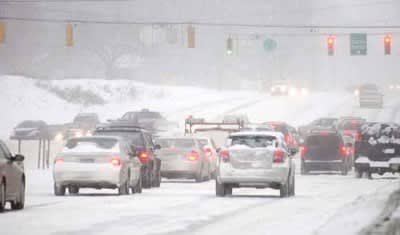
Driver trainers can use videos, roundtable discussions, and experienced drivers to teach less experienced drivers skills for winter weather.
Photo: Wikicommons
Winter driving can be dangerous for bus drivers, their passengers and everyone else on the road. Minimizing the chances of winter road accidents takes some foresight, training and a healthy respect for the power of Mother Nature.
The key to properly preparing drivers for snow, sleet, hail, fog and ice is in-service training that includes behind-the-wheel exercises and classroom education.
Many Driver Training Options
In the Westbrook (Maine) School District, Transportation Director Penny Esposito says driver trainers use videos, roundtable discussions, and experienced drivers to teach less experienced drivers skills for winter weather.
The drivers are also shown how the anti-lock braking systems (ABS) work on ice or snow. “We have, from time to time, set up a training area that is safe for drivers and buses, then have them drive the course in an ABS-equipped bus and in one that’s not,” Esposito says. “That generally helps the driver feel more safe and confident.”
In some areas of the country, school bus managers need to provide drivers with alternate routes because winter weather can be unpredictable.
Keith Harms, safety director for Petermann Ltd. in Cincinnati, says his company’s drivers need to be prepared for a snow emergency, even on days that begin with sunny weather. Hilly areas can become dangerous during snowfall, so drivers should be familiar with alternate routes.
Harms says his company provides driver training through video, PowerPoint and lecture-type presentations. In December and January, the training focuses on winter driving skills, driving conditions and possible traffic conditions. “Special attention is given to braking techniques, air brake systems and their function in severe weather,” he says.
Drivers in Bangor, Pa., face the obstacle of numerous hills and side roads that may not be well maintained. Winters may consist of snow-covered roads, snow drifts, wind and ice, according to Deborah Schander, eastern region Pennsylvania safety supervisor for Student Transportation of America (STA). To prepare her drivers for the harsh weather, she meets with them to review winter driving techniques and to share information about the road conditions.
From Bad Weather to Worse
Weather in Readfield, Maine, can become dangerous quickly, with snow, rain, ice, sleet and freezing rain, according to Jim Scott, transportation director of Maranacook Area Schools. Moreover, some of the problems that drivers face include rain freezing on contact, snow-covered roads, below-zero temperatures and blizzards.
To keep drivers prepared for such weather, Scott stays informed about weather conditions and keeps the drivers up-to-date so that they know what to expect. In-service training includes video instruction and discussions. Occasionally, outside people come in to train them. The district has a “take-your-time policy in bad weather,” Scott says. “If the drivers do not think it is safe to continue, they pull over and wait for a plow or sand truck.”
Winter-Proofing School Buses
Although skilled driving is important in winter weather, a safe bus is also a necessity. Buses should be equipped for the weather with elements to maintain drivers’ ability to see the road, as well as maintain traction on slick surfaces.
STA’s Schander says that her drivers arrive at work early and ensure that their buses are warm before they leave to pick up students. Windows are treated with chemicals to help keep them from fogging or icing up, and drivers are trained to use additional fans to assist the regular fans during the defrosting period.
“When positioned just right, they will help keep the windshield and door windows clear for longer periods of time,” Schander says. If that doesn’t get the job done, drivers can pull off to the side of the road to clear the windshields and wipers.
Some of the drivers use chains, depending on their location, but because schools usually close if weather is bad enough to require chains on the buses, most of the time they do not use them.
For buses in the Westbrook School District, preventive measures are taken to avoid problematic situations. If visibility becomes blocked by dense fog, drivers are told to pull to the side of the road and radio dispatch that they cannot proceed. Dense fog, however, has not been a serious problem in the 20 years that Esposito has worked with the department.
If there are stops on hills where the bus may get stuck in the snow, the driver goes beyond the hill where it is safe. According to Esposito, there are a few locations where traveling on a hill would cause undue safety concerns in a severe storm. In that situation, rather than attempting to drive on the hill, parents are asked to pick up their children before the hill.
Petermann’s Harms advises his drivers to assess the safety of their buses before beginning their routes. A thorough pre-trip inspection should be performed to make sure visibility will not become hindered. Drivers should also check for ample windshield washer solvent, making sure the system, as well as the defroster heat and fans, work properly. Finally, they should verify that the bus’ wipers are not frozen to the windshield; the wiper blades must be in good condition as well.
In fog, drivers are advised to reduce their speed and use low beams. In snow, they are advised to keep moving in order to maintain traction and never take unnecessary risks. The only equipment that buses need in Cincinnati is a windshield scraper.
To maintain visibility in Readfield, Maine, Scott encourages his drivers to drive slowly, take their time and always drive with their low-beam headlights on. “We keep our buses in excellent shape,” says Scott.
Don’t Give Your A/C the Cold Shoulder
It’s a cold night and you’re hot to get rolling, but your defroster is taking forever to clear the windshield.
You may not realize it, but your air conditioner has a big effect on whether your defroster is working at peak efficiency. The air conditioner removes excess moisture from the air, which helps the defroster clear the wiper-stroke area and the door window glass.
“If there’s one thing you can do to improve the performance of your defroster and to increase your margin of safety, it’s to have your air conditioner inspected at the start of the heating season,” says Gary Hansen, vice president of Red Dot Corp. Based in Seattle, Red Dot designs and manufactures heating and air-conditioning systems, components and replacement parts for commercial vehicles and heavy equipment.
There are other steps you can take to prepare your vehicle for cooler temperatures, Hansen says. Most are quick, simple and inexpensive.
Receiver-dryer. The receiver-dryer contains desiccant, a chemical that attracts and traps moisture. When desiccant becomes saturated, moisture in the system is free to combine with refrigerant and turn into corrosive hydrofluoric acid. The receiver-dryer should be replaced once a year, and the sight glass on the moisture indicator should be checked during an oil change or any scheduled maintenance procedure. A blue dot means the refrigerant is dry; pink, white or gray indicates acid or moisture in the system.
Ducts. Turn on the defroster and run your hand under the dash, feeling for air leaks. Fill holes in the ducts with a compound or tape designed for heating systems.
Filters. Your HVAC system has at least one pleated paper or foam filter to capture dust, lint, carpet fibers and other impurities that can clog the heat exchangers and reduce the efficiency of the heater system. “Dirty filters can restrict air flow and allow dirt and dust to interfere with the evaporator core,” Hansen says. Most manufacturers recommend checking the filter every three months and replacing it with one that meets the original equipment spec.
Valves. Check the heater’s water valves to make sure they open and close completely and that the actuator cables aren’t stretched. Remind drivers that valves may be sticky after a season of disuse. “If the driver tries to force the valve to open or close, he risks stretching the cable and damaging the valve,” Hansen says.
Tips for safe winter driving
Through their own experience with different situations that occur during winter weather, professionals have offered the following advice to bus drivers:
Slow down. In bad weather conditions, it is more important to keep the passengers safe than it is to stay on schedule.
Never take chances. If there is a concern that something might not be safe, it probably isn’t.
Anticipate poor or dangerous road conditions. Keep greater distances between you and other objects, which will give you more time to react to things you may encounter on your route.
Control your skid. If your vehicle goes into a skid, steer in the direction of the skid, but don’t overcompensate.
Drive defensively. Be careful of other motorists when entering intersections and always be aware of the traffic around you.
More Safety

Geotab Expands Fleet Safety Tools With Video Coaching, Risk Insights
New safety and video capabilities aim to help fleet managers assess risk, support drivers, and take targeted action through video coaching, red-light violation detection, and more.
Read More →
How to Build a Better School Bus Driver Training Program
Is it time to strengthen your driver training? Here’s how to pick the right talent and improve recruitment, retention, and safety. This video is brought to you by IC Bus.
Read More →
Recent School Bus Accidents Leave 2 Dead, 2 Injured
Four school bus crashes in Florida, Illinois, and Georgia highlight risks in transportation lots, at bus stops, and during student loading and unloading.
Read More →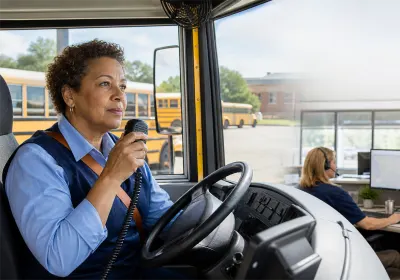

When Every Second Matters, Clarity Keeps Routes Moving
From routine delays to urgent incidents, strong communication practices help drivers, dispatchers, schools, and families respond with confidence.
Read More →
What Happens When a School Bus Catches Fire — and What Can Help
School bus fires are rare but can be devastating. Learn how advances in fire suppression and asset protection help fleets detect fires earlier, reduce damage, and improve safety.
Read More →
Geotab Launches Tool to Help Fleets Investigate Road Incidents
Geotab Investigations combines telematics data, video, documents, and other evidence to help fleets reconstruct incidents, resolve claims, and determine what happened.
Read More →
Texas Sixth Grader Wins 2026 National School Bus Safety Poster Contest
Sai Darshana Yekolu of Moseley Middle School in Prosper, Texas, was named the newest winner for her artwork, bringing the theme of “Safe Rides, Everyday Heroes” to life.
Read More →
Doing More With Less: How Transportation Directors Can Prioritize Safety Amid Budget Uncertainty
With diesel prices soaring and nearly one-third of transportation directors expecting budget cuts, maintaining student safety has never been more challenging. Download this guide to learn how leading districts are prioritizing risk, funding critical safety technology, and building stronger budget cases with data.
Read More →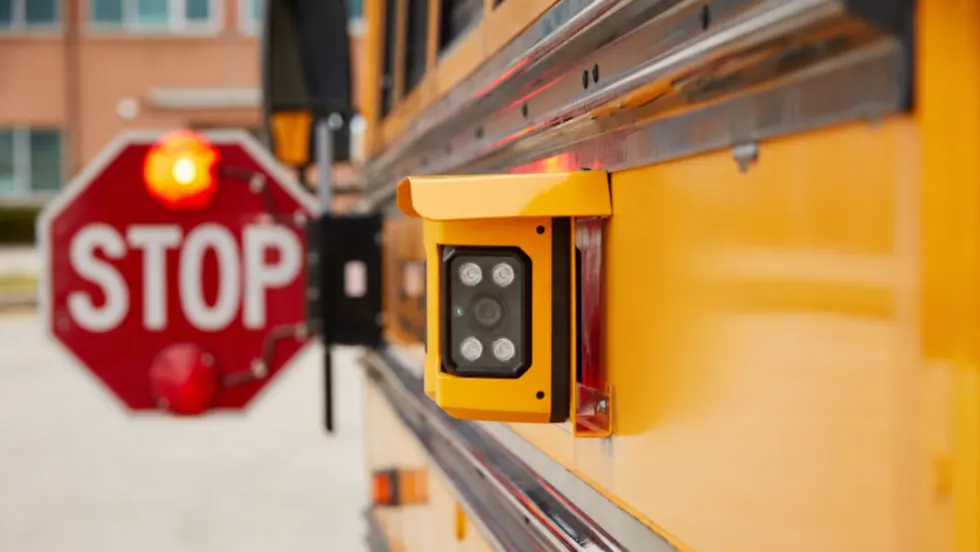
Walton County Schools Adds Gatekeeper Stop-Arm Enforcement System
The Florida district will deploy Gatekeeper’s updated Student Protector technology, which now incorporates AI to improve video evidence.
Read More →
How To Build a More Secure School Bus Yard During and After Hours
As thefts and overnight security threats continue, school transportation leaders are combining stronger operational practices with AI-enabled surveillance to better protect buses, facilities, and staff.
Read More →