



Keys to Choosing the Best Fuel Station for Your Fleet
Pumping fuel into a school bus is part of the daily routine at thousands of operations around the country. But there are plenty of ways to improve the...
Pumping fuel into a school bus is part of the daily routine at thousands of operations around the country. But there are plenty of ways to improve the efficiency of this process, including the use of fuel cards that help track the vehicle's mileage and fuel consumption and that also can be integrated into mileage-based preventive maintenance programs.
In Florida, the transportation department at Miami-Dade County Public Schools (MDCPS) is hoping that a sophisticated fueling system will eventually save the district more than $500,000 annually.
"One of the things we’re looking at is an automated fuel tracking system that tracks mileage, and automatically transmits the data upon refueling," says Orlando Alonso, fleet maintenance coordinator at MDCPS.
The fuel tracking system, which is manufactured by E.J. Ward in San Antonio, accomplishes this task using components that connect to the bus and to the fuel pumps. An electronic device that resembles a collar goes around the fuel neck of the tank. A small computerized box is mounted inside the bus under the dash.
After a technician programs the bus' mileage, vehicle number and fuel type into the onboard computer, a connection to the odometer or transmission can then be used to track and record mileage and other pertinent information.
Another element of the system is integrated into the fuel pump’s nozzle. "When the driver comes in to fuel, there's a proximity sensor that automatically connects the information from the VIT, or vehicle information transmitter, and transmits the mileage, vehicle number and fuel type to the receiver on the nozzle," Alonso explains. The system records the amount of fuel dispensed, the time it was dispensed and the driver's ID.
The district is in the early stages of testing the E.J. Ward system. "We want to test the program at a gradual pace so that we fully understand its capabilities," says Alonso.
Early-warning capability
The final stage of the program is the installation of a CANdometer, a device that connects to the engine's computer and retrieves diagnostic codes that can then be transmitted upon refueling.
"This information is helpful because it can prevent potential mechanical failures by early detection," says Alonso. "The information is reported through exception reports that will identify vehicles with problems."
MDCPS is testing the program at one of its nine terminals. More than 200 vehicles are already equipped with the system. Eventually, the program could allow the district to eliminate the positions of 18 fuel attendants, which would save more than $634,000 per year in salary and benefits, says Alonso.
For tracking purposes, MDCSP utilizes an ID/fuel card that's unique to the employee. "It's a swipe system similar to those you might find at a regular gas station, and it enacts the system to allow the fuel to dispense," says Philip Fleming, systems and accountability manager in the transportation department. "We then track that dispensed fuel to that employee."
More traditional setups
"Our fueling station is similar to a regular gas station," says James Bronec, a bus technician at Havre Public Schools (HPS) in Montana. "We have an under-ground diesel storage tank with a 12,000-gallon fill capacity." HPS operates a fleet of 21 school buses and three coaches.
Drivers at HPS use fuel cards to record mileage and fuel usage on a monthly basis through a software program called Fleet Pro. But Bronec needed more from his reports.
"Fleet Pro is a Montana-based software program that we've used for quite a while, but we wanted our reports to be a little more accurate," says Bronec. "I wanted to beef up preventive maintenance on my buses, so we had our drivers use the fuel cards on a daily basis instead of monthly. Now our records are a lot more accurate."
Tony Autorino, owner of Double-A Transportation, a contractor in Rocky Hill, Conn., updated his fueling station about five years ago with the installation of four 5,000-gallon fiberglass fuel tanks. Autorino's storm drains run directly into the Connecticut River. The environmental ramifications of fuel leaking into the river prompted him to upgrade.
"We have underground tanks that carry diesel and gasoline," says Autorino. "Our setup is all automated where the driver puts a card in and enters the bus number." Autorino monitors his fueling patterns using a program called Petro Vend.
Drivers at Faherty Inc., a school bus contractor for the Platteville School District in Wisconsin, use tubular keys that unlock a pump and correspond to the driver and his vehicle. "Each vehicle in our fleet is keyed so that we know what each vehicle used for fuel each month," says Transportation Director Gene Hottenstein.
CNG fueling concerns
Fueling stations for buses that run on compressed natural gas (CNG) have different concerns than their diesel or gasoline counterparts.
Setting up a CNG fueling infrastructure is a much more expensive proposition than diesel or gasoline. For example, a CNG station for a school bus fleet ranges in construction costs from $400,000 to $800,000.
Trillium USA, a provider of CNG fuel infrastructure and fueling services, has its own fuel cards for its customers and other authorized vehicles. "We've just introduced for private users use of general credit cards, but they have to be used in conjunction with our fleet cards," says Jan Hull, president of Salt Lake City-based Trillium.
School bus fleet operators should consult with industry experts, engineers, architects and their local fire marshals when considering a new fuel station or upgrading an existing one. A general understanding of permitting, zoning requirements and soil evaluation can also ensure the best outcome.
More Management

Reliable Transportation Linked to Better Student Outcomes, New EverDriven Study Finds
See why new research suggests transportation consistency improves student outcomes while influencing attendance, funding, IEP compliance, and family trust.
Read More →
Switzer-CARTY Enters the U.S. with New Acquisition
The Canadian contractor’s acquisition of Minnesota-based Agnes Corporation marks its first cross-border expansion into the United States and adds 350 vehicles.
Read More →
BusRight Adds New Rider Tracking Technology
Safety Pass is an NFC-based student ridership tracking solution that provides real-time boarding and drop-off data to improve school bus safety and family communication.
Read More →
EverDriven Launches RideAware App With Real-Time Student Ride Visibility
The updated platform’s new features improve communication among caregivers, districts, and drivers while streamlining trip updates.
Read More →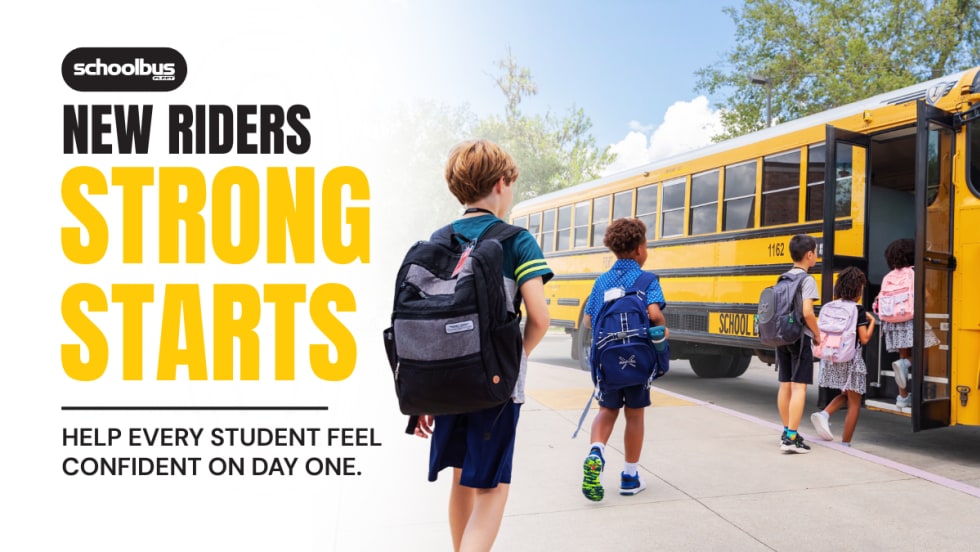
How School Transportation Departments Can Help Acclimate New Riders to the Bus
Here's how transportation departments can turn first-day jitters into confidence for students and parents alike.
Read More →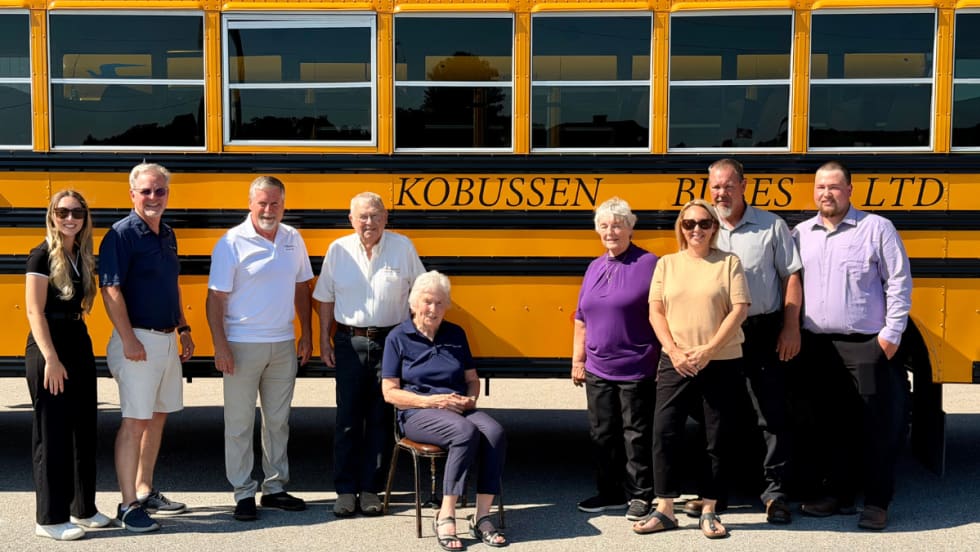
Neighbors Helping Neighbors: Nearly 90 Years of Safely Transporting Wisconsin Students
From one farmer's act of service to a fourth-generation family business, Kobussen Buses reflects on nearly 90 years of earning the trust of Wisconsin families.
Read More →
Changing Lanes: AMF Bruns, Pro-Vision, CALSTART, HopSkipDrive, & Kooner
Check out who's been hired, promoted, and appointed to leadership positions at various school transportation industry suppliers and nonprofits.
Read More →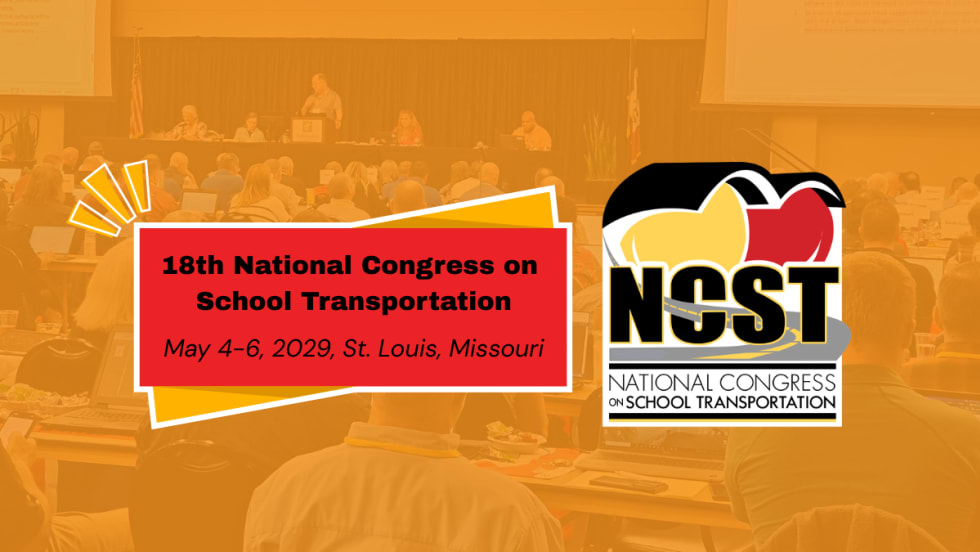
NCST Announces 18th Congress Event Dates, New Committees
The National Congress on School Transportation moves to St. Louis in May 2029, convening delegates and industry representatives to discuss new best practice recommendations. Now, the new committee chairs have been named.
Read More →
Key Moments from the 2026 NSTA Annual Meeting in the Mile High City
From federal policy updates and OEM presentations to speed networking and industry awards, see photos and highlights from the contractor association’s summer conference in Denver.
Read More →
HopSkipDrive Launches Spanish-Language App Update, Plans Additional Language Support
The update aims to improve communication with multilingual families by offering ride tracking, notifications, and support in Spanish, with more languages planned for the 2026-2027 school year.
Read More →