




Evacuating passengers with special needs and equipment
Pupil transportation officials must have access to medical information on the students they are transporting, especially when the students are dependent on medical equipment and others for their care. They must also have a well-developed evacuation plan for all students that they transport.

When transporting students with complex medical conditions and special equipment, pre-planning is critical. In addition, it is important to note that children with the same medical diagnosis may present a very different picture. Each child is unique, and we can’t generalize how they will react. Thus, two students should never be compared, and assumptions should never be made based on what another student can do.
The transportation needs of students with medical conditions must be discussed at their individualized education program (IEP) meeting. A representative from the transportation department must be an active participant in the IEP process. The IEP meeting is where decisions regarding the need for a nurse to accompany the student on the bus should be made.
Other factors to consider when transporting these students include emergency evacuation planning and the involvement of local emergency response teams.
The following is a best practice evacuation guideline for students with various medical conditions, some of which require use of special equipment.
Keep emergency cards handy
All special-needs students riding a school bus should have an emergency card that describes their pertinent medical information.
This card should be stored in a universally accepted location that is known to all local emergency personnel. Photo identification should be on the card in the event of the driver becoming incapacitated.
Students who have seizures
Many students with medical conditions have seizure activities. A seizure is a sudden attack of altered behavior, consciousness, sensation or autonomic function that is produced by a self-limited description of brain activity. Seizures can range from a momentary blank stare to a temporary loss of consciousness. Although frightening to all, a seizure is usually not life threatening.
What do you do if your student has a seizure during an evacuation? You need to start to time the seizure. As you drag the student on the evacuation aide or as you carry the student, be sure his or her head is well protected. Also, have the student on his or her side so they do not aspirate on saliva, and loosen the student’s shirt collar to help with breathing.
Students with a tracheostomy
A tracheostomy is a surgically created opening in the neck into the windpipe that allows the student to breathe if he or she is unable to breathe well through the nose or mouth. The opening may have a metal or plastic tracheostomy tube inside to keep it open and allow air to pass in and out of the windpipe and lungs.
Speed is important during an evacuation, but with students who have a tracheostomy, one must be very careful when unfastening the occupant shoulder strap to avoid dislodging the tracheostomy tube. If the tracheostomy tube becomes displaced, in many cases it can be replaced. However, with some students who have a narrowing of their trachea, if the tube is displaced, it could be life threatening.
[PAGEBREAK]Students who require suctioning
There are three levels of suctioning for a tracheostomy tube. One is surface suctioning or shallow suctioning, which is suctioning at the opening of the tube. This is suctioning of what the student has coughed up.
The other type of suctioning is pre-measured suctioning, which is suctioning the length of the tube. Deep suctioning is when a catheter is inserted until resistance is felt.
Suctioning is a medical technique that must be discussed at the student’s IEP meeting. The plan must also include who, according to the state’s nursing practice regulations, can perform what type of suctioning is prescribed.
While on the bus, suctioning is usually performed by a suctioning machine that is attached to the wheelchair. However, should an evacuation be necessary, it is extremely difficult to remove the suction machine. Therefore, every bus should be equipped with a manual bulb syringe to remove any mucus.
School systems must also have an emergency medical plan in place regarding who can replace a tracheostomy tube.
Students who need a ventilator
Many students who must use a tracheostomy to breathe also need a ventilator, which is a mechanical device that helps the student to breathe by pushing air into the lungs. Ventilators vary in size, and it may not be possible to remove the ventilator from the bus quickly, so every bus that transports a student who uses a ventilator should also carry an Ambubag.
The Ambubag is also known as a big-valve mask, a hand-held device used to provide ventilation to a student who is not breathing or is breathing inadequately. During an evacuation, the staff will need to drag the student, and then the nurse or bus staff will need to breathe for the student via the Ambubag. Repeat this procedure until the student is safely out of the bus and additional medical help has arrived.
Students who use oxygen and a pulse oximeter
Some students may need supplemental oxygen during their bus ride. These students may wear a pulse oximeter, which is a probe attached to the child’s finger or toes. The probe measures the amount of oxygen saturation in the blood, and an alarm can be set to sound if the oxygen falls below a certain saturation level. The needs of a student who is oxygen-dependent are complex and must be discussed at the IEP meeting.
Oxygen is provided by prescription. Some school systems are now transporting oxygen in a closed container called an “O2 Bus Buddy.”
As part of the planning process, the IEP team should discuss:
• The student’s ability to request oxygen or assistance as needed.
• How much assistance does the student need to get on and off the bus?
• How long will he or she be able to breathe on their own if the oxygen runs out?
• Daily plans to check the equipment.
Nursing services
As previously mentioned, the need for an individual nurse for a student must be discussed at the IEP meeting, and this nurse must be part of the evacuation planning team. There also needs to be plans for a backup if the nurse is out sick or if the nurse is injured in the accident and cannot help. The nurse should help with other passengers once his or her student is well taken care of.
The Do Not Resuscitate order
Because of the progressive degree of some disabilities and medical conditions, some students may have a Do Not Resuscitate (DNR) order in place. In the case of an evacuation, the transportation staff must follow the school system’s policy regarding the DNR order, and they must inform paramedics of the DNR order.
An important point for transportation staff: A DNR order does not mean that you do not evacuate the student. All students must be evacuated.
Summary
Pupil transportation officials must have access to medical information on the students they are transporting. This information is especially important when the students are dependent on medical equipment and others for their care.
We must also have a well-developed evacuation plan for all students that we transport.
More Special Needs Transportation
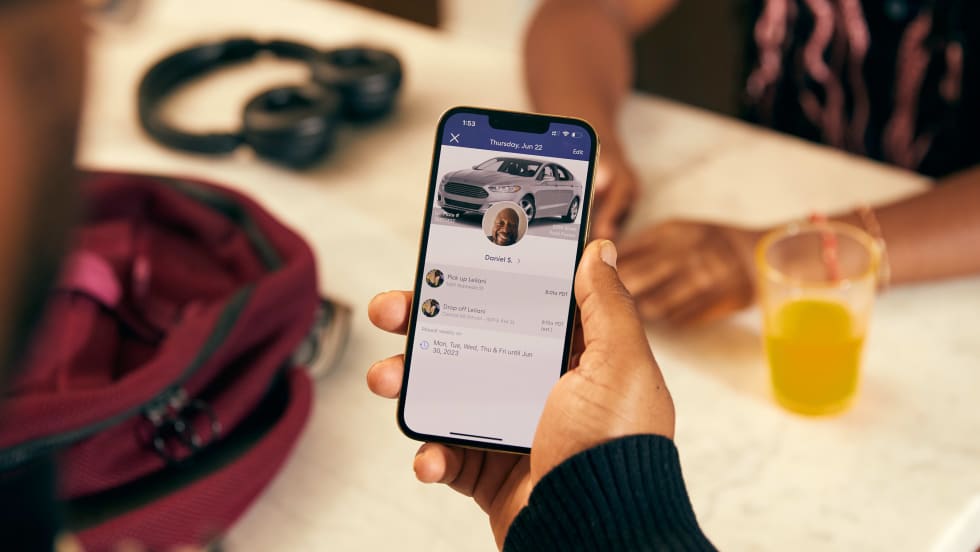
HopSkipDrive Launches New Safety, Driver Consistency Features for 2026-27 School Year
The company’s free ride recording, live ride tracking, and consistent driver assignments aim to improve safety and continuity for diverse student transportation needs.
Read More →
The Most Common Wheelchair Securement Mistakes on School Buses (and How to Fix Them)
Small missteps in wheelchair securement can have serious consequences. Here are 32 tips from experts to reduce risk and increase student safety on the bus.
Read More →
Inside AMF Bruns’ New Showroom: School Bus Securement Solutions Explained
Go inside AMF Bruns America’s new Ohio showroom with Maritza Valentin to see its FutureSafe technology, driver training tools, securement systems, and seating innovations.
Read More →
What AMF Bruns’ New Facility Means for Customers [Video]
Inside AMF Bruns’ new Stow, Ohio, operations: See how expanded space and innovation will enhance customer support and operations.
Read More →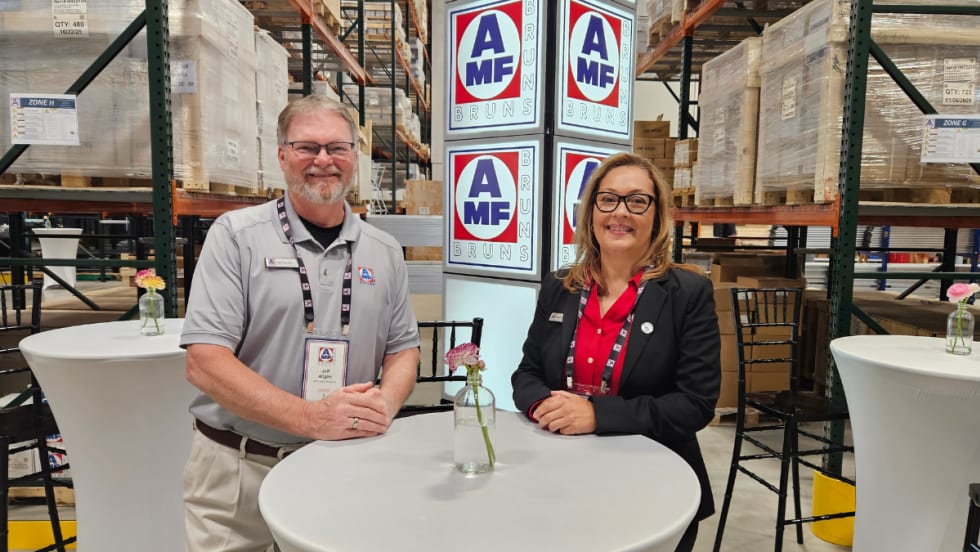
AMF Bruns Expands in Ohio, Investing in Growth and Community
With expanded production space, local investment, and a growing workforce, AMF Bruns is scaling its U.S. presence. Here’s an exclusive first look inside the new Stow, Ohio, HQ.
Read More →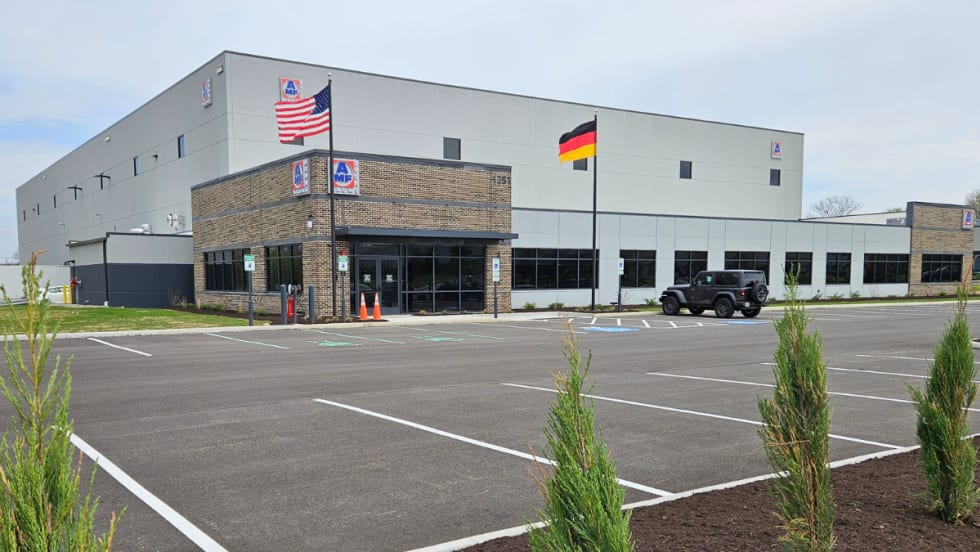
Inside AMF Bruns of America’s New Ohio Manufacturing Facility [Photos]
Take a behind-the-scenes look at AMF Bruns of America’s new 41,000-square-foot Stow, Ohio, headquarters, featuring advanced manufacturing, expanded space, and future-ready mobility solutions.
Read More →
First Student Boosts Student Support in Wichita & Texas
First Student and Wichita Public Schools are using behavioral support strategies to improve student ride experiences, while a separate initiative expands access to after-school programs through a bus donation.
Read More →
2026 Special-Needs Transportation Survey
What’s changing in special-needs transportation? This year, student transportation operators report a rising need, easing driver shortages, growing tech adoption, and evolving challenges. Sponsored by AMF Bruns of America.
Read More →
The Lived-Experience Gap in Mobility Tech: An Expert Take on Safe Student Transportation
Brianna Pauwee, a product application specialist at AMF Bruns of America and a wheelchair user, drops in to The Route to share practical securement and training insights, plus the story behind the new “Beyond Mobility” podcast. The Route is sponsored by IC Bus.
Read More →
What Transportation Gets Wrong About Wheelchair Securement (And How to Fix It)
Brianna Pauwee, product application specialist at AMF Bruns of America and a wheelchair user shares practical securement and training insights, plus why she launched the “Beyond Mobility” podcast. The Route is sponsored by IC Bus.
Read More →