



Special-needs transportation: Looking back while facing forward
An expert on transporting students with special needs reflects on changes in the transportation of special-needs students over the past 25 years.

Cheryl Wolf, an expert on transporting students with special needs, is set to retire March 1 as transportation supervisor for Lafayette (Ind.) School Corp. She plans to remain active in the industry as a consultant. She can be reached at cwolf22@comcast.net.
As I look back over the past 25 years of transporting students with disabilities, I am amazed at the changes that have transpired.
In the early '80s, some school districts did not transport "handicapped" students (as they were called) in school buses. Instead, they were taken to school in vans and station wagons, leaving the yellow school bus for the "regular" students.
The students with disabilities would arrive late and be picked up early, and their drop-off and pickup point would be an obscure entrance to the building out of the main flow of traffic. The rationale was that they wouldn't be caught in the hustle and bustle of the hallway during regular bell time arrival and dismissal. This practice shortened their instructional time significantly.
Another common practice was segregating the disabled students in one classroom or one building without interaction with their non-disabled peers.
Public Law 99-372 - the Handicapped Children's Protection Act of 1986 - brought many changes in this area. Students with disabilities would now arrive at the same bell time as their non-disabled peers and enter the building through the same entrance. Also, they were given the opportunity to spend appropriate instructional time in the classroom with students of their age group.
Advancing equipment, training
The necessary equipment required to transport students with disabilities safely has also improved over the years. The vans and station wagons were traded for yellow school buses that were equipped with lifts and tiedown systems for transporting students using wheelchairs.
Wheelchairs have morphed from being collapsible to being equipped with transport options that have been crash tested. School bus specific child passenger safety restraint systems are now available, as are many other products that contribute to a more comfortable ride for our passengers.
Training the bus drivers and attendants is the No. 1 factor in safe transportation for students with disabilities. During the past 25 years, there has been a plethora of material developed to help train our driver trainers, drivers and attendants.
Another change that has occurred over the years is the cooperation and collaboration between the special-education department and the transportation department. This has been a key component in providing for the individualized transportation needs of a student with a disability.
Future improvements
Many changes have occurred in the transportation industry during the past 25 years, and there will continue to be change. Our anticipations and expectations for the future include: new and improved equipment and products developed specifically for the school bus; forward-thinking people in our industry developing new and innovative training programs; exploring options to provide the least-restrictive environment for our students by assessing their abilities before we make adaptations for their disabilities; and, as always, being mindful of our cooperation and collaboration with our special-education departments, keeping in mind that "it's all about the kids."
It has been a privilege and a pleasure to watch and be part of the changes that have come about in our industry. I look forward to what will be in our future with new innovations and new products to help us continue transporting students with disabilities in the safest possible way.
More Special Needs Transportation
What More Than Two Million Rides Reveal About School Transit
More than two million student trips. Nearly 28million miles. Here's what that data reveals about the future of alternative student transportation.
Read More →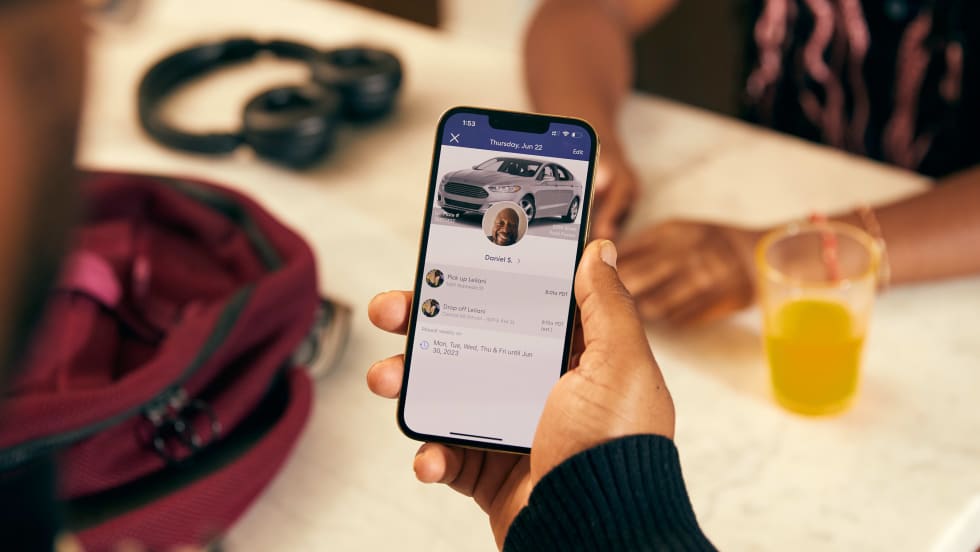
HopSkipDrive Launches New Safety, Driver Consistency Features for 2026-27 School Year
The company’s free ride recording, live ride tracking, and consistent driver assignments aim to improve safety and continuity for diverse student transportation needs.
Read More →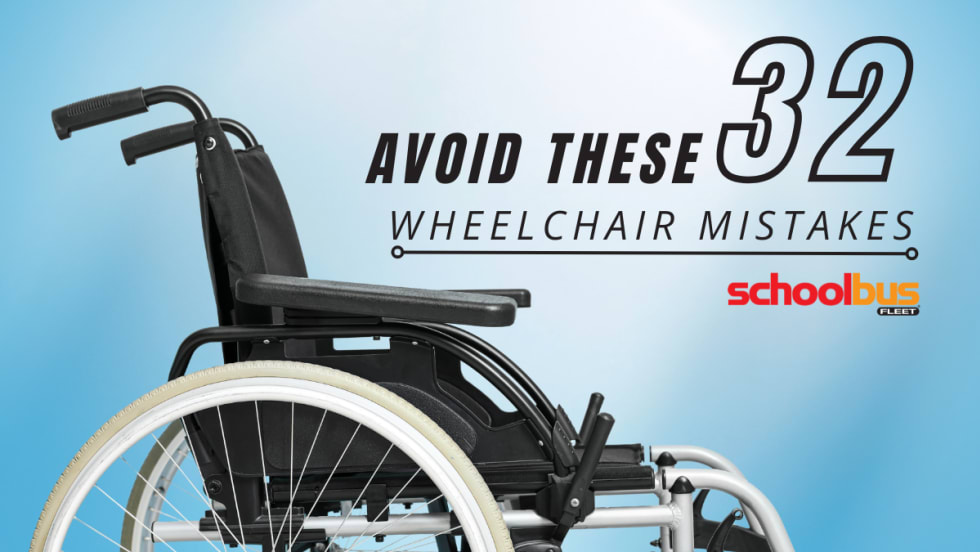
The Most Common Wheelchair Securement Mistakes on School Buses (and How to Fix Them)
Small missteps in wheelchair securement can have serious consequences. Here are 32 tips from experts to reduce risk and increase student safety on the bus.
Read More →
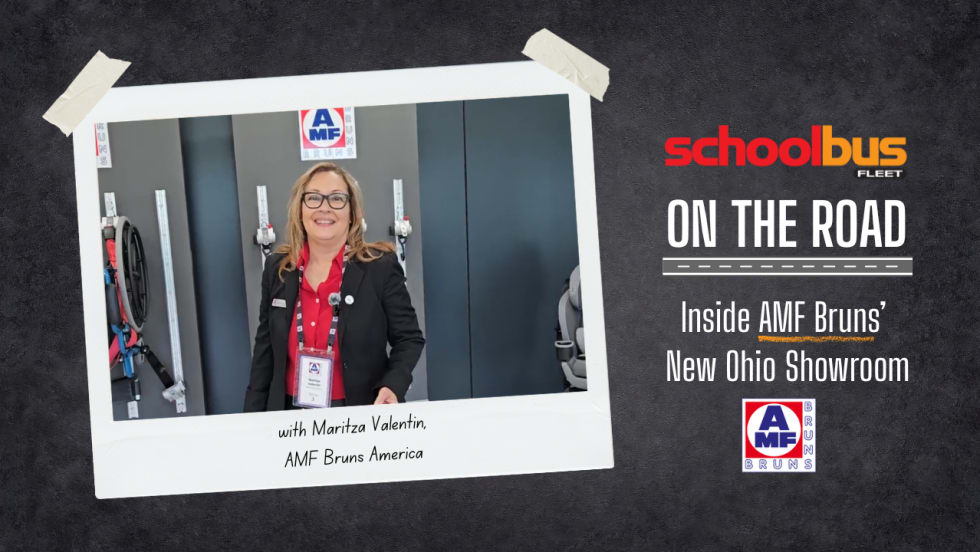
Inside AMF Bruns’ New Showroom: School Bus Securement Solutions Explained
Go inside AMF Bruns America’s new Ohio showroom with Maritza Valentin to see its FutureSafe technology, driver training tools, securement systems, and seating innovations.
Read More →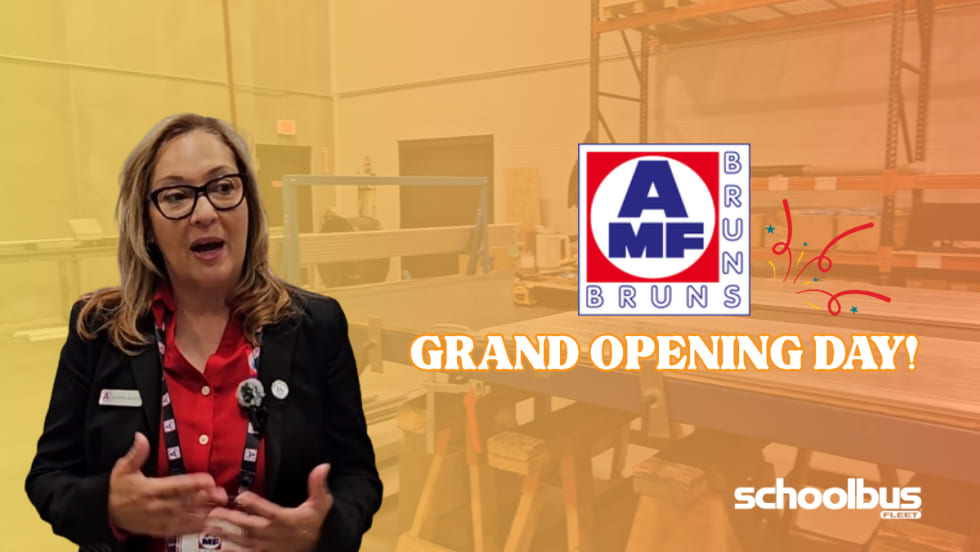
What AMF Bruns’ New Facility Means for Customers [Video]
Inside AMF Bruns’ new Stow, Ohio, operations: See how expanded space and innovation will enhance customer support and operations.
Read More →
2026 State of Student Transportation Report
Student transportation teams are being asked to do more with less, facing driver shortages, rising costs, and increasing safety expectations. This report uncovers how fleets are adapting, where technology is making the biggest impact, and why student ridership tracking is emerging as a top priority. Download the report to explore the key trends shaping 2026 and what they mean for your operation.
Read More →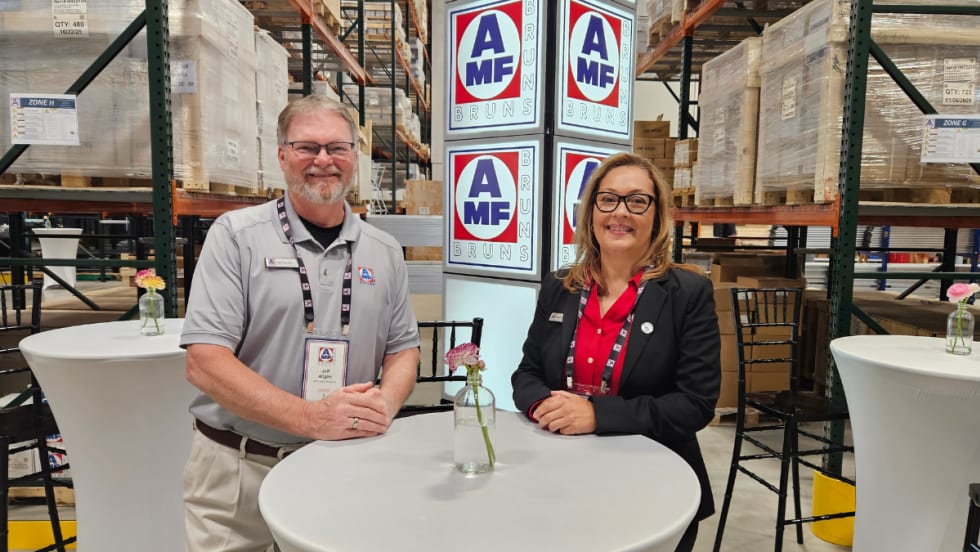
AMF Bruns Expands in Ohio, Investing in Growth and Community
With expanded production space, local investment, and a growing workforce, AMF Bruns is scaling its U.S. presence. Here’s an exclusive first look inside the new Stow, Ohio, HQ.
Read More →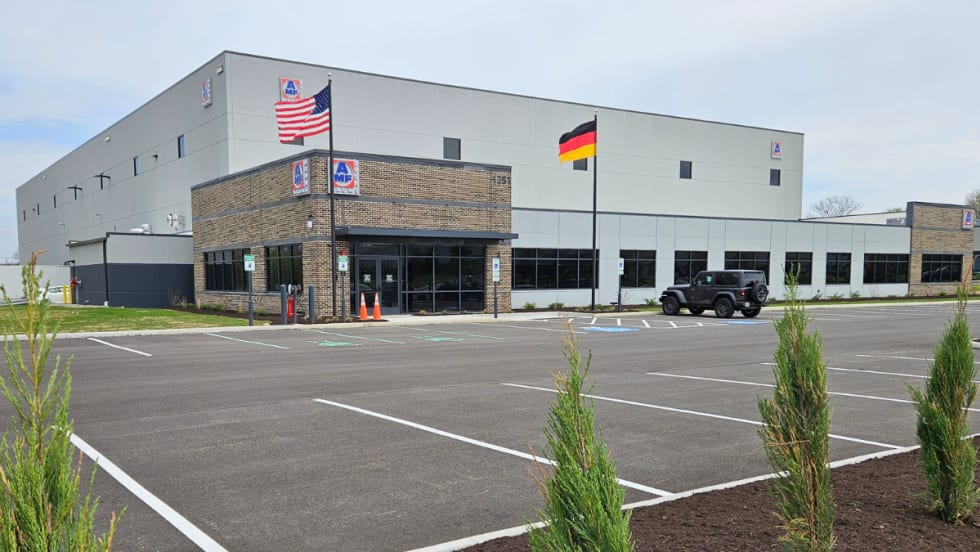
Inside AMF Bruns of America’s New Ohio Manufacturing Facility [Photos]
Take a behind-the-scenes look at AMF Bruns of America’s new 41,000-square-foot Stow, Ohio, headquarters, featuring advanced manufacturing, expanded space, and future-ready mobility solutions.
Read More →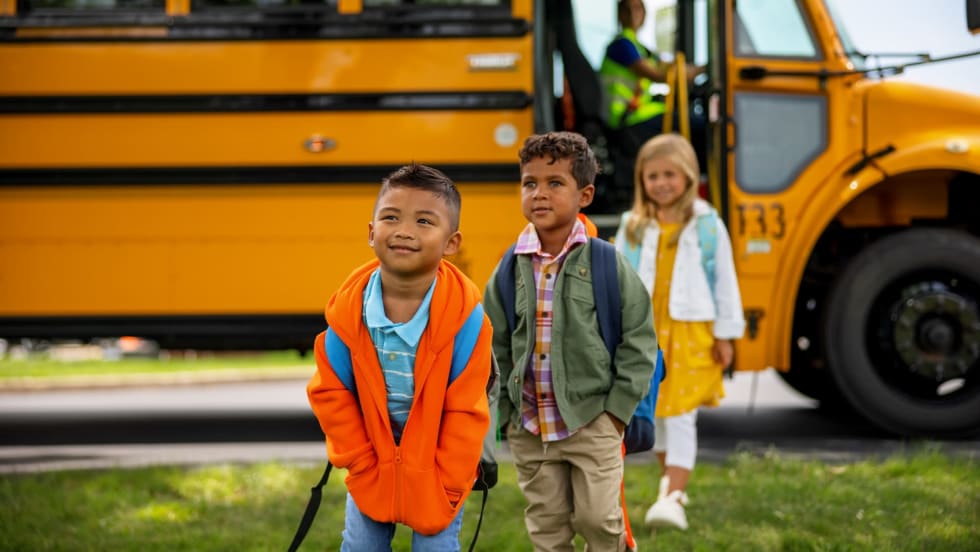
First Student Boosts Student Support in Wichita & Texas
First Student and Wichita Public Schools are using behavioral support strategies to improve student ride experiences, while a separate initiative expands access to after-school programs through a bus donation.
Read More →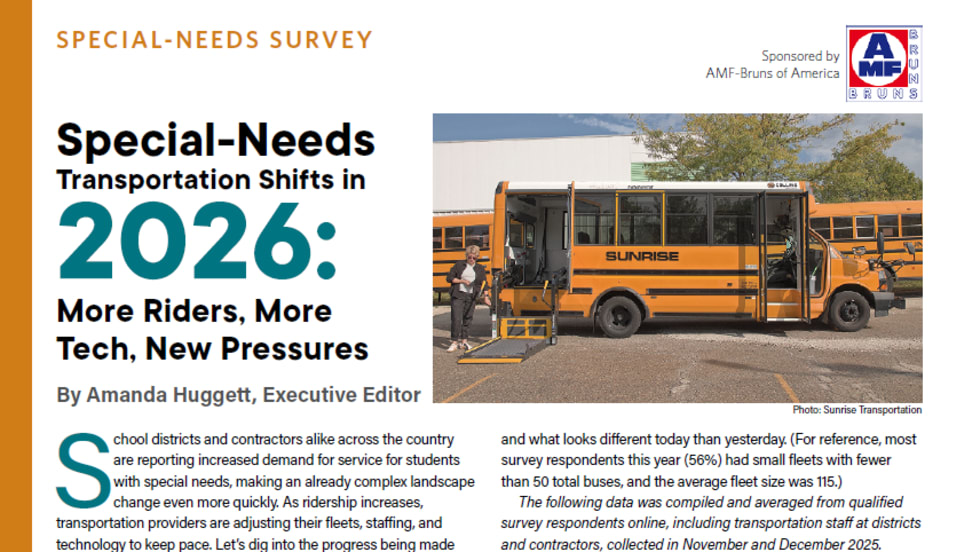
2026 Special-Needs Transportation Survey
What’s changing in special-needs transportation? This year, student transportation operators report a rising need, easing driver shortages, growing tech adoption, and evolving challenges. Sponsored by AMF Bruns of America.
Read More →