




Involving Physical Therapists in Pupil Transportation
Physical and occupational therapists are a great asset to an operation. Help them to see the critical role they play in assisting with the transport of special-needs students by soliciting their expertise on body mechanics, disabilities and mobility devices. Ensure that they participate in evacuation training and drills.
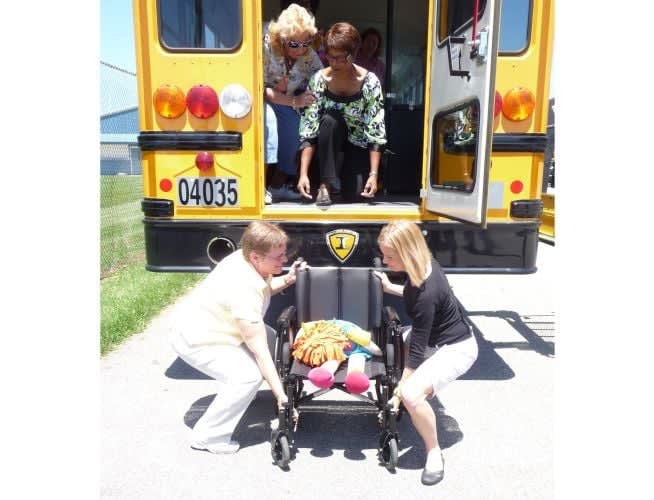
Author Jean Zimmerman (top left) says physical therapists can teach bus drivers about proper body mechanics to help reduce injury while they are transporting special-needs students.
Where did summer vacation go? Some of you may have worked due to a summer school program. Others may have had the luxury of taking the entire summer off.
Whatever your summer entailed, the reality is that a new school year is upon us and with that comes another year of transporting students.
When I have given presentations throughout the U.S., a question that often arises is: How do I get the physical therapists (PTs) and occupational therapists (OTs) in my school system involved in pupil transportation?
One of the first things transportation professionals need to understand is that as PTs and OTs, we are taught little to nothing about school bus transportation. The college curriculum for therapists addresses so many medical areas that working in school systems and school bus transportation are barely addressed. With this in mind, the first step in getting therapists involved is to help them realize how valuable they can be to transportation.
Request training on body mechanics
"I have hurt my back." This is one statement that transportation supervisors hate to hear. Worker's compensation complaints not only cost money in a time when budgets are dwindling, they can also cause problems in the transportation work force.
Therapists are taught during their professional training how our bodies move most effectively and efficiently. We learn the mechanics of bones and joints and how muscles cause the various movements in our bodies that we can take for granted. If you disrupt correct body mechanics, you can cause long-term pain that can make it difficult to perform your job.
To get therapists involved in pupil transportation, ask them to teach your employees about body mechanics. Because physical and occupational therapists are trained on this topic, many would be comfortable speaking about it.
Moreover, before this in-service training takes place, the supervisor should invite the therapist to the transportation facility to observe a school bus driver and bus attendant's daily tasks in serving students with special needs. This way, the therapist will become more aware of and knowledgeable about the school bus environment.
For instance, transferring a student from a wheelchair to a school bus seat involves the same basic principles of transfer, but it will have to be modified slightly due to the logistics of a school bus.
In addition, request a dialogue between the therapist and transporters about the height of the school bus steps, how to maneuver down the bus aisle and how to perform proper body mechanics in a tight space.
[IMAGE]560[/IMAGE]Go to therapists for information on disabilities
Do your bus drivers and attendants say, "I don't know anything about the special-needs students on my bus. I don't understand why they move the way they do," and ask where they can find more information?
PTs and OTs have a wealth of knowledge about different disabilities. For example, therapists know that cerebral palsy means having difficulty with movements, spasticity and, possibly, being unable to walk. The therapists understand the progression of a disease, and they can explain to a bus staff why a student's condition appears to be getting worse.
Since therapists understand students' disabilities, they can assist in determining what type of support is needed when the students sit on bus seats. When they are part of the transportation team, they will also teach correct loading procedures, both on the stairs and on the wheelchair lift.
Solicit their expertise on mobility devices
Another question that often comes from transportation officials is: Why are there so many different kinds of mobility devices?
Each student is an individual and, thus, he or she may require being transported in equipment or using equipment that is customized to meet his or her needs. Transportation staff should seek out the PTs or OTs who work with students who have mobility devices to learn more about them.
The therapists have studied many kinds of mobility devices. The therapists can teach you how to tilt the mobility device, how to move the anti-tipper bars, where the wheel locks are located, etc. They will also show you how to disengage the gears of a motorized mobility device and put it into the manual mode.
Furthermore, therapists will help you understand which devices students may remain seated in during transport to and from school, and they can assist in determining the best location to tie down the wheelchair if there are no transit options.
[PAGEBREAK]
[IMAGE]561[/IMAGE]Riding with bus drivers will answer their questions about students' posture
Why does a student lean to the side during the bus ride? If the student's head is moving up and down during the bus ride, is that going to hurt him or her? What about their arms hanging off the arm rests or their legs not staying on the foot rests — can this hurt students?
These are all questions that should be directed to PTs or OTs, and it is yet another way to include therapists in the transportation process. Invite them to ride the school bus and observe what happens to students' posture during the ride.
Involve therapists in evacuation training and drills
When therapists prescribe a mobility device for a student, their goal is not just to help the student get around. The goal in prescribing a wheelchair in particular is also to help the student achieve proper body alignment while he or she is seated on the bus. Pads may be put along the student's legs and trunk to keep them as straight as possible. A student with a serious trunk problem who could not sit by himself would be prescribed a custom-molded seating system.
Because one of the goals in prescribing mobility devices is support for proper body alignment, lifting students from their mobility devices requires specific directions and training from PTs or OTs to maintain the alignment.
Find the students' therapists and ask them to provide in-service training on how to lift them. Pupil transporters should be highly engaged in the training, asking the therapists such questions as "How much does the wheelchair and student weigh?," "Do they have significant orthopedic deformities?" and "Does the student have severely increased tone when you lift him or her?" (Tone is the reaction of muscles to movement. Hypertonic tone can cause muscles to become very stiff and difficult to move. The other type of tone is hypotonic tone — the muscles are loose and floppy; thus, more support is needed to lift a student.) This information and training will become especially valuable during evacuation drills and in the event of an actual emergency.
In addition to providing training on proper lifting techniques, therapists should be involved in evacuation training, planning and drills. As a team, you will decide the best way to evacuate students with special needs, whether it is transporting them in their wheelchairs or on an emergency evacuation device.
Whatever the decision is, therapists will be a great asset to the team. Although we are not trained specifically in school bus evacuations, as previously mentioned, we know the type of tone the student has as well as lifting techniques to accommodate students' physical deformities and minimize injury to the children and to the adults doing the lifting.
However, just as transportation personnel do not like to think about having to evacuate students from a school bus, neither do PTs and OTs. When you seek out help from therapists, do not start by asking them to help with evacuations.
Get them hooked on assisting in transporting students with special needs first by helping them see how much they have to offer to the team and the critical role they will play. Ask them for help with body mechanics, disabilities and mobility devices and then gradually invite them to participate in discussions about evacuations.
Jean Zimmerman is a physical therapist and supervisor of occupational and physical therapy for the School District of Palm Beach County (Fla.). She frequently speaks at pupil transportation conferences and heads special-needs training sessions for school bus operations around the country. Zimmerman can be reached at greybabyz@aol.com.
More Special Needs Transportation

What More Than Two Million Rides Reveal About School Transit
More than two million student trips. Nearly 28million miles. Here's what that data reveals about the future of alternative student transportation.
Read More →
HopSkipDrive Launches New Safety, Driver Consistency Features for 2026-27 School Year
The company’s free ride recording, live ride tracking, and consistent driver assignments aim to improve safety and continuity for diverse student transportation needs.
Read More →
The Most Common Wheelchair Securement Mistakes on School Buses (and How to Fix Them)
Small missteps in wheelchair securement can have serious consequences. Here are 32 tips from experts to reduce risk and increase student safety on the bus.
Read More →
Inside AMF Bruns’ New Showroom: School Bus Securement Solutions Explained
Go inside AMF Bruns America’s new Ohio showroom with Maritza Valentin to see its FutureSafe technology, driver training tools, securement systems, and seating innovations.
Read More →
What AMF Bruns’ New Facility Means for Customers [Video]
Inside AMF Bruns’ new Stow, Ohio, operations: See how expanded space and innovation will enhance customer support and operations.
Read More →
2026 State of Student Transportation Report
Student transportation teams are being asked to do more with less, facing driver shortages, rising costs, and increasing safety expectations. This report uncovers how fleets are adapting, where technology is making the biggest impact, and why student ridership tracking is emerging as a top priority. Download the report to explore the key trends shaping 2026 and what they mean for your operation.
Read More →
AMF Bruns Expands in Ohio, Investing in Growth and Community
With expanded production space, local investment, and a growing workforce, AMF Bruns is scaling its U.S. presence. Here’s an exclusive first look inside the new Stow, Ohio, HQ.
Read More →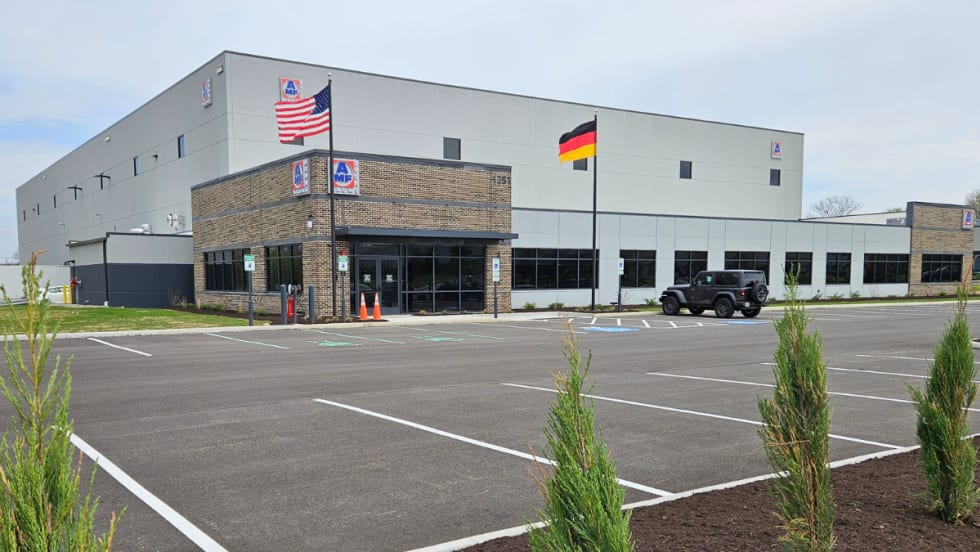
Inside AMF Bruns of America’s New Ohio Manufacturing Facility [Photos]
Take a behind-the-scenes look at AMF Bruns of America’s new 41,000-square-foot Stow, Ohio, headquarters, featuring advanced manufacturing, expanded space, and future-ready mobility solutions.
Read More →
First Student Boosts Student Support in Wichita & Texas
First Student and Wichita Public Schools are using behavioral support strategies to improve student ride experiences, while a separate initiative expands access to after-school programs through a bus donation.
Read More →
2026 Special-Needs Transportation Survey
What’s changing in special-needs transportation? This year, student transportation operators report a rising need, easing driver shortages, growing tech adoption, and evolving challenges. Sponsored by AMF Bruns of America.
Read More →