




Q&A: Managing the Behavior of Autistic Students on the School Bus
Autistic children have difficulty communicating their wants and needs to others, which puts the task of deciphering their complex behavior in the hand...


Autistic children have difficulty communicating their wants and needs to others, which puts the task of deciphering their complex behavior in the hands of responsible adults. Sometimes this task can overwhelm even the most astute special-needs care provider.
SBF Associate Editor Albert Neal spoke with Debbie Rike, supervisor of transportation at Shelby County Schools in Arlington, Tenn., about the challenges involved in providing proper care and managing the behavior of autistic children on the school bus.
SBF: Is it more challenging to work with an autistic child on the school bus than with another special-needs student?
DEBBIE RIKE: Autistic children provide great challenges in regard to safe behavior on the bus because of the severe communication problems they exhibit. It’s very difficult to know if the student even understands the behavior expectations. Sometimes it is difficult to determine appropriate consequences for unsafe behavior. It’s frustrating for the child to not be able to communicate his or her wants and needs to others — for instance, to say that something hurts or that they’re hungry. They may show something is wrong by frantic rocking motions or a constant humming or screaming or any number of ways to express discomfort. It’s up to the adults to try to figure out what the student is trying to communicate. One of the biggest challenges is establishing some form of communication with the student.
What type of training do you provide drivers for managing the behavior of autistic passengers?
All special-ed bus drivers and bus assistants are provided in-service training on basic communication systems. These include basic sign language and the use of visual symbols, usually survival signs and symbols. Most of the communication basics are as simple as, “Sit down,” “Quiet,” or “Are you sick?”
We also have visual symbols to communicate the basic bus rules and bus schedules. We always include one “Oops” card just to let the student know that something is different today, such as a student is sick and the bus will not be going to their home. One of the students we transport starts to scream if another student doesn’t ride. We believe she thinks we’re forgetting to pick up her friend to ride the bus. With the assistance of behavior specialists and speech-language pathologists, we have developed a series of about 10 social stories designed to instruct the special-needs student about proper behavior on the bus. A copy has been placed on all 43 of our special-ed buses. The social stories are short and include the same visual symbols used in the classrooms.
How much participation/cooperation is required from parents of autistic children, their teachers and behavior specialists to assist the bus driver in performing his or her duties adequately?
With unusually difficult behaviors, we ask everyone who works with the student for help with suggestions. This could include any or all the following: parent, teacher, school administrator, classroom assistant, occupational therapist and speech-language pathologist, as well as the school bus driver and bus assistant. Often, parents have found a way to work with their student better than anyone. Very specific and individual transportation plans are developed and approved by the IEP team with input from all appropriate members. Safety is our major concern, and several plans with consequences and rewards may have to be tried before we have one that works well. It could be something as simple as giving the student a circle every day when they get off the bus. A yellow circle signifies a good bus ride and the student is given an immediate treat. A red circle signifies a difficult ride. The student usually receives an immediate time out with a red circle.
{+PAGEBREAK+}
Can you provide examples of some of the different suggestions you get for managing autistic passengers?
Sometimes school staff or parents have found unusual ways to calm a student. For example, one student became calm when provided the smell of pickles. We found an empty plastic pickle jar that we allowed the student to carry in his backpack; it was some sort of security blanket for the student. Another student was allowed to twist a 6-inch piece of yarn or string during the bus ride. This activity was preferred over the self-stimulation activity that the student had been involved in previously.
Would you say managing the behavior of non-verbal autistic children is more challenging than verbal ones?
Managing the behavior of non-verbal autistic children is sometimes more challenging than with verbal children, but not always. Every child is different. It’s finding the things that work for that particular student, whether verbal or non-verbal. Some non-verbal autistic children exhibit no severe behavior problems. I can think of one non-verbal 17-year-old autistic student who exhibits very few behavior problems. He sometimes tries to touch a person’s hair, but this is easily changed to a different activity. We limit the opportunities for him to do this touching. It only becomes a problem around new people. This is much easier to manage than a verbal but emotionally or behaviorally impaired student.
Professionals develop a variety of strategies that work with students based on each student’s needs. The secret is to be flexible, creative and open minded enough to try almost anything until a strategy is found that works.
How selective are you with choosing bus drivers to transport autistic passenger? Would a person who has experience transporting other special-needs students be automatically qualified to transport autistic children?
Choosing bus drivers and bus assistants to work with autistic students must be taken very seriously. Just because the staff person works well with other special-needs students doesn’t mean they’re able to work with autistic students. Some drivers are bothered by the student’s behaviors, especially the high-pitched, agitated noises they sometimes make. If a driver does not work well with a specific student, I look for opportunities to transfer the student to a different route. Some drivers want to work with these students, as it provides a needed challenge. They can become very attached to the students. When that happens, I do everything possible to keep the match together for years — even when the student moves from an elementary school to a middle school. Some drivers work well with younger autistic students but may be intimidated by older, larger autistic students.
A few characteristics that bus drivers must exhibit to be successful working with autistic students would be a calm, level voice and temperament (not easily excited) and an excellent attendance record. Autistic students don’t do well with substitutes or changes in their schedules. The driver must also show genuine care for the student. Autistic students seem to “feel” when someone is faking or nervous. The driver must be open-minded and willing to work in the development of a safe plan. If the first plan doesn’t work, then he or she must be willing to accept suggestions and ideas from others. The driver can’t just tolerate inappropriate behavior and hurry to complete the route. They must be a part of the entire education process to help in the development of the student to his or her full potential.
How responsive are parents to the care that drivers and assistants provide when transporting their children?
One thing that’s very important is to make sure drivers know the wonderful jobs they’re doing and that they’re appreciated. I send a letter to parents at the beginning of each school year that includes bus information. In the letter, I include the following statement as a reminder to the parents to be appreciative of the work of the driver and assistant when services are appropriate: “Few parents compliment good service. School bus personnel need parental support, too.” Still, most parents of autistic children are appreciative of the help provided by wonderful transportation personnel.
More Special Needs Transportation
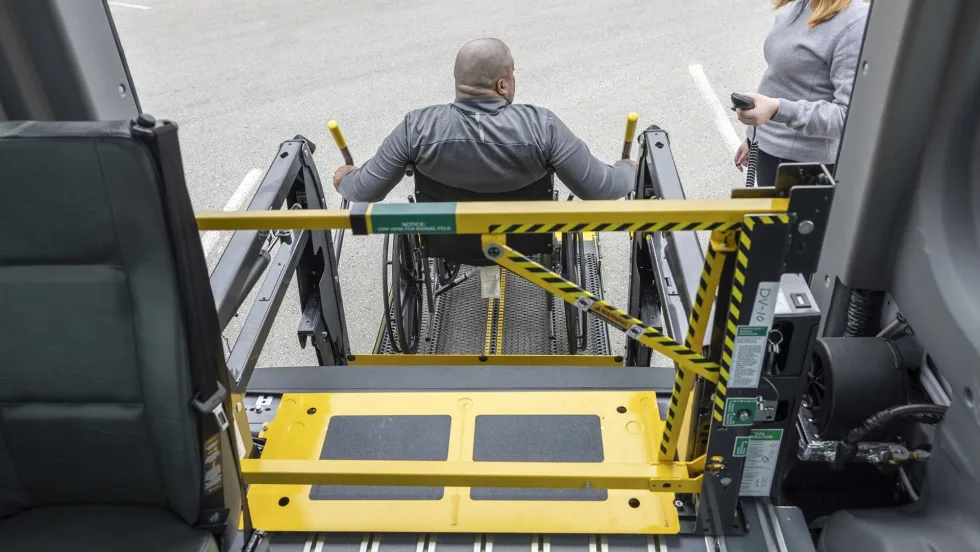
BraunAbility Introduces New Safety Barrier for Wheelchair Lifts
LiftSentinel is designed to add another layer of protection during wheelchair loading and unloading and can be retrofitted to many existing commercial lift installations.
Read More →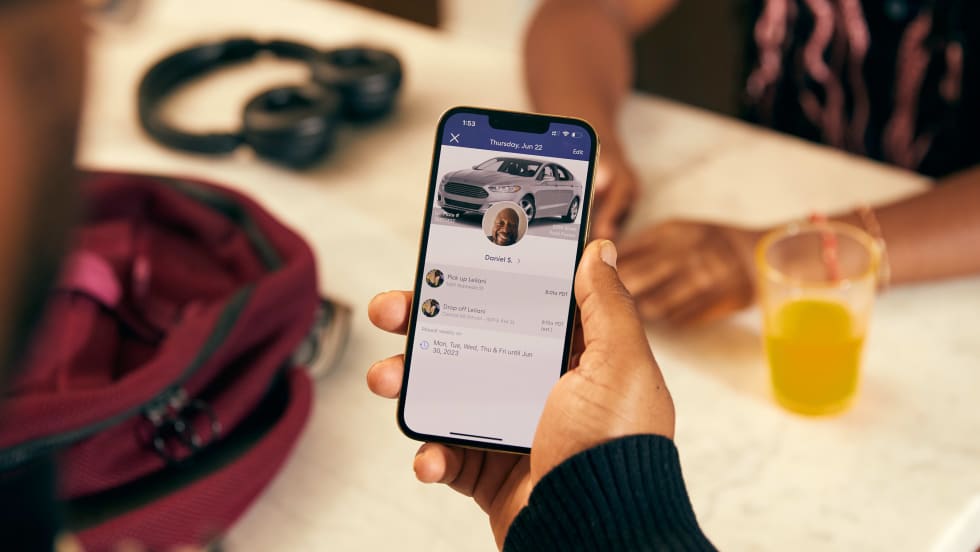
HopSkipDrive Launches New Safety, Driver Consistency Features for 2026-27 School Year
The company’s free ride recording, live ride tracking, and consistent driver assignments aim to improve safety and continuity for diverse student transportation needs.
Read More →
The Most Common Wheelchair Securement Mistakes on School Buses (and How to Fix Them)
Small missteps in wheelchair securement can have serious consequences. Here are 32 tips from experts to reduce risk and increase student safety on the bus.
Read More →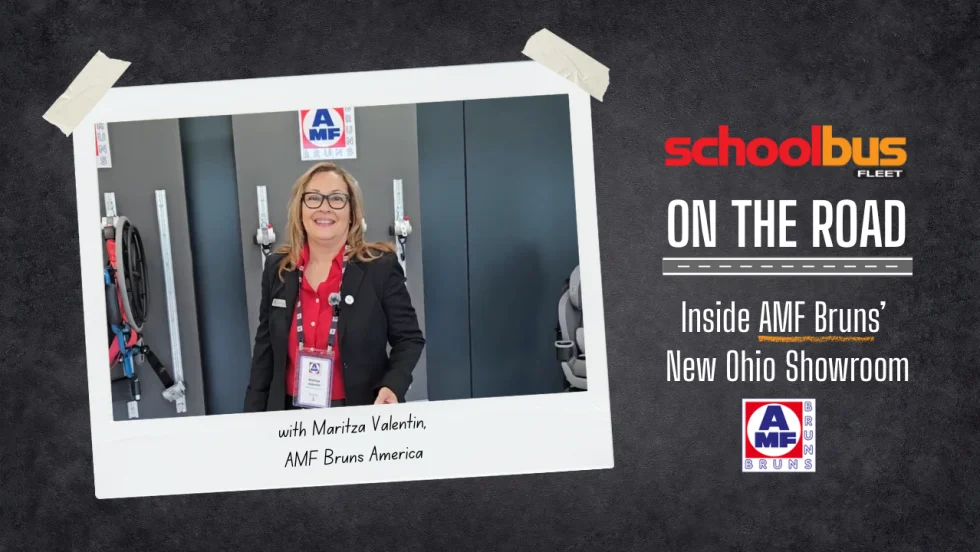
Inside AMF Bruns’ New Showroom: School Bus Securement Solutions Explained
Go inside AMF Bruns America’s new Ohio showroom with Maritza Valentin to see its FutureSafe technology, driver training tools, securement systems, and seating innovations.
Read More →
What AMF Bruns’ New Facility Means for Customers [Video]
Inside AMF Bruns’ new Stow, Ohio, operations: See how expanded space and innovation will enhance customer support and operations.
Read More →
AMF Bruns Expands in Ohio, Investing in Growth and Community
With expanded production space, local investment, and a growing workforce, AMF Bruns is scaling its U.S. presence. Here’s an exclusive first look inside the new Stow, Ohio, HQ.
Read More →
Inside AMF Bruns of America’s New Ohio Manufacturing Facility [Photos]
Take a behind-the-scenes look at AMF Bruns of America’s new 41,000-square-foot Stow, Ohio, headquarters, featuring advanced manufacturing, expanded space, and future-ready mobility solutions.
Read More →
First Student Boosts Student Support in Wichita & Texas
First Student and Wichita Public Schools are using behavioral support strategies to improve student ride experiences, while a separate initiative expands access to after-school programs through a bus donation.
Read More →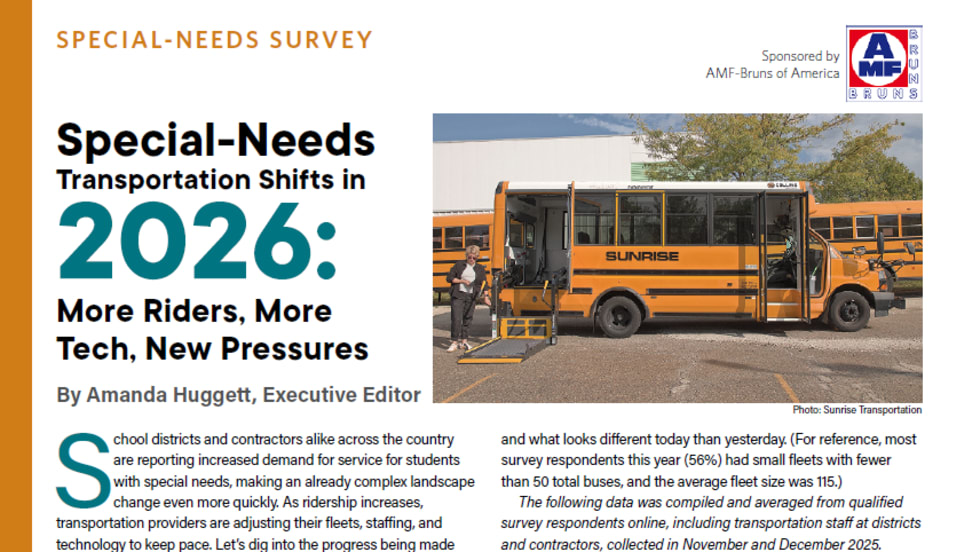
2026 Special-Needs Transportation Survey
What’s changing in special-needs transportation? This year, student transportation operators report a rising need, easing driver shortages, growing tech adoption, and evolving challenges. Sponsored by AMF Bruns of America.
Read More →
The Lived-Experience Gap in Mobility Tech: An Expert Take on Safe Student Transportation
Brianna Pauwee, a product application specialist at AMF Bruns of America and a wheelchair user, drops in to The Route to share practical securement and training insights, plus the story behind the new “Beyond Mobility” podcast. The Route is sponsored by IC Bus.
Read More →