




Q&A: Invasive Procedures May Be Beyond Drivers' Scope
Navigating a school bus full of students is challenging enough as it is. Are drivers being subjected to undue stress when they are required to also perform some types of invasive actions on medically complex passengers? Should some procedures be left to a nurse or the IEP team?

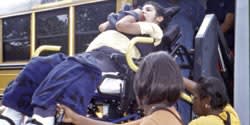
At the Transporting Students with Disabilities & Preschoolers conference this past March in Phoenix, Jean Zimmerman, supervisor of occupational/physical therapy at the School District of Palm Beach County (Fla.), spoke on complex medical procedures that school bus drivers are being asked to perform on special-needs students.
Zimmerman raised this question: In life-threatening situations, should bus personnel be required to tend to medically complex passengers, or should this be reserved for qualified medical professionals such as nurses?
SBF Associate Editor Albert Neal spoke with Zimmerman about the complexities involved in tending to these passengers.
SBF: What constitutes an invasive procedure?
JEAN ZIMMERMAN: It is a medical or surgical procedure that requires the skin to be cut open and/or an object is inserted into the body. A medication is injected or inserted into the body.
When would a person have to execute such a procedure?
All of these procedures depend on the child. In some cases, they are performed on a routine basis. Other times, the procedures are needed on an emergency basis.
What are drivers being asked to perform?
More and more students are requiring the use of an EpiPen when they are having an allergic reaction. For students with uncontrolled seizure activity, one procedure is the Vagus Nerve Stimulator and the administration of the medication Diastat. Also, students with a tracheostomy may need suctioning.
Would you say that some of these procedures are outside drivers’ scope?
I think it’s beyond the driver to be expected to drive the bus plus look at the medical reactions and conditions of children. The driver’s scope is to drive the bus. If there’s a need for a medical procedure, that’s where the IEP team comes in.
The IEP should include members of the transportation staff, medical professionals, the occupational and physical therapist, school staff and parents. These people should be familiar with the environment of the bus that the child would be riding. The IEP team should determine if a nurse is necessary on the bus or if someone else can be taught and safely do the medical procedure.
Is the interior of a bus conducive to executing these procedures?
Sometimes you have to put a child who is having a seizure down on the floor to be able to give them Diastat, which is a rectal suppository. If you only have a 12-inch aisle in a school bus, then you really can’t do that. There’s not enough space. Plus, you have the hard floors and the anchor points of the bus seats, on which children could hit and injure their heads. Then there’s the whole privacy issue.
The IEP team should consult the child’s physical about the possibility of another medication being given until the paramedics arrive. If this is not at all possible, the bus environment will need to be modified, including removal of seats, placing a mat on the floor and planning for privacy.
Can drivers be properly trained to perform invasive procedures?
It’s different with each procedure. Intense training is not always enough, because sometimes you need to have additional medical knowledge. It’s not only knowing how to do the procedure — it’s knowing when to do it and what, if any, side effects to expect. Some procedures include the use of medications that could slow down respiration. Therefore, the driver would also need CPR training.
[PAGEBREAK]
What should transportation departments do when asked to perform an invasive procedure?
First of all, transportation departments should take this opportunity to be proactive. We are transporting more and more medically complex students on our school buses. Be proactive. Form a task force in your area. Familiarize yourself with your state’s Nurse Practice Act — your state may say that only a nurse can perform certain medical procedures. Have policies and procedures in place before you need them. Have your school board attorney review your policies and procedures.
Invasive Procedures
EpiPen
Many children and adults are allergic to certain medications, food, insect bites/stings and latex. The result of exposure to one of these irritants could be anaphylaxis. This is a sudden, severe and potentially fatal systemic allergic reaction.
The EpiPen auto injector is commonly prescribed for individuals who have had prior severe allergic reactions. The EpiPen is an emergency injection of the medication epinephrine. Epinephrine constricts blood vessels, relaxes smooth muscle in the lungs to improve breathing and stimulates the heartbeat. The effects of epinephrine usually last 10 to 20 minutes, so it is still necessary to call 911 or proceed to the hospital. The child may need additional medication, cardiac or respiratory care.
Vagus Nerve Stimulation
Vagus Nerve Stimulation is a relatively new treatment for uncontrolled seizure. It is a type of treatment in which short bursts of electrical energy are transmitted into the brain via the vagus nerve, which is a large nerve in the neck. The energy comes from a small generator, which is surgically implanted under the skin, usually on the chest. Leads are threaded under the skin and attached to the vagus nerve in this same procedure. The physician programs the device to deliver small electrical stimulation bursts every few minutes. This electrical stimulation travels via the vagus nerve to influence parts of the brain that control seizures.
The second way Vagus Nerve Stimulation is delivered is when a patient, a family member or a caregiver senses a seizure coming on and passes the magnet over the area in the chest where the generator is implanted to activate an extra, on-demand stimulation. In addition to preventing the seizures, the stimulation can also decrease the severity of the seizure and decrease the recovery time after the seizure. School bus drivers are often asked to use this magnet.
Diastat
Many children experience seizure activity that can be controlled by oral medications. However, some children have seizure clusters, which are episodes of multiple seizures that are different from the child’s usual pattern. These seizures may progress to status epilepticus (a state of non-stop seizures), which carries an increased risk of brain damage or even death. Diastat (diazepam rectal gel) is an acute at-home treatment for patients two years and older who are on stable anti-epileptic medications and experience bouts of increased seizure activity. The literature states that both medical and non-medical care providers can easily administer Diastat in the school setting.
However, there is also a warning in the literature that reads that Diastat “should only be administered by caregivers which in the opinion of the prescribing physician, i) can distinguish between a cluster seizure and the patient’s ordinary seizure patterns ii) have been instructed on how to administer Diastat and judge competent to do so, iii) understand explicitly which seizures may or may not be treated and iv) are able to monitor clinical response and recognize when the response mandates professional medical evaluation.”
More Special Needs Transportation

What More Than Two Million Rides Reveal About School Transit
More than two million student trips. Nearly 28million miles. Here's what that data reveals about the future of alternative student transportation.
Read More →
HopSkipDrive Launches New Safety, Driver Consistency Features for 2026-27 School Year
The company’s free ride recording, live ride tracking, and consistent driver assignments aim to improve safety and continuity for diverse student transportation needs.
Read More →
The Most Common Wheelchair Securement Mistakes on School Buses (and How to Fix Them)
Small missteps in wheelchair securement can have serious consequences. Here are 32 tips from experts to reduce risk and increase student safety on the bus.
Read More →
Inside AMF Bruns’ New Showroom: School Bus Securement Solutions Explained
Go inside AMF Bruns America’s new Ohio showroom with Maritza Valentin to see its FutureSafe technology, driver training tools, securement systems, and seating innovations.
Read More →
What AMF Bruns’ New Facility Means for Customers [Video]
Inside AMF Bruns’ new Stow, Ohio, operations: See how expanded space and innovation will enhance customer support and operations.
Read More →
2026 State of Student Transportation Report
Student transportation teams are being asked to do more with less, facing driver shortages, rising costs, and increasing safety expectations. This report uncovers how fleets are adapting, where technology is making the biggest impact, and why student ridership tracking is emerging as a top priority. Download the report to explore the key trends shaping 2026 and what they mean for your operation.
Read More →
AMF Bruns Expands in Ohio, Investing in Growth and Community
With expanded production space, local investment, and a growing workforce, AMF Bruns is scaling its U.S. presence. Here’s an exclusive first look inside the new Stow, Ohio, HQ.
Read More →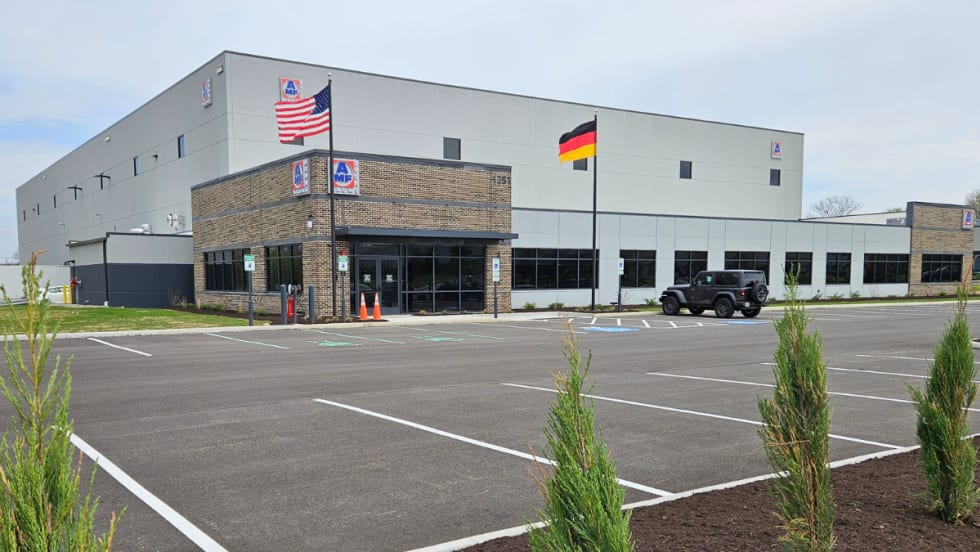
Inside AMF Bruns of America’s New Ohio Manufacturing Facility [Photos]
Take a behind-the-scenes look at AMF Bruns of America’s new 41,000-square-foot Stow, Ohio, headquarters, featuring advanced manufacturing, expanded space, and future-ready mobility solutions.
Read More →
First Student Boosts Student Support in Wichita & Texas
First Student and Wichita Public Schools are using behavioral support strategies to improve student ride experiences, while a separate initiative expands access to after-school programs through a bus donation.
Read More →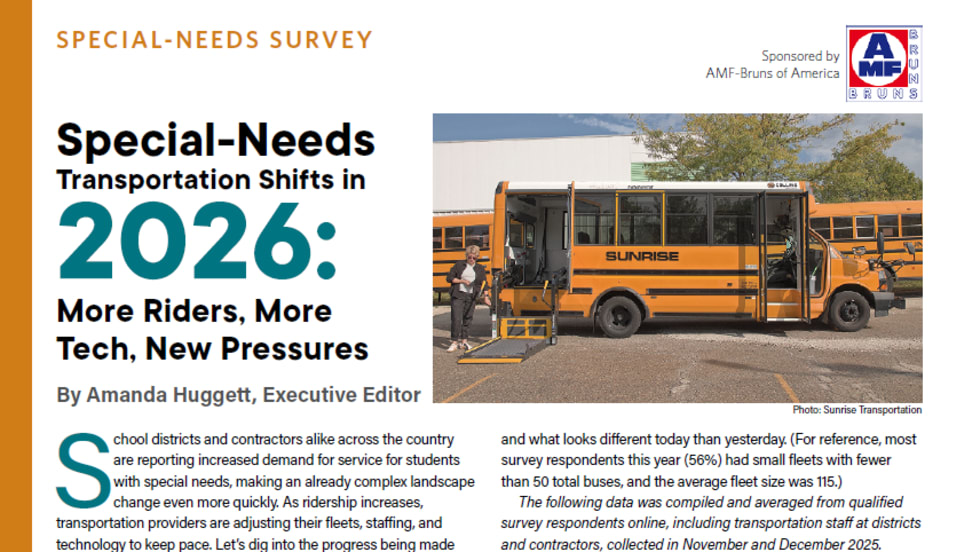
2026 Special-Needs Transportation Survey
What’s changing in special-needs transportation? This year, student transportation operators report a rising need, easing driver shortages, growing tech adoption, and evolving challenges. Sponsored by AMF Bruns of America.
Read More →