




85K stop-arm violations in national count
This year’s survey conducted by the National Association of State Directors of Pupil Transportation Services finds 85,279 violations in a single day, which is down from last year’s count of 88,025. More than half (57.5%) of the vehicles passed the buses from the front, while 42.5% of those counted passed the buses from the rear.
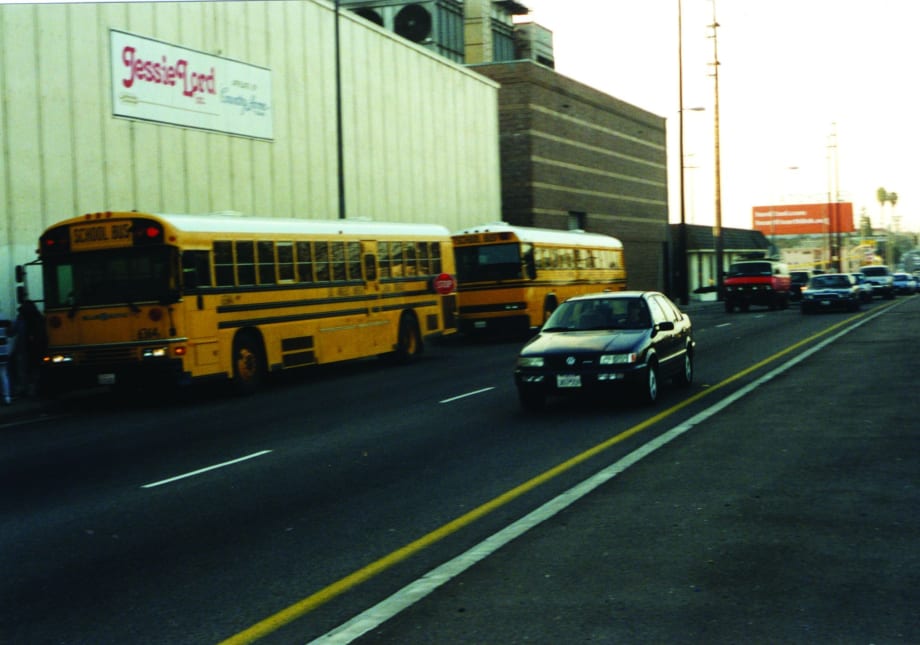
This year's school bus stop-arm running survey found 85,279 violations in a single day, which represents more than 15 million violations in a 180-day school year.
The third national stop-arm running survey found 85,279 violations in a single day, which is down from last year’s count of 88,025.
The survey was conducted by the National Association of State Directors of Pupil Transportation Services (NASDPTS), and the association released the results on Tuesday.
More than 108,000 school bus drivers in 29 states participated in the survey. Officials said that throughout a 180-day school year, the sample results of 85,279 violations in a single day point to over 15 million violations by private motorists.
“There are nearly a half million school buses on the road each day in the United States,” said Max Christensen, president of NASDPTS. “This survey captured only a fraction of the violations that bus drivers and other professionals in school transportation and law enforcement know are occurring each and every day. Students are far safer in school buses than other ways of getting to school, but when they are outside the bus in the danger zone, they are quite vulnerable. Any driver who passes a stopped school bus illegally is gambling with a child’s life.”
NASDPTS first coordinated the annual stop-arm count in 2011, in which 76,685 illegal passes were documented during the one-day survey. In 2012, that number increased to 88,025.
For this year, 45.4% of the illegal passes were observed in the morning, and 50.1% were observed in the afternoon (or p.m.) runs. Mid-day violations accounted for 4.5% of those reported by bus drivers.
More than half (57.5%) of the vehicles passed the buses from the front, while 42.5% of those counted passed the buses from the rear. These findings are fairly consistent with last year’s figures.
Almost 98% of the vehicles passed the buses on the left side, and just over 2% passed the buses on the right; these figures are also fairly consistent with the 2012 findings.
Based on these data and recent student fatalities, some states are adopting more stringent safety countermeasures, such as improved motorist education, increased fines and more law enforcement, including the use of photo evidence from cameras mounted on the sides of school buses, NASDPTS said.
Most recently, North Carolina Gov. Pat McCrory signed into law legislation that enacts stiffer penalties for motorists who illegally pass stopped school buses.
And in South Carolina, a campaign to raise awareness on the dangers of stop-arm running has gained some legislative support.
Officials for NASDPTS emphasized that there is no single solution to this problem. A comprehensive approach, involving education, enforcement and engineering, will be necessary to reduce illegal passing and achieve the goal of zero fatalities to students during transportation to and from school.
As a result of a resolution adopted by NASDPTS and its members at its most recent conference, the association will also be researching state laws and rules to provide a nationwide inventory of required procedures for when motorists must stop for school buses. The research will document the consequences in different states for violations, whether video evidence is admissible in each state, and, what other types of evidence are necessary for law enforcement agencies to issue citations for illegally passing a stopped school bus.
To view this year’s stop-arm violation report in full, click here.
More Safety
School's Back. Here's What Happened to Traffic, Speeding & Distraction
What happens to traffic when school resumes? New data analysis examines changes in distracted driving, congestion, and speeding around schools.
Read More →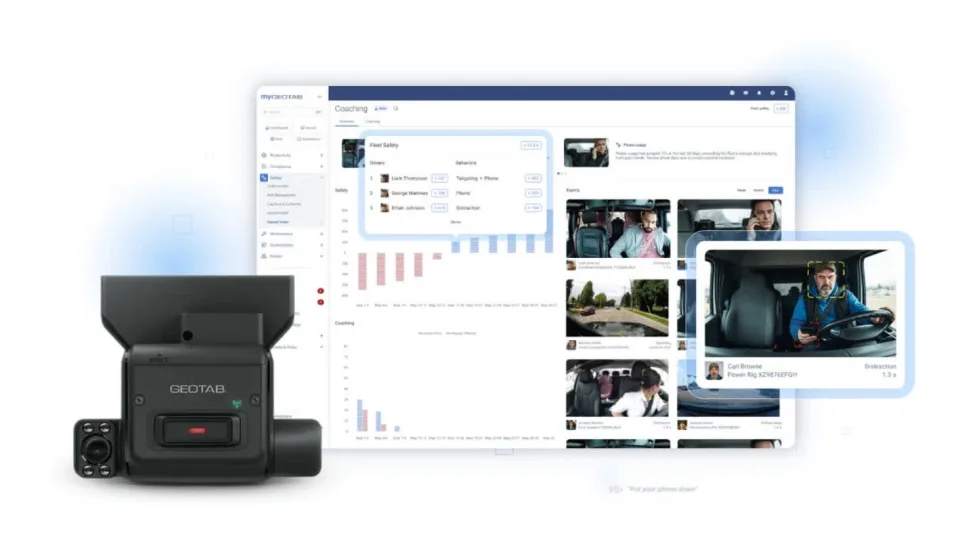
Geotab Expands Fleet Safety Tools With Video Coaching, Risk Insights
New safety and video capabilities aim to help fleet managers assess risk, support drivers, and take targeted action through video coaching, red-light violation detection, and more.
Read More →
How to Build a Better School Bus Driver Training Program
Is it time to strengthen your driver training? Here’s how to pick the right talent and improve recruitment, retention, and safety. This video is brought to you by IC Bus.
Read More →

Recent School Bus Accidents Leave 2 Dead, 2 Injured
Four school bus crashes in Florida, Illinois, and Georgia highlight risks in transportation lots, at bus stops, and during student loading and unloading.
Read More →
When Every Second Matters, Clarity Keeps Routes Moving
From routine delays to urgent incidents, strong communication practices help drivers, dispatchers, schools, and families respond with confidence.
Read More →
What Happens When a School Bus Catches Fire — and What Can Help
School bus fires are rare but can be devastating. Learn how advances in fire suppression and asset protection help fleets detect fires earlier, reduce damage, and improve safety.
Read More →
Geotab Launches Tool to Help Fleets Investigate Road Incidents
Geotab Investigations combines telematics data, video, documents, and other evidence to help fleets reconstruct incidents, resolve claims, and determine what happened.
Read More →
Texas Sixth Grader Wins 2026 National School Bus Safety Poster Contest
Sai Darshana Yekolu of Moseley Middle School in Prosper, Texas, was named the newest winner for her artwork, bringing the theme of “Safe Rides, Everyday Heroes” to life.
Read More →
Doing More With Less: How Transportation Directors Can Prioritize Safety Amid Budget Uncertainty
With diesel prices soaring and nearly one-third of transportation directors expecting budget cuts, maintaining student safety has never been more challenging. Download this guide to learn how leading districts are prioritizing risk, funding critical safety technology, and building stronger budget cases with data.
Read More →
Walton County Schools Adds Gatekeeper Stop-Arm Enforcement System
The Florida district will deploy Gatekeeper’s updated Student Protector technology, which now incorporates AI to improve video evidence.
Read More →