




Bus stop near-miss makes for powerful lesson
Footage of an illegal passer nearly striking a West Virginia boy leaving his school bus is being used for public education and driver training. And the state has a variety of other initiatives that are helping to crack down on stop-arm running.

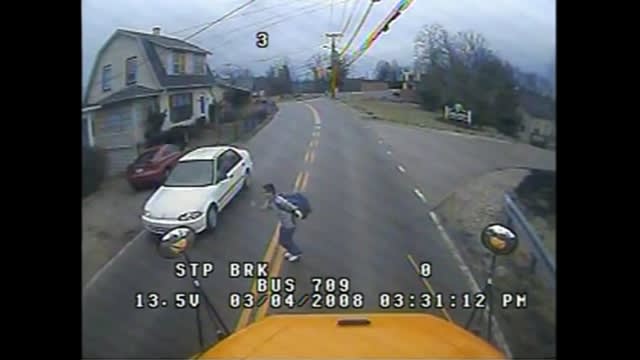
Footage of an illegal passer nearly striking a West Virginia boy is being used for public education and driver training.
CHARLESTON, W.Va. — The footage is harrowing.
A school bus stops and activates its safety equipment, but two oncoming cars quickly — and illegally — pass by. As the bus driver honks the horn, a boy who has gotten off of the bus begins to walk in front.
As he crosses the street, the middle school student looks back up at the bus and waves his arms playfully, unaware of the danger headed his way.
A white car is coming toward the bus with no apparent intention of stopping. Just as the boy walks across the double yellow lines on the road, he looks up to see the white car passing right in front of him — a mere step away from tragedy.
The incident, which took place in Kanawha County, W.Va., in 2008, was captured by a video recorder facing forward through the windshield of the bus (to watch the video, go here).
While the identities of the drivers who passed the bus couldn't be determined, an investigation found that the cars had come from the nearby high school. The principal issued memos on the matter, explaining that anyone found to be a culprit in the incident would be prosecuted.
"There were no citations issued, but some remediation was done," state pupil transportation director Ben Shew told SBF.
After getting permission from the boy's mother — who was standing on her front porch watching when the near-miss took place — and from Kanawha County Schools, Shew's office at the West Virginia Department of Education has distributed copies of the incident footage for driver training and to educate the public about the dangers of stop-arm running.
"A lot of states have seen it and used it for training," Shew said. "We get requests for it quite often, and we use it a lot here."
West Virginia has taken on a variety of other initiatives that are helping to crack down on the illegal passing of school buses — which happens roughly 600 times a day in the state, based on the results of a one-day survey in 2011.
Earlier this year, a stop-arm task force was assembled from various agencies and organizations in West Virginia, including the Department of Transportation, police, magistrates, prosecutors and the media.
The task force came up with a plan to combat the problem of illegal passing. A key element of the plan is stepping up enforcement.
In late April and early May, state patrollers rode along on and followed school buses to catch stop-arm runners in the act. The press and their cameras also joined the operation. "We had about 24 ride-alongs, and about six violators were ticketed," Shew said. "And they got their pictures on TV as well."
But it wasn't just the public whose eyes were opened about the school bus safety issue. "We heard over and over from the troopers on the buses that they had no idea that the school bus got such little respect," Shew said.
Another initiative from the task force is an advertising campaign. A poster was developed to display as a pump topper (an ad posted above fuel pumps) across the state.
"When you see red lights flash, be smart, be patient and stop," the poster declares below a photo of smiling students.
The West Virginia Governor's Highway Safety Program provided funding for the campaign.
"It's part of our education and communication plan to get the word out," Shew said of the posters. "We already have orders for over 3,000 of them."
Since the near-miss incident, the use of school bus exterior cameras has increased in West Virginia. Kanawha County has installed a system with two exterior cameras to capture more evidence on stop-arm scofflaws.
Shew estimated that about 10% of the state's school systems are using the exterior cameras. Also, he noted that the state has been putting together a bid for a three-camera system that would be installed on new school buses.
A key goal in opting for these systems is to be able to identify the drivers of illegally passing cars, which state law requires for a citation to be issued. But the license number is often enough to get the ball rolling.
"If we can't identify the driver but have the license plate," Shew explains, "the police have ways of finding out who the driver was on that particular day."
More Safety
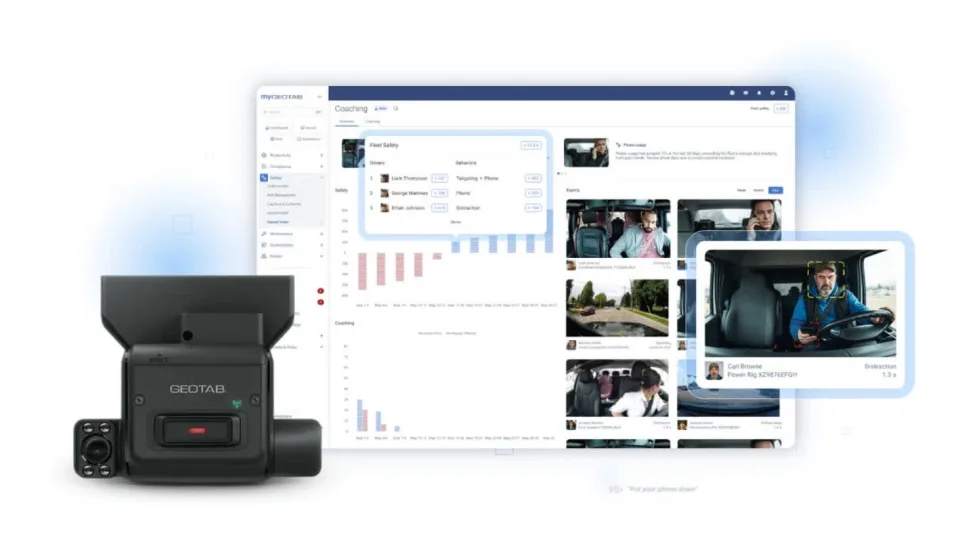
Geotab Expands Fleet Safety Tools With Video Coaching, Risk Insights
New safety and video capabilities aim to help fleet managers assess risk, support drivers, and take targeted action through video coaching, red-light violation detection, and more.
Read More →
How to Build a Better School Bus Driver Training Program
Is it time to strengthen your driver training? Here’s how to pick the right talent and improve recruitment, retention, and safety. This video is brought to you by IC Bus.
Read More →
Recent School Bus Accidents Leave 2 Dead, 2 Injured
Four school bus crashes in Florida, Illinois, and Georgia highlight risks in transportation lots, at bus stops, and during student loading and unloading.
Read More →

When Every Second Matters, Clarity Keeps Routes Moving
From routine delays to urgent incidents, strong communication practices help drivers, dispatchers, schools, and families respond with confidence.
Read More →
What Happens When a School Bus Catches Fire — and What Can Help
School bus fires are rare but can be devastating. Learn how advances in fire suppression and asset protection help fleets detect fires earlier, reduce damage, and improve safety.
Read More →
Geotab Launches Tool to Help Fleets Investigate Road Incidents
Geotab Investigations combines telematics data, video, documents, and other evidence to help fleets reconstruct incidents, resolve claims, and determine what happened.
Read More →
Texas Sixth Grader Wins 2026 National School Bus Safety Poster Contest
Sai Darshana Yekolu of Moseley Middle School in Prosper, Texas, was named the newest winner for her artwork, bringing the theme of “Safe Rides, Everyday Heroes” to life.
Read More →
Doing More With Less: How Transportation Directors Can Prioritize Safety Amid Budget Uncertainty
With diesel prices soaring and nearly one-third of transportation directors expecting budget cuts, maintaining student safety has never been more challenging. Download this guide to learn how leading districts are prioritizing risk, funding critical safety technology, and building stronger budget cases with data.
Read More →
Walton County Schools Adds Gatekeeper Stop-Arm Enforcement System
The Florida district will deploy Gatekeeper’s updated Student Protector technology, which now incorporates AI to improve video evidence.
Read More →
How To Build a More Secure School Bus Yard During and After Hours
As thefts and overnight security threats continue, school transportation leaders are combining stronger operational practices with AI-enabled surveillance to better protect buses, facilities, and staff.
Read More →