




Bus driver's medical episode prompts safety training
Albuquerque (N.M.) Public Schools’ student transportation services division is instructing its bus passengers on how to stop a bus if the driver is unable to. The training is implemented after Rhonda Carlsen boards her daughters’ bus to stop it because the driver is incapacitated. She discusses the incident with SBF, and Roger Garcia, co-interim director for the transportation division, discusses the components of the training.
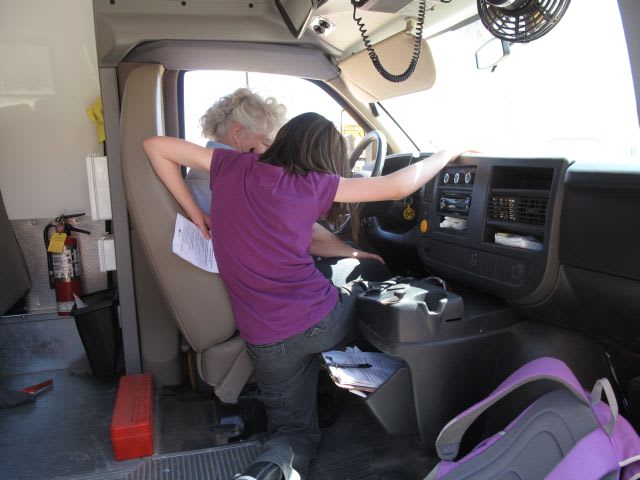
Albuquerque Public Schools’ bus passengers are receiving training from their drivers on how to stop the vehicle if the driver becomes incapacitated.
ALBUQUERQUE, N.M. — Albuquerque Public Schools (APS) is providing safety training for bus passengers following a driver’s medical emergency earlier this year.
On the morning of Feb. 13, Rhonda Carlsen was waiting with her daughters at a bus stop in their neighborhood. They saw the bus approaching at what Carlsen estimates was 10 to 15 mph, but it passed the stop and continued on.
“We were really puzzled that he didn’t stop,” Carlsen told SBF this month. “My daughter started running up the sidewalk to grab the driver’s attention, and she got a glimpse that something was wrong, and she yelled that to me and I started running after the bus.”
As Carlsen ran after the bus, she was unsuccessful in trying to open the door to get on board, so she said she yelled at the children inside to open it.
“A student stood up, and I pointed to where he could open the door. He did, and I was able to get inside and stop the bus by putting my foot on the brake and turning off the ignition,” she explained, adding that she stopped the bus before it hit anything.
A neighbor who had been standing at the bus stop with Carlsen called 911 when she was running after the bus. No students were injured, and Carlsen later learned that the bus driver recovered from his episode. (Doctors have not been able to determine what happened to him.)
When her daughters returned home from school that afternoon, she asked them if they would have known how to stop their bus and open the door if the driver became incapacitated. They told her “no,” and Carlsen said other children in their neighborhood indicated the same.
Feeling that some changes needed to be made, Carlsen met with APS’ student transportation services division officials, including Co-Interim Director Roger Garcia, later that week. What resulted was the development of a training program for students on emergency procedures for stopping a school bus.
The training includes how to use the emergency/parking brake, how to turn off the bus’ engine, how to use a two-way radio and how to open a manual door and an air-operated door.
Garcia told SBF in an interview that all of the bus drivers from the 16 companies that APS contracts with received training at the student transportation services office on the instruction that they would be providing to students.
“The training is being provided to all 40,000 students that ride our school buses, and each driver will identify at least five students who they feel are responsible enough to take on these tasks should they become incapacitated — these students will receive additional hands-on training,” he explained. “We’ve told drivers that they have to have at least one student who’s able to do these things at each stop on their route.”
The students who are assigned to perform these tasks must sit in the front of the bus opposite the driver.
The training for students began the week of April 16, and Garcia hopes to have it completed before the end of the school year. It will then be performed twice a year in conjunction with students’ emergency evacuation drill instruction.
“We’re stressing [to students] that the first thing that’s important to do is stop the bus by pulling the emergency brake — everything else is secondary,” he said. “We’re also stressing to not evacuate the bus unless it’s absolutely necessary, because if you leave the bus and you’re on a roadway, it could be dangerous.”
APS also created a brochure that covers all topics in the training with accompanying images of the components and where they are located. It will be distributed to the students that the district transports. Inside the 407 buses that the contractors run for the district, a laminated information sheet with the emergency steps will be posted above the driver’s area.
Garcia noted that while an event like what occurred on Feb. 13 may not happen again, it showed a flaw in APS’ service to students that needed to be addressed, and the student transportation services department felt it was important to take steps to avoid a future tragedy. He also said that Carlsen has been very supportive of the department’s efforts to implement the training.
For her part, Carlsen speaks highly of the transportation department personnel and the district as a whole.
“I’ve gotten such a great response from the school district and the transportation department,” she said. “I’m really hoping that on a national level, people can learn from a situation like this and realize that they can implement this in their safety training for students.”
More Safety

How to Build a Better School Bus Driver Training Program
Is it time to strengthen your driver training? Here’s how to pick the right talent and improve recruitment, retention, and safety. This video is brought to you by IC Bus.
Read More →
Recent School Bus Accidents Leave 2 Dead, 2 Injured
Four school bus crashes in Florida, Illinois, and Georgia highlight risks in transportation lots, at bus stops, and during student loading and unloading.
Read More →
When Every Second Matters, Clarity Keeps Routes Moving
From routine delays to urgent incidents, strong communication practices help drivers, dispatchers, schools, and families respond with confidence.
Read More →

What Happens When a School Bus Catches Fire — and What Can Help
School bus fires are rare but can be devastating. Learn how advances in fire suppression and asset protection help fleets detect fires earlier, reduce damage, and improve safety.
Read More →
Geotab Launches Tool to Help Fleets Investigate Road Incidents
Geotab Investigations combines telematics data, video, documents, and other evidence to help fleets reconstruct incidents, resolve claims, and determine what happened.
Read More →
Texas Sixth Grader Wins 2026 National School Bus Safety Poster Contest
Sai Darshana Yekolu of Moseley Middle School in Prosper, Texas, was named the newest winner for her artwork, bringing the theme of “Safe Rides, Everyday Heroes” to life.
Read More →
Doing More With Less: How Transportation Directors Can Prioritize Safety Amid Budget Uncertainty
With diesel prices soaring and nearly one-third of transportation directors expecting budget cuts, maintaining student safety has never been more challenging. Download this guide to learn how leading districts are prioritizing risk, funding critical safety technology, and building stronger budget cases with data.
Read More →
Walton County Schools Adds Gatekeeper Stop-Arm Enforcement System
The Florida district will deploy Gatekeeper’s updated Student Protector technology, which now incorporates AI to improve video evidence.
Read More →
How To Build a More Secure School Bus Yard During and After Hours
As thefts and overnight security threats continue, school transportation leaders are combining stronger operational practices with AI-enabled surveillance to better protect buses, facilities, and staff.
Read More →
FMCSA Names New Chief Safety Officer: What School Bus Operators Should Know
Steve Dowling is set to lead the federal agency's efforts to advance commercial motor vehicle safety and reduce crashes, fatalities, and injuries on the nation's roadways.
Read More →