



Ontario consortium launches bus stop safety program
The Northwestern Ontario Student Services Consortium implements the “Be Seen, Be Safe” initiative after reading in SBF about its implementation at a school district in Texas. As General Manager Judi Green tells SBF, children in junior kindergarten through third grade wear flashing amber lights to improve their visibility when getting to bus stops in times of limited daylight and extreme weather.
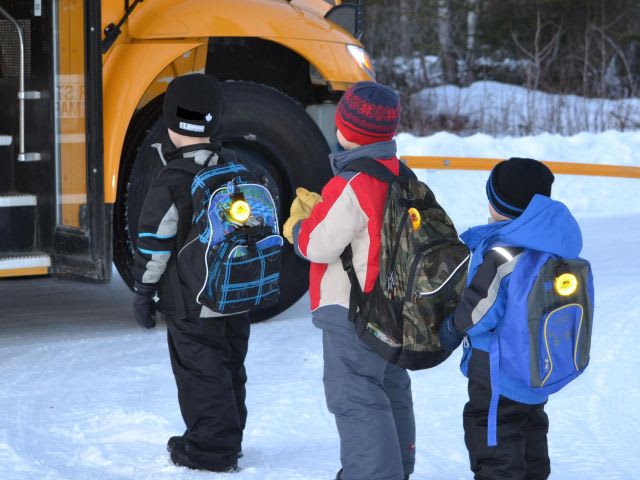
Children in junior kindergarten through third grade transported by the Northwestern Ontario Student Services Consortium wear these flashing amber lights to improve their visibility when getting to bus stops.
DRYDEN, Ontario — School bus passengers served by the Northwestern Ontario Student Services Consortium (NWOSSC) are having a safer journey to and from school under an initiative that increases students’ visibility as they get to their bus stops.
The consortium launched the “Be Seen, Be Safe” program earlier this year. Approximately 4,000 flashing, reflective amber lights, which can be clipped to students’ backpacks or jackets, were distributed to children in junior kindergarten (4 years old) through third grade.
Judi Green, general manager for NWOSSC, got the idea for the program after reading about its implementation at Eanes Independent School District (ISD) in Austin, Texas, in SBF’s October 2011 issue (pg. 6). (The editorial was also featured on our Along for the Ride blog here.)
Green reached out to Eanes ISD Transportation Director Timothy Wysong, who provided her with information that helped to launch the program in Ontario.
“We believed our kids could benefit from this program, especially knowing that we have even less daylight [than Texas], compounded with our extreme weather conditions,” Green told SBF in an interview. “To our knowledge, the Be Seen, Be Safe program is one of the first of its kind in Ontario, and possibly Canada.”
NWOSSC’s area of service is about 55,000 square miles, and it is located just north of Minnesota — Green described it as being in the “heart of Canada.” She said that the operation runs school buses in snowy, frigid conditions with limited visibility from early November to mid-April.
“It’s not uncommon for the Celsius and Fahrenheit scales to meet at 40 below zero, with wind chill factors also 30 to 55 below zero,” Green said, adding that daylight is limited during this time. “Our shortest day is in December, where it would get light around 8:20 a.m. and be dark at about 3:50 p.m.”
Moreover, most of the students who attend the four school districts that the consortium serves live in remote and rural areas, and due to the geographic conditions, Green said it’s difficult to provide door-to-door service.
“In a lot of cases, students have to get to their bus stops, and I would say that less than 10 percent of our road infrastructure is paved. It’s either a hard top or gravel,” she explained.
Green’s idea to implement the Be Seen, Be Safe program within NWOSSC’s area of service was well received. Each of the four school district boards contributed money toward the purchase of the amber lights, and the school bus companies that the consortium has contracts with each contributed $800 for the lights. The cost of the program for the consortium was around $3,000 to $4,000.
“It truly was a shared initiative, and we hope that on that basis, we’ll be able to afford it again,” Green said, noting that this year’s program is still in place, and another launch is planned for the fall in preparation for the next school year.
She added that response to the program from parents and teachers has been positive, and there is potential for implementation at other consortia in the province.
“I sent information to my colleagues, and about eight of them contacted us for information on where they could buy the lights. They want to launch a program for their consortia as well,” Green said.
More Safety
America Has a School Bus Passing Problem — and Distraction Is Making It Worse
Illegal school bus passing remains a major safety threat as distracted driving rises. This op-ed explores why awareness, enforcement, and stop-arm cameras matter more than ever.
Read More →
School Bus Laws to Watch: New York Delays EV Mandate
Plus, federal lawmakers seek new funding for school bus safety as states weigh stop-arm enforcement, disability protections, and education spending.
Read More →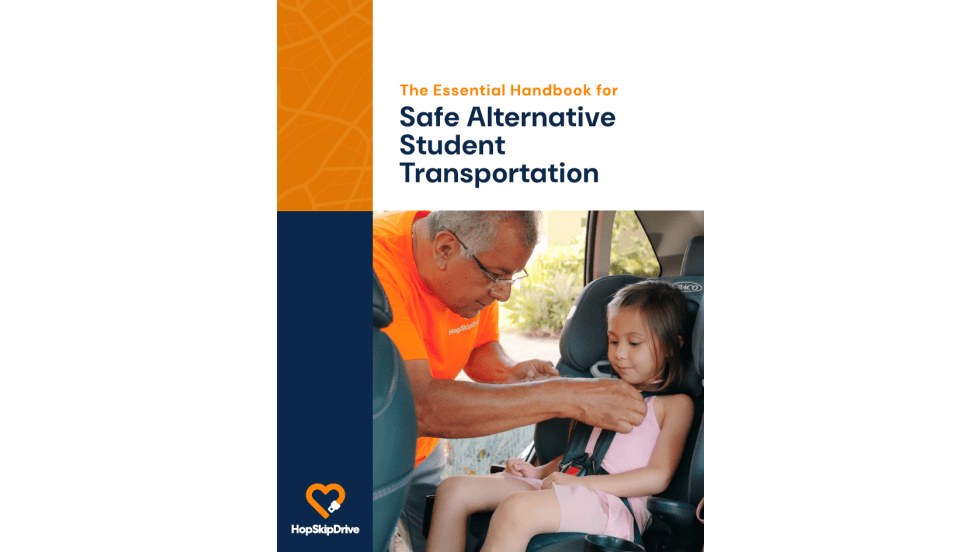
The Essential Handbook for Safe Alternative Student Transportation
Your district's "exception riders" — students with IEPs, those experiencing homelessness, foster care youth — deserve more than a middleman solution. This handbook breaks down exactly what to look for in a supplemental transportation partner: from driver vetting and regulatory compliance to proactive safety technology. Because getting a ride isn't the same as getting a safe one.
Read More →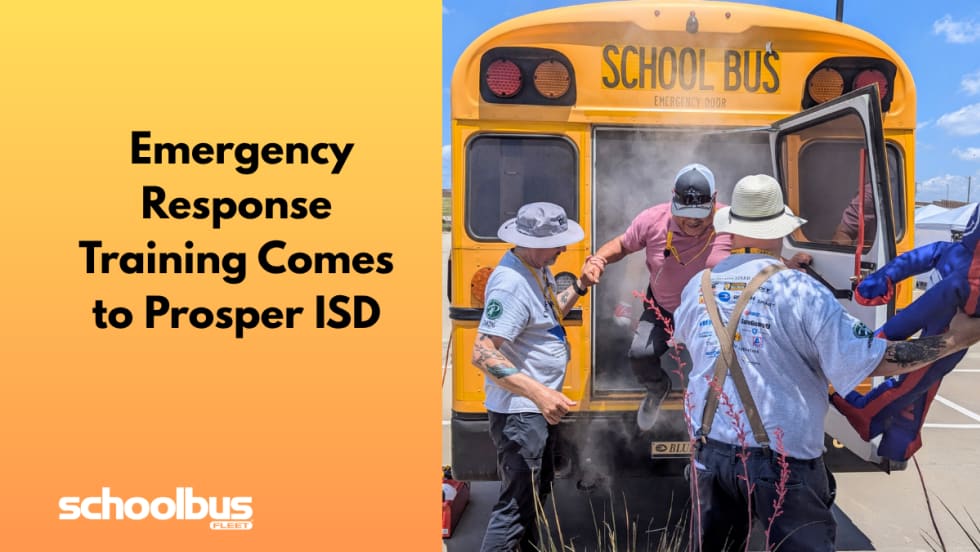
Operation STEER Brings Emergency Response Training to North Texas
Prosper ISD hosted the third annual training for transportation professionals across 67 districts to learn how to respond to emergencies, such as rollovers and evacuations, and proper use of safety equipment.
Read More →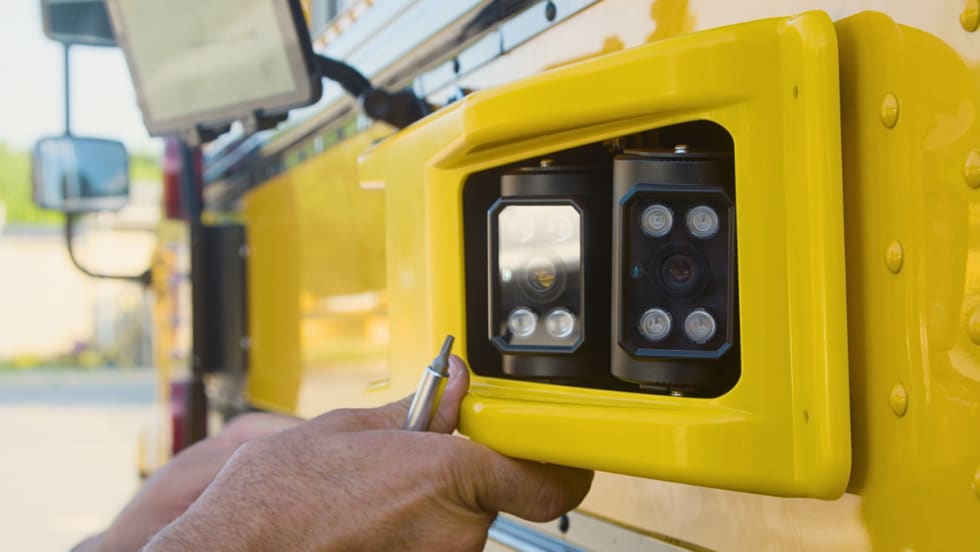
Florida District Relaunches BusPatrol School Bus Camera Program With New Safeguards
After being suspended over due process concerns, Miami-Dade schools and law enforcement are restarting the AI-powered stop-arm camera program with new oversight.
Read More →
School Bus Laws To Watch: Seat Belt Bills, Funding Fights & EV Changes
From national bills on seat belts and driver oversight to driver awareness campaigns referencing “Finn’s Rule” and ongoing transportation funding debates in Alaska, here’s the latest in school bus legislation across the U.S.
Read More →
9-Year-Old Boy Killed by School Bus at Busy Brooklyn Intersection
A Williamsburg community is mourning after a child was fatally struck by a private yeshiva bus, prompting calls for urgent safety improvements at the high-traffic crossing.
Read More →
Does Reliable School Transportation Boost Attendance? EverDriven’s Data Says Yes
The new data shows 99.99% incident-free trips and strong on-time performance, reinforcing how dependable transportation, especially for vulnerable student populations, can help districts combat chronic absenteeism.
Read More →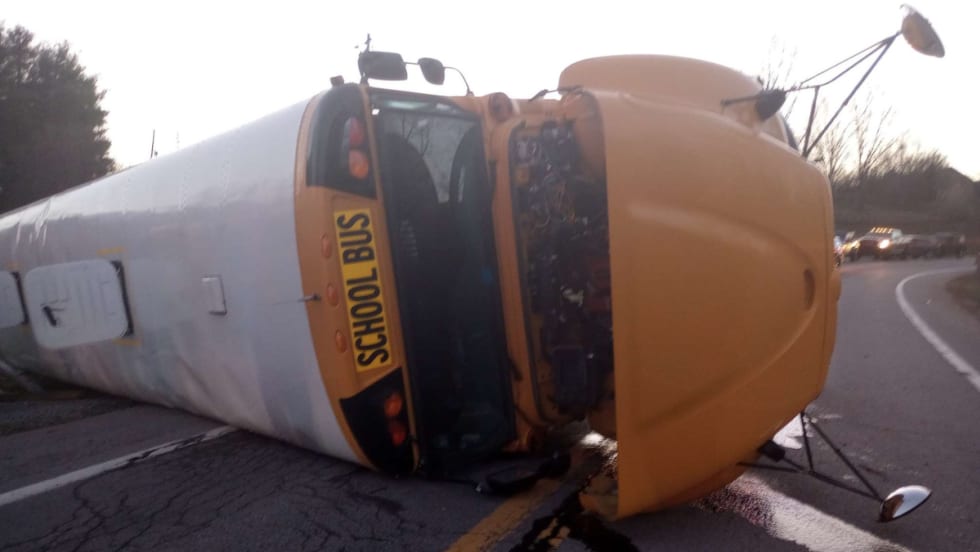
NTSB Calls for Alcohol Impairment Systems, Seat Belts After W.V. Crash Investigation
The federal agency's report asks NHTSA to require all new school buses to be equipped with vehicle-integrated alcohol detection systems and passenger lap-shoulder belts.
Read More →
2026 State of Student Transportation Report
Student transportation teams are being asked to do more with less, facing driver shortages, rising costs, and increasing safety expectations. This report uncovers how fleets are adapting, where technology is making the biggest impact, and why student ridership tracking is emerging as a top priority. Download the report to explore the key trends shaping 2026 and what they mean for your operation.
Read More →