




Md. districts aim to capture stop-arm violations
Several counties in the state are turning to camera systems to combat the persistent problem of illegal school bus passing. Directors of transportation discuss their efforts with SBF.

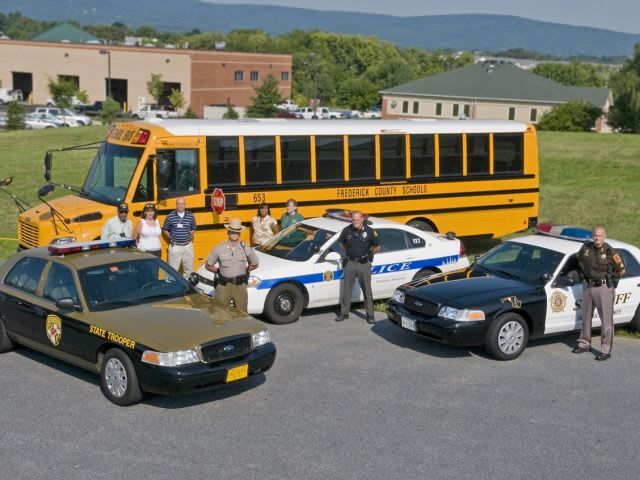
Frederick County (Md.) adopted a stop-arm camera ordinance in February. This photo, of officials from the school district's transportation department and three law enforcement agencies, was taken when legislation was initiated.
Several counties in Maryland are turning to stop-arm cameras to combat the persistent problem of illegal school bus passing.
Veronica Lowe, director of transportation for Frederick County Public Schools, told SBF that her district has seen an increase in the number of bus-passing incidents in recent years. The tally for the 2010-11 school year was 457, although that only includes the violations that the district's bus drivers were able to record. In the previous school year, the total was 231.
"We recognized that it was a huge problem that was affecting the safety of our students," Lowe said.
She and other leaders from Frederick County took the issue to the state General Assembly. They worked on state legislation, enacted in spring 2011, that enables Maryland counties to pass their own bills to allow the use of stop-arm cameras in citing motorists who illegally drive by stopped school buses.
"We saw that other states had bills named after a child who was killed" in a stop-arm running incident, Lowe noted. "We wanted to get legislation out there before that happened."
Frederick County adopted a stop-arm camera ordinance on Feb. 7. Previously, a stop-arm runner could only be cited if a police officer witnessed the violation.
The school district is now in the process of selecting a vendor to provide stop-arm cameras. A few systems will be tested in a side-by-side comparison.
Lowe said that the interested vendors had been asked "to be very specific about the cameras, the clarity, what they could capture, what speed, how many lanes over. And for the processing of that data — how it would transfer over to the sheriff and what they would have to do as far as review and approving."
Frederick County Public Schools expects to equip about 40 of its 433 buses with the camera systems. It is expected that the vendor will supply the cameras at no cost based on a split of the fines that are collected, with the county getting the rest (the proportions haven't been determined yet). The fines can be up to $250.
"We wanted to make it clear that this isn't a moneymaker for us," Lowe noted. "Our hope is that the violations will go down to zero."
Toward that end, the district will also launch a campaign to educate the public about stop-arm violations.
Elsewhere in Maryland, Washington County’s commissioners on Tuesday approved an enabling ordinance for stop-arm cameras. It will go to a public hearing within the next few weeks.
“Our sheriff’s department is really spearheading this, which is wonderful,” said Barbara Scotto, supervisor of transportation for Washington County Public Schools.
Also, grant money has been used to have officers on overtime crack down on stop-arm running. And Scotto said that Washington County is working to educate the public on when and why they need to stop for school buses.
Montgomery County passed its own legislation on Tuesday.
Todd Watkins, director of transportation for Montgomery County Public Schools, said that his district is waiting for approval of funding for the camera systems. He expects to initially outfit about 25 buses with the units, at a cost of around $5,000 to $8,000 each.
The district already has some basic stop-arm cameras, but Watkins said that the new systems will be much more sophisticated, with motion detection and automatic sending of the data to law enforcement.
The new systems will be moved from bus to bus as needed, targeting areas with higher rates of illegal bus passing.
Before the new cameras go into service, the district will do a media blitz to get the word out. Watkins said he expects the cameras to be a significant deterrent.
"Our county has a lot of intersection cameras and speed cameras. You can see people changing their behavior around those," he said. "All we're looking to do is change behavior in the area of school buses."
In Charles County, the school district and the sheriff's department have been working together to develop a school bus stop-arm camera program.
"We are currently running a pilot with two vendors on six school buses," said Richard Wesolowski, director of transpor-tation for Charles County Public Schools. "[We] have not made any definitive decision yet. However, cost is going to be a big factor."
More Safety

How to Build a Better School Bus Driver Training Program
Is it time to strengthen your driver training? Here’s how to pick the right talent and improve recruitment, retention, and safety. This video is brought to you by IC Bus.
Read More →
Recent School Bus Accidents Leave 2 Dead, 2 Injured
Four school bus crashes in Florida, Illinois, and Georgia highlight risks in transportation lots, at bus stops, and during student loading and unloading.
Read More →
When Every Second Matters, Clarity Keeps Routes Moving
From routine delays to urgent incidents, strong communication practices help drivers, dispatchers, schools, and families respond with confidence.
Read More →

What Happens When a School Bus Catches Fire — and What Can Help
School bus fires are rare but can be devastating. Learn how advances in fire suppression and asset protection help fleets detect fires earlier, reduce damage, and improve safety.
Read More →
Geotab Launches Tool to Help Fleets Investigate Road Incidents
Geotab Investigations combines telematics data, video, documents, and other evidence to help fleets reconstruct incidents, resolve claims, and determine what happened.
Read More →
Texas Sixth Grader Wins 2026 National School Bus Safety Poster Contest
Sai Darshana Yekolu of Moseley Middle School in Prosper, Texas, was named the newest winner for her artwork, bringing the theme of “Safe Rides, Everyday Heroes” to life.
Read More →
Doing More With Less: How Transportation Directors Can Prioritize Safety Amid Budget Uncertainty
With diesel prices soaring and nearly one-third of transportation directors expecting budget cuts, maintaining student safety has never been more challenging. Download this guide to learn how leading districts are prioritizing risk, funding critical safety technology, and building stronger budget cases with data.
Read More →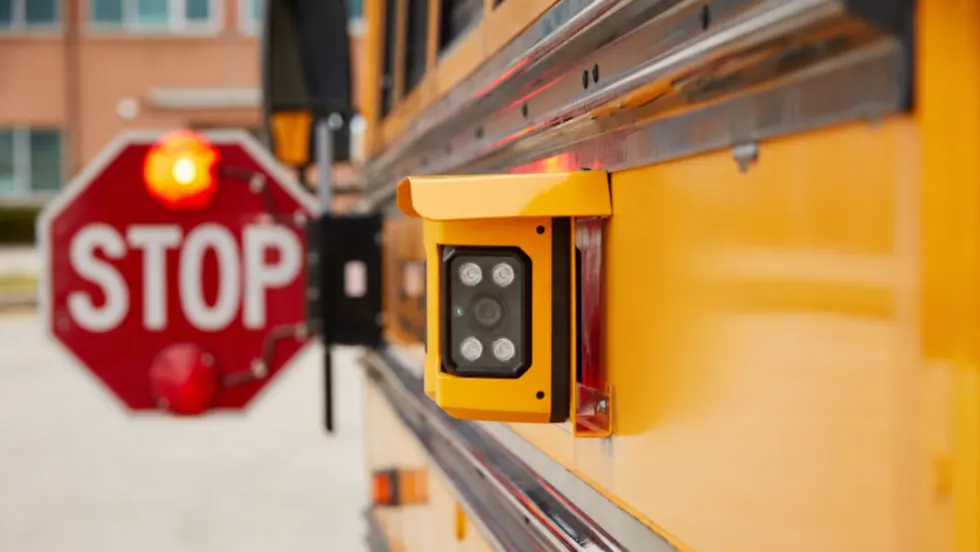
Walton County Schools Adds Gatekeeper Stop-Arm Enforcement System
The Florida district will deploy Gatekeeper’s updated Student Protector technology, which now incorporates AI to improve video evidence.
Read More →
How To Build a More Secure School Bus Yard During and After Hours
As thefts and overnight security threats continue, school transportation leaders are combining stronger operational practices with AI-enabled surveillance to better protect buses, facilities, and staff.
Read More →
FMCSA Names New Chief Safety Officer: What School Bus Operators Should Know
Steve Dowling is set to lead the federal agency's efforts to advance commercial motor vehicle safety and reduce crashes, fatalities, and injuries on the nation's roadways.
Read More →