




NTSB issues report on fatal Mo. bus crash
The agency finds problems with the brakes of the school buses involved in the accident. Among its recommendations to the state of Missouri is to require that students traveling to an activity or field trip in a school or school-chartered bus be instructed in safe riding practices. NTSB Vice Chairman Christopher Hart also addresses the agency’s call for a nationwide ban on driver use of electronics following the accident, saying it “may be scoped too narrowly.”

WASHINGTON, D.C. — The National Transportation Safety Board (NTSB) has released its full report on the fatal 2010 Gray Summit, Mo., crash that involved a pickup truck, a truck-tractor and two school buses.
As SBFreported in December, the NTSB called for a nationwide ban on driver use of nonemergency personal electronic devices while operating a motor vehicle after its meeting on the accident.
In the crash, a pickup truck ran into the back of a truck-tractor that had slowed due to an active construction zone. The pickup truck, in turn, was struck from behind by a school bus. That school bus was then hit by a second school bus that had been following. Two people died, and 38 others were injured in the incident.
The NTSB's investigation revealed that the pickup driver sent and received 11 text messages in the 11 minutes preceding the accident.
NTSB determined that the probable cause of the initial collision was distraction, likely due to a text messaging conversation being conducted by the GMC pickup driver. The agency also found that the second collision, between the lead school bus and the pickup, was the result of the bus driver's inattention to the forward roadway, and the final collision was due to the driver of the following school bus not maintaining the recommended minimum distance from the lead school bus.
Moreover, problems were found with each bus’ brakes. In terms of the lead bus, NTSB found that once power was restored to the bus and the engine was started, neither the ABS warning indicator nor the brake system warning indicator illuminated when the bus was running, and during deceleration testing. In the absence of power and with the engine off, the brakes functioned with manual hydraulic force only.
In addition, the brake lines that ran from the master cylinder to the hydraulic ABS unit appeared to be corroded and leaking, while corrosion was present on a few areas of other brake lines. When the brake pedal on the lead bus was depressed, the movement of the pedal was soft and spongy, and a brake fluid leak was observed in the brake lines running from the master cylinder to the ABS unit. Upon further examination, it was found that one of the bus’ brake lines had a 0.06- by 0.03-inch hole.
In regard to the second school bus, NTSB found that the company that owned the bus had fabricated a spring assembly to help return the brake pushrod from a braking actuation to its non-braking position in an attempt to turn off the service brake application indicator light on the dash. Inspection of the brake lines from the master cylinder to the wheels revealed corrosion in some locations.
The bus was equipped with an ABS ECU, which recorded ABS configuration and diagnostic-related data. Upon examining the data, eight inactive diagnostic fault codes and one active fault code were discovered — this resulted in frequent error signals from the left rear wheel speed sensor. Also, the ABS was not functioning at the bus’ right rear tire.
In addition to the buses' brake problems, NTSB found upon touring the bus company’s facilities that there did not appear to be any set maintenance schedule for the buses or any established method of retaining maintenance records. Neither the owner nor the mechanic had any formal training in the service or maintenance of passenger or heavy-duty vehicles.
NTSB made several recommendations following its investigation of the crash, including that the National Highway Traffic Safety Administration (NHTSA) modify FMVSS 217 to require that all emergency exits on school buses be easily opened and remain open during an emergency evacuation.
The agency also made specific recommendations to the state of Missouri, addressed to the governor. Among them are to revise bus evacuation regulations to require that students traveling to an activity or field trip in a school bus or school-chartered bus be instructed in safe riding practices, and on the location and operation of emergency exits prior to starting the trip.
NTSB also made recommendations to the Missouri Department of Elementary and Secondary Education, CTIA — The Wireless Association and the Consumer Electronics Association, the National Association of State Directors of Pupil Transportation Services, the National Association for Pupil Transportation and the National School Transportation Association, and it reiterated previously issued recommendations.
For example, the agency recommended that NHTSA determine whether equipping commercial vehicles with collision warning systems with active braking and electronic stability control systems will reduce commercial vehicle accidents. If the technology is determined to be effective in this purpose, NTSB would like NHTSA to require its use on commercial vehicles.
The report also includes statements from several NTSB members. Vice Chairman Christopher Hart said that he agrees with most of the findings and the recommendations, as well as the probable cause of the crash, but he has a “concern about how [the NTSB] addressed the issue of driver distraction,” and he added that the recommendation to ban the nonemergency use of portable electronic devices for all drivers “may be scoped too narrowly.”
“Drivers can be distracted just as much by installed electronic devices as by portable electronic devices, so our limitation to portable devices does not fully respond to the problem,” Hart said. “Moreover, portable electronic devices that are designed to support the driving task can be just as distracting as those that are not. Consequently, I believe we should follow up on a suggestion that was mentioned in our Sunshine Meeting for this accident, which is to convene a forum that would look more broadly at the issue of distraction of drivers by electronic devices, both portable and installed.”
Hart suggested that a forum that considers the viewpoints of a variety of experts, as well as the viewpoints of manufacturers, commercial vehicle operators and drivers, could provide a “solid” foundation for the agency to make additional recommendations that more fully and directly focus on the target of driver distraction “without creating unintended consequences, and without resulting in undue or unnecessary burdens.”
To read the report, click here.
More Safety

HopSkipDrive Reports Progress on Safety Advisory Council
More than a year after forming the council, independent safety experts have helped shape new rider-safety features and policy progress, with a new goal to address rider behavior.
Read More →
What the 2026 National School Bus Safety Month Resolution Means for Student Transportation
The bipartisan resolution highlights illegal school bus passing, student safety during loading and unloading, and the need for driver training and public education.
Read More →
School Bus Stop-Arm Violations Decline 53% Across Verra Mobility Programs
Verra Mobility shares how school bus stop-arm cameras and school zone safety programs are changing driver behavior, reducing violations, and protecting students.
Read More →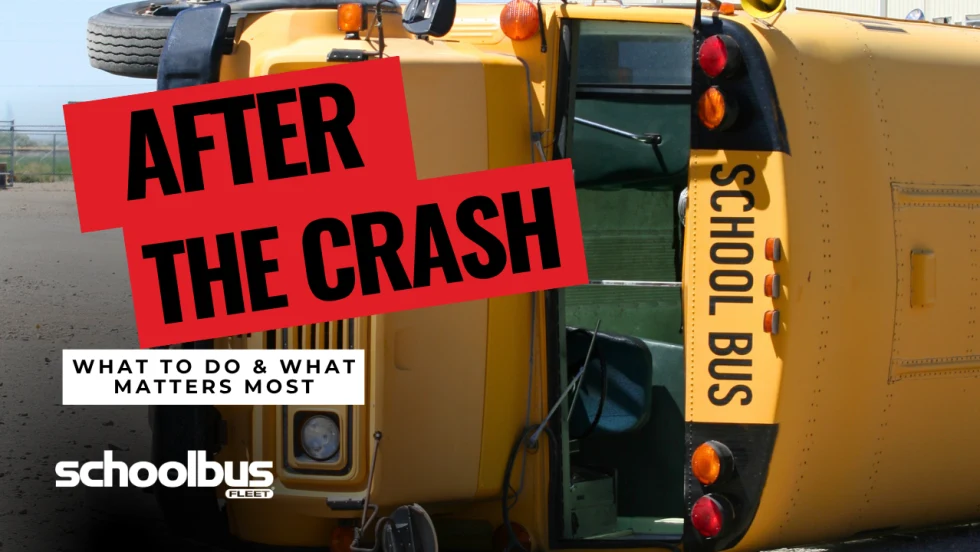
Most Bus Crashes Aren’t Your Fault. Here’s How to Prove It.
A guide for what to do in between a school bus crash and a claim: what to preserve, who to notify, and how to keep the facts available when they matter.
Read More →
National School Bus Safety Week 2026: Tips, Toolkits & Resources to Keep Students Safe
School bus safety takes more than awareness. Explore expert tips, enforcement strategies, and free resources to help protect students on every ride.
Read More →
2 Killed, Dozens Injured in Florida School Bus Crash
A multi-vehicle collision caused a Polk County school bus carrying 37 students to overturn on its way to Winter Haven High School.
Read More →
Illegal School Bus Passing Drops 24% in New York Districts
With fewer than 5% of citations involving repeat offenders, Westchester County officials said enforcement, education, and community partnerships are helping change driver behavior.
Read More →
School's Back. Here's What Happened to Traffic, Speeding & Distraction
What happens to traffic when school resumes? New data analysis examines changes in distracted driving, congestion, and speeding around schools.
Read More →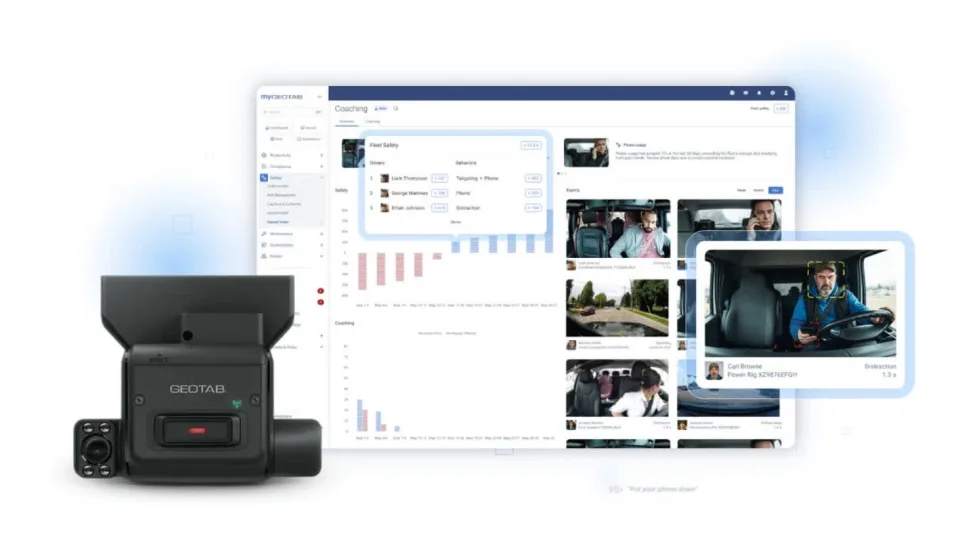
Geotab Expands Fleet Safety Tools With Video Coaching, Risk Insights
New safety and video capabilities aim to help fleet managers assess risk, support drivers, and take targeted action through video coaching, red-light violation detection, and more.
Read More →
How to Build a Better School Bus Driver Training Program
Is it time to strengthen your driver training? Here’s how to pick the right talent and improve recruitment, retention, and safety. This video is brought to you by IC Bus.
Read More →