




Why school bus crashes are on the decline in Ohio
State director Pete Japikse says that better training and management practices have led to a steady decrease — about 25 percent over the past 11 years — in the number of school bus accidents in Ohio. He discusses the state's safety efforts in an interview with SBF.

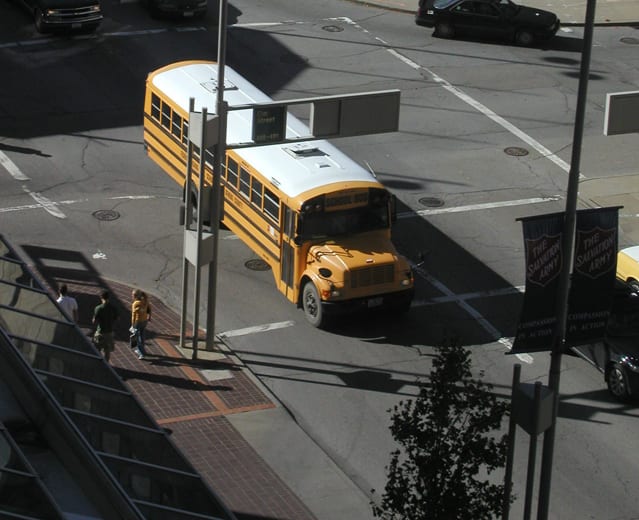
In Ohio, the annual school bus crash rate has dropped about 25 percent over the past 11 years. Pictured is a bus on the streets of Cincinnati.
COLUMBUS, Ohio — A recent report from the Ohio State Highway Patrol shows that in 2010, there were 1,579 crashes in the state that directly involved a school bus.
State pupil transportation director Pete Japikse told SBF in an interview that his agency does not evaluate the patrol's reported data for accuracy, but does monitor it on a regular basis. What is clear is that the annual school bus crash rate has been steadily decreasing over the past 11 years — from more than 2,100 accidents in 2000 to 1,579 in 2010. That's a drop of about 25 percent.
Japikse said that the decline can be attributed to better training and management practices. For example, recertification was added to Ohio's school bus driver training program. So in addition to training new drivers, veteran drivers come back through the state program and are re-evaluated every six years.
Japikse noted that his office is also now encouraging school districts to do their own re-evaluations of their drivers every year.
Another factor Japikse cited is that "districts are doing a better job at monitoring driving skills and training drivers in areas where there is more risk. And we use accident data to analyze the risks."
For the proportion of the accidents in which the school bus driver is determined to be at fault (41 percent of the school bus accidents last year, Japikse said), the most common types — be they backing, moving mistakes, etc. — are identified.
For school bus driver training this summer, the state focused on depth perception and vehicle perimeter sense.
"How do you teach that? You use mirror grids and you help drivers with backing exercises and turning exercises," Japikse said.
The state director noted that very few school bus accidents are mechanical in fault, but he acknowledges the State Highway Patrol for its vigilance in bus inspections.
Ohio has about 15,000 school buses on routes. Including field trips, the state's school buses travel an estimated 200 million miles per year.
Using the state patrol's figure of 1,579 school bus crashes in 2010, the rate comes out to just 0.7895 crashes per 100,000 miles. And the majority of the crashes are minor.
"I think we're doing pretty well," Japikse said. "The bus drivers, the owners and the trainers are all focused on reducing accidents to a lower level, but we’re also realistic enough to realize that there will be some. That’s why we also train for responding to them."
More Safety

When Every Second Matters, Clarity Keeps Routes Moving
From routine delays to urgent incidents, strong communication practices help drivers, dispatchers, schools, and families respond with confidence.
Read More →
What Happens When a School Bus Catches Fire — and What Can Help
School bus fires are rare but can be devastating. Learn how advances in fire suppression and asset protection help fleets detect fires earlier, reduce damage, and improve safety.
Read More →
Geotab Launches Tool to Help Fleets Investigate Road Incidents
Geotab Investigations combines telematics data, video, documents, and other evidence to help fleets reconstruct incidents, resolve claims, and determine what happened.
Read More →

Texas Sixth Grader Wins 2026 National School Bus Safety Poster Contest
Sai Darshana Yekolu of Moseley Middle School in Prosper, Texas, was named the newest winner for her artwork, bringing the theme of “Safe Rides, Everyday Heroes” to life.
Read More →
Doing More With Less: How Transportation Directors Can Prioritize Safety Amid Budget Uncertainty
With diesel prices soaring and nearly one-third of transportation directors expecting budget cuts, maintaining student safety has never been more challenging. Download this guide to learn how leading districts are prioritizing risk, funding critical safety technology, and building stronger budget cases with data.
Read More →
Walton County Schools Adds Gatekeeper Stop-Arm Enforcement System
The Florida district will deploy Gatekeeper’s updated Student Protector technology, which now incorporates AI to improve video evidence.
Read More →
How To Build a More Secure School Bus Yard During and After Hours
As thefts and overnight security threats continue, school transportation leaders are combining stronger operational practices with AI-enabled surveillance to better protect buses, facilities, and staff.
Read More →
FMCSA Names New Chief Safety Officer: What School Bus Operators Should Know
Steve Dowling is set to lead the federal agency's efforts to advance commercial motor vehicle safety and reduce crashes, fatalities, and injuries on the nation's roadways.
Read More →
New Study Finds School Zone Speed Safety Cameras Cut Speeding Violations 97%
A Florida university's research demonstrates that Verra Mobility's automated enforcement changes driver behavior and significantly improves school zone safety.
Read More →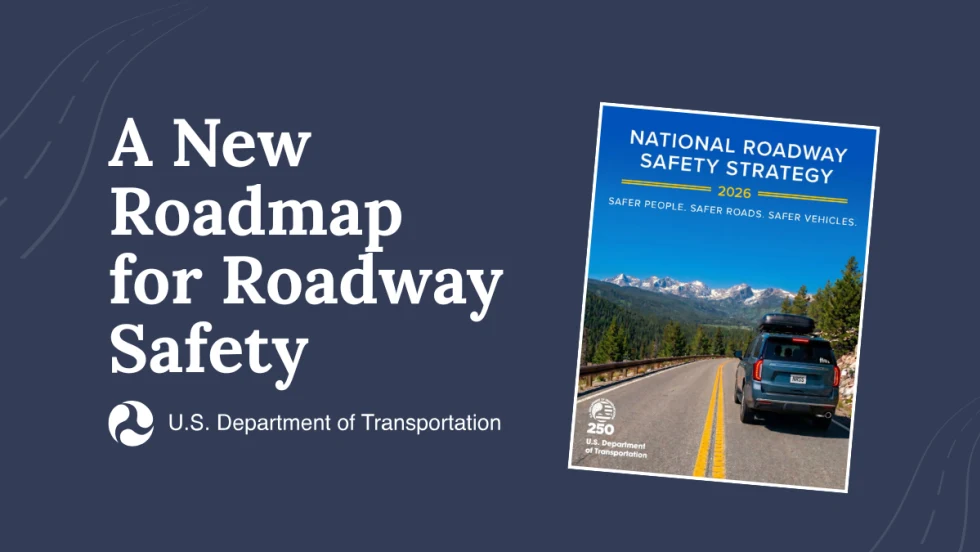
What Changed in DOT’s New National Roadway Safety Strategy?
The federal agency's new plan shifts its focus to safer people, roads and vehicles, with a new three-pronged approach instead of five. One outlined action even addresses a key industry concern around illegal school bus passing.
Read More →