




Is your school district prepared for super-fog?
Super-fog is a combination of smoke and early morning water vapor that produces zero visibility over roadways. When it impacts a Florida operation, buses are convoyed out of the terminals until they reach a clear area, and a “pre-warning” procedure is developed.
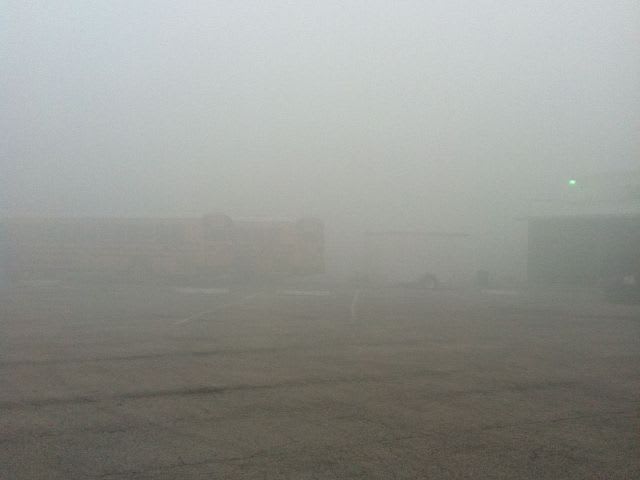
In January, super-fog rolled in over Volusia County Schools’ bus compound in DeLand, Fla., for two days, creating zero visibility for employees. They reportedly could not even see their hands in front of their faces.
Wildfires in Florida occur at all times of the year. From Jan. 1 to 29, 2012, the Florida Forest Service reported 402 wildfires in the state. Combine smoke from the wildfires and early morning water vapor and “super-fog” is created, which produces zero visibility over roadways.
On Jan. 25, in DeLand, Fla., Volusia County Schools’ student transportation services began just like any other morning. At 5 a.m., technicians began to open the garage, bus operators and attendants were proceeding with the pre-trip inspection of their school buses, and dispatch was preparing for the morning shift as the lead driver trainer prepared the morning coverage. But when 5:30 came, employees saw super-fog moving in over the parked school buses across the compound, and in a matter of minutes there was zero visibility. They said it was the most surreal experience they have seen — almost like from a movie. Confusion, questions and concerns began.
Transportation at a stand-still
Due to zero visibility, bus operators did not want to drive. They raised questions such as, “This is my commercial driver’s license, my livelihood — is the district going to be responsible if I get in an accident, ticketed or hurt someone?” And, “Can I refuse to drive without getting into trouble?” All are valid and very important questions.
The dispatcher contacted me at 6 a.m. and explained the situation with the smoke and fog. I advised the dispatcher to have the bus operators decrease their speed, proceed with caution and ensure their strobe lights were activated. Dispatch had already advised the bus operators of this, and they were still hesitant about driving. I was told, “You need to be here to understand; it’s like nothing I have ever seen.”
I assessed the situation: You have students waiting for their school bus on the side of the road, and you have buses you can’t move out of the compound due to zero visibility. But if I can just get them down the road, visibility should get better.
Responding as a team
The call was made to have the technicians from the garage convoy all buses traveling south out of the terminal together, and the lead driver trainer in another county vehicle would convoy all school buses traveling west out of the terminal together. The idea was to keep the school buses together until they could get down the road for better visibility, as the super-fog only affected certain areas. Operators and attendants had to feel their way through the compound to their school buses, as you could not even see your hand in front of your face. Once everyone was prepared to leave together, the convoy took place and I was en route to the compound.
We encountered medical conditions with our employees from the smoke. One operator with an asthmatic condition had to leave because she became ill. One attendant left the terminal after the morning shift and had to go to a hospital for a breathing treatment. We were limited on face masks to provide to our employees, but those we knew who have asthma were given a face mask for protection.
[PAGEBREAK]
Super-fog took place for two mornings due to a fire located near the compound. The second day, visibility conditions at the terminal were better; however, down the road, we encountered super-fog grounding a high school bus for two hours and preventing the elementary and middle school buses from entering the area. We were able to contact parents via telephone to inform them that the school buses were not going to be able to run in their area due to zero visibility. We also said that a list of students affected by this would be sent to the school to excuse their tardiness in case the parents took them into school, and we assured them we would be able to bring them home. Parents were very accommodating and understanding.
After-action procedures
Due to the seriousness of this event, an “after action” report was written. It was decided that a super-fog procedure would be made for the protection of our employees and students, and it would entail a “pre-warning.” The pre-warning will be a letter to parents/guardians at the beginning of each school year advising them that if we should ever encounter a super-fog condition, they will be notified by an automated telephone message to inform them if Volusia County will be delaying or canceling the morning pickup because of zero visibility in the area.
School buses are the safest means of transportation for our students. It’s the district’s responsibility to ensure they only operate on public roadways when it is safe to do so.
How would you handle a similar situation? Are you prepared for super-fog? These are realities in our business and require pre-planning. Ask yourself, “What would I do?” Plan, communicate, practice, then practice again.
Nicole Miller is the area operations manager at Volusia County Schools’ student transportation services department. She oversees 42 school bus routes, manages 72 employees and serves 13 schools.
More Safety

How to Build a Better School Bus Driver Training Program
Is it time to strengthen your driver training? Here’s how to pick the right talent and improve recruitment, retention, and safety. This video is brought to you by IC Bus.
Read More →
Recent School Bus Accidents Leave 2 Dead, 2 Injured
Four school bus crashes in Florida, Illinois, and Georgia highlight risks in transportation lots, at bus stops, and during student loading and unloading.
Read More →
When Every Second Matters, Clarity Keeps Routes Moving
From routine delays to urgent incidents, strong communication practices help drivers, dispatchers, schools, and families respond with confidence.
Read More →

What Happens When a School Bus Catches Fire — and What Can Help
School bus fires are rare but can be devastating. Learn how advances in fire suppression and asset protection help fleets detect fires earlier, reduce damage, and improve safety.
Read More →
Geotab Launches Tool to Help Fleets Investigate Road Incidents
Geotab Investigations combines telematics data, video, documents, and other evidence to help fleets reconstruct incidents, resolve claims, and determine what happened.
Read More →
Texas Sixth Grader Wins 2026 National School Bus Safety Poster Contest
Sai Darshana Yekolu of Moseley Middle School in Prosper, Texas, was named the newest winner for her artwork, bringing the theme of “Safe Rides, Everyday Heroes” to life.
Read More →
Doing More With Less: How Transportation Directors Can Prioritize Safety Amid Budget Uncertainty
With diesel prices soaring and nearly one-third of transportation directors expecting budget cuts, maintaining student safety has never been more challenging. Download this guide to learn how leading districts are prioritizing risk, funding critical safety technology, and building stronger budget cases with data.
Read More →
Walton County Schools Adds Gatekeeper Stop-Arm Enforcement System
The Florida district will deploy Gatekeeper’s updated Student Protector technology, which now incorporates AI to improve video evidence.
Read More →
How To Build a More Secure School Bus Yard During and After Hours
As thefts and overnight security threats continue, school transportation leaders are combining stronger operational practices with AI-enabled surveillance to better protect buses, facilities, and staff.
Read More →
FMCSA Names New Chief Safety Officer: What School Bus Operators Should Know
Steve Dowling is set to lead the federal agency's efforts to advance commercial motor vehicle safety and reduce crashes, fatalities, and injuries on the nation's roadways.
Read More →