



More Than Just a Radio
Digital two-way radios for the school bus industry offer messaging capabilities, increased capacity, interoperability and GPS tracking, all while remaining affordable.
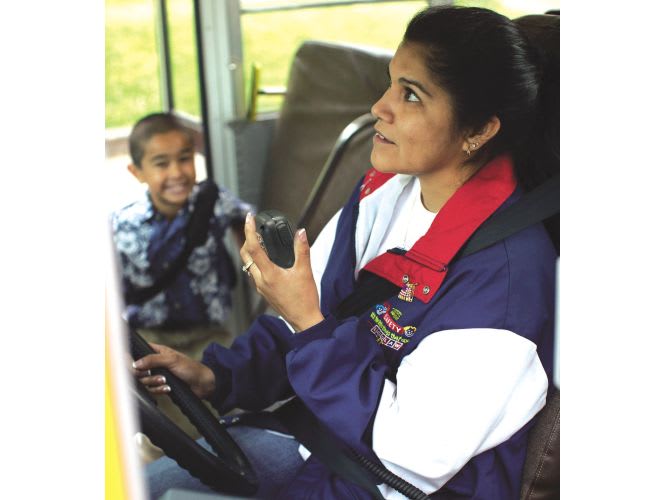
Digital two-way radios can improve school bus security through optional interoperability with first responders and GPS tracking.
Communications equipment for school buses and other mobile applications has become increasingly feature-rich and customizable. Two-way radios that operate on a digital platform offer interoperability, GPS tracking and messaging capabilities - all of which can dramatically increase school bus security.
Not only are digital two-way radios more effective than analog systems, they are cost-effective as well. Many mobile communications solutions are similar in cost to analog systems; even better, they will eliminate recurring cellular network fees while providing increased clarity and capacity.
To learn about the newest communications options for the school bus market, SBF spoke with representatives from Kenwood USA Corp., Motorola Solutions and Sprint. They say that their latest communications products have the potential to drastically improve communication between you and your school bus drivers.
Digital radios offer increased capacity, text messages
Kenwood USA Corp. and Motorola Solutions offer two-way radio equipment for mobile applications and a number of solutions that can be paired with this equipment to meet communication needs on a school bus. Both companies can combine their offerings to create custom solutions for individual operators.
For instance, Motorola's MOTOTRBO platform for digital two-way radios can allow "instant push-to-talk between buses and garages, businesses, schools and even public safety interoperability if that's something that the school district is looking for," says Brandon Williams, education solutions lead, North America, for Motorola Solutions. "Business critical environments and school buses in particular are really good applications for the MOTOTRBO platform."
Radios utilizing MOTOTRBO give bus drivers the ability to send text messages as well as communicate over two voice channels using delay-tolerate networking (DTN) technology. (DTN allows for continuous networking connectivity, even in mobile environments.)
"Over traditional [analog] channels in the past, you could only have one conversation at once," Williams explains. "We've doubled the capacity of the voice infrastructure over what school districts have had in the past."
Similarly, Kenwood offers communications equipment that operates on its digital NEXEDGE system, such as "mobile [and] portable [radios], base stations and repeaters to provide a complete communications system for bus fleets," says Alex Hinerfeld, vice president of Secom Systems Inc., an authorized representative for Kenwood USA Corp.'s communications sector.
Kenwood radios using the digital NEXEDGE system offer an abundance of features that are not available to users on analog systems. While an analog radio can only be used for basic voice communication, NEXEDGE radios offer messaging capabilities, interoperability and encryption.
"NEXEDGE system communications are encrypted so that someone with a scanner cannot listen in on communications between the driver and dispatch," Hinerfeld explains. Also, the system can be "configured to support other organizations within the school district, including security and operations."
These options can help districts to improve security on their school buses by allowing instant communication between drivers and security personnel, as well as prevent unauthorized individuals from listening to district radio communications.

GPS solutions can track buses, students
Sprint offers customizable school bus tracking GPS solutions that can help an operation to improve student safety by monitoring the locations of its buses and to create more effi cient bus routes. These solutions can be applied to a number of radio technologies.
"If [the district is] deploying PTT [push-to-talk] devices or handsets to their drivers, we have solutions that will allow the handset to be the GPS tracking device," explains Charnsin Tulyasathien, senior manager of product management for mobile applications at Sprint. "If the district would rather have an onboard device, we have a number of certified boxes that can be installed."
According to Tulyasathien, "black boxes" - embedded modems and routers - can become a "communications hub for voice-driven track/trace/diagnostics solutions." This equipment can even help to collect engine diagnostics and data on driver behavior.
Sprint's GPS tracking devices for handheld two-way radios are a relatively inexpensive way to track the course of a school bus in near real time. Typically, a black box monitoring the hand-held would be wired into the bus' electrical system to prevent any power supply disruptions to the hand-held that could interrupt GPS tracking.
In conjunction with ActSoft Inc., Sprint also offers school districts the opportunity to track individual students getting on and off the bus through the use of hardware that can be integrated into a handset. This hardware can be used to scan ID cards with bar codes or radio frequency identification (RFID) cards.
Motorola has also recently incorporated digital two-way radios and RFID technology using its MOTOTRBO platform.
[PAGEBREAK]
"We have deployed RFID readers on school buses by the door so that as kids are getting on and off the bus, the bus is automatically tracking them. It knows which students got on what bus at what GPS location and time, and can send that information back to the district over the MOTOTRBO radio," Williams says. The system's GPS capabilities can also be used to enhance bus routing with fleet management and security applications.
In addition, a driver with a radio working on the MOTOTRBO platform can e-mail or text parents a child's location from the bus.
Kenwood radios can be outfitted with a GPS receiver for real-time bus tracking. Also, Kenwood offers Fleetsync tracking software that provides digital fleet unit identification, selective calling, status messaging and text messaging for dispatch operations.
"The ability to pinpoint the exact location of the bus as needed or if the driver has an emergency on the bus" is something a district should look for when selecting communications equipment, Hinerfeld says.

Multifunctional systems lead to cost savings
Today, communications equipment for school buses is multifaceted. The same platform that allows for digital radio communications can also track your bus and students, send text messages and e-mails, provide engine diagnostics and collect data on driver behavior. These different capabilities also provide the opportunity for savvy fleet managers to cut costs.
"One of the big benefits that comes with a private system is no recurring costs - no cellular charges," Williams says. "That's certainly a big plus right there - you have voice and data capabilities without the monthly bill."
"Cost of ownership would be a primary factor in choosing an AVL (Automatic Vehicle Location) system,"Hinerfeld explains. "With budget cuts, it is nice to be able to own a system without having to worry about a monthly fee."
Kenwood's NEXEDGE radio repeaters support both analog and digital radios, so that "school bus fleets do not have to change over all at once, which means a budget-conscious and smooth migration to digital operation," Hinerfeld adds.
Motorola two-way radios that work on its MOTOTRBO platform allow for two simultaneous conversations over a single channel.
Using GPS technology, districts can collect data to create better bus routes. Improved routing can help cut down on fuel costs, and even the number of buses needed.
"There is a cost-savings aspect in understanding the routes that your buses are taking and how long it's taking them," Tulyasathien says. "In addition, bus companies can benefit from these solutions providing traditional 'fleet management' functionality and information that can lead to cost savings. Driver behavior - leading to training as applicable for safety and/or fuel consumption savings - and vehicle diagnostics - leading to improved maintenance schedules, less repairs and cost savings - are two examples."
Status messaging and AVL, Hinerfeld says, "can help control cost by identifying when a driver starts a route, where the bus is on the route and when the route is complete. Many of these features can be accomplished without the driver having to do anything but drive."
Even more important, these solutions can save a district time and resources in the event of an emergency by making it easy to locate students and drivers. Using digital radio equipment, districts have the option of instant interoperable communication with first responders.
Motorola is also planning to roll out a real-time video surveillance solution using an existing wireless access point for buses: the AP 7131.
"When we have [the AP 7131] device providing Wi-Fi to students on the bus, there are a lot of other things we could also do because we've got a high-speed connection going out to the bus," Williams explains. "One of those, for example, would be video surveillance. The school or bus driver would have the capability to basically pull up a web interface on demand ... and see live video from that school bus if there's something going on."
Bus could become a 'classroom on wheels'
Incorporating wireless capabilities into the school bus environment has become an additional focus for Motorola's education customers.
"Now that our students are using fewer textbooks and relying on digital devices and digital content [such as eBooks], it's critical that they have [Internet] access everywhere they go ... whether it's across the campus or on a school bus," Williams says.
Motorola's wireless access point for buses, AP 7131, can have an embedded 3G modem. This allows a school to extend its wireless network to its buses.
"With built-in Virtual Private Network capability, Internet access on the school bus can have the same content filtering and security features as inside the classroom - but in a mobile environment," Williams explains.
This means that on the bus, students would have access to their school's website, assignments and e-mails, but they would not have access to content that is deemed inappropriate for school use.
An added benefit of having wireless access on the bus, Williams says, is an improvement in student bus etiquette. Busy students are less likely to disrupt a driver, who is concentrated on steering the bus or communicating on the bus' two-way radio system.
"Our education customers have noticed that in addition to the academic benefits of using wireless technology on the bus, the behavioral benefits are equally as important," he adds. "We can keep [students] occupied ... so it actually improves behavior and calms the kids down. It's a side benefit that nobody really expected."
More Safety
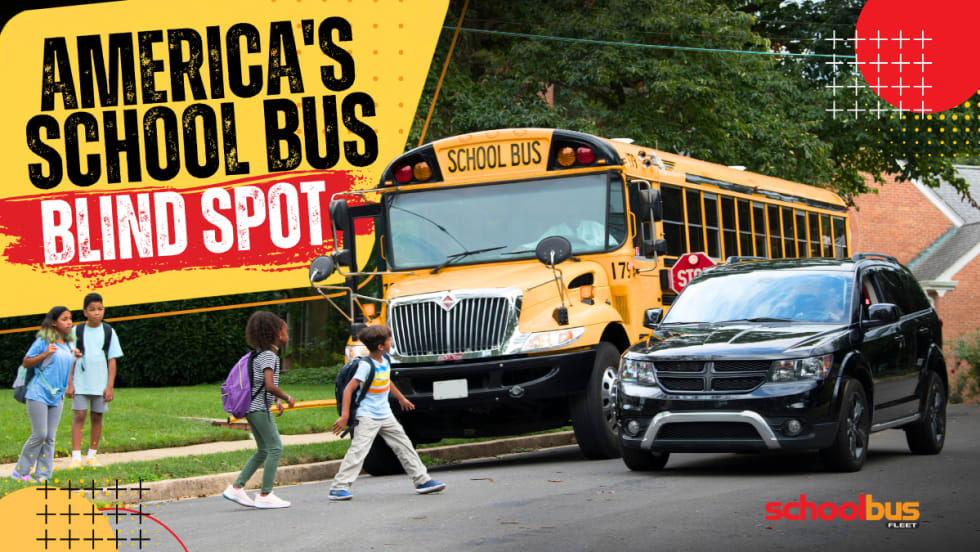
America Has a School Bus Passing Problem — and Distraction Is Making It Worse
Illegal school bus passing remains a major safety threat as distracted driving rises. This op-ed explores why awareness, enforcement, and stop-arm cameras matter more than ever.
Read More →
School Bus Laws to Watch: New York Delays EV Mandate
Plus, federal lawmakers seek new funding for school bus safety as states weigh stop-arm enforcement, disability protections, and education spending.
Read More →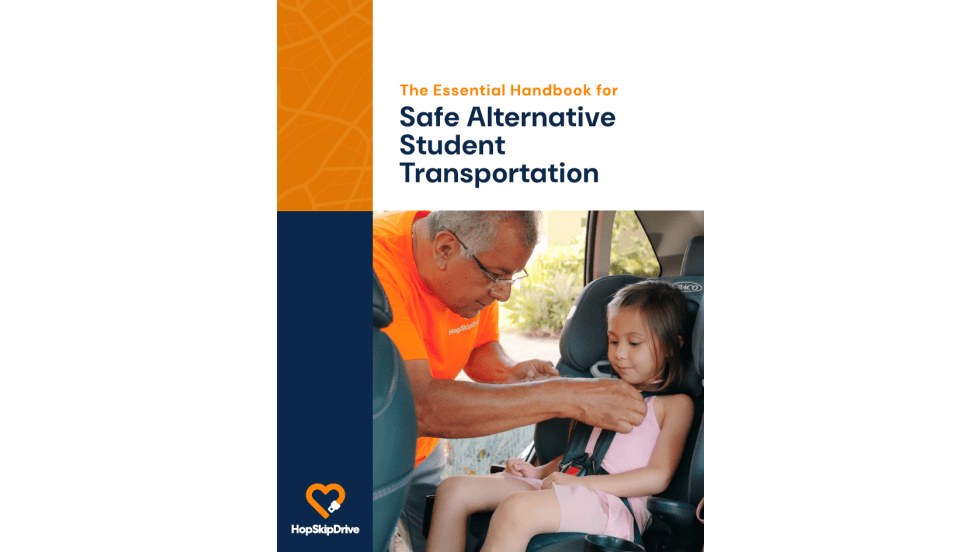
The Essential Handbook for Safe Alternative Student Transportation
Your district's "exception riders" — students with IEPs, those experiencing homelessness, foster care youth — deserve more than a middleman solution. This handbook breaks down exactly what to look for in a supplemental transportation partner: from driver vetting and regulatory compliance to proactive safety technology. Because getting a ride isn't the same as getting a safe one.
Read More →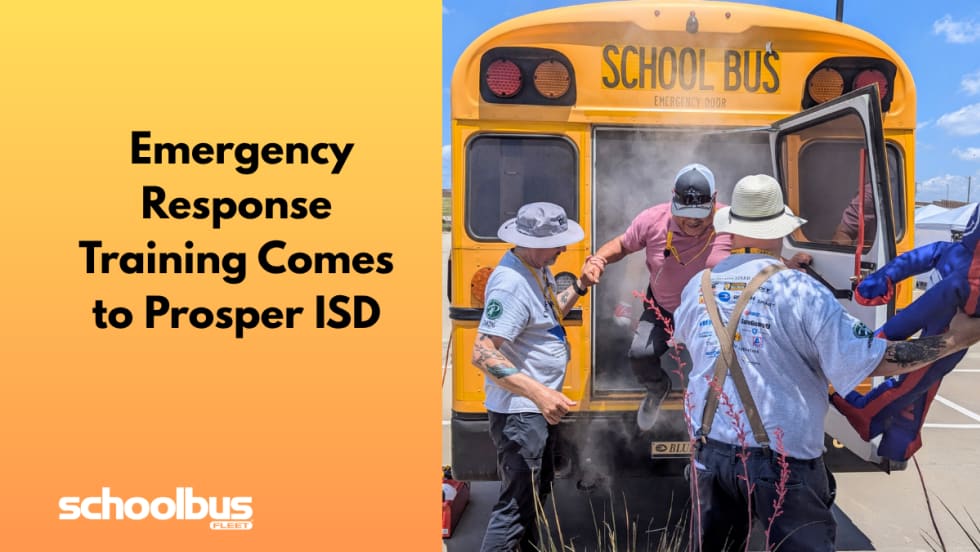
Operation STEER Brings Emergency Response Training to North Texas
Prosper ISD hosted the third annual training for transportation professionals across 67 districts to learn how to respond to emergencies, such as rollovers and evacuations, and proper use of safety equipment.
Read More →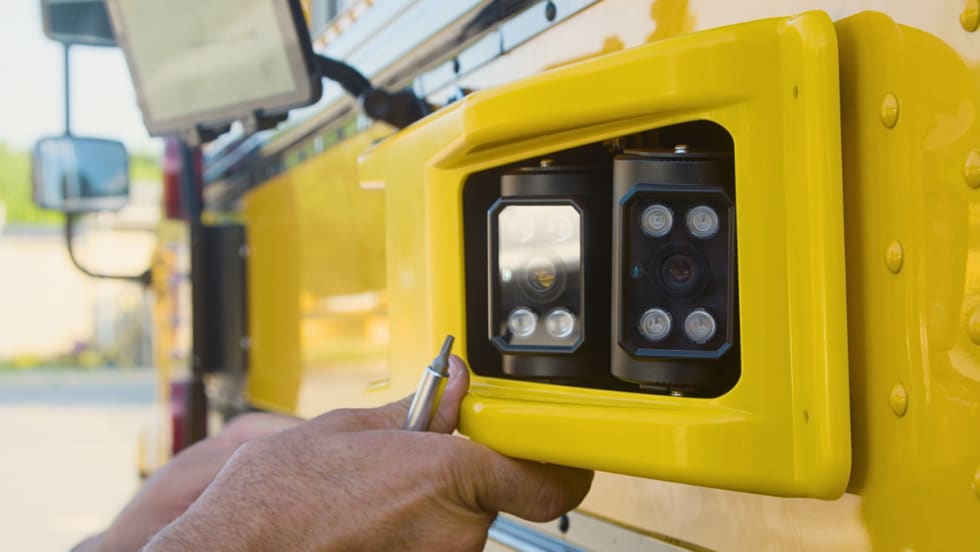
Florida District Relaunches BusPatrol School Bus Camera Program With New Safeguards
After being suspended over due process concerns, Miami-Dade schools and law enforcement are restarting the AI-powered stop-arm camera program with new oversight.
Read More →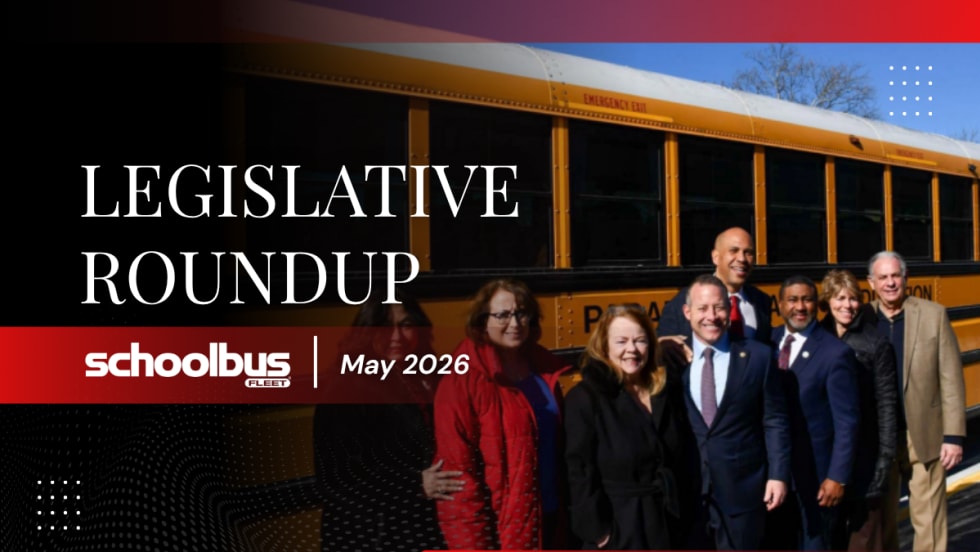
School Bus Laws To Watch: Seat Belt Bills, Funding Fights & EV Changes
From national bills on seat belts and driver oversight to driver awareness campaigns referencing “Finn’s Rule” and ongoing transportation funding debates in Alaska, here’s the latest in school bus legislation across the U.S.
Read More →
9-Year-Old Boy Killed by School Bus at Busy Brooklyn Intersection
A Williamsburg community is mourning after a child was fatally struck by a private yeshiva bus, prompting calls for urgent safety improvements at the high-traffic crossing.
Read More →
Does Reliable School Transportation Boost Attendance? EverDriven’s Data Says Yes
The new data shows 99.99% incident-free trips and strong on-time performance, reinforcing how dependable transportation, especially for vulnerable student populations, can help districts combat chronic absenteeism.
Read More →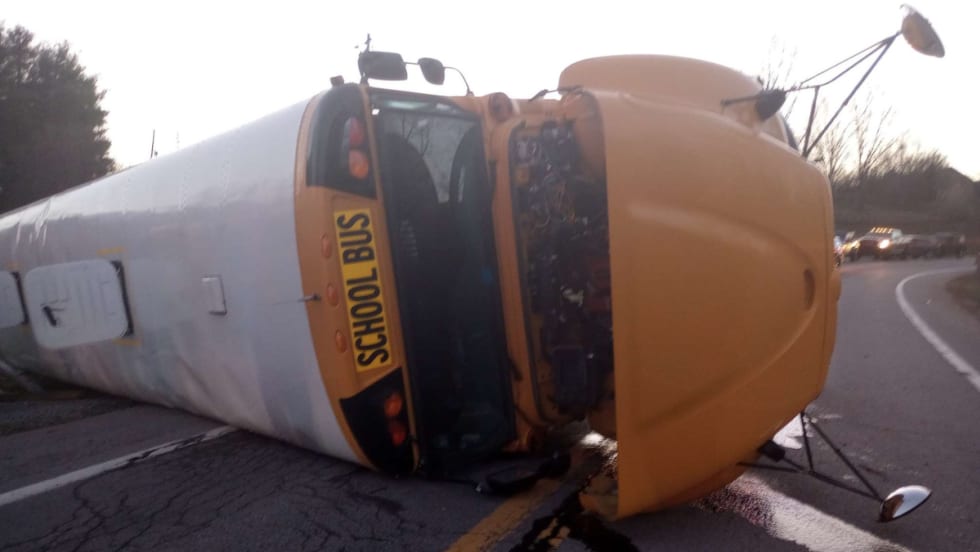
NTSB Calls for Alcohol Impairment Systems, Seat Belts After W.V. Crash Investigation
The federal agency's report asks NHTSA to require all new school buses to be equipped with vehicle-integrated alcohol detection systems and passenger lap-shoulder belts.
Read More →
2026 State of Student Transportation Report
Student transportation teams are being asked to do more with less, facing driver shortages, rising costs, and increasing safety expectations. This report uncovers how fleets are adapting, where technology is making the biggest impact, and why student ridership tracking is emerging as a top priority. Download the report to explore the key trends shaping 2026 and what they mean for your operation.
Read More →