



Que sera, sera?
It’s easy to get mired down in all the bad economic news these days. It’s everywhere and affects nearly everyone. As bad as it seems, there are actually choices for school bus professionals trying to deal with the new economic realities. Acknowledge that the “good ol’ days” have been replaced with a new reality requiring a more energized professional advocacy.
It’s easy to get mired down in all the bad economic news these days. It’s everywhere and affects nearly everyone. School transportation service providers are among those that have been hit most heavily, particularly from a budget standpoint.
While it may seem that all the bad economic news is of recent vintage, the reality is that these painful days of reckoning have been approaching for years. In our hearts and minds, most of us sensed it coming. Think about housing, for example. We all wondered just how high home prices could get, but the cynics were rebuked for many years when they questioned the market forces. Today, many of us are dealing with the reality that the Big Correction arrived with a vengeance and our homes are worth far less than their value just a few years ago.
There’s good reason for feeling hopeless: federal and state financial deficits, unfunded liabilities for government programs, a loss of manufacturing jobs overseas where labor is cheaper, big demographic changes and a list of other issues. It is hard to see the light at the end of the tunnel.
As bad as it seems, there are actually choices for school bus professionals trying to deal with the new economic realities. Two, in fact: Sing “Que sera, sera / Whatever will be, will be / The future’s not ours to see.” Or, acknowledge that the “good ol’ days” have been replaced with a new reality requiring a more energized professional advocacy.
Previously, we could assume that everyone saw the relevance of yellow school buses. That there was near universal agreement they are worth the investment. That their phenomenal record of safety and reliability sealed the deal with policymakers and the public.
Today, all bets are off. When funds get tight, everyone has to work harder to demonstrate relevance, much less excellence. And it becomes important to communicate that in places where taxpayers, state officials and other decision-makers will hear it.
We have a strong argument that many others competing for funds do not: We are an integral element of education — the critical link between the neighborhood and the classroom that helps to facilitate learning. We provide a compelling public service, much like police, fire and rescue.
In the “good ol’ days,” you didn’t necessarily have to make the case. Everyone got it, and state coffers were usually flush with cash. The new reality is that you have to fight for dollars not just in your budget submissions, but also in the public arena. You must continuously make the case for pupil transportation. It is imperative.
Over the last few months, we have had this conversation many times with a variety of people. Policymakers. School administrators. Voters. And each time, the message boils down to a handful of points. Here are the major ones:
1. School buses are essential to effective learning. There is a logical relationship between school buses and attendance (kids that have daily access to school bus service have better attendance) and there is also a logical relationship between attendance and student performance (kids that go to school regularly get better grades and have higher test scores than kids who don’t). It stands to reason, therefore, that there is a direct connection between school buses and student performance. School buses are the critical link between the neighborhood and the classroom.
2. School buses are safe. In fact, school buses are the safest way for children to get to and from school. Safer than walking, bicycling or riding with parents, and much safer than riding with other teenagers.
[PAGEBREAK]
3. School buses are convenient. School buses provide parents with incomparable convenience that enables working families to be able to work. Without school buses, parents would need to drive children to school in the morning and then leave work early to pick them up after school. Parents (and employers) know that simply wouldn’t work.
4. School buses have environmental benefits. School buses are the largest mass transit system in the country. Imagine the traffic congestion and additional emissions if, instead of school buses, thousands of parents were driving children to school during rush hours.
So, how do you make the case? Here again, a new paradigm is required. Many school bus professionals are prohibited from “lobbying” and this is not a suggestion that you do so. But usually there is no prohibition from accepting speaking engagements, providing information to the news media to help them frame local stories, or even something as simple as making a presentation at homeowners association meetings.
NAPT is working with its partners, especially in the American School Bus Council, to develop resources that will enable you to speak clearly and effectively on this subject. We are working on them right now and expect to have them available soon. They will be available via download for free from www.americanschoolbuscouncil.org.
In the meantime, look for opportunities to get out and be heard! You’ve got a wonderful story to tell.
Mike Martin is executive director of NAPT. Barry McCahill is communications consultant for the association.
More Safety
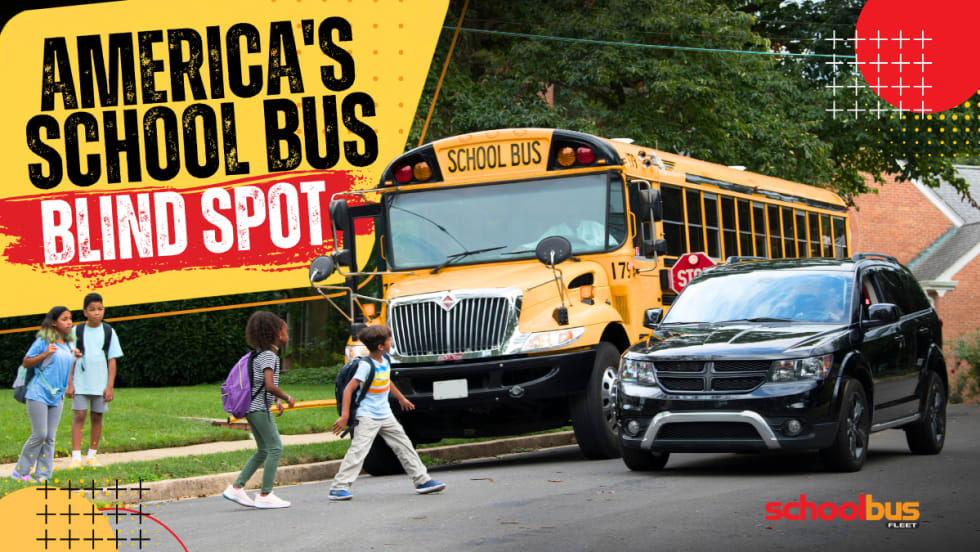
America Has a School Bus Passing Problem — and Distraction Is Making It Worse
Illegal school bus passing remains a major safety threat as distracted driving rises. This op-ed explores why awareness, enforcement, and stop-arm cameras matter more than ever.
Read More →
School Bus Laws to Watch: New York Delays EV Mandate
Plus, federal lawmakers seek new funding for school bus safety as states weigh stop-arm enforcement, disability protections, and education spending.
Read More →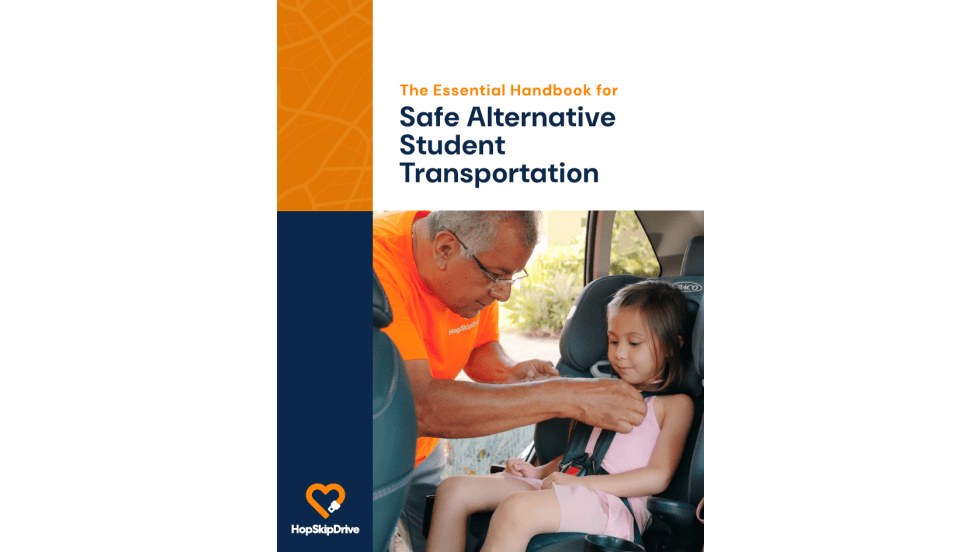
The Essential Handbook for Safe Alternative Student Transportation
Your district's "exception riders" — students with IEPs, those experiencing homelessness, foster care youth — deserve more than a middleman solution. This handbook breaks down exactly what to look for in a supplemental transportation partner: from driver vetting and regulatory compliance to proactive safety technology. Because getting a ride isn't the same as getting a safe one.
Read More →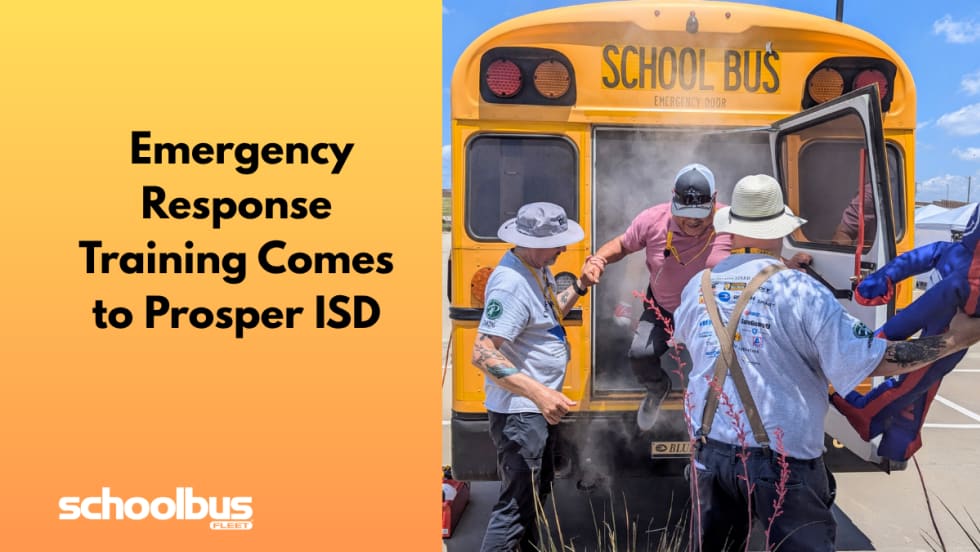
Operation STEER Brings Emergency Response Training to North Texas
Prosper ISD hosted the third annual training for transportation professionals across 67 districts to learn how to respond to emergencies, such as rollovers and evacuations, and proper use of safety equipment.
Read More →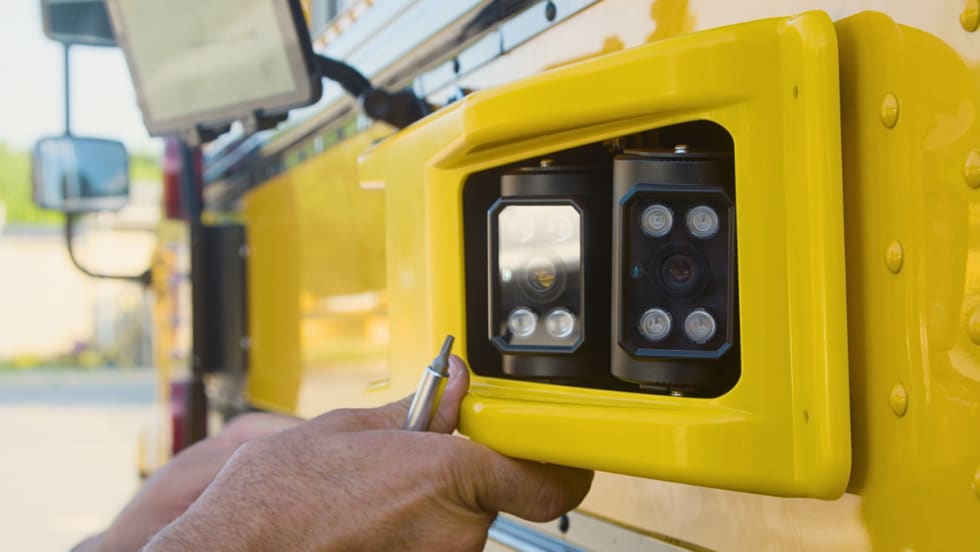
Florida District Relaunches BusPatrol School Bus Camera Program With New Safeguards
After being suspended over due process concerns, Miami-Dade schools and law enforcement are restarting the AI-powered stop-arm camera program with new oversight.
Read More →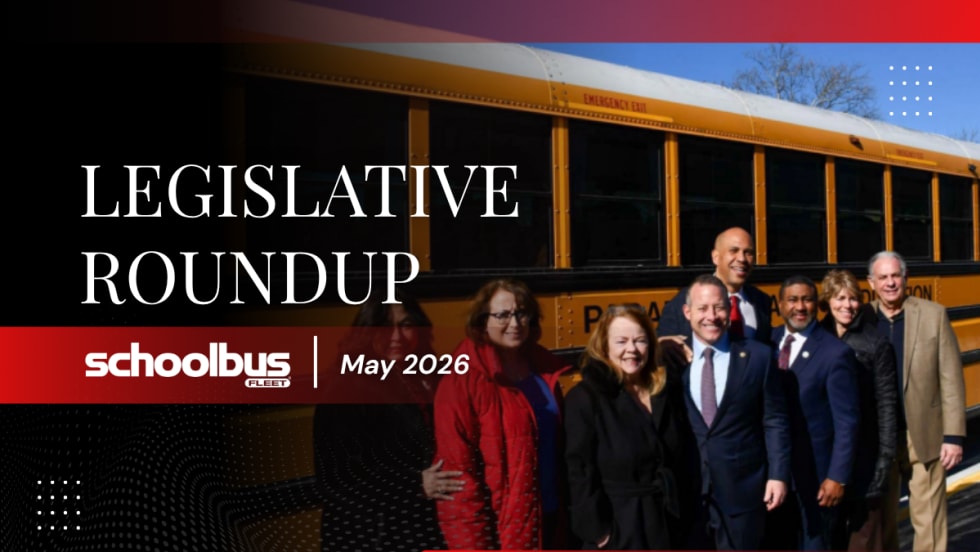
School Bus Laws To Watch: Seat Belt Bills, Funding Fights & EV Changes
From national bills on seat belts and driver oversight to driver awareness campaigns referencing “Finn’s Rule” and ongoing transportation funding debates in Alaska, here’s the latest in school bus legislation across the U.S.
Read More →
9-Year-Old Boy Killed by School Bus at Busy Brooklyn Intersection
A Williamsburg community is mourning after a child was fatally struck by a private yeshiva bus, prompting calls for urgent safety improvements at the high-traffic crossing.
Read More →
Does Reliable School Transportation Boost Attendance? EverDriven’s Data Says Yes
The new data shows 99.99% incident-free trips and strong on-time performance, reinforcing how dependable transportation, especially for vulnerable student populations, can help districts combat chronic absenteeism.
Read More →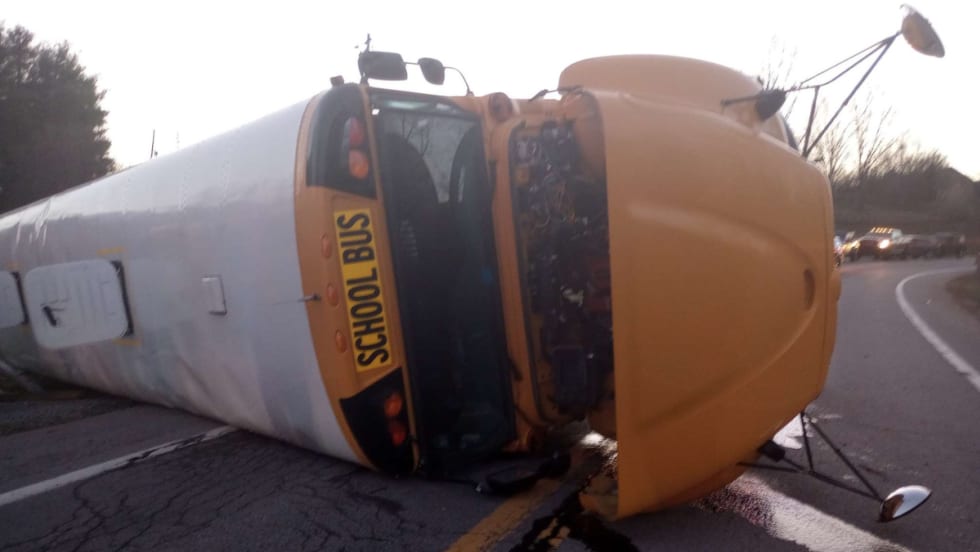
NTSB Calls for Alcohol Impairment Systems, Seat Belts After W.V. Crash Investigation
The federal agency's report asks NHTSA to require all new school buses to be equipped with vehicle-integrated alcohol detection systems and passenger lap-shoulder belts.
Read More →
2026 State of Student Transportation Report
Student transportation teams are being asked to do more with less, facing driver shortages, rising costs, and increasing safety expectations. This report uncovers how fleets are adapting, where technology is making the biggest impact, and why student ridership tracking is emerging as a top priority. Download the report to explore the key trends shaping 2026 and what they mean for your operation.
Read More →