




State Directors Delve Into Bus Crash Details
Changing regulations, innovative state programs and transporting homeless students are also discussed during the annual NASDPTS conference in Louisville, Ky.

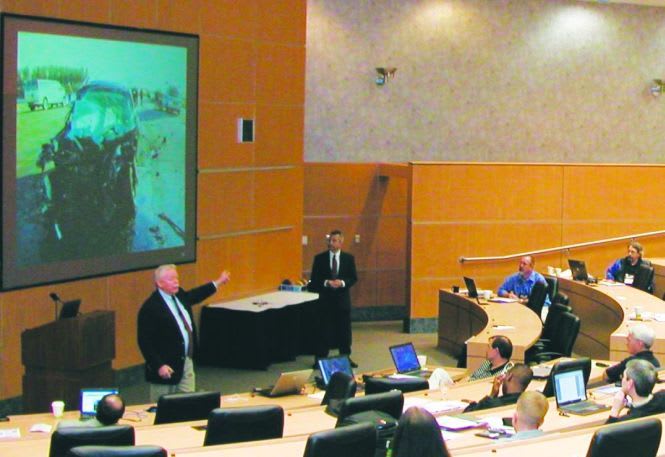
At the NASDPTS conference, Denny Coughlin (left) of Minneapolis Public Schools and state director Lt. Ed Carroll gave a presentation on the fatal 2008 school bus crash in Cottonwood, Minn.
Harold Dennis almost couldn’t go on the church trip to an amusement park. If he hadn’t, he would have missed one of the worst bus crashes in U.S. history.
But despite his single mom’s financial troubles, Dennis ended up being able to go to Kings Island with his friends that day in 1988. On the way home, their church bus — a former school bus that was built just before the 1977 safety standards began — was struck head-on by a drunken driver near Carrollton, Ky.
The fiery crash killed 27 people. Dennis was able to escape, though he was left badly burned.
At the annual conference of the National Association of State Directors of Pupil Transportation Services (NASDPTS) in Louisville, Ky., in late October and early November, Dennis shared the details of the crash, the effects it had on enhancing bus safety and on drunken-driving laws, and how he was able to persevere and become a star athlete.
Safety improvements in the wake of the Carrollton crash included a concentrated effort in most states to phase out all pre-1977 buses, the upgrade of Federal Motor Vehicle Safety Standard (FMVSS) 301 — related to fuel tank integrity — and the revision of FMVSS 217 to require that the total area of emergency exits be based on the designated seating capacity.
Dennis described the tribulations he endured after the crash. Among the children who lost their lives was his best friend, Andy. Dennis told NASDPTS attendees that he went through survivor guilt. And he spent two months in the hospital being treated for his wounds, undergoing skin grafts and other painful treatments. Yet Dennis found the strength to move past the tragedy and attain success.
“I had to grow up at an early age — become a man at age 14,” he recalled. “I didn’t do it alone, and it wasn’t easy.”
Although he didn’t make the soccer team his freshman year of high school, he went on to become an all-state player and was recruited by the University of Louisville. After a year, he transferred to the University of Kentucky, where he walked on to the football team and then earned a full scholarship.
[PAGEBREAK]
[IMAGE]447[/IMAGE]
Also at the NASDPTS conference, Minnesota state director Lt. Ed Carroll and Denny Coughlin of Minneapolis Public Schools gave a presentation on the fatal 2008 school bus crash in Cottonwood, Minn. They revealed some enlightening insights about that accident, in which four children were killed.
For example, it’s believed that a number of the bus passengers had shifted to one side of the bus to look at a passing train, which would have positioned them away from the point of impact of a pickup truck. After the bus was broadsided by a van, it began to tip and was struck by the truck in the side windows — one of the most vulnerable spots on a bus, Carroll and Coughlin said. The truck intruded into the bus almost to the center aisle.
Carroll and Coughlin emphasized the need for counseling and debriefing after severe crashes. They also noted that the bus driver, who was praised for his quick reaction in getting his students out of the bus, is still driving today.
The NASDPTS event also covered myriad changing federal and state regulations, and Barbara Duffield, policy director at the National Association for the Education of Homeless Children and Youth, discussed mandates on transporting homeless students.
During regional updates, directors shared innovative programs that have been implemented in their states, but they also noted the toll that budget cuts have taken on their pupil transportation systems.
One positive note during the session was the breaking news that Michigan had just reinstated the funding for its state school bus inspection program, which had been slated to be cut.
More Safety

HopSkipDrive Reports Progress on Safety Advisory Council
More than a year after forming the council, independent safety experts have helped shape new rider-safety features and policy progress, with a new goal to address rider behavior.
Read More →
What the 2026 National School Bus Safety Month Resolution Means for Student Transportation
The bipartisan resolution highlights illegal school bus passing, student safety during loading and unloading, and the need for driver training and public education.
Read More →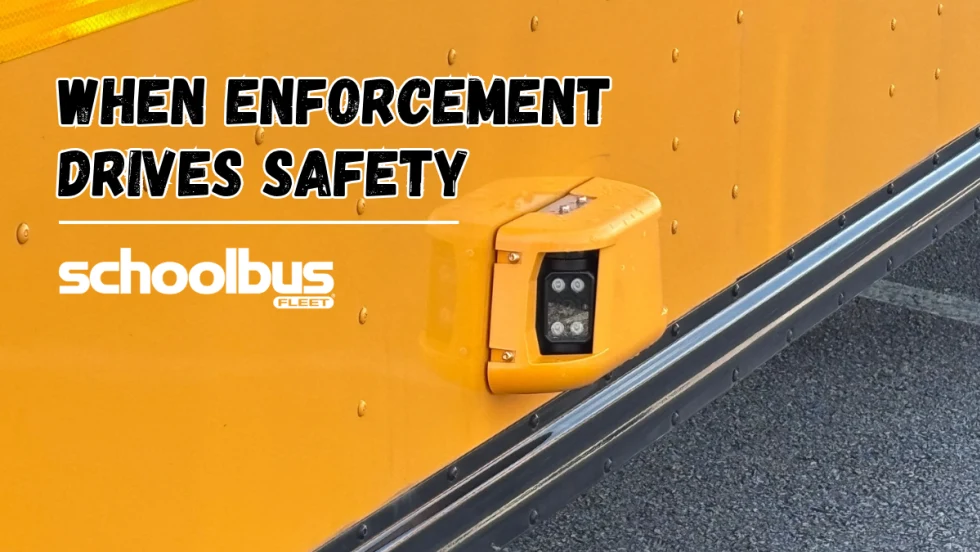
School Bus Stop-Arm Violations Decline 53% Across Verra Mobility Programs
Verra Mobility shares how school bus stop-arm cameras and school zone safety programs are changing driver behavior, reducing violations, and protecting students.
Read More →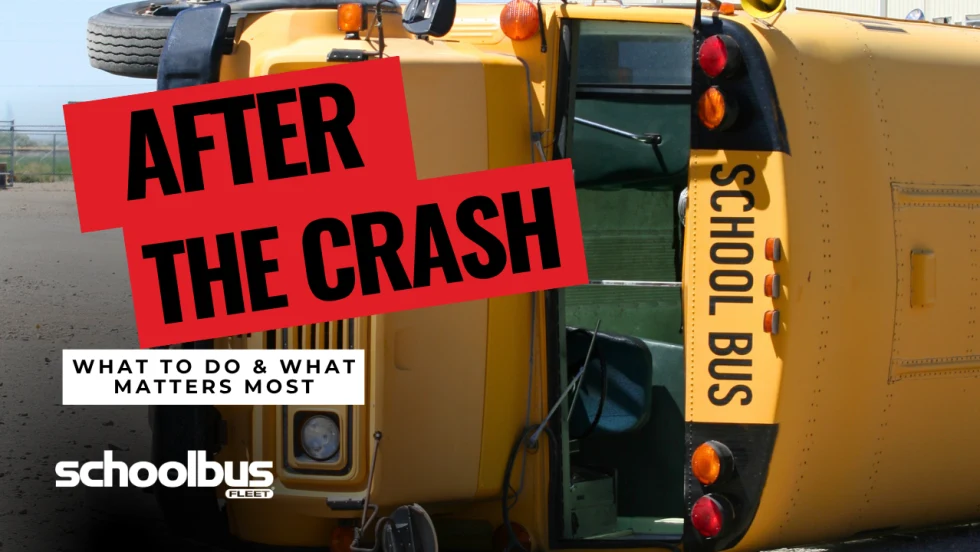
Most Bus Crashes Aren’t Your Fault. Here’s How to Prove It.
A guide for what to do in between a school bus crash and a claim: what to preserve, who to notify, and how to keep the facts available when they matter.
Read More →
National School Bus Safety Week 2026: Tips, Toolkits & Resources to Keep Students Safe
School bus safety takes more than awareness. Explore expert tips, enforcement strategies, and free resources to help protect students on every ride.
Read More →
2 Killed, Dozens Injured in Florida School Bus Crash
A multi-vehicle collision caused a Polk County school bus carrying 37 students to overturn on its way to Winter Haven High School.
Read More →
Illegal School Bus Passing Drops 24% in New York Districts
With fewer than 5% of citations involving repeat offenders, Westchester County officials said enforcement, education, and community partnerships are helping change driver behavior.
Read More →
School's Back. Here's What Happened to Traffic, Speeding & Distraction
What happens to traffic when school resumes? New data analysis examines changes in distracted driving, congestion, and speeding around schools.
Read More →
Geotab Expands Fleet Safety Tools With Video Coaching, Risk Insights
New safety and video capabilities aim to help fleet managers assess risk, support drivers, and take targeted action through video coaching, red-light violation detection, and more.
Read More →
How to Build a Better School Bus Driver Training Program
Is it time to strengthen your driver training? Here’s how to pick the right talent and improve recruitment, retention, and safety. This video is brought to you by IC Bus.
Read More →