




NASDPTS: State Directors Grapple With Tough National Issues
High-profile issues such as school bus occupant protection, school travel research and diesel emissions programs were hot topics at the 2002 conferenc...
High-profile issues such as school bus occupant protection, school travel research and diesel emissions programs were hot topics at the 2002 conference of the National Association of State Directors of Pupil Transportation Services (NASDPTS) in Greensboro, N.C., in early November.
More than two dozen state directors of pupil transportation attended the four-day event, which included a three-hour tour of Thomas Built Buses manufacturing facilities in nearby High Point. In all, more than 70 NASDPTS members (including state council representatives and supplier members) attended the meeting.
NASDPTS President Pete Baxter presided over the meeting, held Nov. 1-4. The welcome was provided by Derek Graham, state pupil transportation director in North Carolina. Next year’s annual meeting will be held in Salt Lake City, Utah, in conjunction with the National Association for Pupil Transportation’s annual conference and trade show.
EPA makes inroads
The issue of school buses and air quality drew serious discussion at the meeting. Environmental groups have challenged the school bus industry in regard to diesel engine emissions. Organizations such as the Natural Resources Defense Council and the Coalition for Clean Air have proffered reports suggesting that children, both on and off the bus, are exposed to hazardous levels of diesel exhaust from school buses, especially older vehicles.
“Clean-air advocates have been using school buses as a pawn in a much larger battle,” said Charlie Gauthier, executive director of NASDPTS. “These studies are biased by the people funding them.” During a one-hour live talk radio show in San Diego earlier this year, Gauthier says he was barraged with diesel emissions questions. “The public’s perception is that diesel engines are bad.”
Environmental Protection Agency (EPA) Administrator Christie Whitman recently introduced a program in Texas called Clean School Bus USA that attempts to partner private business with schools to replace aging buses with modern, cleaner-burning versions.
Greg Green, director of certification and compliance for the EPA, told NASDPTS members that 40 to 50 companies, including Disney, America Online and Coke, are interested in supporting the program. In return for helping to fund the replacement of aging buses, it’s possible that companies would receive advertising space on the exterior of school buses, Green said.
In concert with the Clean School Bus program, the EPA is also pushing an initiative for voluntary diesel retrofit. Green said goals include the increased use of low-sulfur diesel fuel and particle traps, reduced idling and replacement of all pre-1991 school buses. Minimizing unnecessary idling of school buses alone, he added, would save $28 million annually in fuel costs. For more on the voluntary retrofit program, visit www.epa.gov/otaq/retrofit.
Push for federal aid
Annette Sandberg, deputy administrator of the National Highway Traffic Safety Administration (NHTSA), said it’s important the voices of the pupil transportation community be heard in the reauthorization of the Transportation Equity Act for the 21st Century (TEA 21), which earmarks billions of dollars for federal transportation programs.
“Let your congressmen know that safety is your priority,” urged Sandberg, noting that TEA 21 will set funding for NHTSA for the next six years.
Sandberg explained that NHTSA uses the funds to improve motor vehicle safety. “Last year, as many people died on our highways as would die in the crash of a Boeing 737 going down every day,” she said. The cost of deaths each year due to lack of seat belts is more than the DOT’s entire budget.
NHTSA is focusing heavily on preventing alcohol-related crashes. “Two out of three Americans will be involved in an alcohol-related crash in their lifetime,” Sandberg said. To target drunk drivers, NHTSA first had to identify those most likely to commit the crime. Studies have shown that the mean blood alcohol content of drunk drivers involved in accidents is 0.16, far above the legal limit in any state.
Stop stop-arm scofflaws
NHTSA researchers are looking into prototype bus-mounted cameras aimed at catching stop-arm runners. The cameras used in the research employ the red-light running technology used to catch motorists who run stop lights at intersections.
NHTSA is also continuing its crashworthiness research, looking at three potential requirements: 1) increased seat back height, 2) requiring lap/shoulder belts on small buses and 3) establishing performance requirements for the option of lap/shoulder belt systems on large buses.
Charles Hott, NHTSA safety standards engineer, said that the Fatality Analysis Reporting System (FARS) data is out for 2001, showing that there were eight large school bus-related fatalities last year, two small school bus-related fatalities and two fatalities in other vehicles that were used as school buses. The complete data is available at www-fars.nhtsa.dot.gov.
Hott discussed the agency’s crashworthiness research program, saying that rollover does occur in large school buses but is not generally as harmful as in small school buses. The reason lap belts are required in small school buses, said Hott, is because the risk of ejection is greater than the risk of abdominal injury.
The agency is currently looking into requiring three-point systems on small buses. “Lap/shoulder belts should be accompanied by a training program on use,” said Hott, adding, “Lap/shoulder belts are going to be the standard enforced in small school buses, not lap belts.”
NASDPTS’ Gauthier talked about the public’s perception of school buses. “We believe the public does expect belts in school buses,” he said. “If you’re going to put a belt in a school bus, it really must be a lap/shoulder belt.” The bottom line, however, is funding. NASDPTS supports the implementation of lap/shoulder belts if funding is provided.
Transporting the homeless
Diane Bowman, director of the National Center for Homeless Education at SERVE, told NASDPTS members about the transportation requirements of the McKinney-Vento Homeless Assistance Act, which was signed into law on Jan. 8, 2002.
Bowman said one of the key provisions is that school districts must provide homeless students with transportation to and from their school of origin (the school the students attended before they lost their housing) if requested by the parent, guardian or homeless education liaison.
Keys to handling difficult transportation scenarios with homeless students include:
Developing close ties among LEA homeless liaisons, school staff and pupil transportation staff.
Designating a district-level point of contact to arrange and coordinate transportation.
Collaborating with local public agencies and service providers to develop transportation plans or provide transportation.
Principles of leadership
In addition to several presentations on federal school transportation issues, the meeting included a pep talk from Diane Steed, a consultant and former NHTSA administrator.Steed, who served in several political posts during the Reagan and Bush administrations, said good leaders must understand five key principles:
1. Change is inevitable.
2. It’s better to ask forgiveness than it is to ask for permission.
3. Think around corners.
4. Think about issues from others’ perspectives.
5. Understand your organization’s core strengths and values, but remain flexible.
More Safety
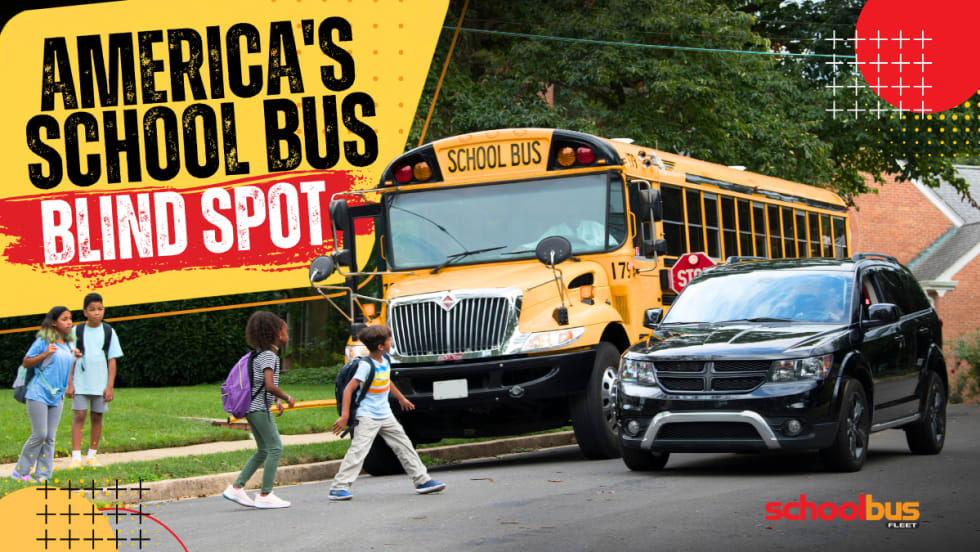
America Has a School Bus Passing Problem — and Distraction Is Making It Worse
Illegal school bus passing remains a major safety threat as distracted driving rises. This op-ed explores why awareness, enforcement, and stop-arm cameras matter more than ever.
Read More →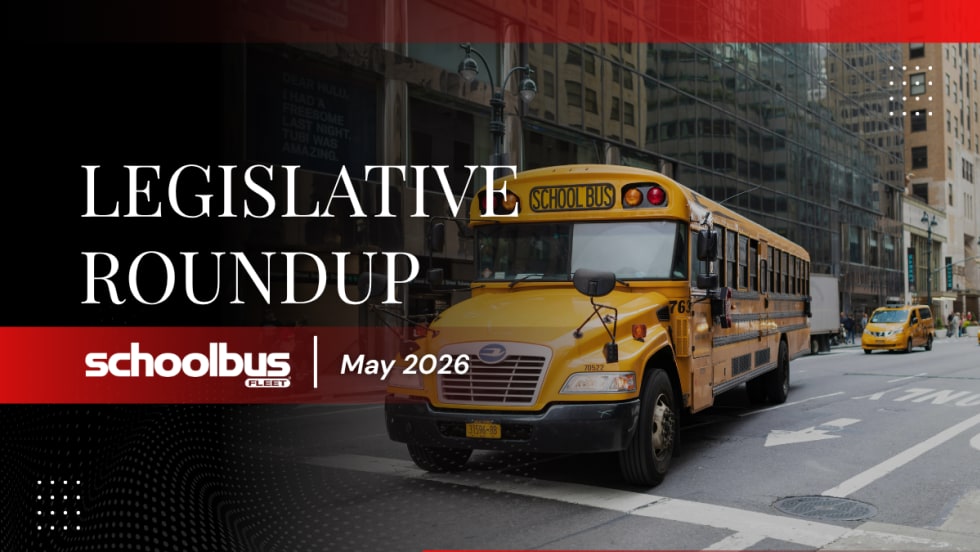
School Bus Laws to Watch: New York Delays EV Mandate
Plus, federal lawmakers seek new funding for school bus safety as states weigh stop-arm enforcement, disability protections, and education spending.
Read More →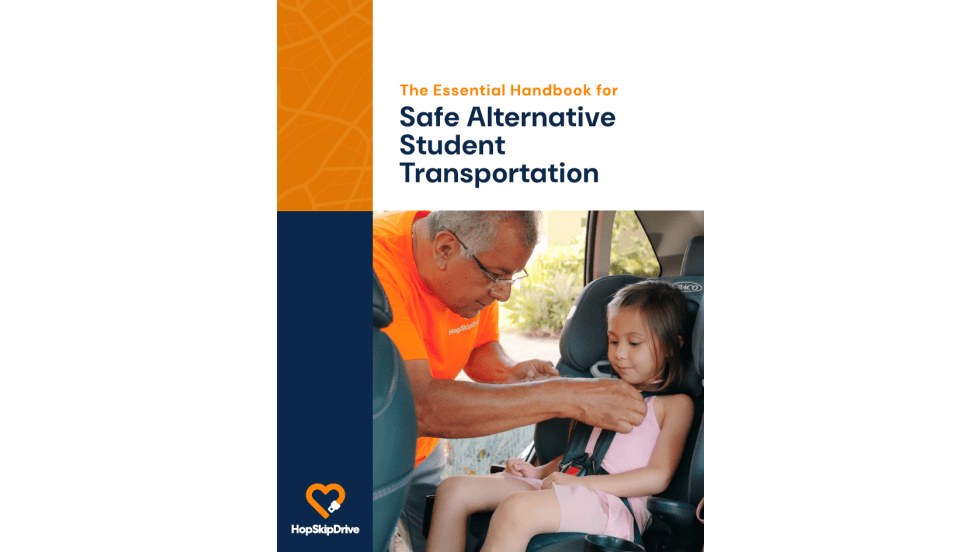
The Essential Handbook for Safe Alternative Student Transportation
Your district's "exception riders" — students with IEPs, those experiencing homelessness, foster care youth — deserve more than a middleman solution. This handbook breaks down exactly what to look for in a supplemental transportation partner: from driver vetting and regulatory compliance to proactive safety technology. Because getting a ride isn't the same as getting a safe one.
Read More →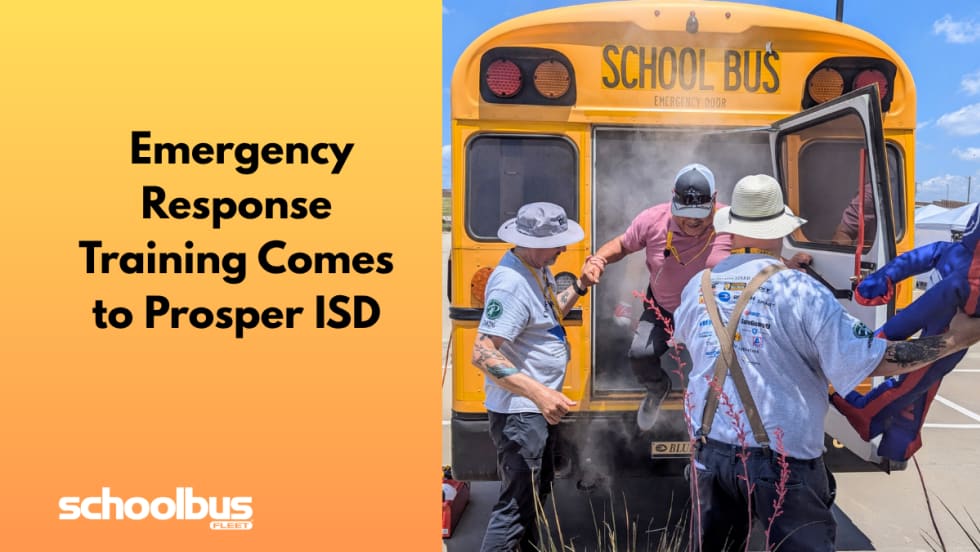
Operation STEER Brings Emergency Response Training to North Texas
Prosper ISD hosted the third annual training for transportation professionals across 67 districts to learn how to respond to emergencies, such as rollovers and evacuations, and proper use of safety equipment.
Read More →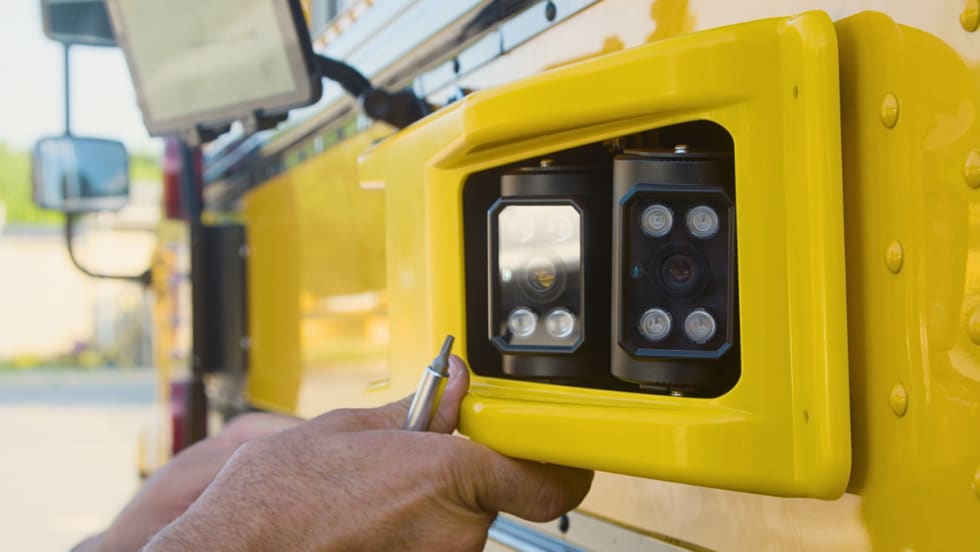
Florida District Relaunches BusPatrol School Bus Camera Program With New Safeguards
After being suspended over due process concerns, Miami-Dade schools and law enforcement are restarting the AI-powered stop-arm camera program with new oversight.
Read More →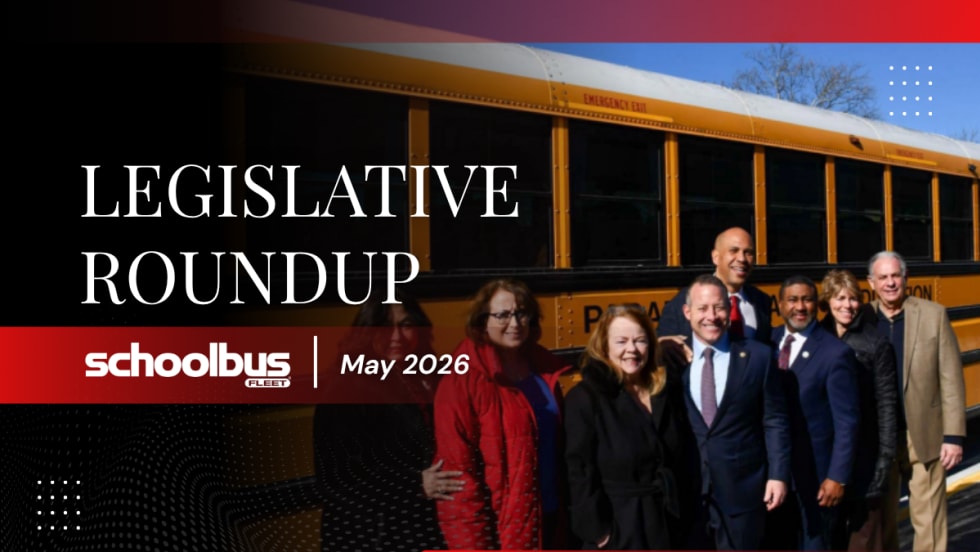
School Bus Laws To Watch: Seat Belt Bills, Funding Fights & EV Changes
From national bills on seat belts and driver oversight to driver awareness campaigns referencing “Finn’s Rule” and ongoing transportation funding debates in Alaska, here’s the latest in school bus legislation across the U.S.
Read More →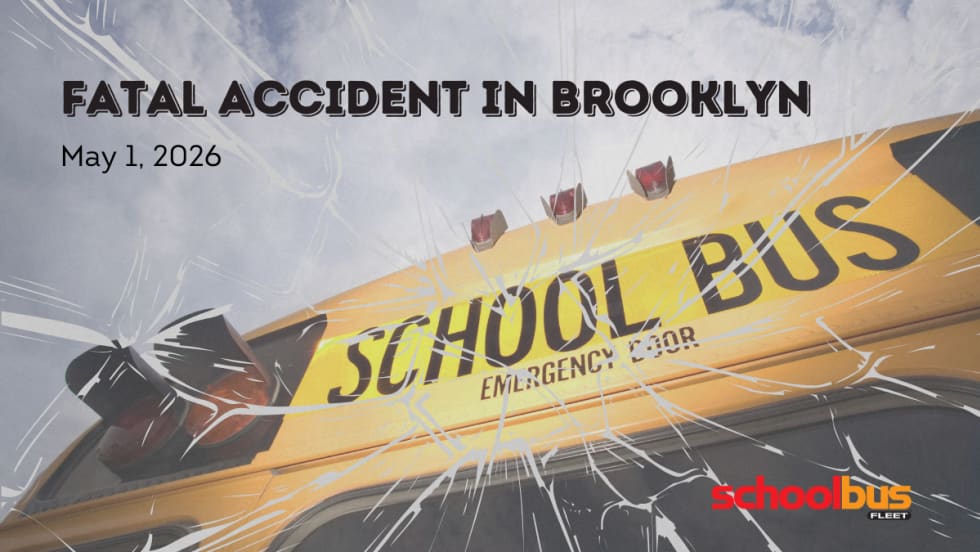
9-Year-Old Boy Killed by School Bus at Busy Brooklyn Intersection
A Williamsburg community is mourning after a child was fatally struck by a private yeshiva bus, prompting calls for urgent safety improvements at the high-traffic crossing.
Read More →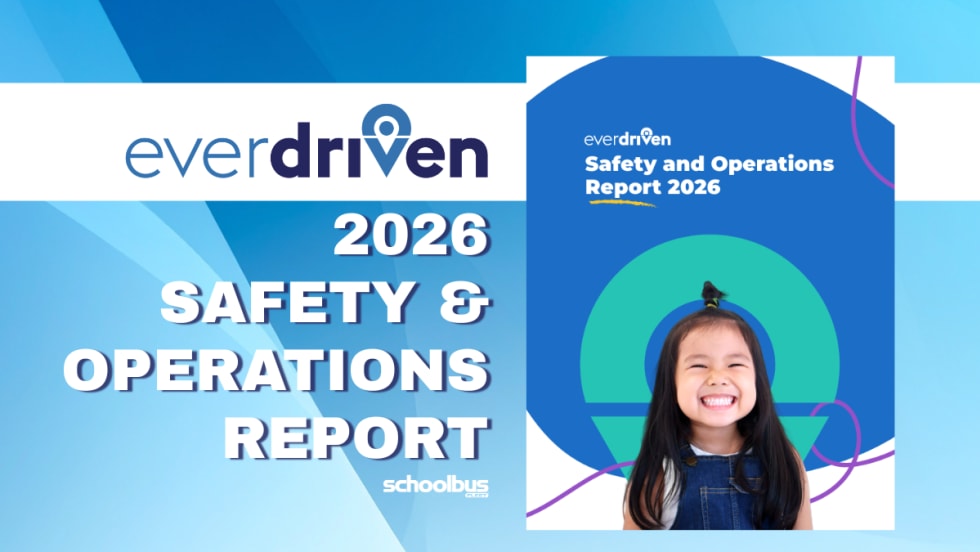
Does Reliable School Transportation Boost Attendance? EverDriven’s Data Says Yes
The new data shows 99.99% incident-free trips and strong on-time performance, reinforcing how dependable transportation, especially for vulnerable student populations, can help districts combat chronic absenteeism.
Read More →
NTSB Calls for Alcohol Impairment Systems, Seat Belts After W.V. Crash Investigation
The federal agency's report asks NHTSA to require all new school buses to be equipped with vehicle-integrated alcohol detection systems and passenger lap-shoulder belts.
Read More →
2026 State of Student Transportation Report
Student transportation teams are being asked to do more with less, facing driver shortages, rising costs, and increasing safety expectations. This report uncovers how fleets are adapting, where technology is making the biggest impact, and why student ridership tracking is emerging as a top priority. Download the report to explore the key trends shaping 2026 and what they mean for your operation.
Read More →