



2002 in Review: The Top 10 News Stories
As we near the end of 2002, SBF recaps 10 major news events (in no particular order) that affected the pupil transportation industry this year. Multip...
As we near the end of 2002, SBF recaps 10 major news events (in no particular order) that affected the pupil transportation industry this year. Multiple stories played a role in shaping the year, but a slew of regulatory issues took center stage, including the seat belt controversy and the school choice dilemma. These issues leave the industry with a full plate of questions to be answered for 2003.
1. Leaving no child behind
On Jan. 8, President Bush signed into effect a challenging education reform act, titled No Child Left Behind (NCLB). Of the act’s four main objectives, one aimed to give parents expanded schooling options for their children, allowing students at schools identified as under-performing to attend schools with good academic records.
District transportation departments were left to figure out how to provide school bus services to children who chose to transfer. Although the full effects have not yet been felt, NCLB has led to an increased national concern about budgets and routing.
2. Closure in Tennga crash
After nearly two years of research and investigation into the March 2000 school bus-train collision in Tennga, Ga., the National Transportation Safety Board (NTSB) issued its final report on the accident. The board determined that the school bus driver’s failure to follow standard rail crossing safety was the primary cause of the accident that killed three passengers and seriously injured four others.
The NTSB faulted the school district for not properly monitoring driver performance and safely planning routes. It suggested that a stop sign, crossing lights and a gate could have prevented the tragedy.
Ultimately, the NTSB made several recommendations based on its findings. Each state, it said, should work with NASDPTS to develop guidelines for school bus safety at passive grade crossings by installing better traffic signs and improving training.
3. Bus-napping scare
Over a six-hour period that captivated the nation’s attention, Otto Nuss, a bus driver with the Oley Valley (Pa.) School District, took a busload of 13 students 150 miles off course while carrying a loaded rifle and several boxes of ammunition. Police cruisers and helicopters searched for the bus, which traveled to a Washington, D.C., suburb before Nuss, who has a history of psychiatric problems, turned himself in to an off-duty police officer.
Although no one was hurt, the hijacking intensified security concerns looming after Sept.11. The pupil transportation industry responded by emphasizing the need for stricter criminal background checks for drivers and the use of GPS and other school bus locating technologies.
4. Emissions controversy
In early February, the popular television program “Good Morning America” aired a report indicating that diesel school bus fumes can cause health hazards to riders. The report was based on a study conducted by a Yale University professor who placed monitoring devices on children to record the emissions levels they were exposed to during a normal day.
That same week, the Union of Concerned Scientists, an environmental advocate based in Cambridge, Mass., published results of a study in which school bus fleets in all 50 states were given a grade on their pollution level. No state received an “A” and 21 states either rated poorly or failed.
The two studies have fueled controversy in one of the school transportation industry’s most contentious issues. Industry leaders have stated that further research is necessary before policy decisions can be made.
5. Stifling driver strike
A month-long school bus driver strike in the nation’s second largest school district — Los Angeles Unified School District (LAUSD) — resulted in the cancellation of dozens of sporting events, extra-curricular activities and field trips as well as significant delays to normal school service. With at least 700 of LAUSD’s 2,220 bus routes disrupted by the strike, more than 10 percent, or 75,000, of the district’s students experienced transportation delays.
The labor feud was between 800 members of Teamsters Union Local 572 and their employer, Laidlaw Education Services. The strike ended in compromising fashion when drivers accepted a new contract with wage increases and enhanced health care.
6. Occupant safety report
After four years of research and testing, NHTSA submitted its assessment of school bus occupant protection to Congress in May. NHTSA suggested the following three changes to federal school bus safety regulations: Increasing seat back height from 20 to 24 inches, developing standardized test procedures for voluntarily installed lap/shoulder belts and requiring buses that weigh less than 10,000 pounds to be equipped with lap/shoulder belt systems.
NHTSA pointed out that lap/shoulder belts on all buses could provide some benefits, but that potential belt misuse, decreased bus capacity and increased costs could counteract these benefits. Further, NHTSA concluded that lap belts have little, if any, benefit in reducing injuries. Industry associations such as NAPT, NASDPTS and NSTA praised the conclusions of the report.
7. Study validates bus ride
In a study titled “The Relative Risks of School Travel,” the Transportation Research Board (TRB) rated the safety of different methods of getting to and from school. Basing statistics on incidents that occurred during traditional school travel hours — from 6 to 9 a.m. and 2 to 5 p.m. — researchers concluded that students traveling to and from school in school buses are the least likely to be injured or killed. Study results concluded that students riding in private passenger vehicles with a teenager behind the wheel are at greatest risk.
The study examined six modes of transportation overall: 1. School buses; 2. Walking; 3. Biking; 4. Other buses; 5. Passenger vehicles with adult drivers; 6. Passenger vehicles with teenage drivers.
By touting school bus safety, TRB’s research was regarded as a welcome public confirmation of what was already known to pupil transportation professionals. The study represents a step towards spreading the word about the safe track record of school buses.
8. FMCSA rule revision
The Federal Motor Carrier Safety Administration (FMCSA) published several changes in July to CDL regulations for commercial bus and truck drivers. The new rules generally stiffened licensing and sanctioning requirements by creating new disqualifying offenses and prohibiting states from masking convictions that could show up in background checks.
More importantly to the school bus industry, the changes incorporated a new federal school bus “S” endorsement, which requires applicants to pass a school bus-specific knowledge and skills test before receiving a CDL. The endorsement is reciprocal among states so that a driver licensed in one state can drive a school bus in another state without having to meet additional requirements. The greatest criticism of the new endorsement, however, is that it does not prevent new hires from receiving free training and then leaving an operation to work for a better-paying truck or commercial bus driving job.
9. Bus-truck disaster
On Thursday, Oct. 10, a school bus carrying 43 first- and second-graders and 17 adult chaperones on a field trip to an apple orchard collided with an 18-wheeler hauling steel near the Ohio-Michigan state line. Three helicopters, 10 ambulances and five fire and rescue trucks were needed to deal with the ensuing carnage, which consisted of fire, scattered debris and nearly 60 injured passengers, some in critical condition. Miraculously, no one was killed in the accident.
It was later determined that the bus driver failed to yield at an intersection, causing the oncoming truck, which was hauling 38 tons of steel, to tear a hole in the side of the bus and force it 100 feet from the roadway. The crash gave way to a $100 million lawsuit, filed on behalf of at least 21 of the bus’ passengers, accusing the school district, the bus company, the school bus driver and the truck driver of negligence. The result of the suit is pending.
10. Safety vest final rule
NHTSA announced proposed changes to regulations governing how child safety restraint systems (CSRS) attach to bus seats. Under the previous regulations in FMVSS 213, vests and other CSRSs could not attach to a vehicle seat back. The proposed changes excluded vests made for school bus seats from this provision.
Instead, the changes propose three important requirements. First, restraint systems must only be used on school bus seats. Second, the seat behind a child wearing a seat-mounted CSRS must be vacant or occupied by a passenger with a CSRS. Finally, beginning Feb. 1, 2003, all CSRSs and harnesses must have a warning label.
The proposal became effective immediately on an interim basis. NHTSA also initiated a 60-day period during which it will gather public feedback on the proposal. Responses will help to determine whether the changes should become permanent.
More Safety
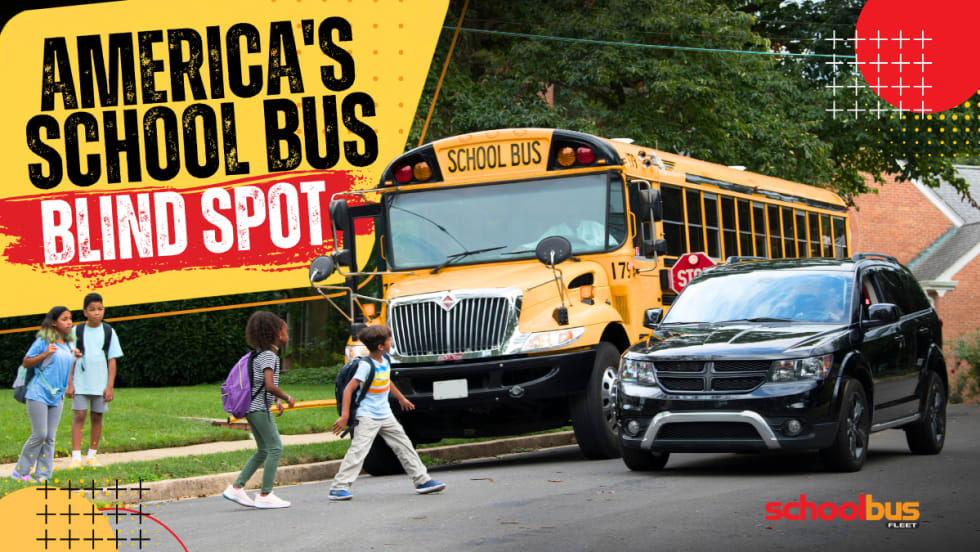
America Has a School Bus Passing Problem — and Distraction Is Making It Worse
Illegal school bus passing remains a major safety threat as distracted driving rises. This op-ed explores why awareness, enforcement, and stop-arm cameras matter more than ever.
Read More →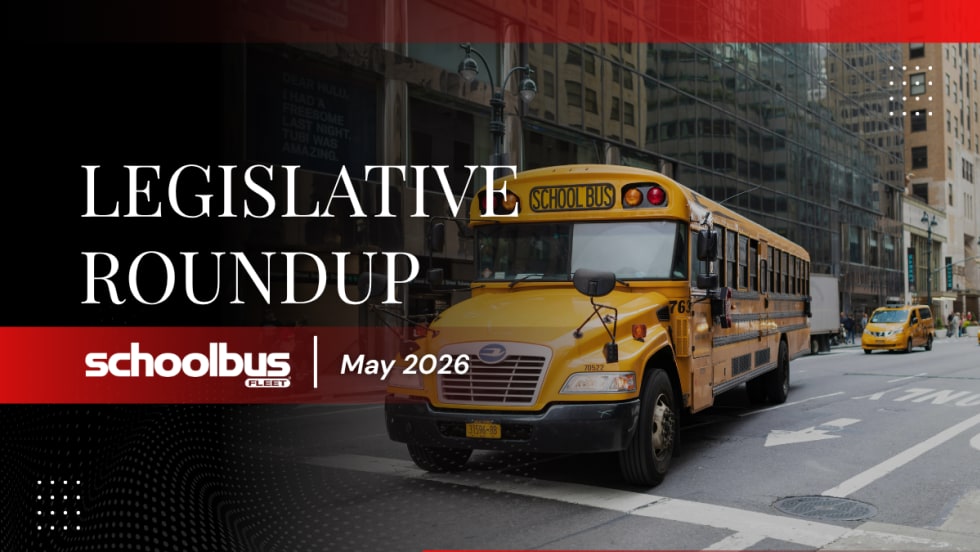
School Bus Laws to Watch: New York Delays EV Mandate
Plus, federal lawmakers seek new funding for school bus safety as states weigh stop-arm enforcement, disability protections, and education spending.
Read More →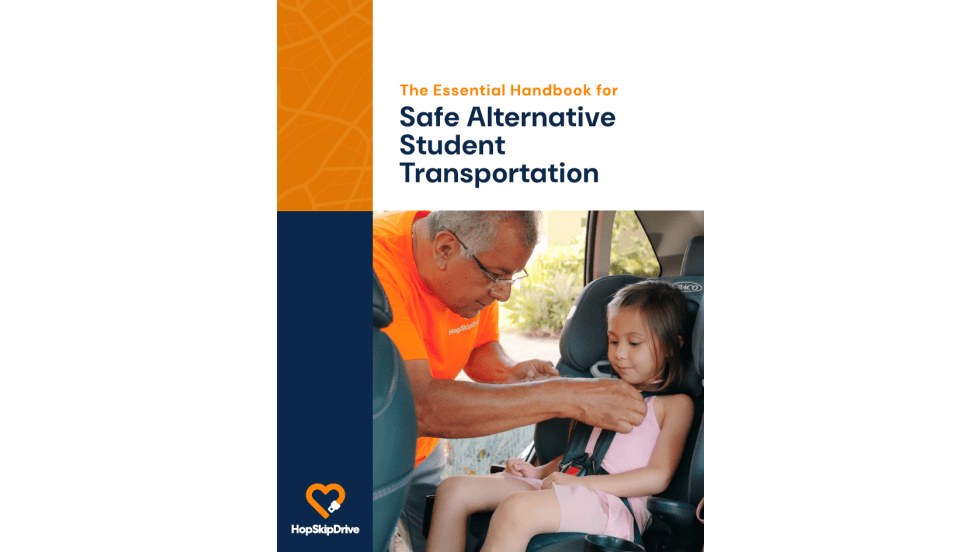
The Essential Handbook for Safe Alternative Student Transportation
Your district's "exception riders" — students with IEPs, those experiencing homelessness, foster care youth — deserve more than a middleman solution. This handbook breaks down exactly what to look for in a supplemental transportation partner: from driver vetting and regulatory compliance to proactive safety technology. Because getting a ride isn't the same as getting a safe one.
Read More →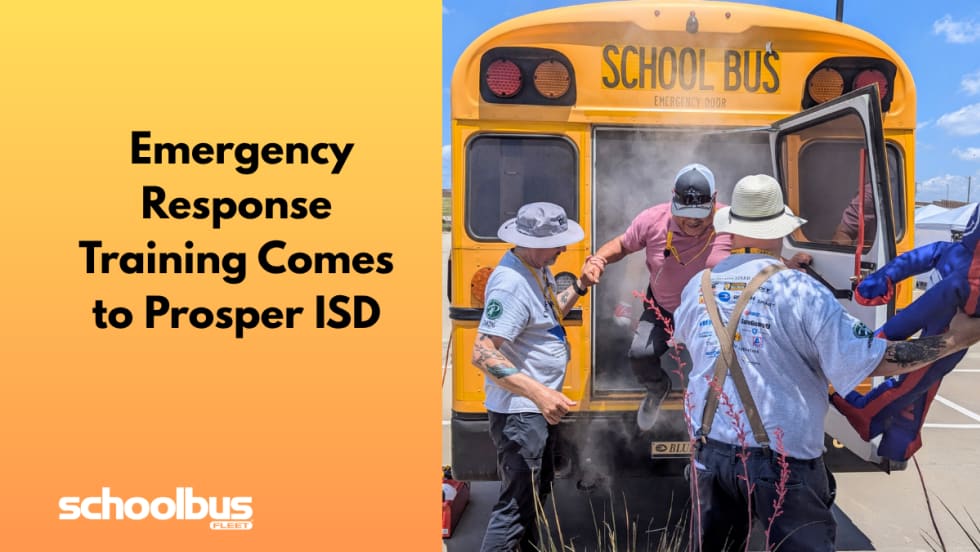
Operation STEER Brings Emergency Response Training to North Texas
Prosper ISD hosted the third annual training for transportation professionals across 67 districts to learn how to respond to emergencies, such as rollovers and evacuations, and proper use of safety equipment.
Read More →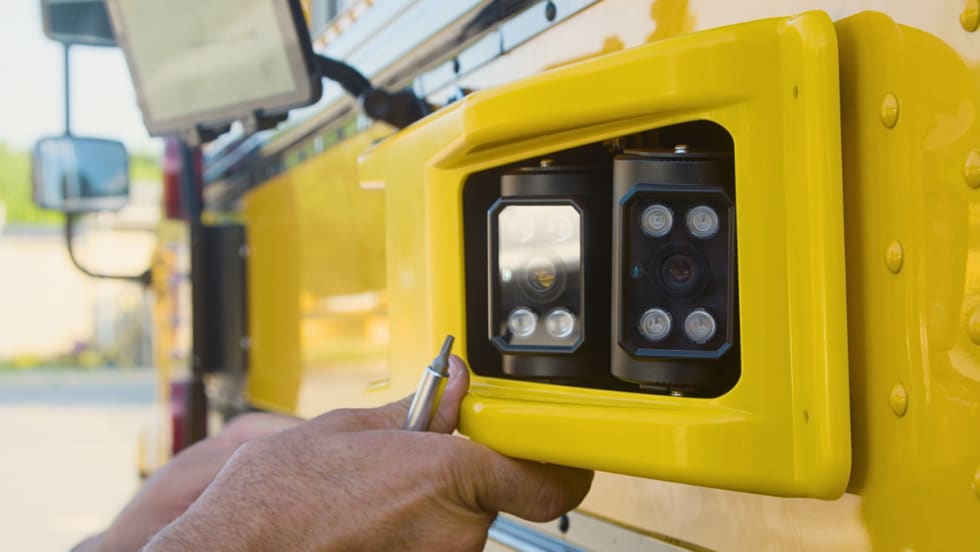
Florida District Relaunches BusPatrol School Bus Camera Program With New Safeguards
After being suspended over due process concerns, Miami-Dade schools and law enforcement are restarting the AI-powered stop-arm camera program with new oversight.
Read More →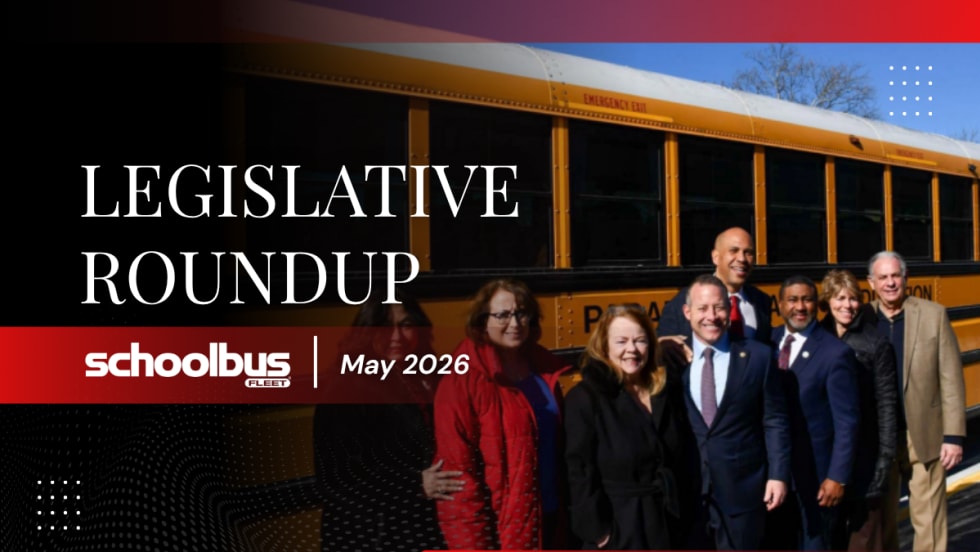
School Bus Laws To Watch: Seat Belt Bills, Funding Fights & EV Changes
From national bills on seat belts and driver oversight to driver awareness campaigns referencing “Finn’s Rule” and ongoing transportation funding debates in Alaska, here’s the latest in school bus legislation across the U.S.
Read More →
9-Year-Old Boy Killed by School Bus at Busy Brooklyn Intersection
A Williamsburg community is mourning after a child was fatally struck by a private yeshiva bus, prompting calls for urgent safety improvements at the high-traffic crossing.
Read More →
Does Reliable School Transportation Boost Attendance? EverDriven’s Data Says Yes
The new data shows 99.99% incident-free trips and strong on-time performance, reinforcing how dependable transportation, especially for vulnerable student populations, can help districts combat chronic absenteeism.
Read More →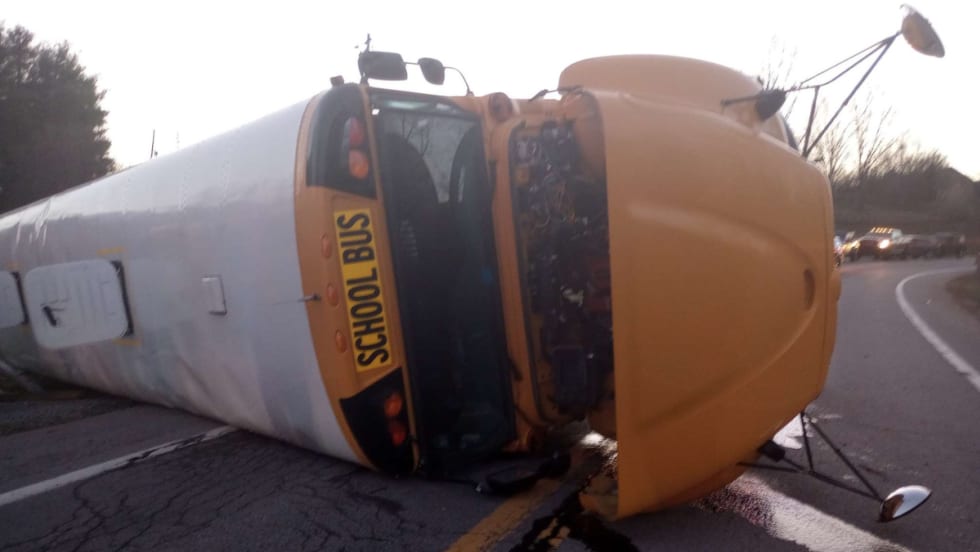
NTSB Calls for Alcohol Impairment Systems, Seat Belts After W.V. Crash Investigation
The federal agency's report asks NHTSA to require all new school buses to be equipped with vehicle-integrated alcohol detection systems and passenger lap-shoulder belts.
Read More →
2026 State of Student Transportation Report
Student transportation teams are being asked to do more with less, facing driver shortages, rising costs, and increasing safety expectations. This report uncovers how fleets are adapting, where technology is making the biggest impact, and why student ridership tracking is emerging as a top priority. Download the report to explore the key trends shaping 2026 and what they mean for your operation.
Read More →