




How to Survive a Hostage Situation on Your School Bus
Sure, chances are slim that you'll be held hostage, but you should be prepared for a worst-case scenario.
The threat of terrorism is never far from home. The bombing in Oklahoma City has become a symbol of the senseless taking of life that can erupt in any city, town or backwater in America. Federal buildings are not the only likely targets. The school bus could also find itself in the crosshairs. It is more visible and accessible than airliners, trains or government buildings. And it remains a symbol of this country's future. Who are the aggressors that we may face? While terrorists could plot to hijack a school bus, more likely it will be a troubled student, a disgruntled employee or former employee or an estranged spouse of an employee. The Fairfax County (Va.) Office of Transportation Services and the Fairfax County Police Department have been planning, training and practicing for hostage situations - just in case - for several years. Chances are slim that this will ever happen, but there are some basic survival tips that may help school bus drivers and attendants in the event of such an emergency. The following advice is offered to help school bus drivers survive a hostage situation and is intended to inform - not to cause unnecessary alarm or concern.
First, do no harm
Your main objective is to prevent anyone from getting hurt. Consider the consequences of your action or inaction before you cause additional risk for you or your passengers. In this case, patience is a virtue. This is easier to say than do, but remember that your passengers are looking to you for guidance. If you show patience, your passengers will be more prone to follow your lead. If you become hysterical, panic will spread. Know that 99 percent of hostage situations are resolved through negotiation. This process may take time, but time is on your side.
Maintain a calm exterior
Although you may be quaking inside, try not to show fear. Again, children are looking to your example. Know that police are very concerned for you and your passengers' safety, but they may purposely not ask how you are doing as this may serve to reinforce the hostage-taker's actions. Do not put yourself or passengers at additional risk by initiating aggressive actions. This is not the time to be a "hero," except in preventing harm to yourself and your passengers. This is not TV or the movies. The dangers are too real for you to take an unnecessary risk.
Stay in contact
Try to advise police and/or supervisors on your location and situation as soon as possible if the hostage-taker has not made contact. If the hostage-taker has already made contact, try to use special emergency radio codes. Also, try to keep the microphone "keyed open." This might allow a dispatcher to piece together what is happening. Be aware that many radios have what is called a "time-out timer." This feature will cause the radio to stop transmitting if the microphone button is depressed for long periods. This prevents a malfunctioning radio or a talkative driver from dominating a radio channel. Most radios with this feature are set to stop transmitting after about three minutes of continuous transmission. If your radio has this feature, you'll have to release and rekey the microphone every few minutes. This will help ensure that your transmission gets through.
How to help police
Try to help police see what is going on inside the bus or building where you are detained. Turning on interior lights, opening windows or opening a door can aid police in seeing what is happening inside. The pretense could be to let more air into the bus. The advantage is the police have a much better view and possible access to you. Also, unlatch or open the service door if possible. An unlatched door is easier for police to force open if necessary. Make a mental picture of the hostage-taker(s) and any weapons or other information that might help police. It is possible that some hostages may be released earlier than others as part of the negotiation process. Take note of any information that you can share with police if you are released before others. You may prefer to remain with your passengers, but you may not have the choice.
[PAGEBREAK]
Cooperate, within reason
Cooperate with your captor and do as you are told. Make phone or radio calls if asked. You should comply with reasonable demands but do not offer to help. If you are told to drive your bus to a particular location, follow your captor's instructions. However, if you have the opportunity to position the bus upon your arrival, try to avoid parking in the open. Instead, park near large objects such as buildings or other vehicles that block the captor's view. Better positioning of the bus may help police get closer to you without being seen. If police try to enter the bus or building where you are being held, avoid giving away their position or actions by your reactions. Changes in your facial expression alone could cause the captor to be suspicious. Be prepared for loud noises or shouting to distract or instruct captors as the police approach. If you are in a bus with air brakes, the police may release the air from the system rapidly to prevent the bus from moving or to aid in gaining access or to create a distraction. In any case, the quick release of air is extremely loud. There could even be gunfire to distract or suppress the captor.
Avoid the situation
It helps to know what to do if your bus is put in a hostage situation, but it's best not to allow yourself to end up in such a situation. Here are a few tips on how to avoid hostage situations:
Report any suspicious persons immediately. Do not wait for something to happen or get out of control.
Safeguard your keys. It is harder for someone to enter or move your bus if you have the keys under your control.
Supervisors should retrieve keys from terminated employees.
If you are involved in a domestic dispute or have an order of protection against someone, be sure you take action to protect yourself while on your bus and while en route to the compound.
Alert your supervisors to the situation or dispute and provide them with a photo of the person if he or she is prone to violence.
Let neighbors, co-workers or your landlord know that you may be in danger and that they should call police if they hear or see anything suspicious.
Know what looks normal and not normal at your workplace.
If you suspect a hostage crisis is about to occur, evacuate or remove the bus and passengers from the area and call police.
Know your passengers
Your familiarity with your passengers and their needs can be vital in such emergencies, especially if a student has medical needs that could become acute if he or she is not delivered to school or home for treatment. This might also serve as a reason for your captor to allow communication to emergency support. If a student is the hijacker, your personal knowledge and relationship with the student could be helpful in safely resolving the situation. Better still, your knowledge or identification of a student's problem might get them assistance before the situation escalates. For more information on how to deal with hostage situations, contact your local law enforcement agency.
How to Prepare Your Drivers
Last fall, the transportation department at Fairfax County Public Schools began to present information to all school bus drivers on how to deal with hostage-taking situations. But actual drills and role-playing scenarios with the SWAT team have involved a relatively small number of staff members. It's difficult to involve 1,200-plus drivers in role-playing drills with police. At Fairfax County Public Schools, we are looking into possibly adding a role-playing activity in the classroom, but police would not be involved. We have also added a hidden air release valve on our new buses to allow police to open the air-operated entrance door with greater ease.
Tim Parker is assistant transportation director at Fairfax County (Va.) Public Schools. Information in this article was collected from the Fairfax County Police Department through interviews and handout materials.
More Safety
NY Coalition Calls for Modernized Transportation for Vulnerable Students
A new statewide coalition is urging New York lawmakers to expand student transportation options for vulnerable students amid ongoing driver shortages.
Read More →
America Has a School Bus Passing Problem — and Distraction Is Making It Worse
Illegal school bus passing remains a major safety threat as distracted driving rises. This op-ed explores why awareness, enforcement, and stop-arm cameras matter more than ever.
Read More →
School Bus Laws to Watch: New York Delays EV Mandate
Plus, federal lawmakers seek new funding for school bus safety as states weigh stop-arm enforcement, disability protections, and education spending.
Read More →
The Essential Handbook for Safe Alternative Student Transportation
Your district's "exception riders" — students with IEPs, those experiencing homelessness, foster care youth — deserve more than a middleman solution. This handbook breaks down exactly what to look for in a supplemental transportation partner: from driver vetting and regulatory compliance to proactive safety technology. Because getting a ride isn't the same as getting a safe one.
Read More →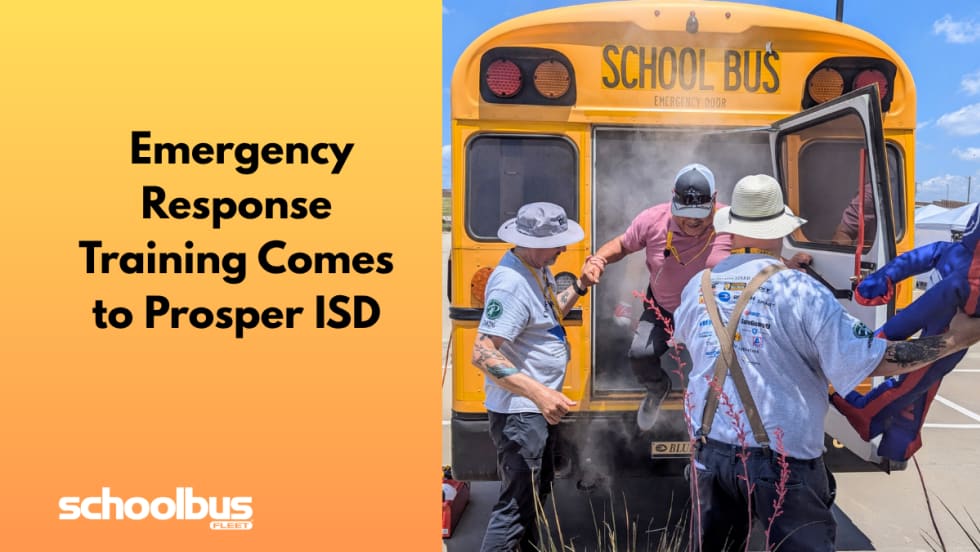
Operation STEER Brings Emergency Response Training to North Texas
Prosper ISD hosted the third annual training for transportation professionals across 67 districts to learn how to respond to emergencies, such as rollovers and evacuations, and proper use of safety equipment.
Read More →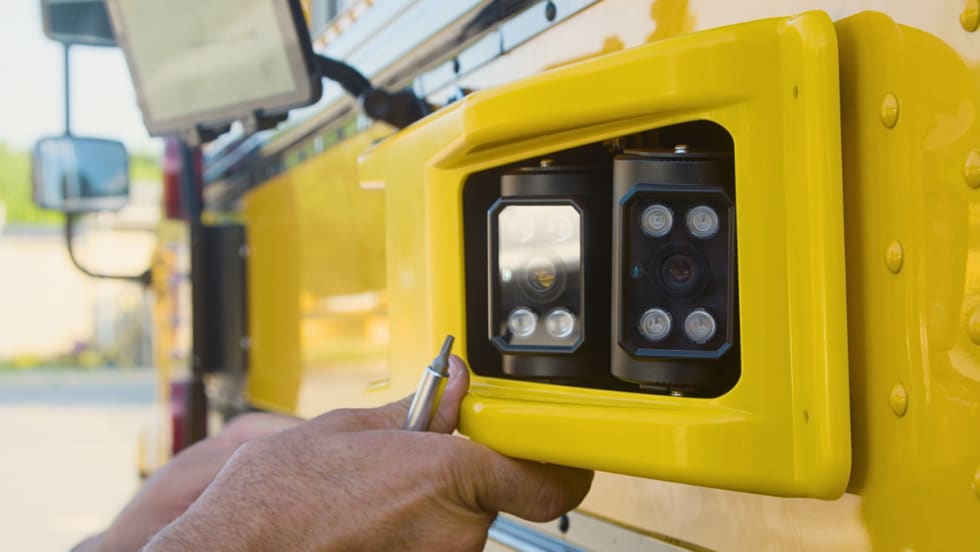
Florida District Relaunches BusPatrol School Bus Camera Program With New Safeguards
After being suspended over due process concerns, Miami-Dade schools and law enforcement are restarting the AI-powered stop-arm camera program with new oversight.
Read More →
School Bus Laws To Watch: Seat Belt Bills, Funding Fights & EV Changes
From national bills on seat belts and driver oversight to driver awareness campaigns referencing “Finn’s Rule” and ongoing transportation funding debates in Alaska, here’s the latest in school bus legislation across the U.S.
Read More →
9-Year-Old Boy Killed by School Bus at Busy Brooklyn Intersection
A Williamsburg community is mourning after a child was fatally struck by a private yeshiva bus, prompting calls for urgent safety improvements at the high-traffic crossing.
Read More →
Does Reliable School Transportation Boost Attendance? EverDriven’s Data Says Yes
The new data shows 99.99% incident-free trips and strong on-time performance, reinforcing how dependable transportation, especially for vulnerable student populations, can help districts combat chronic absenteeism.
Read More →
NTSB Calls for Alcohol Impairment Systems, Seat Belts After W.V. Crash Investigation
The federal agency's report asks NHTSA to require all new school buses to be equipped with vehicle-integrated alcohol detection systems and passenger lap-shoulder belts.
Read More →