




Playing with Fire?
Although NHTSA is reluctant to require its use, flame-retardant seating material is making inroads in the school bus industry.
Despite the fact that the Carrollton, Ky., tragedy is now more than a decade old, school transportation professionals haven't forgotten the horrific accident that claimed the lives of 27 passengers. The fire is what most people remember. That may be the reason why fire-resistant seat coverings are growing in popularity, even though the National Highway Traffic Safety Administration (NHTSA) continues to deflect the National Transportation Safety Board's (NTSB) recommendation to upgrade the seating flammability safety standard. James Collins, marketing manager for GenCorp., which manufactures vinyl and flame-blocking seating materials, says he's seen a slow but steady movement toward flame-barrier seating material by school bus operators. "We're seeing more and more people asking for the fire-blocking material," he says. "They're shifting over, slowly." Tee Harris, a sales manager for Morbern U.S.A. Inc., an industrial fabric manufacturer in Raleigh, N.C., estimated that flame-retardant seat covering now accounts for 40 percent of the overall market for school buses. "And it's definitely growing," he adds.
Reviewing the past
It was May 14, 1988, when a church bus carrying 66 passengers was hit on the right front side by a 1987 Toyota pickup traveling north in the southbound lane. Gasoline from the bus' fuel tank was ignited and flames immediately engulfed the bus. In addition to the 27 fatalities, 34 others were injured. Reaction to this tragedy throughout the field of pupil transportation was immediate and prompted the National Transportation Safety Board (NTSB) to make several recommendations to various groups. Subsequent improvements include a concentrated effort in most states to phase out all pre-1977 buses, the upgrade of Federal Motor Vehicle Safety Standard (FMVSS) 301, related to fuel tank integrity, and the revision of FMVSS 217 to require that the total area of emergency exits be based on the designated seating capacity. However, one of these recommendations remains in an "open-unacceptable action" status. That one pertains to FMVSS 302, the flammability of seat materials. Although the specific cause of the Carrollton accident was the alcohol-impaired condition of the truck driver, the accident's severity was intensified by the fire penetrating the interior, igniting the seat material and causing the rapid spread of fire and smoke. Consequently, NTSB issued safety recommendation H-89-04 to the National Highway Traffic Safety Administration (NHTSA). It urged the agency to upgrade FMVSS 302.
Flammability requirements argued
In October 1995, NHTSA advised NTSB of its response to recommendation H-89-04. NHTSA concluded that there was no need to upgrade the flammability requirements for school bus seats, and pointed to three factors which influenced their decision. First, the Carrollton crash is the only one in which the primary cause of the fatalities was fire. Second, upgrading to a flame-blocking material is expensive. Third, the revision of FMVSS 217, allowing for upgraded emergency exits, allows for faster evacuation in such emergencies. NHTSA added that it had informed each state director of pupil transportation about the availability of flame-resistant materials. Each state was free to adopt regulations that require these more flame-resistant materials. The NTSB expressed disappointment in NHTSA's failure to increase the flammability requirements, and indicated that "pending further response, H-89-04 will remain in an open-unacceptable action status."
[PAGEBREAK]
Agree to disagree
On April 13, 1998, the two agencies met to discuss the status of open recommendations, including H-89-04. In correspondence dated July 31, NHTSA expanded on its previous conclusions by noting first that the bus involved in the Carrollton crash was manufactured before upgraded school bus standards had gone into effect; therefore, the upgraded requirements of FMVSS 301 and 217 may have prevented the results of the crash. Second, they stated that "emergency exits work in many different crash scenarios, while reducing the flammability only slows the rate of fire spread." Says Charlie Hott of NHTSA's Office of Safety Performance Standards, "Fire-blocking materials on school bus seats, at the most, would allow an increase in evacuation time of only a few minutes in fuel-fed fires." Third, upgrading flammability requirements would result in very high costs with little or no corresponding benefit. These "very high costs," according to the 1995 NHSTA correspondence would range from $275, to upgrade only the seat foam, to $1,500 for the seat foam and a flame-retardant cover for a 66-passenger bus. These figures were repeated in its 1998 correspondence to the NTSB.
Weighing the costs
According to David Turner of Butner, N.C-based Athol Corp., one of the nation's leading suppliers of fire-blocking materials for school buses, "the foam cushion is not involved in the fire-blocking solution since the idea of flame-blocking seat covering is to prevent the fire from reaching the materials underneath the covers." Such covers, according to Allan Haggai, marketing manager for Thomas Built Buses in High Point, N.C., range from approximately $400 to $800 for a 66-passenger bus, depending on the grade of materials used. More than a dozen states have chosen to adopt regulations that require more flame-resistant materials for school bus seats. And, among these states, there is a wide range of standards. Some states require fire-blocking materials on all the seats, while others may require them only for the driver's seat and the first rows, or only in special-needs buses. Some states require the more expensive kevlar seat covers, while others require the less expensive covers. The kevlar coverings are more resistant to cuts and tears. However, all levels of fire-blocking materials possess the same degree of flame-resistant properties. In any event, those states have not allowed higher costs to prevent them from adopting their regulations. Doug White of the North Carolina Department of Education, says that the additional cost for fire block material on a 66-passenger bus in NC is about $324. "We feel the cost is warranted," he added. Mike Roscoe, Kentucky's state director of pupil transportation, reports the increased cost at $31 per seat in his state. When asked to comment on the question, "How do you react to the opinion that due to the rarity of fatalities caused by fire in school bus crashes, plus the costs involved, legislation requiring more flame-resistant materials in school buses is not warranted," his comment was simply, "An ounce of protection is worth a pound of cure." But this does not resolve the issue. Roger Eastman, state director of pupil transportation in Washington state, which requires flame-retardant seat covers, believes that requiring items on a school bus that will reduce the likelihood of injury or death should be left to the individual states. Bruce Little, Colorado's state pupil transportation director, reports that his state does not require fire-retardant seating material due to the high cost and the lack of buses that have burned. He says, "If we were looking at just safety, of course, we would require this material and many other safety features and heavier construction." Little believes that reality requires states to look at the cost of a new rule or bus feature and weigh that against the safety benefits. "That's very hard to tell a parent," he says. "But, again, this is reality with shrinking budget dollars. Instead of a high-cost safety feature such as fire-block material, we need to see if there might be lower cost alternatives."
Author Leon Davis is transportation director at Whittier Christian High School in La Habra, Calif.
More Safety
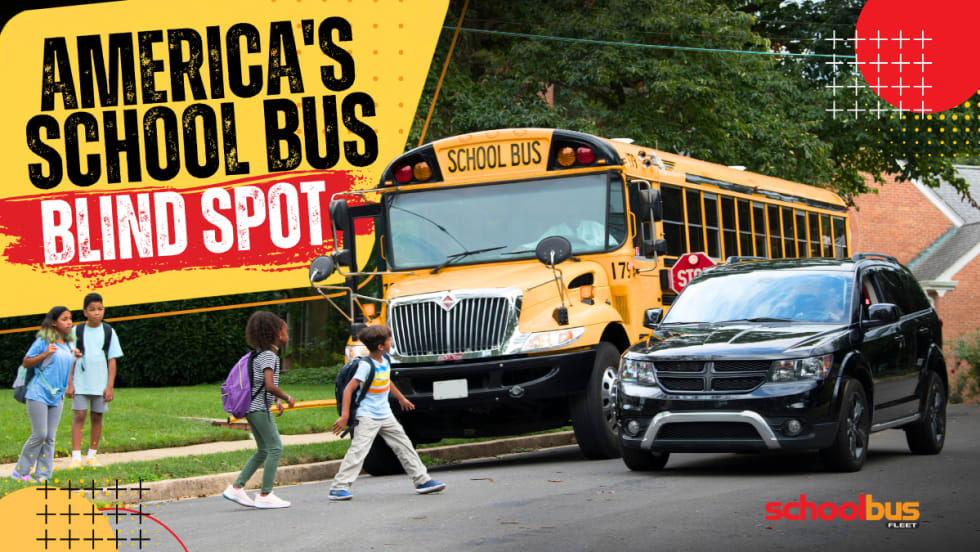
America Has a School Bus Passing Problem — and Distraction Is Making It Worse
Illegal school bus passing remains a major safety threat as distracted driving rises. This op-ed explores why awareness, enforcement, and stop-arm cameras matter more than ever.
Read More →
School Bus Laws to Watch: New York Delays EV Mandate
Plus, federal lawmakers seek new funding for school bus safety as states weigh stop-arm enforcement, disability protections, and education spending.
Read More →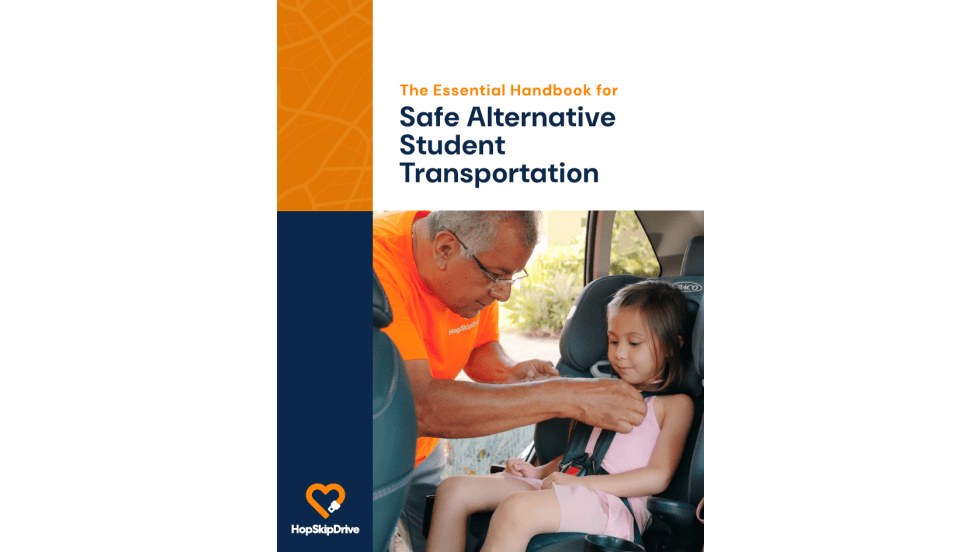
The Essential Handbook for Safe Alternative Student Transportation
Your district's "exception riders" — students with IEPs, those experiencing homelessness, foster care youth — deserve more than a middleman solution. This handbook breaks down exactly what to look for in a supplemental transportation partner: from driver vetting and regulatory compliance to proactive safety technology. Because getting a ride isn't the same as getting a safe one.
Read More →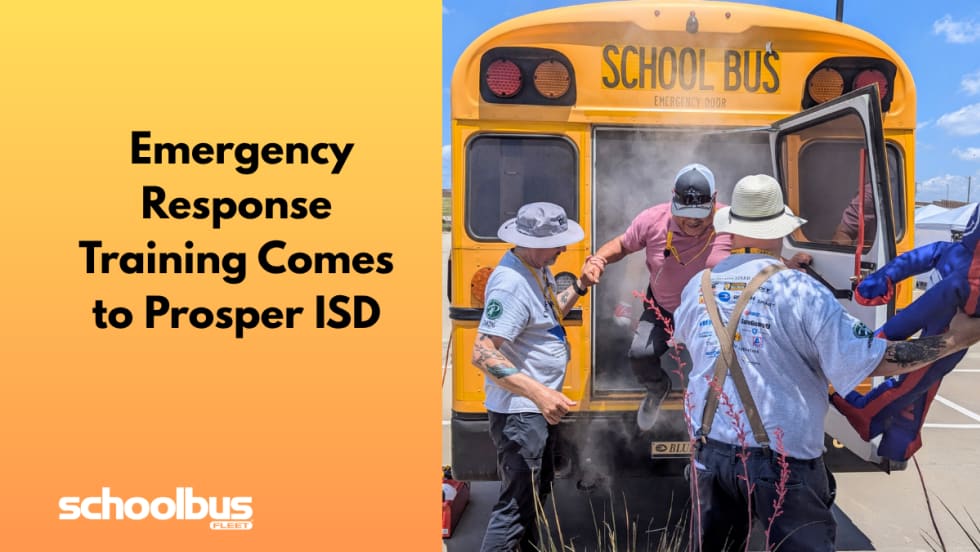
Operation STEER Brings Emergency Response Training to North Texas
Prosper ISD hosted the third annual training for transportation professionals across 67 districts to learn how to respond to emergencies, such as rollovers and evacuations, and proper use of safety equipment.
Read More →
Florida District Relaunches BusPatrol School Bus Camera Program With New Safeguards
After being suspended over due process concerns, Miami-Dade schools and law enforcement are restarting the AI-powered stop-arm camera program with new oversight.
Read More →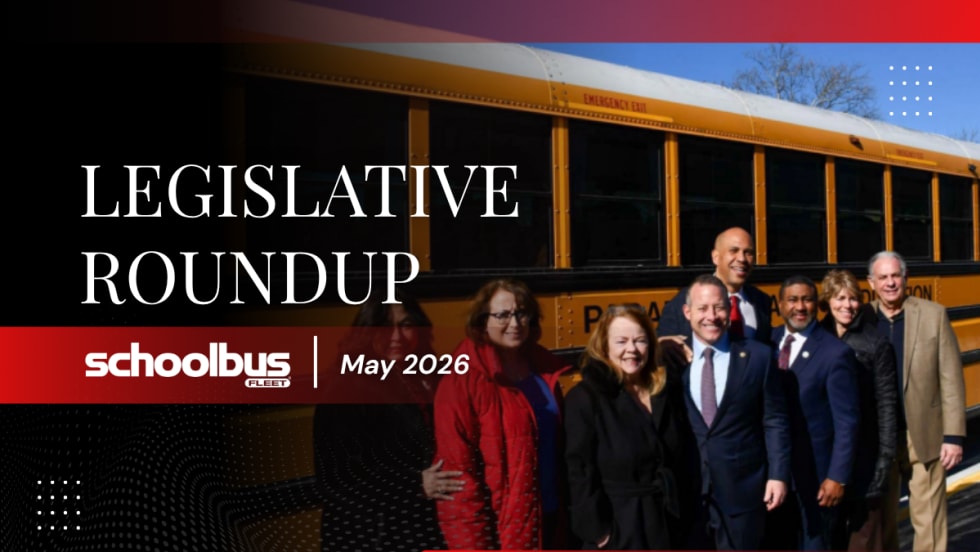
School Bus Laws To Watch: Seat Belt Bills, Funding Fights & EV Changes
From national bills on seat belts and driver oversight to driver awareness campaigns referencing “Finn’s Rule” and ongoing transportation funding debates in Alaska, here’s the latest in school bus legislation across the U.S.
Read More →
9-Year-Old Boy Killed by School Bus at Busy Brooklyn Intersection
A Williamsburg community is mourning after a child was fatally struck by a private yeshiva bus, prompting calls for urgent safety improvements at the high-traffic crossing.
Read More →
Does Reliable School Transportation Boost Attendance? EverDriven’s Data Says Yes
The new data shows 99.99% incident-free trips and strong on-time performance, reinforcing how dependable transportation, especially for vulnerable student populations, can help districts combat chronic absenteeism.
Read More →
NTSB Calls for Alcohol Impairment Systems, Seat Belts After W.V. Crash Investigation
The federal agency's report asks NHTSA to require all new school buses to be equipped with vehicle-integrated alcohol detection systems and passenger lap-shoulder belts.
Read More →
2026 State of Student Transportation Report
Student transportation teams are being asked to do more with less, facing driver shortages, rising costs, and increasing safety expectations. This report uncovers how fleets are adapting, where technology is making the biggest impact, and why student ridership tracking is emerging as a top priority. Download the report to explore the key trends shaping 2026 and what they mean for your operation.
Read More →