




It Could Happen Here
Are you prepared for gunfire aboard a school bus? Recent campus assaults have forced transportation managers to scrutinize training programs, student conduct policies and emergency plans.
Violence is all the rage on school campuses these days, literally. The recent carnage in Springfield, Ore., West Paducah, Ky., Pearl, Miss., and Jonesboro, Ark., is graphic evidence that the violent impulses of children can turn deadly when guns are involved. Educators have responded by approving zero-tolerance policies for weapons possession and threats, installing campus metal detectors and supporting increased crisis prevention training for teachers, counselors and other building personnel. Transportation departments are also searching for solutions. Although the recent assaults have not taken place on a school bus, the possibility that drivers and passengers will someday become players in a shooting rampage cannot be ignored. "Hey, if you don't smell something like this coming, you're not paying attention," says Terry Thomas, president of Community Bus Services Inc. in Youngstown(Ohio). "The incidents are certainly increasing, and it's going to happen somewhere." Crisis prevention training is one option for transportation managers, who also should be preparing emergency plans in the event of a tragedy on the scale of the May 21 assault in Springfield, Ore., in which two students were killed and 22 others injured in the spray of gunfire by 15-year-old Kip Kinkel. "The transportation issue is critical in terms of being prepared for crisis situations," says Kenneth S. Trump, president of National School Safety and Security Services in Cleveland. "Drivers need to be fully supported and trained." Moreover, Trump says transportation managers need to be active participants in developing district crisis guidelines. "Certainly you could have a violent incident or hostage situation aboard a bus, but transportation's also going to be key if you have an emergency dismissal or a mass evacuation," he says. "You can't just fly by the seat of your pants in those situations."
The Springfield tragedy
Volinda Wilson, transportation director at Springfield (Ore.) School District, says Kip Kinkel's bloody rampage at Thurston High School tested the preparedness of her 70-bus operation. "I heard the distress call that we had several bodies down at Thurston High School, and I thought about my drivers having to evacuate the school," Wilson says. "Before the drivers had to face the students I wanted them to meet with a counselor, who told them what they could be facing and where they needed to be with themselves. And my drivers did a super job." On buses serving other schools in Springfield, drivers were instructed not to turn on the radio. Wilson said news of the tragedy was kept from the passengers so they could be informed by their parents. Not every driver followed the procedure. "You're shocked and stunned by the news," she says. "Some were quick to turn off their radios; others were not so quick." In the wake of the shooting, Wilson says she would like to train drivers to recognize the warning signs of a student who's on the brink of a violent episode. She believes that drivers have insights into the children’s lives that even teachers might not have. "We're the first to see them in the morning and the last to see them as they go home," Wilson says. "And often we know them from the time they're 5 years old until they graduate from high school. We certainly learn a lot about them in that time." Wilson also would like to instruct bus drivers on how to deal with gun-wielding students and hostage situations. "Kip Kinkel was an active bus rider," she says, reflecting on the horrifying possibility that he might have unleashed his fury on a packed school bus. That fateful day, however, Kinkel didn't ride the bus to school. Instead, he killed his parents and took their car.
Warning signs evident?
Bill Hoosty, a senior training consultant for the Pupil Transportation Safety Institute in Syracuse(NY), says drivers need to improve their awareness of what’s going on in the bus. "For example, Johnny gets on the bus, heads toward the back, stops to a show a friend something he has in a gym bag and continues to the back of the bus," he says. "That may begin to be where the driver shows a little more attention." Hoosty believes that the transportation department should be looked upon as the distant early-warning signal for the schools. "And drivers, when they write somebody up or talk to the building administrators, need to be given a lot more credibility than they have in the past," he says. George Horne, a school transportation consultant in Metairie(La.), agrees that drivers can play a role in heading off impending violence by noting any dramatic changes in a child’s personality or behavior. "It’s been my experience that some kids will talk to bus drivers when they won’t talk to their teachers or counselors," he says. Horne says particular attention should be paid to children who are constantly teased by their peers. "We see it more and more. These are the children who are striking out because they’re not going to take it anymore," he says.
[PAGEBREAK]
Firepower is growing
"Years ago we talked about fistfights; now we talk about gunfights," Ronald Stephens, president of the National School Safety Center in Westlake Village(Calif.), told the Los Angeles Times. "First it was a big deal if we saw guns come to school. Now we're seeing semiautomatic weapons." Thomas of Community Bus Services believes that school bus operators must respond to this problem with additional training, but has concerns about the affordability of this commitment. "It's the level of sophistication with which you can approach that problem," Thomas says. "This is no different than years ago when they mandated drug and alcohol testing and commercial driver's license requirements. All you had to do was have a strategy that made sense. You addressed it and resolved it within your operation." But training drivers to handle potentially violent situations — beyond the kick-and-push scrapping of two third-graders — requires an investment of capital, which Thomas says some small school districts can't afford. "I feel sorry for the public-sector bus operators, especially those with small fleets, whose school boards don't give them the resources to deal with these problems," he says. Thomas says he's turned to the crisis intervention program developed by Strategies Training Systems in Seattle. "We'll spend a couple thousand dollars developing programs, and then we'll start the training this fall," he says. "We’ll have our situation under control for our customers. It's just good business."
Drivers often overlooked
"What's important for school districts is to be offering training to school bus drivers," says Linda Steiger, president of the Crisis Prevention Institute (CPI) in Brookfield, Wis. "They are often overlooked when it comes to this type of training." CPI trainers teach school staff members how to de-escalate situations using verbal and non-verbal behaviors. Steiger says confidence is the key to successfully handling these situations. "This allows you to focus on what the student is actually saying or doing, rather than becoming fearful and distraught." Although verbal de-escalation is the primary objective, CPI also teaches techniques to subdue a physically aggressive student. However, the notion that drivers should be taught physical restraint tactics is controversial (see Industry Forum), though few would deny that drivers are occasionally called upon to break up fights. At the core of much of the violence on campuses and school buses these days is the breakdown of collective morals and sanctions. Many people believe that society is to blame for the quickening pulse of youth violence. From the standpoint of safe school transportation, the bottom line is that students are more difficult to handle now than, say, a decade, or even five years, ago. "It's a lack of respect for adult authority," says Bob McElligott, transportation safety manager at Davidsmeyer Bus Service in Elk Grove Village, Ill. "Students just blatantly disregard the rules. They just don't care." McElligott says his company, which operates 120 buses and transports approximately 8,000 children, is treating the rash of violence "very seriously" and has reported threats to school authorities. "There’s no goofing around," he says. "You’d rather err on the side of safety."
Threats taken seriously
Bobby Sheroan, transportation director at Hardin County (Ky.) Board of Education, says concern about potential violence has increased over the past year. These days, rumors of weapons aboard the school bus are immediately investigated. Last year, a student was expelled after it was proven that he had brought a gun on the school bus. "Rumors are investigated to the utmost, even at the cost of considerable time on our part," Sheroan says. The district operates 184 school buses in a mostly rural area spread over 600 square miles. On a few of the alternative-school routes, drivers use hand-held metal detectors on high-risk students before they're allowed to enter the bus. "That way we know that they're going to school without a weapon," Sheroan says. He met with the students' parents before implementing the weapons search and has not received any opposition. The students are placed on special-needs buses with a minimal number of other passengers. Although the hand-held scanners prevent the most incorrigible youths from bringing weapons to school, they are not used on regular-education bus routes. Earlier this year, Indianapolis Public Schools implemented random weapons checks at elementary schools, with many of the searches taking place as the students disembarked from the school bus. Not everyone supports the idea that these precautions will stop the flow of weapons on school campuses. School transportation consultant Horne says a district he once worked for prohibited students from toting book bags unless they had see-through mesh. "But if a child wants to bring a gun to school, he's going to find a way to do it," he says. Expecting a bus driver to identify students who might be carrying weapons is unreasonable, Horne says. "If the driver is really doing his job properly — paying attention to the loading and unloading process — it's almost impossible for him [to watch for students trying to bring weapons aboard]."
[PAGEBREAK]
Defusing a crisis
"When somebody is losing it, they lose their hearing, get tunnel vision and break eye contact," says Joe Hixon of Strategies Training Systems. What the driver needs is training in how to verbally de-escalate these situations. This may require the driver to "penetrate the person's intensity level," Hixon says. That means raising the volume of his voice and his intensity. "You might need to say, ‘Hey, you're really pissed off, aren't you?' in a direct, commanding tone," he says. Most importantly, drivers need to participate in role-playing exercises, preferably taught by law enforcement personnel. The exercises need to be as real as possible. Otherwise, the drivers might not react properly during an actual crisis. "People under stress go back to their training," Hixon explains. "If they have nothing in their bag, then they have the fight-or-flight syndrome." National School Safety’s Trump recommends that school districts offer their school buses to police SWAT teams for a weekend of training exercises. "These tactical officers may not have practiced on a school bus," he says. Unless they've ridden on a school bus recently, the officers may have forgotten how narrow the aisles are or where the emergency exits are located.
Guns won’t go away
Some educators believe that schools need to devise their strategies based on the assumption that guns will always be a factor. "We must learn how to raise a generation of kids in a society where guns are readily available," says Stephen Thomas, director of the Institute for Minority Health Research at Emory University in Atlanta (Ga.). "Once you accept that premise, then you realize that the solution is with the kids. They're the ones that should be brainstorming." At Polk County (Fla.) Schools, middle-school students are doing the brainstorming to keep the peace aboard school buses. Fred Murphy, the district's assistant superintendent in charge of transportation, says a program was started two years ago at a middle school to involve the students in developing the rules of conduct aboard school buses. Approximately 1,000 students collaborated with Murphy, 15 bus drivers and the school principal. They established a set of bus rules that were similar to the district's own, but Murphy noticed a marked increase in self-policing. "Anyone who violated the rules was breaking their rules, not ours," he says. The drivers and students met twice during the school year, at the beginning of the year and again after the Christmas break. Murphy says the series of meetings lasted two to three hours and enhanced communication between the drivers and their passengers. "We’ve seen our discipline reports reduced by 50 percent," Murphy says. "It has made a phenomenal difference."
More Safety
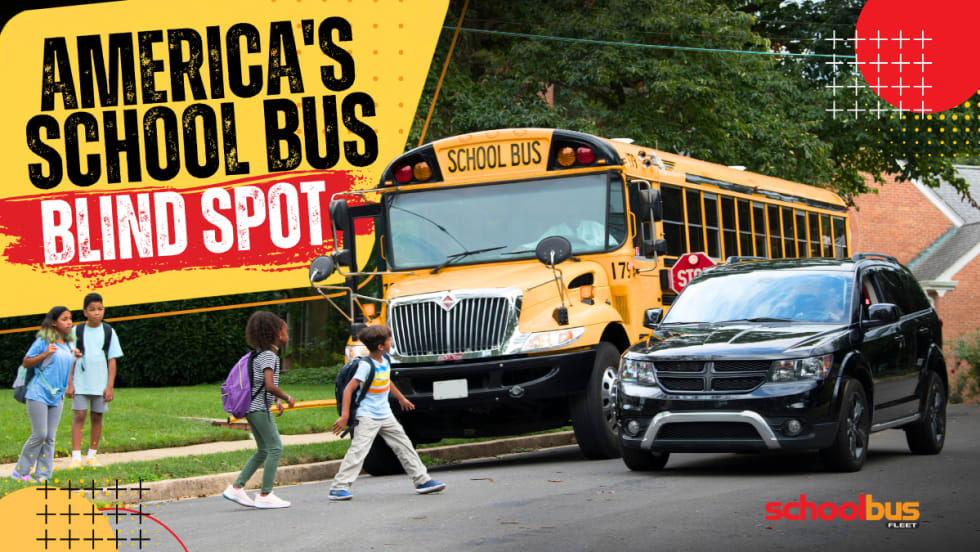
America Has a School Bus Passing Problem — and Distraction Is Making It Worse
Illegal school bus passing remains a major safety threat as distracted driving rises. This op-ed explores why awareness, enforcement, and stop-arm cameras matter more than ever.
Read More →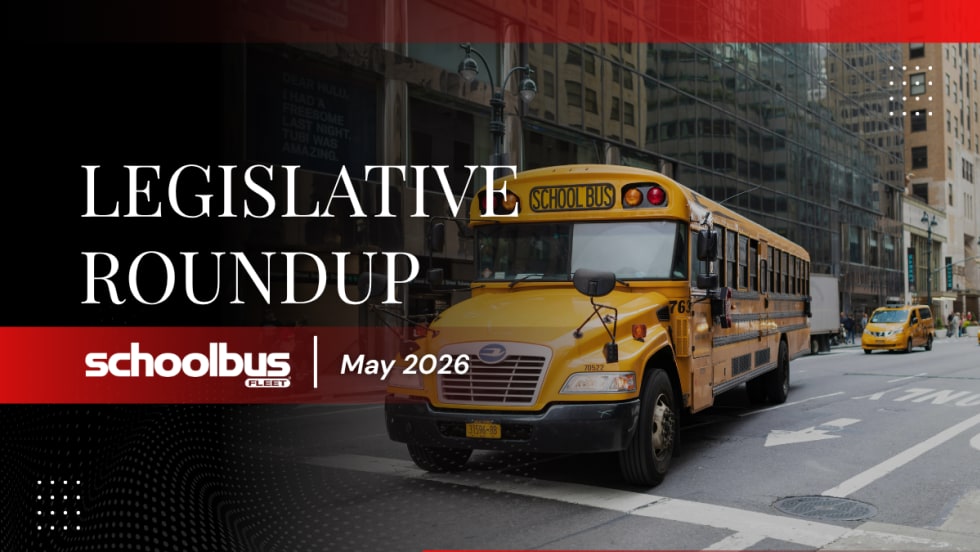
School Bus Laws to Watch: New York Delays EV Mandate
Plus, federal lawmakers seek new funding for school bus safety as states weigh stop-arm enforcement, disability protections, and education spending.
Read More →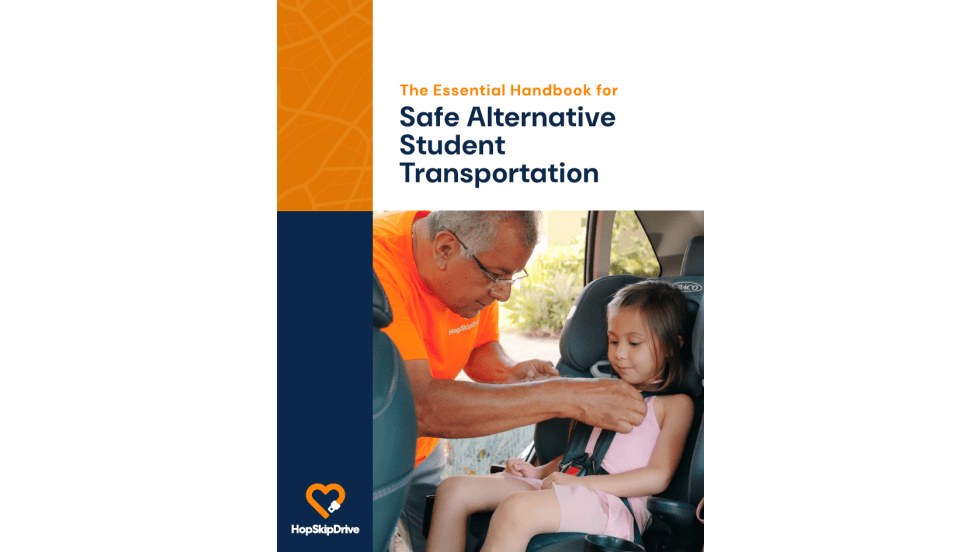
The Essential Handbook for Safe Alternative Student Transportation
Your district's "exception riders" — students with IEPs, those experiencing homelessness, foster care youth — deserve more than a middleman solution. This handbook breaks down exactly what to look for in a supplemental transportation partner: from driver vetting and regulatory compliance to proactive safety technology. Because getting a ride isn't the same as getting a safe one.
Read More →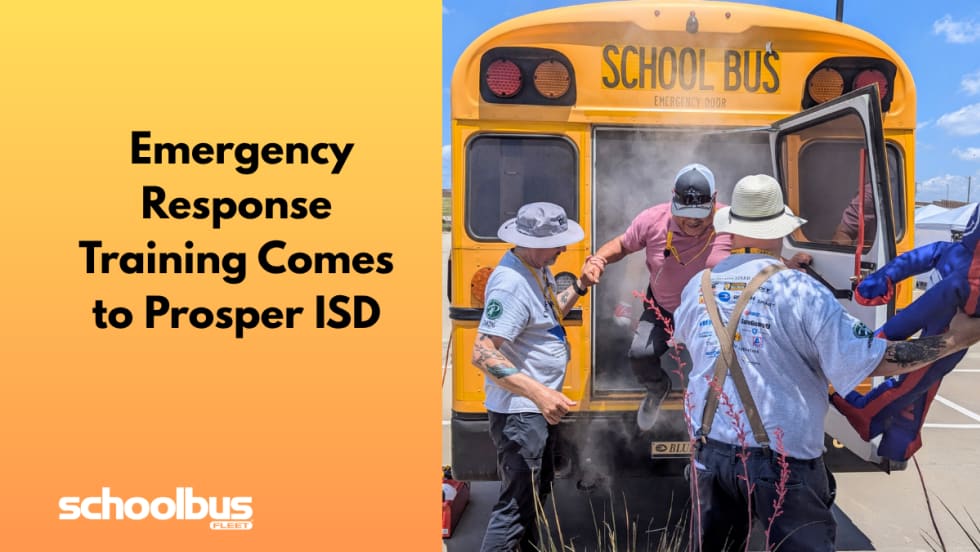
Operation STEER Brings Emergency Response Training to North Texas
Prosper ISD hosted the third annual training for transportation professionals across 67 districts to learn how to respond to emergencies, such as rollovers and evacuations, and proper use of safety equipment.
Read More →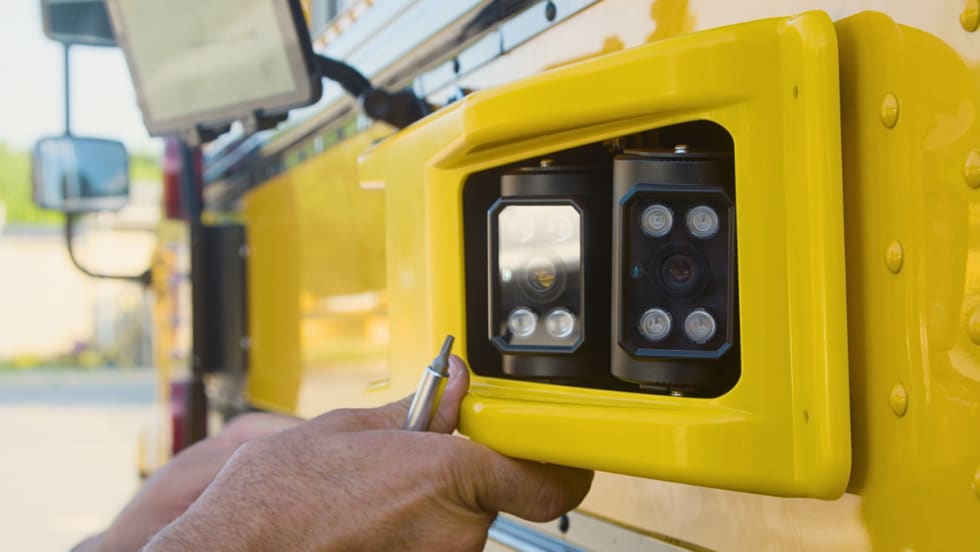
Florida District Relaunches BusPatrol School Bus Camera Program With New Safeguards
After being suspended over due process concerns, Miami-Dade schools and law enforcement are restarting the AI-powered stop-arm camera program with new oversight.
Read More →
School Bus Laws To Watch: Seat Belt Bills, Funding Fights & EV Changes
From national bills on seat belts and driver oversight to driver awareness campaigns referencing “Finn’s Rule” and ongoing transportation funding debates in Alaska, here’s the latest in school bus legislation across the U.S.
Read More →
9-Year-Old Boy Killed by School Bus at Busy Brooklyn Intersection
A Williamsburg community is mourning after a child was fatally struck by a private yeshiva bus, prompting calls for urgent safety improvements at the high-traffic crossing.
Read More →
Does Reliable School Transportation Boost Attendance? EverDriven’s Data Says Yes
The new data shows 99.99% incident-free trips and strong on-time performance, reinforcing how dependable transportation, especially for vulnerable student populations, can help districts combat chronic absenteeism.
Read More →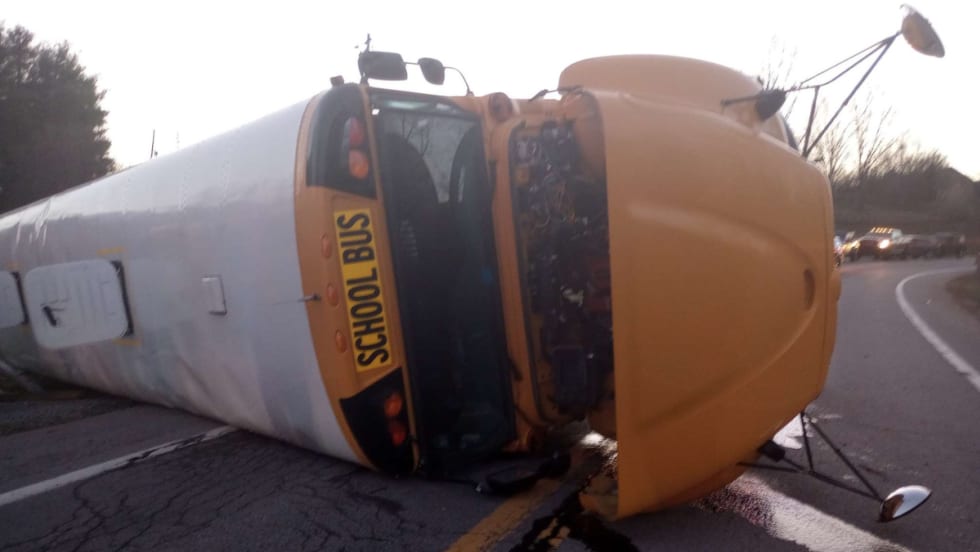
NTSB Calls for Alcohol Impairment Systems, Seat Belts After W.V. Crash Investigation
The federal agency's report asks NHTSA to require all new school buses to be equipped with vehicle-integrated alcohol detection systems and passenger lap-shoulder belts.
Read More →
2026 State of Student Transportation Report
Student transportation teams are being asked to do more with less, facing driver shortages, rising costs, and increasing safety expectations. This report uncovers how fleets are adapting, where technology is making the biggest impact, and why student ridership tracking is emerging as a top priority. Download the report to explore the key trends shaping 2026 and what they mean for your operation.
Read More →