




Unsafe Passage: How to Curtail Illegal Pass-Bys
Thousands of motorists illegally pass school buses every day.
A red octagon undoubtedly is one of the most instantly recognizable symbols. It's so familiar that it conveys its message - STOP - even without that word emblazoned across the middle. Unfortunately, attaching those octagons (in the form of stop arms) to the sides of school buses seems to render the signs powerless - possibly invisible; "I didn't see it" being the most common excuse offered. That excuse, of course, is unacceptable when lives are at stake. Stop arms exist to provide a safety zone for children, especially inattentive children. The stop arm, by grabbing a motorist's attention, acts as insurance against a child's momentary lapse that could lead to tragedy. The reality, however, is that many motorists don't heed school bus stop arms (or the flashing red lights) and children occasionally are injured or killed as a result. "People just don't get it," says Deborah Lincoln, Oregon's state director for pupil transportation, with evident frustration. "It isn't just school buses," she adds. "We drive faster than the posted speed limit, run all the red lights we possibly can. People are just in a hurry and don't want to stop." Across the country in Fairfax, Va., the situation essentially is the same. "They're listening to the radio, talking on the phone, thinking about where they need to be," says Tim Parker, assistant transportation director for the Fairfax County Public Schools. Parker recalls a 1997 survey that tracked stop arm violations in the state. In Fairfax County alone, 819 motorists drove past extended stop arms in a single day. Unfortunately, the numbers elsewhere are worse. In 1995, a similar one-day Florida study, conducted by the University of South Florida's Center for Urban Transportation Research, tallied more than 10,000 stop arm violations in a single day. Incredibly, more than 400 of those drivers passed on the right. Even more sobering, Jim Brown, founder and state director of New York's Operation Safe Stop, says the passing motorist is that state's No. 2 killer of school-age children. Not all of those fatalities occurred around school buses, but the danger posed by passing vehicles is clear.
Why don't people get it?
One school transportation director neatly summarized another reality: "Passing a school bus with flashing lights is illegal anywhere on the continent." That's basically true, but complicated by inconsistent enforcement and a jumble of different, sometimes conflicting state laws. In Oregon, for example, Lincoln says stop arm violators are especially prevalent in border cities, where interstate highways bring in many motorists who are unfamiliar with the particulars of the Oregon law. Motorist confusion is a widely cited factor in the proliferation of stop arm violations, and not only for cross-border traffic. In January, California implemented the Thomas Edward Lanni School Bus Safety Act, named after a young boy who was killed by a passing motorist. While the new law, which more than doubled the fines for stop arm violations, was intended as a crackdown of sorts on stop arm violators, it apparently is having an unintended effect. Because the law requires bus drivers to activate the stop arm and flashing lights at every stop, motorists are treating the signs like a red herring. Additionally, bus drivers must activate the amber warning lights at least 200 feet before coming to a stop and activating the stop arm. Apparently, that's not a sufficient warning in many situations, as school bus drivers across the state report surprised motorists making "panic stops," causing chain-reaction collisions among other motorists. Moreover, interviews with violators indicate that awareness of the stop arm law is no greater than before the new law went into effect. Although the new law is less than a year old, amendments already are before the California legislature. Are the stop arm laws too obscure or too confusing? "That's just an excuse," says Neal Abramson, assistant director of transportation for the Santa Monica-Malibu (Calif.) Public Schools. "People want to be confused because it justifies their mistake. It's plain and simple: It says on the back of the bus 'Stop When Red Lights Flash.' If they are flashing, you stop; if they are not, you go - how hard is that?" Although L.A. traffic is often rude and reckless, Abramson says that for several years he drove school buses in the Midwest, where, he says, stop arm laws are just as routinely violated. Indeed, stop arm violations seem to cut across every regional and geographic boundary. Even in California's Humboldt County, a rural, heavily wooded region, stop arm violations have their own distinct character, according to Dan Pires, transportation director at Eureka City Schools. He explains that following a school bus on a rural road is "like following a motorhome on a mountain road; motorists are looking for the first opportunity to get around it," and that opportunity may come when the bus stops to load or unload passengers.
[PAGEBREAK]
Alert the media!
While motorists certainly will continue attempting to get around school buses and stop arm laws, there are a few methods for raising awareness and reducing violations. Brown's Operation Safe Stop works with local school districts to coordinate community, media and law enforcement attention on stop arm violations. First, "work internally within the school district," Brown advises. In fact, bus drivers and transportation directors interviewed for this article lamented the many parents, students, teachers and various school employees they've observed violating stop arm laws in school loading zones. District newsletters, PTA advisories and articles in student newspapers all are effective procedures for alerting the people in your district about stop arm laws. Several districts have reported significant success by utilizing these easily available outlets. The next step should take you into the community, to enlist the help of the police, the courts and the local media. But first, says Brown, do a little research: "How big is the problem? Where are the trouble spots? Is the media willing to ride along. Are school bus contractors and the police willing to let reporters ride along? How are the courts handling these offenses. Are the maximum penalties applied or are they usually plea-bargained?" Enlisting the help of the local newspapers and radio and TV stations is a tried-and-true method. "A lot of people watch the six o' clock news," says Charlie Hood, Florida's state pupil transportation director. "The single most effective thing a school district can do is meet with a team of law enforcement, tell them the problem, ask them to enforce at high-incidence locations and to solicit publicity of those events," Hood says. Vigorous enforcement usually works, but there are limits. Hood says the Florida police told him, "If you make the penalties too high, you will be less likely to get widespread enforcement. Cops are people too, and if we know someone is going to be faced with an unreasonably high penalty, in many cases we're going to give them a warning." It is a good idea, however, to contact the local district attorney and determine how the courts in your area actually are handling stop arm violations. Local prosecutors, like the rest of the public, may not be aware that it's such a widespread problem. Prosecution actually is the last resort, the real goal should be prevention. That perhaps is a good place to bring the issue back to the transportation department. A comprehensive prevention effort should include a review of the routes and stop locations for areas where motorists might suddenly encounter a stopped school bus and slam on the brakes. Drivers also should be trained to activate the amber warning lights early, allowing other motorists enough time to stop safely by the time the stop arm is extended. Expect that motorists will ignore the stop sign. Develop unambiguous hand signals for drivers to direct children when it's safe to cross. Also, review safe loading and unloading procedures, particularly those relating to special-needs students and young children. Pires' district requires kindergartners to wear name and address tags, which familiarizes drivers with their young passengers and reduces the chances that a confused 5-year-old child is allowed off at the wrong stop and wanders into traffic on an unfamiliar street. It's important for school bus drivers to be aware that leaving the stop arm extended and the red lights flashing while they chat with a student's parents might be delaying an already anxious driver who has obeyed the law and stopped. Bus drivers need not eliminate those conversations, but they do need to be aware of their effect on other motorists. If the community perceives a stop arm as a true safety device, it will be more inclined to treat the device with the respect it deserves.
More Safety
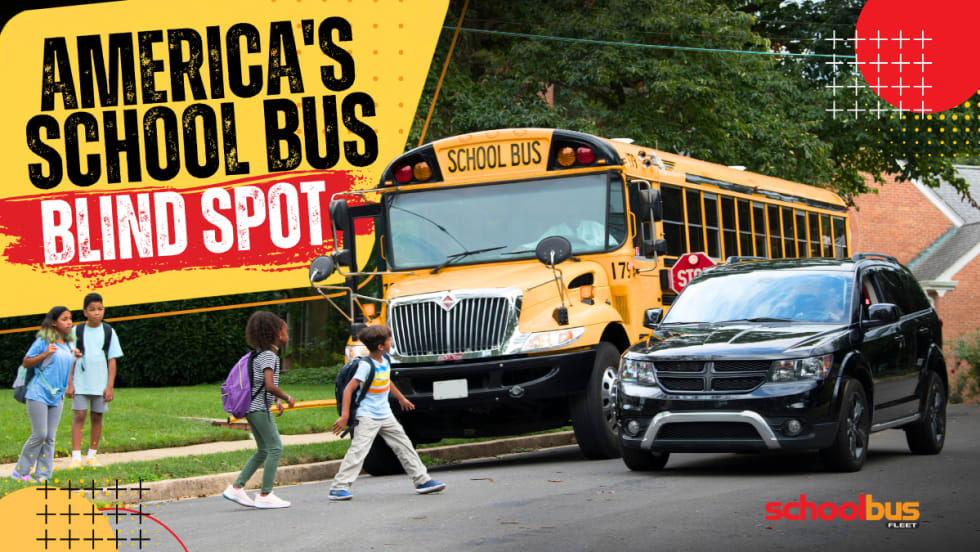
America Has a School Bus Passing Problem — and Distraction Is Making It Worse
Illegal school bus passing remains a major safety threat as distracted driving rises. This op-ed explores why awareness, enforcement, and stop-arm cameras matter more than ever.
Read More →
School Bus Laws to Watch: New York Delays EV Mandate
Plus, federal lawmakers seek new funding for school bus safety as states weigh stop-arm enforcement, disability protections, and education spending.
Read More →
The Essential Handbook for Safe Alternative Student Transportation
Your district's "exception riders" — students with IEPs, those experiencing homelessness, foster care youth — deserve more than a middleman solution. This handbook breaks down exactly what to look for in a supplemental transportation partner: from driver vetting and regulatory compliance to proactive safety technology. Because getting a ride isn't the same as getting a safe one.
Read More →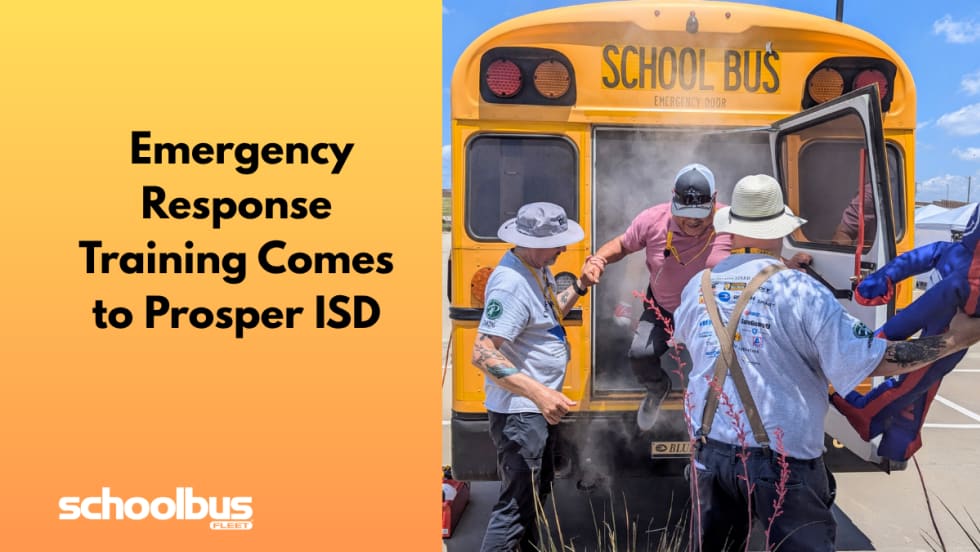
Operation STEER Brings Emergency Response Training to North Texas
Prosper ISD hosted the third annual training for transportation professionals across 67 districts to learn how to respond to emergencies, such as rollovers and evacuations, and proper use of safety equipment.
Read More →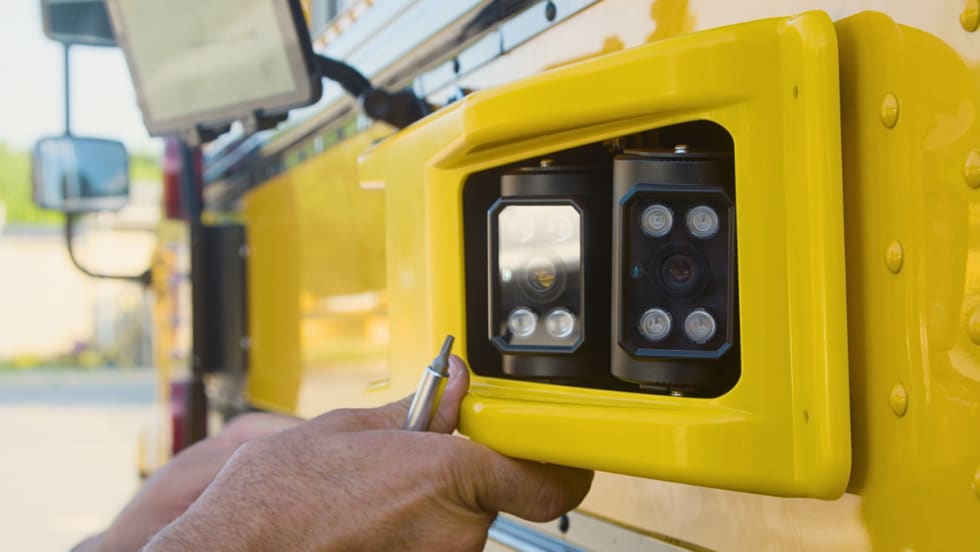
Florida District Relaunches BusPatrol School Bus Camera Program With New Safeguards
After being suspended over due process concerns, Miami-Dade schools and law enforcement are restarting the AI-powered stop-arm camera program with new oversight.
Read More →
School Bus Laws To Watch: Seat Belt Bills, Funding Fights & EV Changes
From national bills on seat belts and driver oversight to driver awareness campaigns referencing “Finn’s Rule” and ongoing transportation funding debates in Alaska, here’s the latest in school bus legislation across the U.S.
Read More →
9-Year-Old Boy Killed by School Bus at Busy Brooklyn Intersection
A Williamsburg community is mourning after a child was fatally struck by a private yeshiva bus, prompting calls for urgent safety improvements at the high-traffic crossing.
Read More →
Does Reliable School Transportation Boost Attendance? EverDriven’s Data Says Yes
The new data shows 99.99% incident-free trips and strong on-time performance, reinforcing how dependable transportation, especially for vulnerable student populations, can help districts combat chronic absenteeism.
Read More →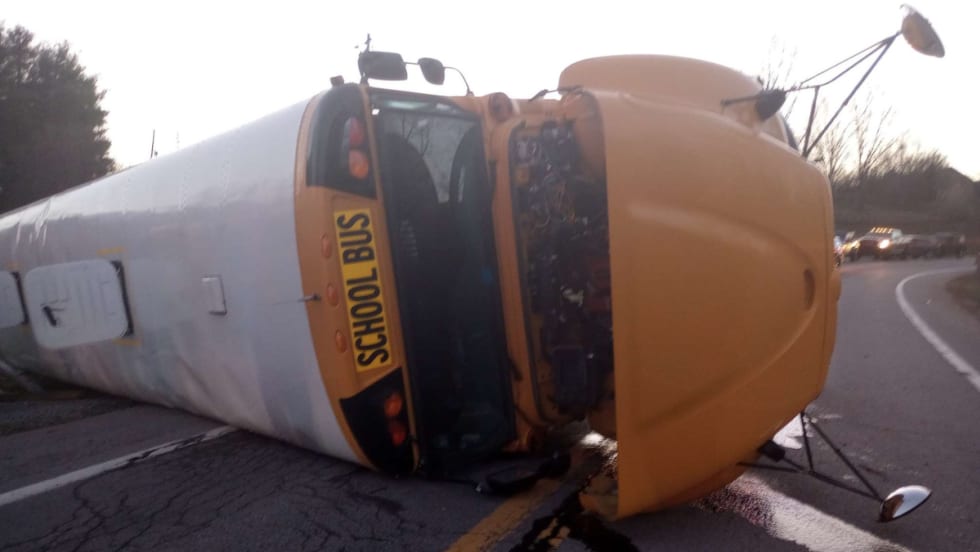
NTSB Calls for Alcohol Impairment Systems, Seat Belts After W.V. Crash Investigation
The federal agency's report asks NHTSA to require all new school buses to be equipped with vehicle-integrated alcohol detection systems and passenger lap-shoulder belts.
Read More →
2026 State of Student Transportation Report
Student transportation teams are being asked to do more with less, facing driver shortages, rising costs, and increasing safety expectations. This report uncovers how fleets are adapting, where technology is making the biggest impact, and why student ridership tracking is emerging as a top priority. Download the report to explore the key trends shaping 2026 and what they mean for your operation.
Read More →