




Iowa mandates school bus driver background checks
Gov. Terry Branstad signs legislation that requires employers to review the Iowa court information system, as well as the sex offender registry and central registries for child abuse and dependent adult abuse, for information regarding applicants. State director Max Christensen shares with SBF his views on the new law, which also requires checks every five years once applicants are hired.

Gov. Terry Branstad has signed into law legislation that requires employers to perform background checks on school bus driver applicants and then every five years once an employee is hired.
DES MOINES, Iowa — School bus drivers in the state will be subject to background checks under a bill signed into law last week by Gov. Terry Branstad.
The new law specifies that prior to hiring an applicant for a school bus driver position, including a contracted position, an employer “shall have access to and shall review” the Iowa court information system available to the general public, as well as the sex offender registry, the central registry for child abuse and the central registry for dependent adult abuse, for information regarding the applicant.
(Max Christensen, executive officer of school transportation at the Iowa Department of Education [DOE], told SBF that the Iowa court information system refers to the Iowa Courts Online Search website. He said that anyone can go on the site to find information about any type of court case that any resident of the state may have. This would include the person’s driving records.)
An employer must follow the same review procedure every five years upon the renewal of an employee’s school bus driver license issued by the Department of Transportation. In addition, employers must pay for the registry checks, and they must maintain documentation demonstrating compliance with the law.
“I’m happy we will now have mandatory school bus driver background checks here in Iowa,” Christensen said. “It’s something that we have needed for a long time. It appears that the sexual abuse checks, both for child and adult abuse, will be thorough, and I’m very happy about that.”
Under the law, if a school bus driver is listed in the sex offender registry, the central registry for child abuse or the central registry for dependent adult abuse, a termination hearing conducted will be limited to the question of whether the individual was incorrectly listed in the registry.
If after a hearing it is determined that a person is correctly listed in one or more of these registries, the DOE cannot issue to that person authorization to operate a school bus. If the individual is already a bus driver, the DOE must suspend or revoke his or her authorization to operate a school bus.
The DOE will recommend rules and procedures for issuing and suspending or revoking school bus operation authorization. The state board of education will be required to adopt those rules and procedures.
While Christensen is pleased that bus drivers in the state will now have to undergo background checks, he said he has some reservations about the mandatory check of driving records through the Iowa Courts Online website.
“Although the bill does not explicitly say the employer ‘shall check driving records,’ the intent is that by requiring a check of Iowa Courts Online, those driving records will be accessed and checked,” he said.
Christensen went on to say that there are a lot of small school districts in the state, and in these school systems, the responsibility to check driving records through Iowa Courts Online could fall on the shoulders of head bus drivers, janitors, secretaries and other support staff.
“Unless Iowa Courts Online is used properly, there is a huge potential for many things to be missed,” he explained. “In these smaller districts, they may not hire a new driver more than once a year, if that. It’s difficult to be familiar with a system and know how to get the most out of it when you don’t use it very often.”
Christensen added that the website is only searchable by name and birthdate. While the person performing the driving record check should have the applicant's or bus driver's information in front of him or her, “it’s not impossible for two or more people to have the same name and/or birthdate, and that could pose a problem unless the person running the check is really aware of those possibilities,” he said.
Still, Christensen noted that a previous version of the bill did not include the requirement for a driving record check, which he believes is very important given a school bus driver’s duties, and he said that school districts can pay for an additional driving record check outside of the Iowa Courts Online system.
For information about other states’ background check requirements for school bus drivers, as well as pupil transportation operations’ policies and procedures in this regard, check out “Who’s behind the wheel?: optimizing driver background checks.”
More Safety
School's Back. Here's What Happened to Traffic, Speeding & Distraction
What happens to traffic when school resumes? New data analysis examines changes in distracted driving, congestion, and speeding around schools.
Read More →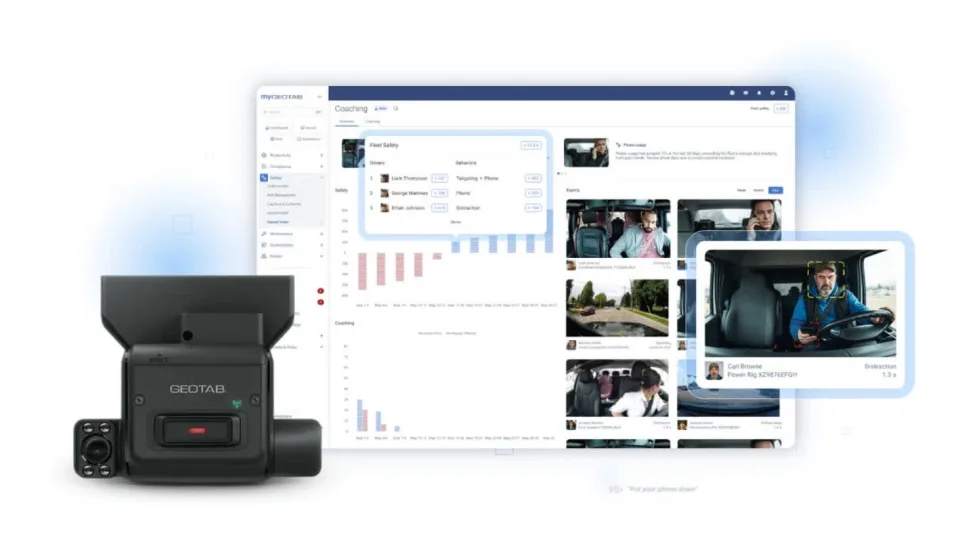
Geotab Expands Fleet Safety Tools With Video Coaching, Risk Insights
New safety and video capabilities aim to help fleet managers assess risk, support drivers, and take targeted action through video coaching, red-light violation detection, and more.
Read More →
How to Build a Better School Bus Driver Training Program
Is it time to strengthen your driver training? Here’s how to pick the right talent and improve recruitment, retention, and safety. This video is brought to you by IC Bus.
Read More →

Recent School Bus Accidents Leave 2 Dead, 2 Injured
Four school bus crashes in Florida, Illinois, and Georgia highlight risks in transportation lots, at bus stops, and during student loading and unloading.
Read More →
When Every Second Matters, Clarity Keeps Routes Moving
From routine delays to urgent incidents, strong communication practices help drivers, dispatchers, schools, and families respond with confidence.
Read More →
What Happens When a School Bus Catches Fire — and What Can Help
School bus fires are rare but can be devastating. Learn how advances in fire suppression and asset protection help fleets detect fires earlier, reduce damage, and improve safety.
Read More →
Geotab Launches Tool to Help Fleets Investigate Road Incidents
Geotab Investigations combines telematics data, video, documents, and other evidence to help fleets reconstruct incidents, resolve claims, and determine what happened.
Read More →
Texas Sixth Grader Wins 2026 National School Bus Safety Poster Contest
Sai Darshana Yekolu of Moseley Middle School in Prosper, Texas, was named the newest winner for her artwork, bringing the theme of “Safe Rides, Everyday Heroes” to life.
Read More →
Doing More With Less: How Transportation Directors Can Prioritize Safety Amid Budget Uncertainty
With diesel prices soaring and nearly one-third of transportation directors expecting budget cuts, maintaining student safety has never been more challenging. Download this guide to learn how leading districts are prioritizing risk, funding critical safety technology, and building stronger budget cases with data.
Read More →
Walton County Schools Adds Gatekeeper Stop-Arm Enforcement System
The Florida district will deploy Gatekeeper’s updated Student Protector technology, which now incorporates AI to improve video evidence.
Read More →