




Bullying and Harassment: Thin Line and Thin Ice
An expert on legal issues in school transportation discusses the distinction between bullying and harassment and offers best practices for dealing with both on the bus.

In 2006, Dr. Nan D. Stein, senior research scientist at the Center for Research on Women at Wellesley College in Massachusetts, wrote that "eradicating bullies is ... all the rage with state legislators and consultants" (National School Boards Association's Leadership Insider, August 2006).
Five years later, bullying is a centerpiece of national and state school transportation conferences. The fact that such behavior creates a barrier to learning, and, too often, media headlines shout the tragic aftermath of relentless bullying at the hands — and computers — of a student's peers, certainly justifies our interest.
As of October 2010, 44 states had adopted "bullying" statutes requiring a variety of actions by school districts. Such legislation testifies to the attention this serious problem is receiving. But Dr. Stein observed in 2006 that, "School boards and administrators should consider whether they have been too quick to embrace the anti-bullying movement and, in so doing, to abandon the anti-harassment focus."
And, on Feb. 9, 2011, testifying at a hearing in Massachusetts instigated by that state's Commission to Review Statutes Relative to Implementation of the School Bullying Law in Massachusetts, Dr. Stein cautioned that "federal civil rights laws trump bullying frameworks which can work to gloss over harassment concerns that amount to federal civil rights violations."
When is a "bully" a "harasser"? Does it matter? It may, if Dr. Stein's concerns are valid. School districts have significant responsibilities under federal anti-discrimination laws that prohibit "harassment" based on race, color, national origin, disabilities or sex. Often, the lines between bullying and harassment are blurred.
If the "bullying" label is misused, leading school officials to overlook the legal mandate for investigation and, where harassment is identified, implementation of an effective remedy that complies with federal law, then the label that's applied to the conduct can be important.
That was the point of an Oct. 26, 2010, "Dear Colleague" letter that the U.S. Department of Education's Office for Civil Rights sent to all school districts. The letter noted that "by limiting its response to a specific application of its anti-bullying disciplinary policy, a school may fail to properly consider whether the student misconduct also results in discriminatory harassment."
Where is the line, however thin, between bullying and harassment? You can, in fact, be on thin ice if you don't recognize that the label applied must not improperly limit the response made to the conduct. And, given the long-standing disconnect that too often characterizes school administrators' attention to incidents on the bus, what must school offi cials and school transportation professionals do about bullying and harassment on the school bus?
What can we learn from litigation?
A brief review of a sampling of cases of bullying and harassment on the school bus yields some fairly clear messages.
When kindergartner Jacqueline Fitzgerald's parents sued a Barnstable, Mass., school district for its handling of allegations that boys made the little girl lift up her dress and touched her inappropriately on the school bus, the case went all the way to the U.S. Supreme Court. In June 2009, the case settled for $150,000, soon after the Supreme Court had cleared the way for the case to go back to the trial court for further exploration into the school district's handling of the complaint in the first instance, and its investigatory procedures (despite what appeared to be reasonable response on the part of the district).
In January 2010, the U.S. Justice Department orchestrated a $1.475 million settlement with the Metropolitan Government of Nashville and Davidson County (Tenn.) in response to a lawsuit stemming from a 19-year-old emotionally disturbed student's sexual assault on Gilberto Lopez, a 9-year-old with autism, on an unmonitored special-education bus. A key issue in the case was the district's failure to share information with the transportation department about its knowledge of the older student's previous predatory sexual behavior with younger students. The special-needs routing coordinator placed the two students on the same bus, unknowingly, with a substitute driver who knew nothing of their disabilities, and less about what to do when she saw "something inappropriate" occur between them on the bus.
In an August 2005 New York case, a 13-year-old eighth-grader with disabilities was the victim of repeated instances of being called "stupid," "idiot," "retard" and other insults, and acts of "physical aggression and intimidation," by students both in school and on the school bus. After the first incident on the bus, the boy's mother sought out both the superintendent and the director of transportation; allegedly, neither got back to her. School officials failed to take any action despite the boy and his mother reporting each incident.
A 2007 Indiana case was "the culmination of two school years of bullying and defendants' perceived lack of response to the bullying." Among the defendants were the school corporation and an independent contractor who provided transportation to district students. Allegedly, the district was well aware that S.S., a middle school boy, was being bullied on the basis of sexual orientation. The bully started antagonizing the boy's sister after she sought help from the driver. When S.S. tried to come to his sister's defense, a fight ensued. The driver "never physically intervened to stop the altercation; he only looked in his rearview mirror and ordered the students to stop." Both the victim and the bully were given in-school suspensions by school administrators. The court found that the district failed to follow its own policies about threatened violence and bullying, and that this failure led to a severe and pervasive "campaign of harassment."
[PAGEBREAK]

Author Peggy Burns says imagining that the bullying and harassment labels go hand in hand will lead to appropriate responses.
What do you really have to know?
Legally speaking, the school bus must be a place of safety; harassment and bullying threaten a safe ride for students. Just as there are "best practices" connected with bus maintenance and driving, the following "best practices" represent your best bet for addressing harassment and bullying in connection with school transportation:
• Younger students and those with disabilities are particularly vulnerable to harassment, raising your obligation to protect their civil rights. Be especially alert to training and reporting responsibilities in those areas. Also, harassment on the basis of sexual orientation continues to be a major concern. Be sure your drivers and attendants verbally intervene and notify supervisors.
• Pay attention to reports from students and parents. Document complaints and observations. Refer them, as appropriate, to the individuals authorized to take further action. Be sure that avenues of communication are open between you and your staff members. Also, information-sharing is a two-way street — school administrators need to know what you know, just as you need to know what they know.
• Follow district policies about harassment and bullying. If you're unsure which applies, resolve conflicts with your supervisors. Document, investigate, communicate, respond.
• The district must take special action when it has knowledge of prior student behaviors or tendencies which forecast future bullying or harassment. Such special action might include, for example:
Removal of barriers to sharing information. I cannot stress this need enough. The laws absolutely support giving educators and support individuals student information that they need to carry out their roles. Train your own team about the need to protect that information when they get it. Take the lead with school administrators in seeking the information you need.
Adding extra adult supervision on the bus — and ensuring that these additional individuals know why they've been assigned, where they should sit and what they should watch for.
Providing information to, and training for, school transportation staff.
Instituting reasonable preventive steps — e.g., seat assignments and separate routing — that demonstrate common-sense measures in anticipation of the potential for trouble.
Regular review of bus rules and expectations with both students and staff.
• Doing nothing is never the right thing - not by school administrators, transportation officials or drivers.
• At a minimum, train drivers and attendants to speak up, and speak promptly, when one student is insulting, demeaning, goading, teasing or intimidating another student. Silence is permission.
• Investigate and document all complaints; second-guess your decisions; follow up on your actions. For the components of "Invincible Investigations," as well as a model transportation harassment report form, go to www.educationcompliancegroup.com/pointoflaw.html for free downloads of both documents.
• Stress with staff the importance of notifying you of all significant incidents. You, in turn, must be sure others at the school and district levels know about the incidents.
Walking that thin line
Bullying isn't new, and harassment isn't yesterday's problem. Worrying less about the labels, and, to be safe, imagining that the two go hand in hand, will lead to appropriate responses ... and that ought to be your real concern.
Peggy Burns is an attorney and consultant with Education Compliance Group Inc. She is the author of four training videos for school bus drivers, including "Putting the Brakes on Harassment." Her new book (with Lisa J. Hudson), Defensible Decisions about Transporting Students with Special Needs: Lessons Learned from Legal Disputes, is available at www.educationcompliancegroup.com or by calling (888) 604-6141. Contact Burns by e-mail at peggy@educationcompliancegroup.com.
More Safety
School's Back. Here's What Happened to Traffic, Speeding & Distraction
What happens to traffic when school resumes? New data analysis examines changes in distracted driving, congestion, and speeding around schools.
Read More →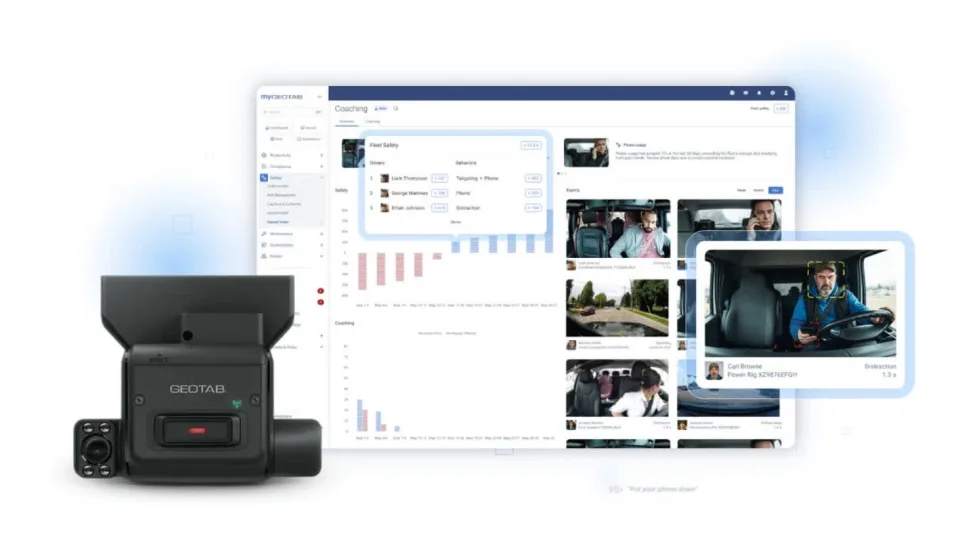
Geotab Expands Fleet Safety Tools With Video Coaching, Risk Insights
New safety and video capabilities aim to help fleet managers assess risk, support drivers, and take targeted action through video coaching, red-light violation detection, and more.
Read More →
How to Build a Better School Bus Driver Training Program
Is it time to strengthen your driver training? Here’s how to pick the right talent and improve recruitment, retention, and safety. This video is brought to you by IC Bus.
Read More →

Recent School Bus Accidents Leave 2 Dead, 2 Injured
Four school bus crashes in Florida, Illinois, and Georgia highlight risks in transportation lots, at bus stops, and during student loading and unloading.
Read More →
When Every Second Matters, Clarity Keeps Routes Moving
From routine delays to urgent incidents, strong communication practices help drivers, dispatchers, schools, and families respond with confidence.
Read More →
What Happens When a School Bus Catches Fire — and What Can Help
School bus fires are rare but can be devastating. Learn how advances in fire suppression and asset protection help fleets detect fires earlier, reduce damage, and improve safety.
Read More →
Geotab Launches Tool to Help Fleets Investigate Road Incidents
Geotab Investigations combines telematics data, video, documents, and other evidence to help fleets reconstruct incidents, resolve claims, and determine what happened.
Read More →
Texas Sixth Grader Wins 2026 National School Bus Safety Poster Contest
Sai Darshana Yekolu of Moseley Middle School in Prosper, Texas, was named the newest winner for her artwork, bringing the theme of “Safe Rides, Everyday Heroes” to life.
Read More →
Doing More With Less: How Transportation Directors Can Prioritize Safety Amid Budget Uncertainty
With diesel prices soaring and nearly one-third of transportation directors expecting budget cuts, maintaining student safety has never been more challenging. Download this guide to learn how leading districts are prioritizing risk, funding critical safety technology, and building stronger budget cases with data.
Read More →
Walton County Schools Adds Gatekeeper Stop-Arm Enforcement System
The Florida district will deploy Gatekeeper’s updated Student Protector technology, which now incorporates AI to improve video evidence.
Read More →