



Inattention, poor maintenance cited in truck-train collision
An inattentive driver and faulty brakes were the probable cause of a fatal accident in which a heavy commercial truck struck a passenger train in the Nevada desert last year, the National Transportation Safety Board finds.

WASHINGTON, D.C. — An inattentive driver and faulty brakes were the probable cause of a fatal accident in which a heavy commercial truck struck a passenger train in the Nevada desert last year, the National Transportation Safety Board (NTSB) said on Tuesday.
On June 24, 2011, a 2008 Peterbilt truck-tractor pulling two empty trailers on northbound U.S. 95 struck the left side of an Amtrak train that was passing through a grade crossing. The collision, which destroyed the truck-tractor and several passenger railcars, also ignited a fire that engulfed two railcars and part of a third.
The accident killed the truck driver, the train conductor and four train passengers. Fifteen train passengers and one crewmember were injured.
NTSB officials said that when the grade crossing signals activated, the truck, traveling at least 58 mph, was still more than 2,300 feet from the tracks. However, investigators found no evidence that the truck driver began braking until the front of the truck was less than 300 feet from the crossing.
“Although we’ll never know the exact cause of the truck driver’s inattention, we do know that if John Davis Trucking had provided its driver with a safe and properly maintained vehicle, this accident could have been avoided,” NTSB Chairman Deborah Hersman said.
Reconstruction of the accident using a recording from a forward-facing video camera mounted on the front of the train as well as physical evidence helped investigators to determine that the truck struck the crew car of the train at 26 to 30 mph.
The investigation revealed that nine of the 16 brakes on the truck were either out of adjustment or inoperative. In addition, the anti-lock brake systems of both trailers were not functional. Wires to missing sensors were cut and zip-tied, and wires to malfunction indicator lights had been disconnected, which the NTSB said raised "serious questions" about the maintenance practices of the trucking company.
Several months after the collision, NTSB investigators returned to the accident site and conducted a series of tests with an exemplar truck in which the braking system was in proper working order. Test results showed that if the accident truck had been able to decelerate as well as the exemplar vehicle, the accident would have been avoided, with the accident truck coming to a stop 15 to 67 feet short of the rail tracks.
As a result of the investigation, the NTSB made a total of 20 safety recommendations to various entities, including John Davis Trucking, the Federal Motor Carrier Safety Administration, the National Highway Traffic Safety Administration (NHTSA), the Federal Railroad Administration, the American Trucking Association, the American Bus Association and the United Motorcoach Association.
To NHTSA, the safety board recommended requiring that all newly manufactured air-braked commercial vehicles be equipped with onboard brake stroke monitoring systems.
A synopsis of the NTSB's report, including the probable cause, findings and a complete list of the safety recommendations, is available here. An animation of the accident reconstruction is available here.
Other recent news related to the NTSB:
More Management
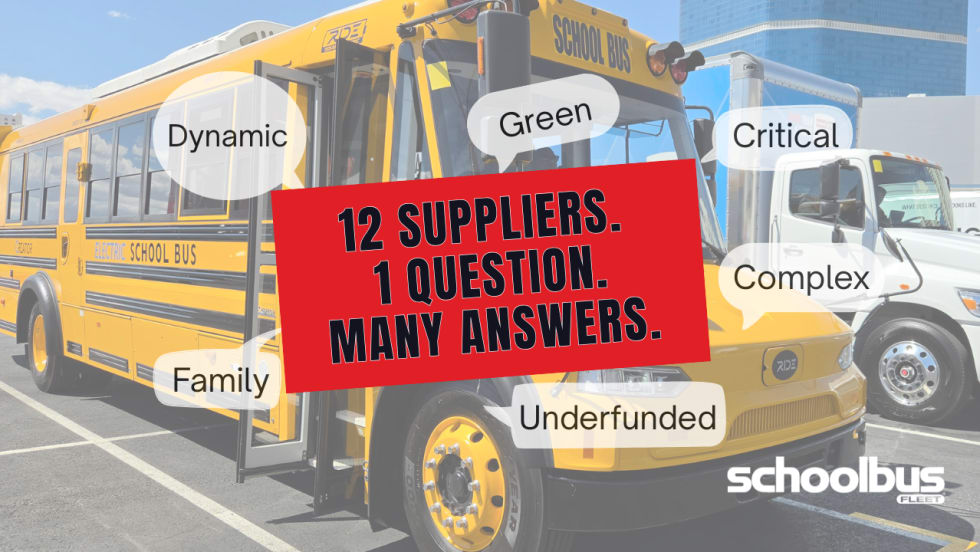
13 Industry Leaders Describe School Transportation in One Word
What word best describes the school bus industry today? We posed that question to over a dozen manufacturers, resulting in a revealing mix of perspectives on the challenges and opportunities ahead.
Read More →
Tyler Technologies Adds New AI, Transactions Leadership Roles
Two company executives are promoted to newly created C-suite positions to accelerate the company's long-term growth in both artificial intelligence and payments.
Read More →
Pro-Vision Acquires Convoy Technologies
The deal aims to broaden customer relationships and adds specialized vehicle video capabilities for commercial fleets.
Read More →


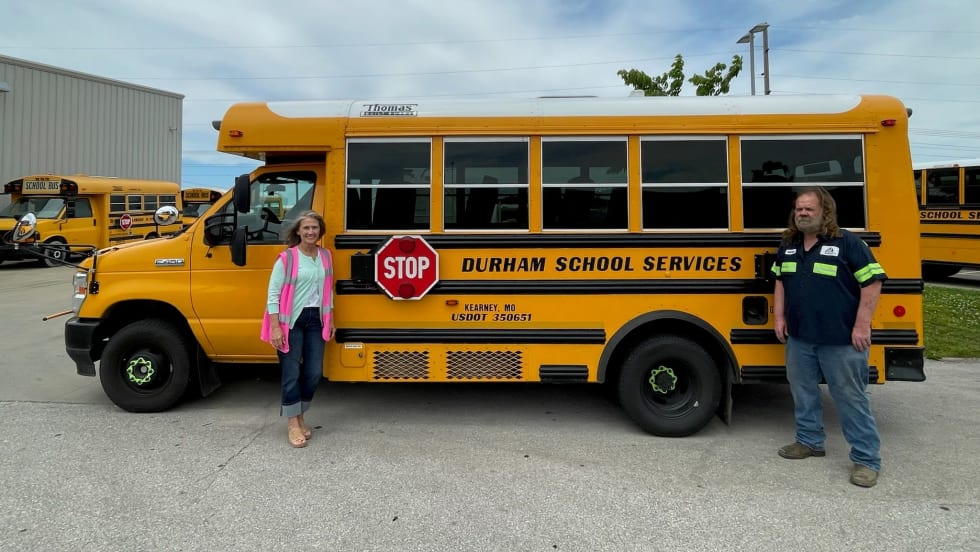
Durham School Services Maintenance Teams Earn Missouri Fleet Excellence Awards
Eight of the contractor’s school bus fleets achieved a distinction few maintenance teams earn during the state’s rigorous annual inspection program.
Read More →
How Incentives, AI, and Energy Markets Are Reshaping School Transportation
Sit down with Joe Annotti of TRC Companies to talk district grant funding, utility challenges, AI, and why school buses are evolving from transportation assets into energy assets.
Read More →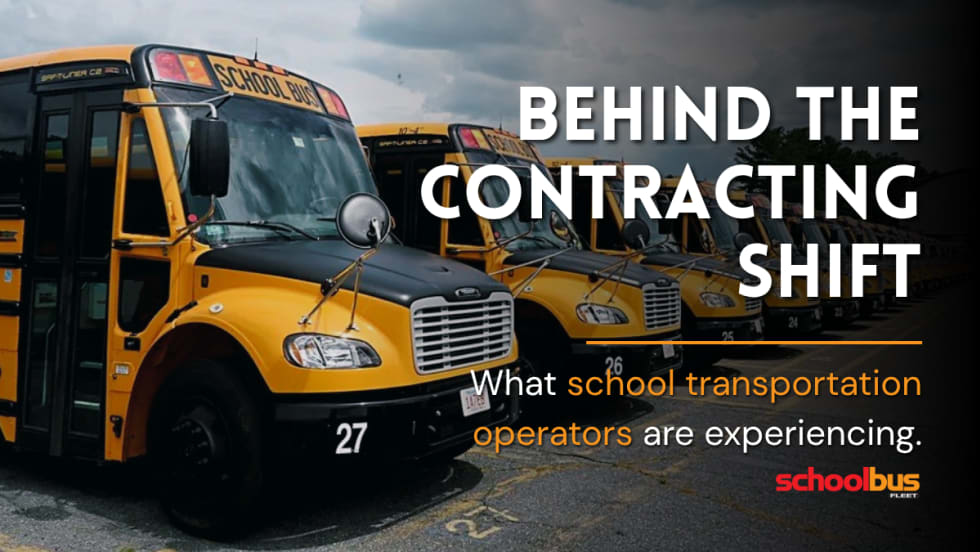
Inside the Contracting Shift: What School Transportation Operators Are Seeing Now
School transportation contractors weigh in on recent trends, costs, driver shortages, and the rise of multimodal student transportation.
Read More →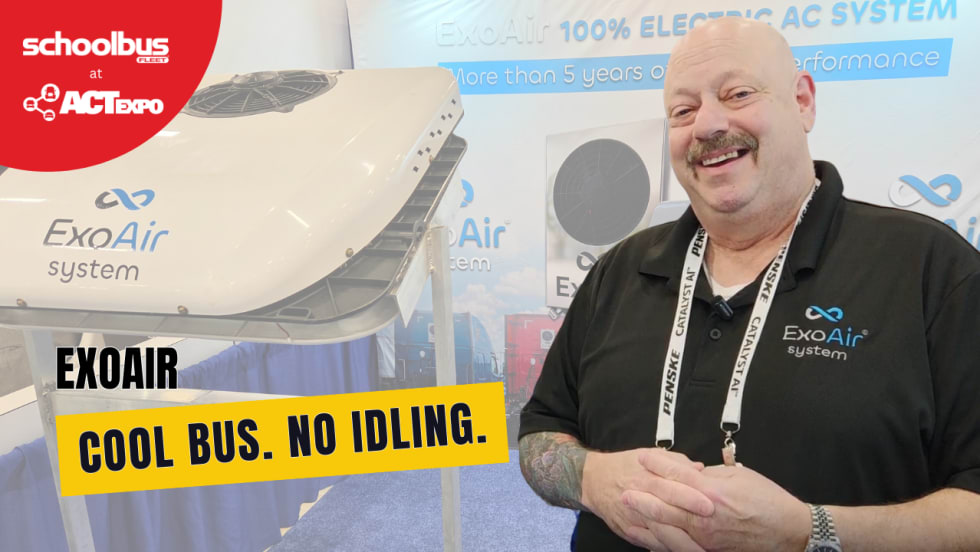
The No-Idling School Bus AC System
Take a peek at ExoAir Systems’ battery-powered cooling solution designed to run for up to 10 hours without the engine on, reducing fuel use and improving comfort for drivers and students.
Read More →
Geotab on Three Major Trends in School Transportation
School bus fleets are becoming more proactive than ever. From AI driver alerts to vehicle-to-grid opportunities, Geotab outlines the biggest technology trends transforming school bus operations.
Read More →
Gatekeeper Lands Major School Bus Deals as Revenue Surges
The video solutions provider announces contracts with Atlanta Public Schools and other fleet operators as it records quarterly revenue growth and expanding subscription business.
Read More →
Building Leaders Who Last: Creating a Successful Mentorship Program in Student Transportation
Discover five strategies for building an effective mentorship program to strengthen leadership development and support staff retention.
Read More →