




Report identifies nation’s most congested corridors
The Texas Transportation Institute study describes congestion problems in 328 corridors over a variety of times. Not only were these roads found to have more stop-and-go traffic than others, but they were also much less predictable.

A new report released by the Texas Transportation Institute (TTI) gives drivers a better idea of exactly where to expect traffic delays, as well as some help in planning for them.
The 2011 Congested Corridors Report is said to be the first nationwide effort to identify reliability problems at specific stretches of highway that are responsible for significant traffic congestion at different times and different days. Researchers noted that the corridors included in the report were identified by the data.
INRIX, a provider of traffic data and analytics, originated the corridor approach, using 10 hours of congestion per week to define a starting point for a congested corridor. To be considered a “corridor,” according to the INRIX standard adopted for the report, congestion should impact a freeway segment at least three miles long.
“Until now, we’ve been able to measure average congestion levels,” TTI Research Engineer Bill Eisele noted, “but congestion isn’t an ‘average’ problem. Commuters and truckers are understandably frustrated when they can’t count on a predictable trip time from day to day.”
Eisele credited the data and corridor listing provided by INRIX with making it possible for researchers to quantify traffic congestion and the even more frustrating variation in congestion from day to day in major urban areas across the country.
The report describes congestion problems in 328 seriously congested corridors over a variety of times: all day, morning and evening peaks, midday and weekends. Much of the national congestion problem exists in a relatively small amount of the freeway system, the researchers said.
Not only were these roads found to have more stop-and-go traffic than others, but they were also much less predictable.
“So not only does it take longer; commuters and truckers have a difficult time knowing how much longer it will take each time they make the same trip,” co-author David Schrank said.
Among the report’s findings:
• The 328 corridors, while accounting for only 6 percent of the nation’s total freeway lane-miles and 10 percent of the traffic, account for 36 percent of the country’s urban freeway congestion.
• Travel time reliability is more of a problem around bridges, tunnels and toll facilities, both because there are few alternate routes available in such circumstances and because a small incident can have a huge effect on corridor travel times.
• Seven of the 10 most congested corridors in the U.S. are found in the Los Angeles region.
As the first national look at travel time reliability, researchers said they believe that the report can be useful in determining where transportation system improvements will have the greatest impact. The best solutions, they said, will come from efforts that have meaningful involvement from everyone concerned: agencies, businesses and travelers.
“If cities and states make the right investments in our most congested highway corridors, the return on those investments will be substantial,” study author Tim Lomax said. “Not only will we see more reliable trips for travelers and trucks, but we can also expect to see greater productivity and more jobs.”
To view the full report, go here.
More Management

BusRight Honors Texas Driver With Inaugural Behind The Wheel Award
Selected from more than 300 nominations, Lawson Crook earned BusRight’s inaugural award for his dedication to students and safety.
Read More →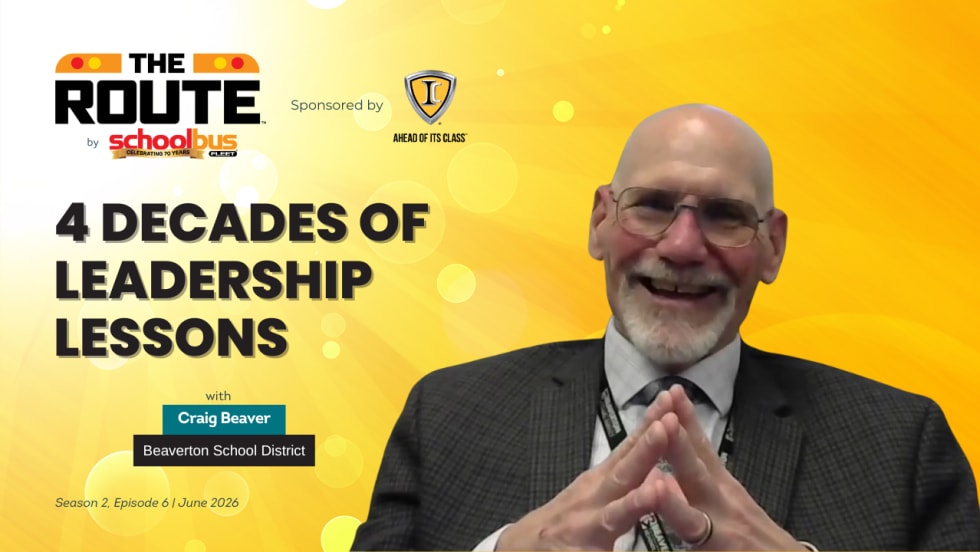
Craig Beaver’s Final Stop: Lessons from 43 Years in Transportation
After more than four decades in transportation, retiring Beaverton School District director Craig Beaver reflects on leadership, alternative fuels, AI, staffing, and what’s coming next. The Route is sponsored by IC Bus.
Read More →
What 43 Years in Transportation Taught Craig Beaver About Leadership
After more than four decades in transportation, retiring Beaverton School District admin Craig Beaver reflects on leadership, alternative fuels, AI, staffing, and what’s coming next.
Read More →


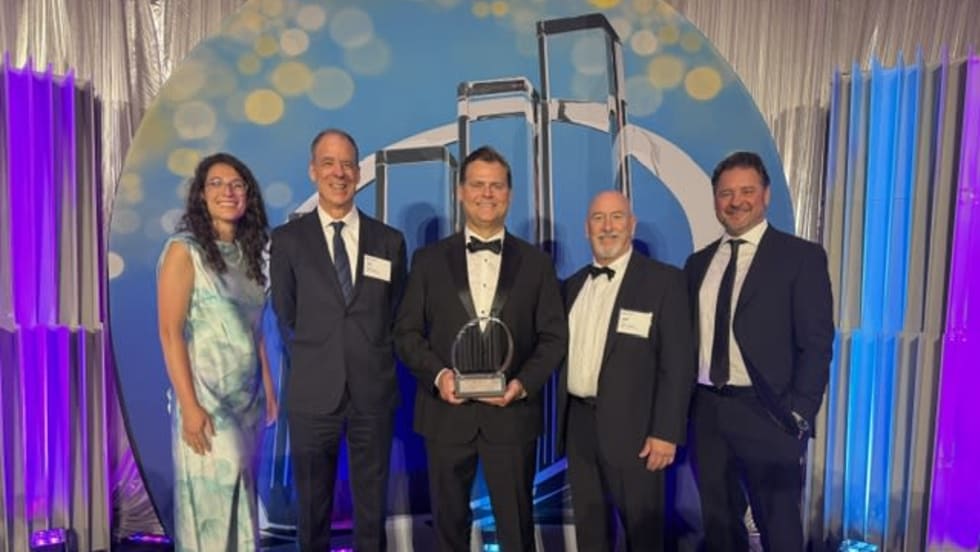
ASTP's Tod Eskra Named an Entrepreneur of the Year
The award from Ernst & Young honors visionary leadership behind one of America's fastest-growing student transportation contracting companies.
Read More →
Drivers and Technicians: Help Benchmark Today's School Bus Manufacturers
If you've spent time behind the wheel or under the hood, we want to hear your perspective on the buses you know best.
Read More →
13 Industry Leaders Describe School Transportation in One Word
What word best describes the school bus industry today? We posed that question to over a dozen manufacturers, resulting in a revealing mix of perspectives on the challenges and opportunities ahead.
Read More →
Tyler Technologies Adds New AI, Transactions Leadership Roles
Two company executives are promoted to newly created C-suite positions to accelerate the company's long-term growth in both artificial intelligence and payments.
Read More →
Pro-Vision Acquires Convoy Technologies
The deal aims to broaden customer relationships and adds specialized vehicle video capabilities for commercial fleets.
Read More →
Durham School Services Maintenance Teams Earn Missouri Fleet Excellence Awards
Eight of the contractor’s school bus fleets achieved a distinction few maintenance teams earn during the state’s rigorous annual inspection program.
Read More →
How Incentives, AI, and Energy Markets Are Reshaping School Transportation
Sit down with Joe Annotti of TRC Companies to talk district grant funding, utility challenges, AI, and why school buses are evolving from transportation assets into energy assets.
Read More →