



Hawaii DOE issues recommendations for school bus deficit
In light of a $12 million school transportation deficit, the Department of Education is recommending eliminating some routes, consolidating other routes and increasing walking distances for grades 3 through high school.

HONOLULU — On Tuesday, Hawaii State Department of Education Interim Superintendent Kathryn Matayoshi issued recommendations to the Board of Education's Committee on Budget & Fiscal Accountability to help alleviate the projected $12 million student transportation deficit this fiscal year.
The recommendations follow the board's approval of the department's request to increase bus fare effective Jan. 1. The board mandated the department to come up with a plan to live within its legislatively-appropriated budget or a plan under which bus service can pay for itself.
Matayoshi recommends the continued elimination of routes for a savings of $600,000 this school year and $2 million to 3 million next school year; route consolidation; and increasing walking distances to 2.5 miles for high school students, 2 miles for grades 6 through 8, and 1.5 miles for grades 3 through 5.
She wrote that the department's objective is to achieve zero deficit in fiscal year 2010-11, made possible by the adoption of recommendations and a transfer of $9 million in federal impact aid funds to student transportation.
In addition, the department proposed changes to Chapter 27, Hawaii Administrative Rules, governing the transportation of students. Proposed changes include the elimination of the fare cap, allowing the department to determine walking distance with board approval, adding a reduced fare concept similar to reduced meal programs, allowing the department to determine student eligibility for free or reduced fares, and allowing the department to discontinue bus service where there is adequate public transportation.
The alternatives the department considered before issuing recommendations included eliminating bus service when the funds run out and discontinuing bus service next year, except for curb-to-curb services. This would eliminate the deficit and reduce costs by $1 million per year as bus contracts expire and idle bus charge decreases.
Another alternative considered was operating the bus service within the legislative appropriation of $46 million plus fare revenues. Without the allocation of $9 million in federal funds, approximately half the routes would need to be discontinued effective Feb. 1. With higher fares, the elimination of free fares and increased walking distances, some of the routes could be restored in fiscal year 2010-11, Matayoshi said.
Lastly, the department considered making regular buses self-supporting. Matayoshi determined that bus service could not pay for itself, as it would force the department to raise the cost of bus fare while still providing free or reduced rides for eligible students as well as free curb-to-curb service. Higher bus fares would reduce ridership, leading to insufficient demand to operate a system, she wrote.
To read the full memorandum, click here.
More Management
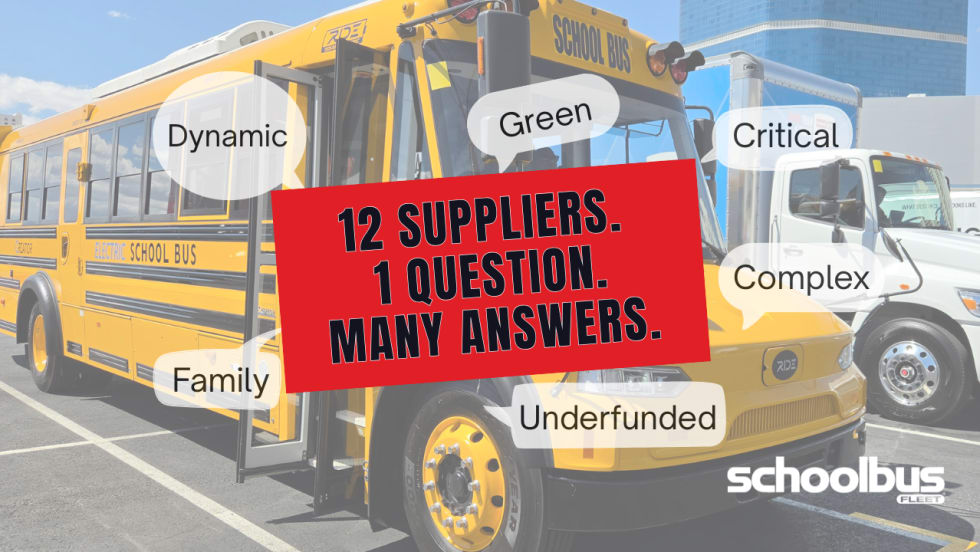
13 Industry Leaders Describe School Transportation in One Word
What word best describes the school bus industry today? We posed that question to over a dozen manufacturers, resulting in a revealing mix of perspectives on the challenges and opportunities ahead.
Read More →
Tyler Technologies Adds New AI, Transactions Leadership Roles
Two company executives are promoted to newly created C-suite positions to accelerate the company's long-term growth in both artificial intelligence and payments.
Read More →
Pro-Vision Acquires Convoy Technologies
The deal aims to broaden customer relationships and adds specialized vehicle video capabilities for commercial fleets.
Read More →


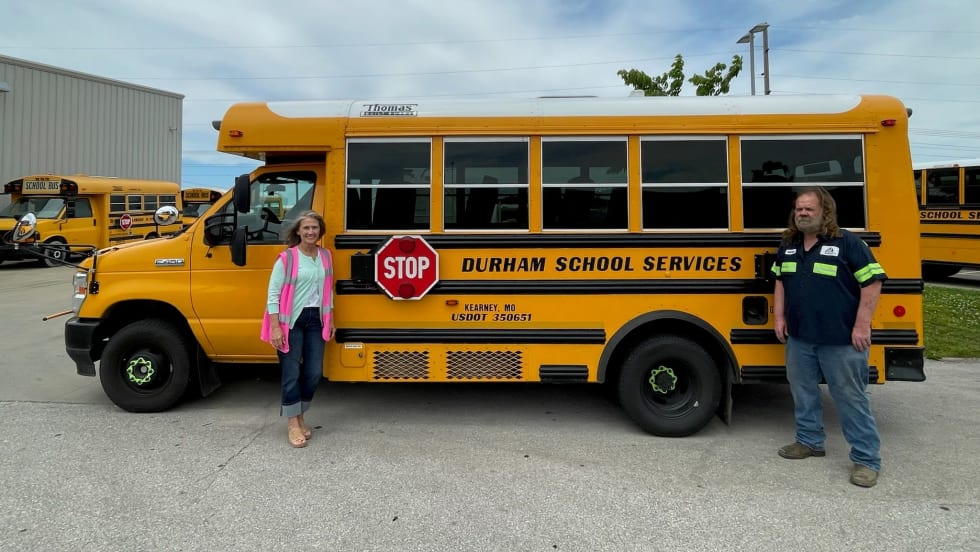
Durham School Services Maintenance Teams Earn Missouri Fleet Excellence Awards
Eight of the contractor’s school bus fleets achieved a distinction few maintenance teams earn during the state’s rigorous annual inspection program.
Read More →
How Incentives, AI, and Energy Markets Are Reshaping School Transportation
Sit down with Joe Annotti of TRC Companies to talk district grant funding, utility challenges, AI, and why school buses are evolving from transportation assets into energy assets.
Read More →
Inside the Contracting Shift: What School Transportation Operators Are Seeing Now
School transportation contractors weigh in on recent trends, costs, driver shortages, and the rise of multimodal student transportation.
Read More →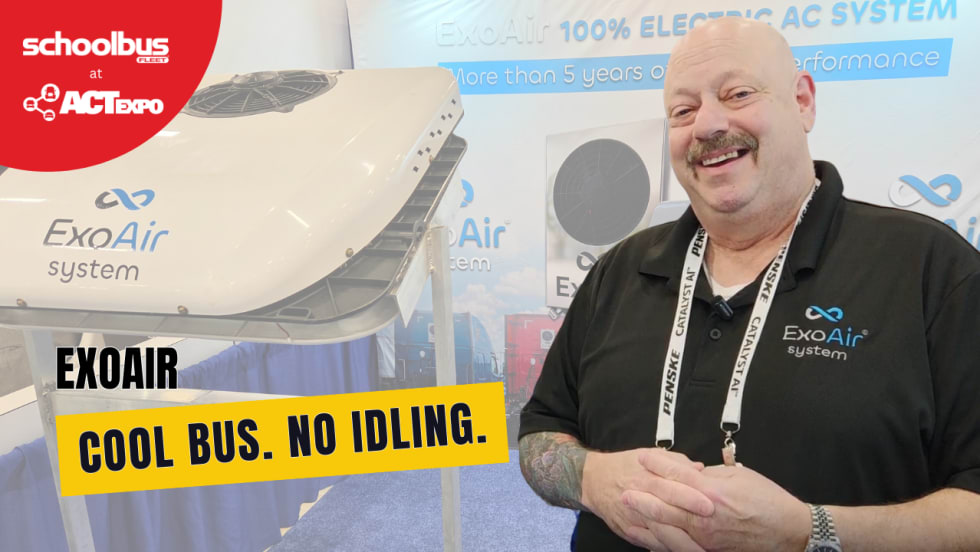
The No-Idling School Bus AC System
Take a peek at ExoAir Systems’ battery-powered cooling solution designed to run for up to 10 hours without the engine on, reducing fuel use and improving comfort for drivers and students.
Read More →
Geotab on Three Major Trends in School Transportation
School bus fleets are becoming more proactive than ever. From AI driver alerts to vehicle-to-grid opportunities, Geotab outlines the biggest technology trends transforming school bus operations.
Read More →
Gatekeeper Lands Major School Bus Deals as Revenue Surges
The video solutions provider announces contracts with Atlanta Public Schools and other fleet operators as it records quarterly revenue growth and expanding subscription business.
Read More →
Building Leaders Who Last: Creating a Successful Mentorship Program in Student Transportation
Discover five strategies for building an effective mentorship program to strengthen leadership development and support staff retention.
Read More →