



Fuel incentive program saves department $28K
WALLED LAKE, Mich. — At its back-to-school meeting last year, Walled Lake Consolidated School District’s transportation department implemented a fuel...


WALLED LAKE, Mich. — At its back-to-school meeting last year, Walled Lake Consolidated School District’s transportation department implemented a fuel incentive program that has increased its miles-per-gallon average, reduced bus idling and facilitated substantial cost savings.
Tim Stage, the department’s head mechanic, had calculated each school bus driver’s miles-per-gallon average for the last two months of the previous school year. The drivers were told during the meeting that he would also calculate their averages for the first two months of the upcoming school year.
“Tim calculated their averages in May and June first so that the drivers wouldn’t come in at the beginning of the school year and try to, by accelerating quickly, braking hard, etc., get their averages up,” explained Jill Segal, the district’s transportation supervisor.
Once it was determined that the drivers were achieving the same rates for the two time periods, the goal was for them to improve their averages by adhering to the district’s idling policy. The two drivers — one who operates a regular-ed bus and another who operates a special-needs bus — who improved their averages the most by the end of each month were allowed to park their buses in the department’s garage for the entirety of the following month while they were not on routes.
Stage used FleetVision by Tyler Technologies Inc. to assist in calculating each driver’s monthly average.
“Each time the buses fuel up, the mileage is recorded, so I write a report at the end of the month and it indicates the miles per gallon for each bus,” he explained.
Segal said that in determining the special-needs driver winners, the department took into consideration that the drivers may have idled their buses longer to accommodate the students’ needs during loading and unloading.
The program was implemented to help enforce the district’s idling policy and to offset rising fuel costs.
“Over the entire year, we averaged an increase from 7 miles per gallon to 7.5,” Segal revealed. “Using our price-per-gallon average for fuel last year, it ended up being a savings of about $28,000.”
Based on the program’s success, the department planned to run it again during the 2009-10 school year.
More Management
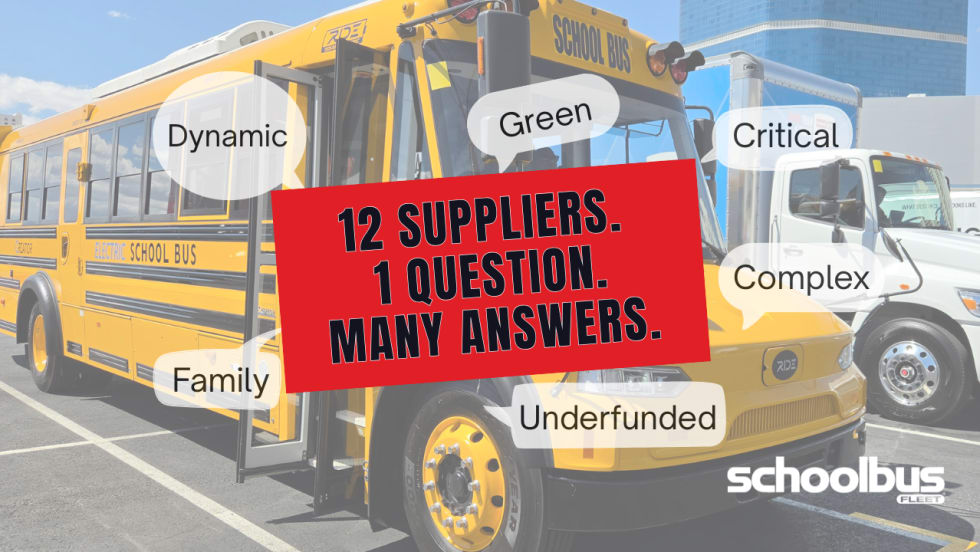
13 Industry Leaders Describe School Transportation in One Word
What word best describes the school bus industry today? We posed that question to over a dozen manufacturers, resulting in a revealing mix of perspectives on the challenges and opportunities ahead.
Read More →
Tyler Technologies Adds New AI, Transactions Leadership Roles
Two company executives are promoted to newly created C-suite positions to accelerate the company's long-term growth in both artificial intelligence and payments.
Read More →
Pro-Vision Acquires Convoy Technologies
The deal aims to broaden customer relationships and adds specialized vehicle video capabilities for commercial fleets.
Read More →


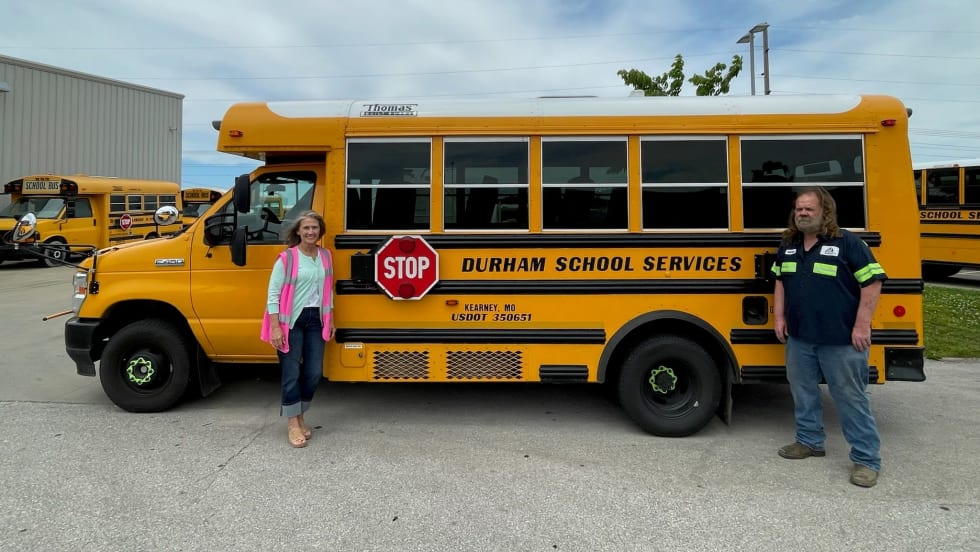
Durham School Services Maintenance Teams Earn Missouri Fleet Excellence Awards
Eight of the contractor’s school bus fleets achieved a distinction few maintenance teams earn during the state’s rigorous annual inspection program.
Read More →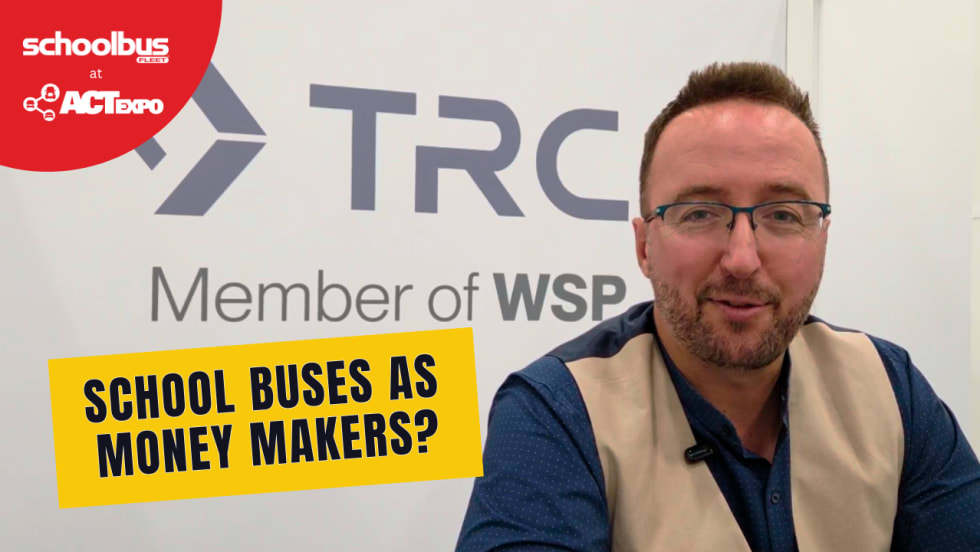
How Incentives, AI, and Energy Markets Are Reshaping School Transportation
Sit down with Joe Annotti of TRC Companies to talk district grant funding, utility challenges, AI, and why school buses are evolving from transportation assets into energy assets.
Read More →
Inside the Contracting Shift: What School Transportation Operators Are Seeing Now
School transportation contractors weigh in on recent trends, costs, driver shortages, and the rise of multimodal student transportation.
Read More →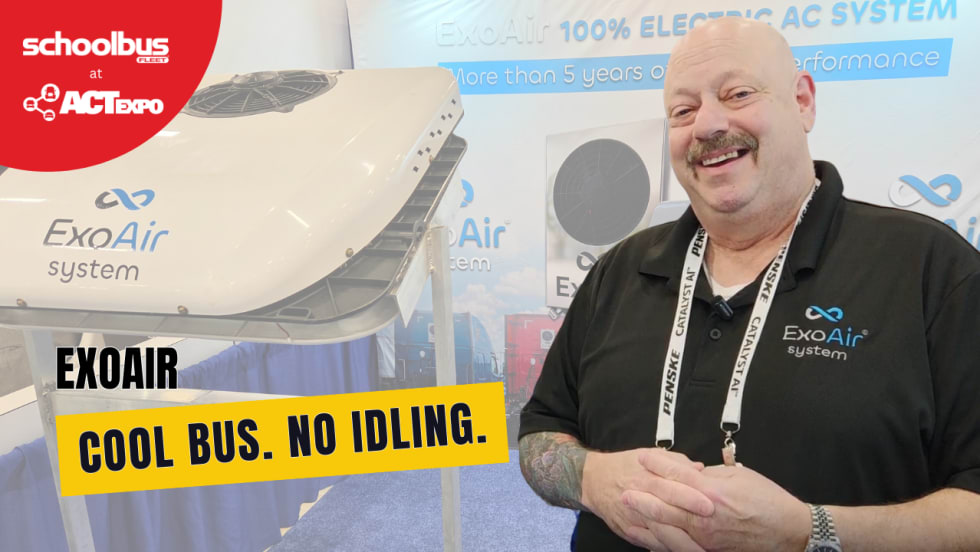
The No-Idling School Bus AC System
Take a peek at ExoAir Systems’ battery-powered cooling solution designed to run for up to 10 hours without the engine on, reducing fuel use and improving comfort for drivers and students.
Read More →
Geotab on Three Major Trends in School Transportation
School bus fleets are becoming more proactive than ever. From AI driver alerts to vehicle-to-grid opportunities, Geotab outlines the biggest technology trends transforming school bus operations.
Read More →
Gatekeeper Lands Major School Bus Deals as Revenue Surges
The video solutions provider announces contracts with Atlanta Public Schools and other fleet operators as it records quarterly revenue growth and expanding subscription business.
Read More →
Building Leaders Who Last: Creating a Successful Mentorship Program in Student Transportation
Discover five strategies for building an effective mentorship program to strengthen leadership development and support staff retention.
Read More →