




How to manage conflict and deal with angry people
Employees can express anger and frustration when they feel that their basic needs, such as feeling appreciated and valued, are not being met. Managers and others in leadership roles must listen to gain an understanding of the problem, learn the points of view of those involved and work together with the employees toward a solution.

iStock image © TrentVino
The business of transporting students safely to school will have days that include conflict with other human beings. How we deal with others, especially during a conflict, is probably the most important factor in our job. The better we do it, the easier our job is and the better we will feel about ourselves.
Every human being has basic needs that must be met. The primary needs are food, clothing and shelter. Other needs are to be loved, valued and appreciated, and to feel in control of ourselves and our destinies.
When we are dealing with conflict, we need to figure out why the person is frustrated or angry. Many of the frustrations we encounter on a regular basis, whether from parents, staff or employees, are because some of these needs have not been met. People will also get frustrated when they feel they are losing one of these needs.
Listen to understand the problem
Dr. Stephen Covey encourages us to “seek first to understand, then to be understood.” This is habit No. 5 in his book The 7 Habits of Highly Effective People. If we are to understand, we must first listen. Sometimes we listen with the intention of responding rather than listening to understand the other person’s position. If you are like me, you are too often ready with the prescription before you have properly understood the problem. So, we must first attempt to diagnose the problem. Listening and asking appropriate questions to gather information are the first steps.
Covey tells us that there are five levels of listening: ignoring, pretend listening, selective listening, attentive listening and empathic listening. The fifth level of listening, empathic, is when you listen with both your heart and your mind. The words we use account for only 7% of our communication, while how we say it accounts for 38%, and the remaining 55% is our body language. Research shows that our listening efficiency is only 25%.
Madelyn Burley-Allen, in her book Succeed by Listening, indicates there are three levels of listening: listening in spurts, hearing words but not making an effort to understand, and listening with understanding and feelings. We can build on our listening skills, but it will not be effective unless we develop a caring attitude.
With many people who are frustrated or angry, you may never find out what their underlying problem is. For some of them, it may require professional assistance. Your job in resolving the conflict is to attempt to understand what their motivation is for the subject matter before you, not whether they need professional help. You must assess the situation: Can this conflict be resolved with a conversation, preferably face to face? Does this person always approach you in a difficult manner? Is he or she swearing or using derogatory terms?
Work toward collaborative negotiations
If you are in a leadership role, you are automatically in a position of being questioned about your decisions, whether you are a school bus driver and the students are questioning your authority, an office worker and the public is questioning your answers, or a supervisor and the employee is questioning your motives or intentions.
People today want answers, and they want facts that support answers. For example, the public is upset with a bus driver, and they want written documentation that something was done. Or the bus driver writes up a student and wants documentation from the principal indicating that something was done.
All of us are in some leadership role and may have experienced this lack of trust. I believe it stems from people feeling they are losing control, and they want that control back. Another example: The public is starting to vote down levies because they are frustrated with government in general. Why? Because they feel they do not have control. One of the ways we can try to offer people the feeling that they are regaining control is to get them involved in the process. Find out what their interests are. Try to understand their wants. Then work together with that information toward a solution.
The most impressive techniques I learned were at a three-day workshop put on by John and Carol Glaser. The purpose was to train the district teams for collaborative negotiations. These teams were from both labor and management. People donated their weekend to complete the training. What was the training? The prime focus, in my opinion, was to understand the other person’s interests and then work toward a collaborative solution that addressed both sides’ interests. The second focus, again, in my opinion, was to stay tuned in on the interests and not on the person or people.
Reducing risk in a tense situation
There are several things you can do to reduce risk to yourself in the workplace when someone is angry:
Meet him or her before the person comes into your office. Position yourself so you will have an exit. If you remain standing, it will let the person know that the meeting time is short. If the person comes into your office, remain standing. Be sure to stand at an angle to the person’s body or with a desk between you. If the person sits down, sit squarely facing him or her.
The greatest defenses you have are your thoughts and emotions — or they can be your greatest weakness. Use self-discipline to control your thoughts, and you will then control your emotions. Keep in mind that their emotion is not yours. Once you become emotional, your thinking becomes clouded and your judgment impaired.
Are your thoughts under control? Next, control your mouth. The most effective tool is making a concentrated and focused effort at trying to understand. Stop thinking about your response. Watch their body language and facial expressions, listen to their tone of voice, and try to understand the message behind the words.
When you think you have an understanding of what they are trying to say, repeat it back to them.
Do not commit to something you cannot deliver. Walk your talk. Use even, gentle tones in your voice. Remain confident with a positive, friendly attitude.
Find agreement on some issues. Remember to smile genuinely when the time seems right.
Avoid taking positions before you find out interests. Gather all the information you can.
Use phrases like “Tell me more” or “What I hear you saying is …”
Defusing conflict and getting past our positions

Author Michael Shields says that when dealing with conflict, we must figure out why the person is frustrated or angry. It is often because he or she feels that some basic need, such as feeling valued, is not being met.
“Making Teams Succeed at Work” from Business Management Daily suggests trying the following strategy when two employees are having a conflict at work that they can’t resolve on their own: Ask each employee to paraphrase the other employee’s point of view. This will go a long way toward determining if each employee understands where the other is coming from. It may be that it’s a simple misunderstanding that can be easily worked out.
Also, people often take positions (position = what they want) and dig in their heels. What you can do is find out their interests (interest = why they want it). Too often we all try to move to a solution before we clearly understand the “why.” Listing their interests and yours on paper will help everyone understand the “what” and the “why.”
Key behavior agreements for conflict resolution
Listen and focus on the problem, rather than on the person
Define the problem
Allow some anger and hostility to surface during discussion
Commit to decisions
Accept that one might be a part of the problem
Try to change behavior
Communication steps
Square up
Eye contact
Feet on the floor
No distractions
Lean forward
Skills for managing conflict
Seek to understand
Gather feedback
Be analytical
Be authentic
Take risks
Be creative in problem-solving
Be accepting of the other party
Be empathetic
Be self-aware
Maintain emotional control
Admit mistakes
Build trust
Listen to feelings and content
Techniques for problem solving
Determine what the problem is.
What do you and others involved want to accomplish?
Get the facts: Review the record; find out what rules, regulations and customs apply; contact individuals concerned to get opinions and feelings, as well as facts; be sure you have the whole story.
Develop alternative solutions: Fit the facts together and consider their bearing on each other; find the causes; and determine constraints.
Evaluate alternative solutions:
What possible actions are there?
What are the possible results of each action?
How much time is involved?
Do you need assistance or resources?
Select the best solution.
Take action: Develop a plan; decide whether to delegate or do it yourself; schedule time; and take the first step.
Evaluate feedback: Were the objectives accomplished?
Michael Shields is director of transportation and auxiliary services at Salem-Keizer Public Schools in Salem, Ore. He is also a member of SBF’s editorial advisory board. He can be reached at shields_michael@salkeiz.k12.or.us.
More Management
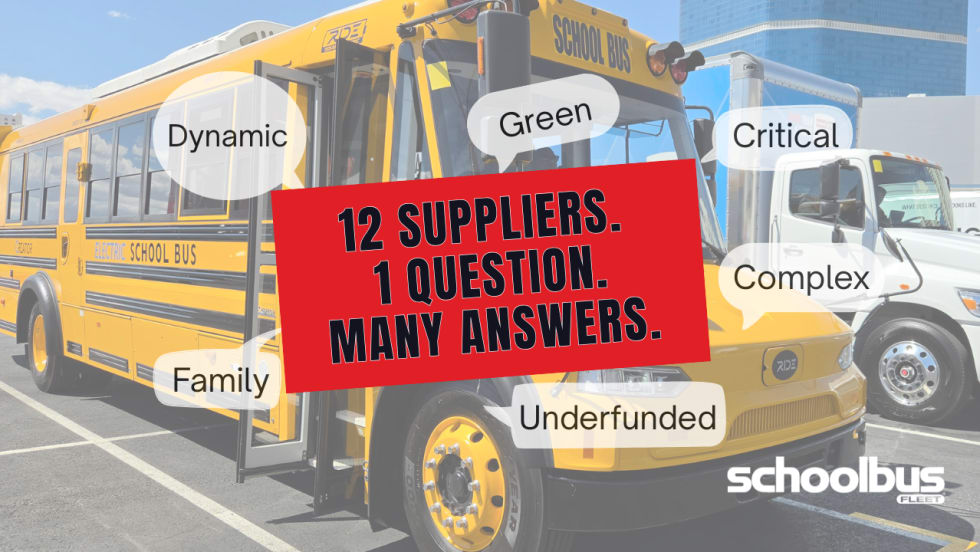
13 Industry Leaders Describe School Transportation in One Word
What word best describes the school bus industry today? We posed that question to over a dozen manufacturers, resulting in a revealing mix of perspectives on the challenges and opportunities ahead.
Read More →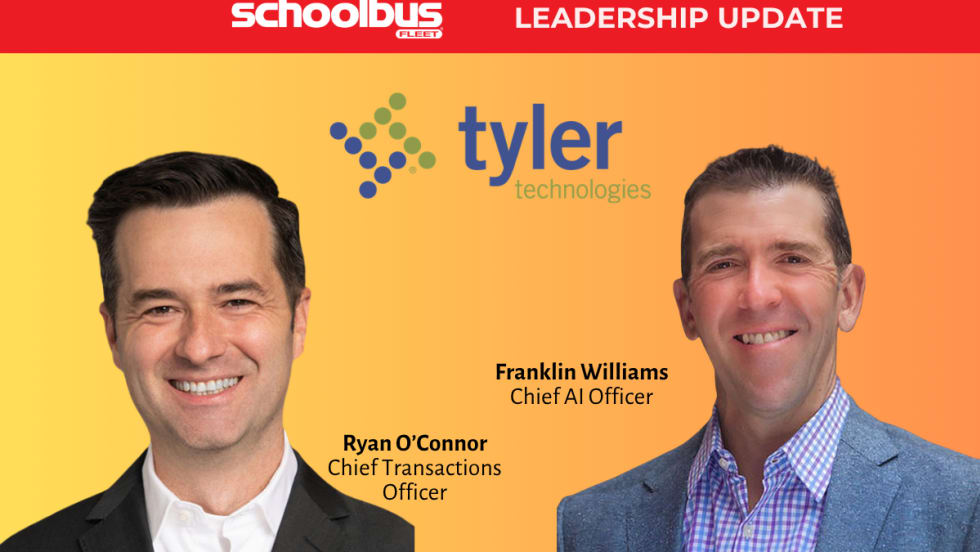
Tyler Technologies Adds New AI, Transactions Leadership Roles
Two company executives are promoted to newly created C-suite positions to accelerate the company's long-term growth in both artificial intelligence and payments.
Read More →
Pro-Vision Acquires Convoy Technologies
The deal aims to broaden customer relationships and adds specialized vehicle video capabilities for commercial fleets.
Read More →



Durham School Services Maintenance Teams Earn Missouri Fleet Excellence Awards
Eight of the contractor’s school bus fleets achieved a distinction few maintenance teams earn during the state’s rigorous annual inspection program.
Read More →
How Incentives, AI, and Energy Markets Are Reshaping School Transportation
Sit down with Joe Annotti of TRC Companies to talk district grant funding, utility challenges, AI, and why school buses are evolving from transportation assets into energy assets.
Read More →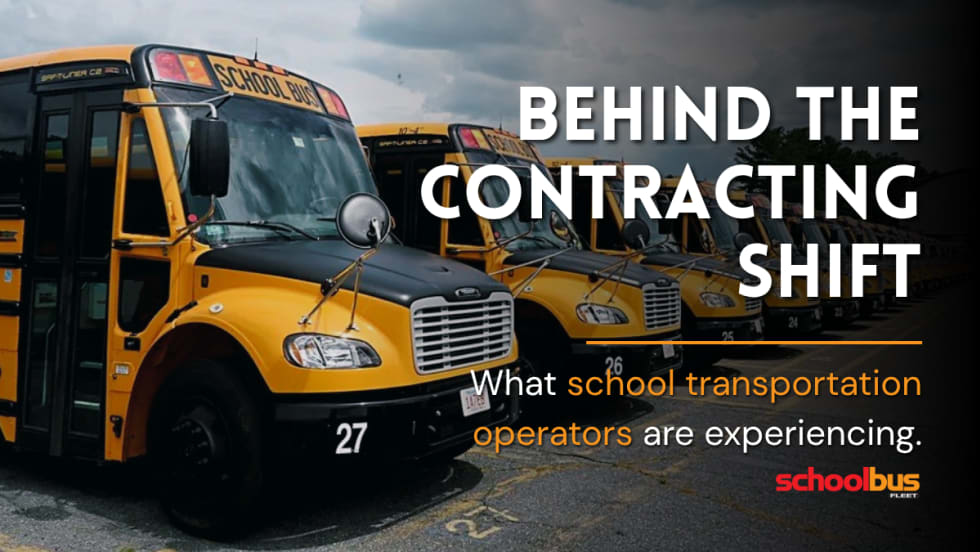
Inside the Contracting Shift: What School Transportation Operators Are Seeing Now
School transportation contractors weigh in on recent trends, costs, driver shortages, and the rise of multimodal student transportation.
Read More →
The No-Idling School Bus AC System
Take a peek at ExoAir Systems’ battery-powered cooling solution designed to run for up to 10 hours without the engine on, reducing fuel use and improving comfort for drivers and students.
Read More →
Geotab on Three Major Trends in School Transportation
School bus fleets are becoming more proactive than ever. From AI driver alerts to vehicle-to-grid opportunities, Geotab outlines the biggest technology trends transforming school bus operations.
Read More →
Gatekeeper Lands Major School Bus Deals as Revenue Surges
The video solutions provider announces contracts with Atlanta Public Schools and other fleet operators as it records quarterly revenue growth and expanding subscription business.
Read More →
Building Leaders Who Last: Creating a Successful Mentorship Program in Student Transportation
Discover five strategies for building an effective mentorship program to strengthen leadership development and support staff retention.
Read More →