



NAPT News & Views — We need a national school bus policy
We need a national school transportation policy that underscores the critical connection between classroom learning and efficient, reliable and safe student transportation. And, we need stable funding instead of the “let’s make a deal” maneuvers that occur in cash-strapped state legislatures.
In the February 2013 issue of Spirit, Southwest Airlines’ in-flight magazine, company Chairman, President and CEO Gary Kelly opines that the U.S. needs a national airline policy.
“The U.S. airline industry plays a vital role in the overall health of our nation’s economy,” Kelly says. “It’s hard to identify a single sector that does not benefit — either directly or indirectly — from strong and healthy airlines.”
Southwest is a member of a trade group called Airlines for America that launched a campaign to emphasize the industry’s economic impact and to argue for a national airline policy that would help keep airline ticket costs down and enhance the travel experience.
Central to the group’s lobbying effort is an initiative to revise federal tax policy, specifically what Kelly calls “punitive” ticket taxes that amount to about 20% of the price for a typical domestic flight. He notes that this tax is greater than that imposed on alcohol and other “sin” taxes that seek to discourage rather than encourage usage.
In short, Kelly wonders why the tax system is being used to discourage travel that is both essential to the public and critical economically.
This raises a very good point that’s also applicable to the pupil transportation industry. Re-read the quote in the second paragraph above and substitute “school transportation” for “airline” and “airlines.”
We, too, need a national school transportation policy that underscores the critical connection between classroom learning and efficient, reliable and safe student transportation. And, we need stable funding instead of the “let’s make a deal” maneuvers that occur in cash-strapped state legislatures.
While we’re not fighting a federal tax, the reality is the nation’s troubled economic situation has the same effect on our industry. While political Washington harrumphs about “economic cliffs,” “sequesters” and “continuing resolutions,” out where yellow buses roll this gobbledygook translates into two words: operational uncertainty.
A national school transportation policy could help correct this. We’re not talking about a laundry list of directives from the federal government to our industry — quite the contrary. We simply need a compelling statement from the government that pupil transportation is critical to our education system and worth protecting.
It might also emphasize our compelling safety record, which is the best in the transportation industry. We help to reduce traffic congestion and emissions, and for many working parents, we are a critical service.
Education is always stated as a national priority. So, too, should be transportation to and from the place of learning. Currently, there is little said at the national level to emphasize this value proposition.
When was the last time you saw a significant national news story about school buses leading the entire transportation industry in safety? Or, a story about how hampered public education would be without the yellow bus?
Ours is an industry of wheels, but seldom do we get much traction or grease.
It’s not for lack of trying to tell our story. The media reality is that it’s not the same when the request comes from us — the impetus must come from the national policymakers and statistic-keepers. They send the smoke signals about national priorities.
When budgets get tight, we often fall into the “nice to have but optional” hopper. What could change this? A national school transportation policy.
Here’s our simple request: We would like a policy statement from the White House and from Congress that underscores the value of school bus transportation, reminding governors and state legislators that cutting school bus service would be a significant safety and educational tradeoff. And we would like it to be repeated periodically so it gains resonance.
Finally, how about fostering more coordination of the federal regulatory and policy apparatus? There are at least five cabinet departments that impact our industry: Transportation, the Environmental Protection Agency, Energy, Education and Homeland Security. Each imposes its regulations without regard to the burdens of the others.
While pupil transportation is not funded by the federal government, it is strongly impacted by federal regulations and policies. Improved cooperation among federal agencies would help to bolster pupil transportation’s vital role in the education equation.
We transport nearly 25 million passengers twice every school day and another 5 to 7 million each school day on field and activity trips. We dwarf the airlines and all other forms of transportation in this respect. Regardless of where you live, school transportation is an essential public service.
There’s a federal program called “Essential Air Service” that guarantees a minimal level of scheduled air service to certain communities that otherwise would not have it because it’s not profitable. Isn’t it time for a national policy that promotes school bus transportation as essential to America, too?
More Management
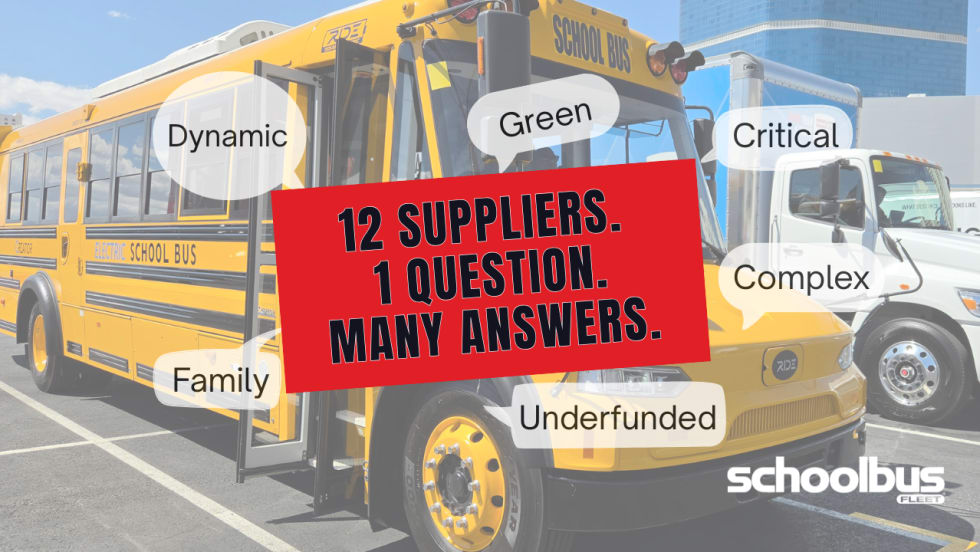
13 Industry Leaders Describe School Transportation in One Word
What word best describes the school bus industry today? We posed that question to over a dozen manufacturers, resulting in a revealing mix of perspectives on the challenges and opportunities ahead.
Read More →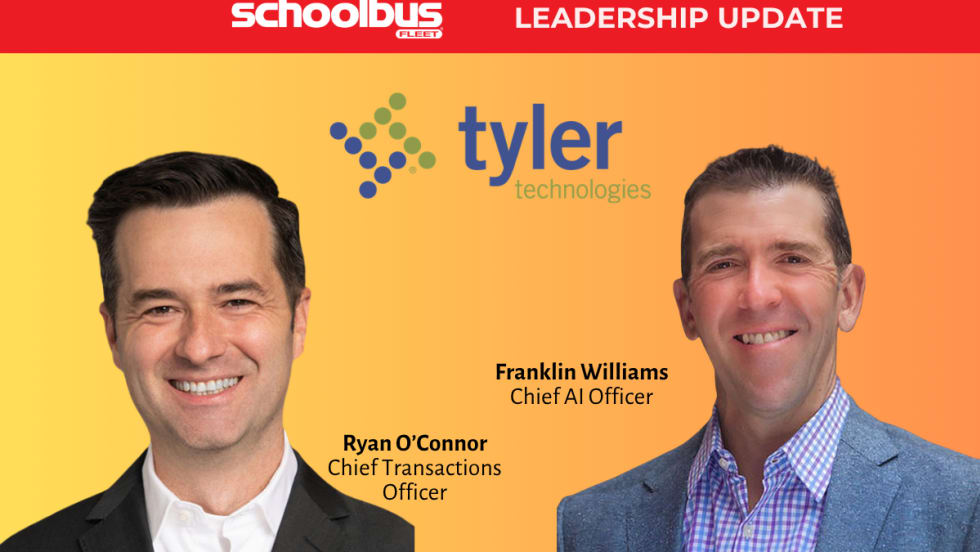
Tyler Technologies Adds New AI, Transactions Leadership Roles
Two company executives are promoted to newly created C-suite positions to accelerate the company's long-term growth in both artificial intelligence and payments.
Read More →
Pro-Vision Acquires Convoy Technologies
The deal aims to broaden customer relationships and adds specialized vehicle video capabilities for commercial fleets.
Read More →


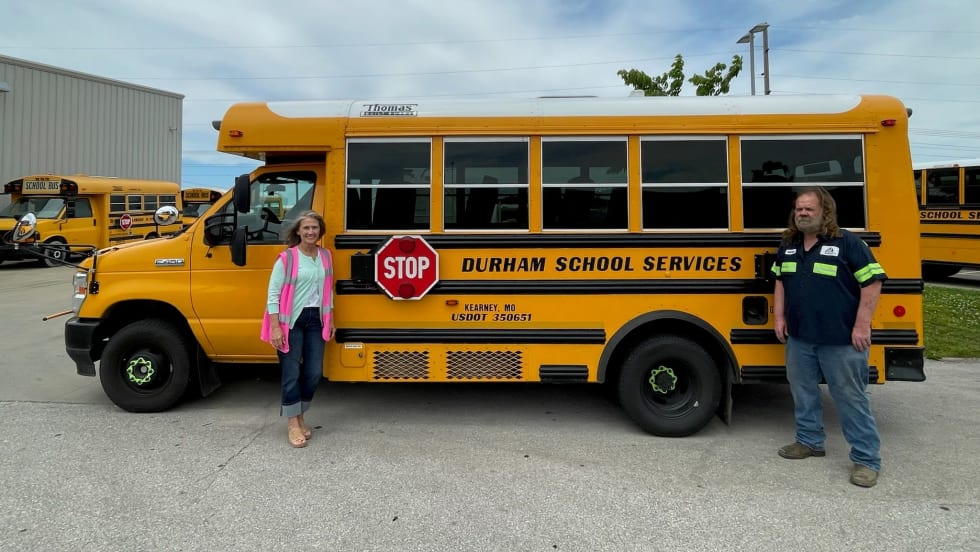
Durham School Services Maintenance Teams Earn Missouri Fleet Excellence Awards
Eight of the contractor’s school bus fleets achieved a distinction few maintenance teams earn during the state’s rigorous annual inspection program.
Read More →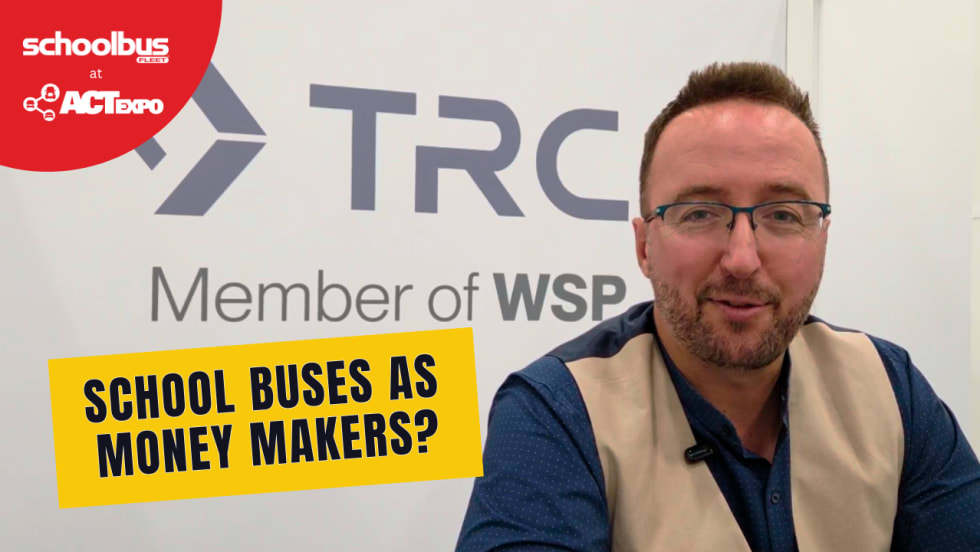
How Incentives, AI, and Energy Markets Are Reshaping School Transportation
Sit down with Joe Annotti of TRC Companies to talk district grant funding, utility challenges, AI, and why school buses are evolving from transportation assets into energy assets.
Read More →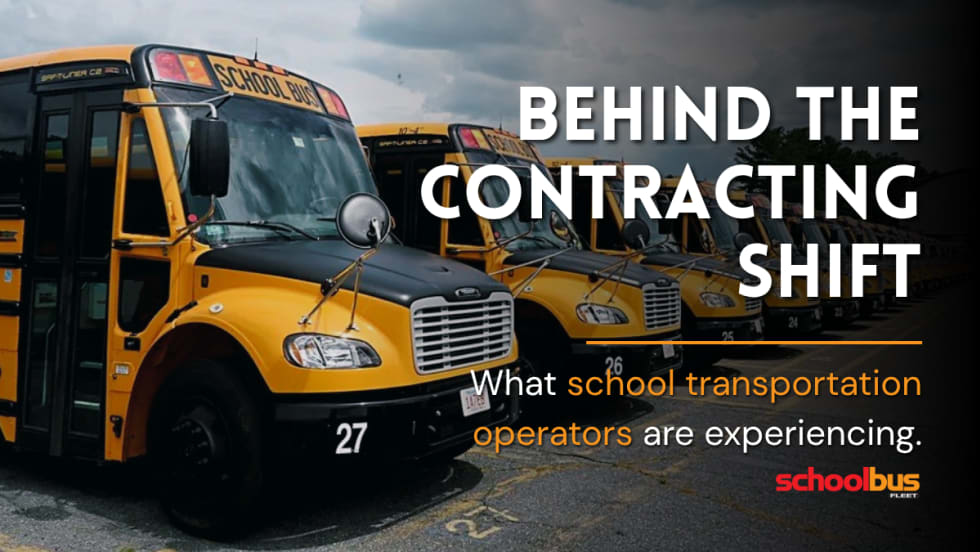
Inside the Contracting Shift: What School Transportation Operators Are Seeing Now
School transportation contractors weigh in on recent trends, costs, driver shortages, and the rise of multimodal student transportation.
Read More →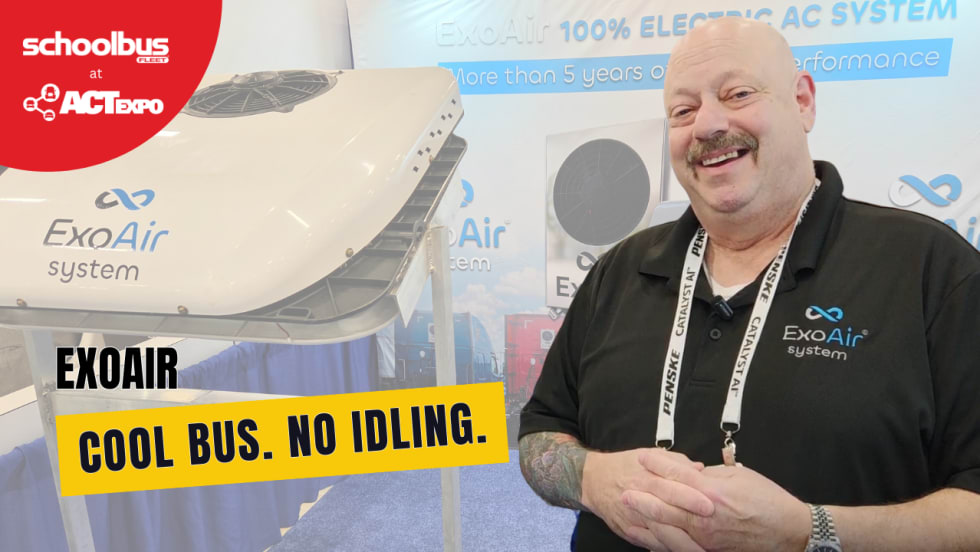
The No-Idling School Bus AC System
Take a peek at ExoAir Systems’ battery-powered cooling solution designed to run for up to 10 hours without the engine on, reducing fuel use and improving comfort for drivers and students.
Read More →
Geotab on Three Major Trends in School Transportation
School bus fleets are becoming more proactive than ever. From AI driver alerts to vehicle-to-grid opportunities, Geotab outlines the biggest technology trends transforming school bus operations.
Read More →
Gatekeeper Lands Major School Bus Deals as Revenue Surges
The video solutions provider announces contracts with Atlanta Public Schools and other fleet operators as it records quarterly revenue growth and expanding subscription business.
Read More →
Building Leaders Who Last: Creating a Successful Mentorship Program in Student Transportation
Discover five strategies for building an effective mentorship program to strengthen leadership development and support staff retention.
Read More →