




How to fine-tune bell times for bus efficiency
Restructuring school start times requires careful planning and collaboration with key stakeholders. Overcoming the obstacles can reap big savings in transportation costs.
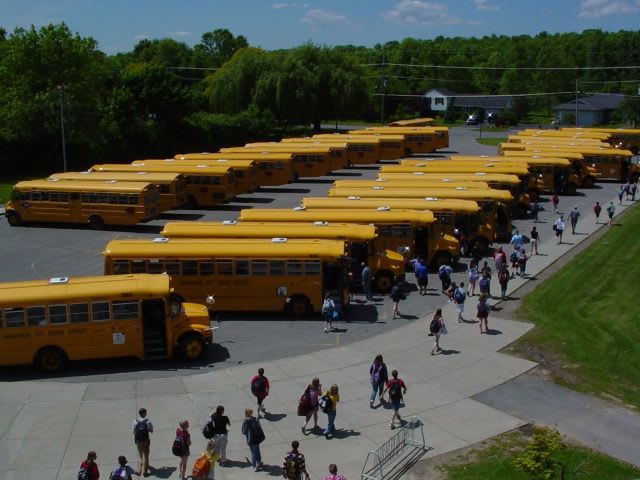
Photo by Scott Goble
When it comes to making a change, school transportation officials need to make sure that all of their ducks are in a row, their eggs are in more than one basket and they haven’t counted them before they’ve hatched.
This is particularly vital for any school district that decides to look at adjusting bell times to make the transportation department run more effectively and efficiently.
On transportation's shoulders
In adjusting bell times, the weight of the change ultimately rests on the shoulders of the transportation department.
Arby Creach knows a few things about bell times and the burden that goes along with it. Although he currently serves as the director of transportation services for Brevard Public Schools in Viera, Fla., Creach also spent close to nine years heading up the transportation department for nearby Orange County Public Schools in Orlando, making sure that the 140,000 daily student trips were completed without a hitch.
A few years before moving to Brevard, Creach was dealing with state funding shortages that were forcing districts to squeeze every penny out of their budgets and still provide the same services to their students.
“As student transportation is typically one of the largest expenses a school district must fund, the urgent need to find ways to reduce the transportation operational budget with little or no significant impact to students was of the utmost importance,” Creach remembers.
At the time, Orange County Public Schools was running a traditional bell schedule, with high school beginning between 7 and 7:30 a.m., elementary starting around 8 a.m. and middle schools starting at 9 a.m. When Creach was approached about finding ways to cut the budget, he immediately thought about adjusting the school bell times, which could, in his estimation, save the district millions. By flipping the middle school and high school start times, Creach felt that the transportation department could park enough buses to save the district more than $3 million.
But making the change was much harder than coming up with the idea for it. Parents immediately voiced their concerns, which included the effect the change might have on the district’s athletic programs, possible losses of after-school jobs and even a feared rise in the crime rate.
“There was a fear that with the middle school students coming home before the high school students, sibling ‘babysitting’ duties would be changed and the younger middle school students would roam the streets without supervision, causing a rise in vandalism and crime,” Creach says. “I even remember one group of concerned parents predicting that teen pregnancy would spike.”
To make a case for his plan, Creach not only highlighted the savings — which ultimately added up to $10 million — he cited studies from the University of Minnesota and the National Sleep Foundation that showed that a later morning start for high school students was more conducive to academic success. The studies also showed that middle schoolers performed better when given an earlier start time.
The combination of arguments in favor of the change led to approval from the school board and implementation of the new bell times.
Tweaking the system
Sometimes you don’t have to overhaul the entire system — you just have to give it a little adjustment.
Peter Lawrence, director of transportation at Fairport (N.Y.) Central School District, knew that his system had a few bugs. While the mornings were running smoothly, his afternoon runs were getting bogged down by bell times that were too close together.
But Lawrence notes the importance of talking to everyone involved before making changes.
“Ideally, when changing bell times, the schools and affected departments, such as music and sports, need to be consulted,” Lawrence says. “It is important that all voices are being heard and valued.”
Timing is also very important, since changes to school calendars could require a considerable amount of advance planning to communicate with all the concerned parties. Even when all the departments are on the same page and a solid plan is in place, Lawrence warns that adjusting bell times can either “create efficiency or chaos within a school district.”
“When the bells are not timed correctly, additional buses and drivers are required to meet the needs of the schedule,” he says.
The changes made by Lawrence and his crew have been effective, but he admits that they are only temporary. He plans to restructure the schedule by November of this year so it will be ready for the 2014-15 school year. It might take a lot of blood, sweat and tears to make this happen, but the ends can justify the means.
“While ideally the tail (transportation) should not wag the dog (school buildings), there are great opportunities for cost savings if transportation professionals are given the latitude to schedule buses based on good loads and times that allow drivers to get to and from each school on time,” Lawrence adds.
[PAGEBREAK]
When Arby Creach headed the transportation department at Orange County Public Schools in Florida, the district saved $10 million by restructuring bell times.
Adding the right ingredients
When it comes to formulating a plan to adjust bell times, transportation departments need to carefully choose the ingredients for their recipe for change.
John Fahey, past assistant superintendent of service center operations at Buffalo (N.Y.) Public Schools and now senior consultant at Tyler Technologies, says that there are four important elements to put together an efficient bell time plan. The first step is connecting the location of buses when they are empty with their next run. The best connection happens when these are in close vicinity and compatible within the time frame.
“This type of scheduling minimizes the in-between travel time and distance [deadhead], making a successful connection much more likely,” Fahey says, adding that routing software can help identify these good connections.
Consistent school arrival and dismissal times are the second ingredient. Making these tiers applicable to all schools is important, because giving individual schools the option of setting their own bell times could limit the ability to make good connections and negatively affect the third ingredient: allowing for sufficient time between the bell tiers.
“In order for a bus to service multiple schools, it needs to be able to complete a preceding run and have time to travel between the end of the preceding run and the start of the succeeding run,” Fahey says.
The final ingredient is to assign schools to the bell tiers so that there is a consistent number of runs scheduled for each tier. This is critical, because the minimum number of buses needed to service the routing plan is determined by the highest number of buses in any one tier. Fahey says that one of the most important savings opportunities for most school districts is a properly balanced bell time structure.
Favorable odds
In some instances, transportation departments have more than just cost savings on their side when attempting to alter bell times. Newly constructed schools make the adjustments a necessity instead of just a possibility.
Michael Shields, director of transportation and auxiliary services at Salem-Keizer Public Schools in Salem, Ore., had time on his hands when it came to restructuring bell times, since construction of the district’s newly planned schools would take up to two years to complete.
“Approaching the change through a process is very important,” Shields says. “Thinking through the details — and from the perspective of the educators and other support departments — is vital.”
To map out his strategy, he met with the superintendent and the leadership staff members who oversaw the school principals. Shields gave them a visual presentation that helped to “answer the ‘why’ questions before they are asked.”
The district considered 14 bell time proposals before final adoption.
“You must consider each area and the impact schedule changes will have on them,” Shields explains. “Think of the Olympic circles: We are all connected but independent. Neither are we separate circles standing alone.”
Stephane Babcock is a writer with more than seven years of experience in covering the pupil transportation industry.
More Management

STA Acquires Sunrise Transportation
Student Transportation of America expands in Illinois and Connecticut through Sunrise's fleet of nearly 1,000 vehicles.
Read More →
EPA Opens $180M DERA Funding Round for Diesel Upgrades
The 2026 Diesel Emissions Reduction Act program seeks applications from eligible organizations to accelerate the retirement of legacy diesel vehicles.
Read More →
HopSkipDrive’s CareEngine Targets the ‘Exceptions’ in Student Transportation
The new platform works alongside districts’ existing transportation management systems to coordinate specialized rides, automate last-minute changes, and turn ride data into operational improvements.
Read More →


The Right Ride for Every Student: Navigating the New Student Transportation Ecosystem
How should districts blend school buses with small-vehicle transportation and other options? EverDriven CEO Mitch Bowling discusses safety, costs, partnerships, and strategy.
Read More →
Annette Brown Always Takes the Extra Time: Meet Our 2026 School Bus Driver Hero
For more than 30 years, the Wa-Nee Community Schools driver has treated students like family, combining safety, compassion, and servant leadership to make a lasting difference on and beyond the school bus.
Read More →
How to Build a Better Driver Training Program
Ready to boost up your school bus instructor training? Here’s how to pick the right talent and improve recruitment, retention, and safety.
Read More →
CALSTART and Forth Combine to Form Catalyst Mobility
The new name represents a renewed vision for the nonprofit focused on advancing clean, equitable, and affordable transportation solutions that move people and goods.
Read More →
What Makes a Great School Bus Driver Trainer?
Choosing the right school bus driver trainer takes more than experience. Learn six keys to selecting and developing trainers and evaluating program effectiveness.
Read More →
School Bus Contractors Expand Through New Deals, Acquisitions & Partnerships
STA's Canadian division acquires Ontario-based G&L Stevenson Transport; Durham School Services adds a new district in California; First Student expands in New Jersey; and Minnesota Coaches rebrands and acquires Halo Transportation.
Read More →
Logan Bus Company Rolls Out AI Phone System for NYC School Bus Families
A summer pilot found that AI agents could handle most routine calls, freeing up time for customer service staff to focus on emergencies and complex family concerns.
Read More →