



State directors: Why we do it this way
State pupil transportation directors discuss their states’ school bus specs and procedures that stand out, from fluorescent driver seat belts to buffer zones at the back of the bus.

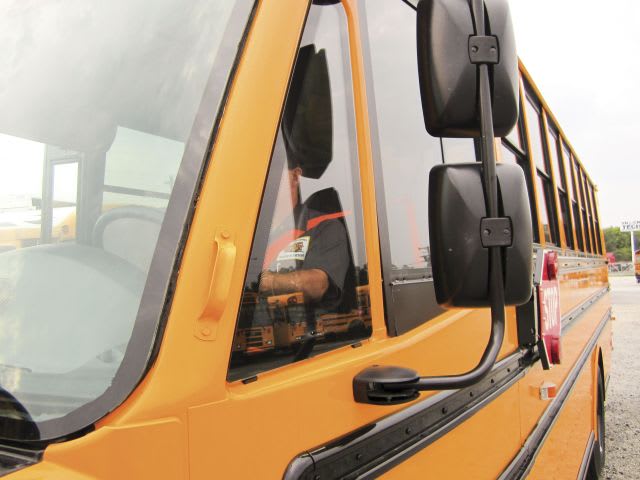
In Delaware, school bus driver seat belts are spec’d in fluorescent green or orange, making it easier to monitor belt use.
Visit a school bus manufacturing plant, and you’ll see that buses bound for different states have a wide variety of different requirements.
Of course, pupil transportation variations from state to state aren’t limited to bus specifications. States have many unique practices in operations, training, funding and other areas.
Here, state pupil transportation directors discuss some of their states’ specs and procedures that stand out.
Ind. requires bus buffer zone
An innovative safety measure in Indiana keeps students away from the very back of the bus.
State director Michael LaRocco says that one of Indiana’s school bus specifications is a requirement for a buffer zone behind the back seat.
For Type C and D buses, the spec states, “the distance between the rearmost portion of the seat backs of the rear row of seats and the outside rear of the bus body, measured at the floor line, must be at least eight (8) inches.”
For Type A buses, the distance must be at least 6 inches.
LaRocco explains that the measure is to enhance protection for school bus passengers. In the event of another vehicle crashing into the rear of the bus, children sitting in the back seats will be farther away from the point of impact.
Seat belts stand out in Del.
It’s vital that school bus drivers buckle up — for their own safety as well as their passengers’ safety. In Delaware, school bus driver seat belts are spec’d in fluorescent green or orange.
State director Ron Love says that these conspicuous colors make it easier for supervisors to see that their drivers are wearing their belts.
Delaware’s school buses are also equipped with an outside public address (PA) system for important instructions.
“The PA is used primarily to communicate to students when to get on the bus and when it is safe for them to cross in front of the bus,” Love says.
Mo. links funding, efficiency
Missouri has an interesting funding formula that is based on efficiency.
State director Roger Dorson explains that the funding formula uses an algebraic equation to compare each school district’s bus ridership, miles, days operated and costs to statewide data to determine the efficiency of the district.
“A penalty is applied to the district’s transportation calculation if the district is determined to be inefficient,” he says.
Also noteworthy: Missouri requires a second stop arm on its school buses, on the left side near the rear. The mandate went into effect for buses manufactured after June 30, 2007.
“There are no stats that display whether it has been effective,” Dorson says, “but since the majority of student fatalities occur in the loading and unloading zone, the technical advisory committee for the Missouri Minimum Standards for School Buses determined it was an added safety feature that Missouri should have on our buses.”
[PAGEBREAK]
Not just “red lights” in Iowa
One component in directing motorists to stop for school buses is wording on the back door. Iowa has a subtle but significant variation from many other states in that text.
Instead of “UNLAWFUL TO PASS WHEN RED LIGHTS FLASH,” the back door of Iowa school buses leaves out “RED” to read “UNLAWFUL TO PASS WHEN LIGHTS FLASH.”
State director Max Christensen explains the wording specification: “This is due to the fact that it is illegal to pass from behind when either our amber or red lights flash.”
Fla.’s drug testing contract
Since the federal Omnibus Transportation Employees Testing Act (OTETA) of 1991 required drug and alcohol testing of all commercial drivers, including school bus drivers, Florida has administered a state contract for that testing and related services.
State director Charlie Hood says that the contract “provides a turnkey means by which local school districts and charter schools can comply with OTETA.”
The contract is now administered by the Florida Department of Transportation. It was previously administered by the state Department of Education.
Hood says that a third-party provider handles the many aspects of the program, which include generating lists of employees subject to immediate random testing, collecting samples, providing the medical review officer services, and performing the testing and custody of the samples.
“It should be noted that this contract, while it is widely used by many of Florida’s school districts, is neither exclusive nor required,” Hood says. “Districts are free to use other providers, and some do.”

N.C.’s own routing software
North Carolina has a statewide license for school bus routing and scheduling software, which was established in the mid-1980s with funds from the state energy office because of the potential for fuel savings.
State director Derek Graham says that offices at the North Carolina State University and the University of North Carolina at Charlotte provide support to the state’s school districts in their use of the software.
“School districts call our offices for assistance with optimization, mapping or general software support,” Graham explains. “This supports our state funding model, which rewards efficiency.”
More interesting practices in North Carolina: the state Division of Motor Vehicles trains and certifies all school bus drivers, so school districts don’t hire their own driver trainers. Also, the state prioritizes and funds the replacement of school buses operated by public districts.
[PAGEBREAK]State bus quote in Wash.
Washington has a state school bus quote process that allows districts to buy buses without going out for an individual bid.
“This provides districts the ability to get buses at lower cost,” state director Allan Jones says. “The state specifies categories of school buses, and districts have the ability to add additional equipment on buses to fit their local needs.”
Also, Jones notes that districts are allowed to choose a bus other than the low-price quote model, which enables them to standardize their fleet.
Kan. compiles vital data
Kansas performs a unique service for the pupil transportation industry: the Kansas State Department of Education (KSDE) develops an annual report on school bus loading and unloading fatalities.
KSDE Senior Administrative Assistant Wilma Crabtree compiles the data from each state to prepare the survey, which has been generated since the 1970-71 school year (initially by the Kansas Department of Transportation).
KSDE Safety Consultant Debora Romine says that the loading/unloading report has been a vital force in the “dramatic decrease in fatalities over the years for the most dangerous area around the school bus.”
W.Va. pilot programs test ROI
West Virginia uses pilot programs to evaluate school bus-related projects.
State director Ben Shew says that the state is currently evaluating the use of disc brakes, for a number of reasons.
“One reason is the upcoming federal requirement for a reduction in stopping distance of trucks and buses,” Shew explains. “We are also evaluating the maintenance and operations costs to see what the overall costs will be associated with this change and to calculate the return on investment (ROI).”
West Virginia is also evaluating the use of specially treated remanufactured brake shoes. The state has “a significant problem with premature failure of brake shoes due to rust problems (rust jacking) caused by aggressive treatment of highways for snow and ice,” Shew says. “This project will also evaluate the ROI of this issue.”
More Management
13 Industry Leaders Describe School Transportation in One Word
What word best describes the school bus industry today? We posed that question to over a dozen manufacturers, resulting in a revealing mix of perspectives on the challenges and opportunities ahead.
Read More →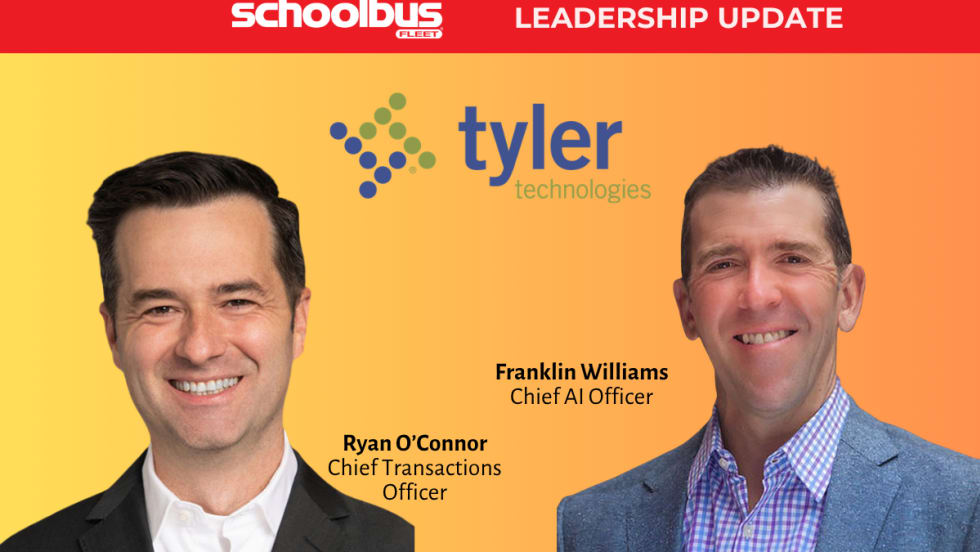
Tyler Technologies Adds New AI, Transactions Leadership Roles
Two company executives are promoted to newly created C-suite positions to accelerate the company's long-term growth in both artificial intelligence and payments.
Read More →
Pro-Vision Acquires Convoy Technologies
The deal aims to broaden customer relationships and adds specialized vehicle video capabilities for commercial fleets.
Read More →


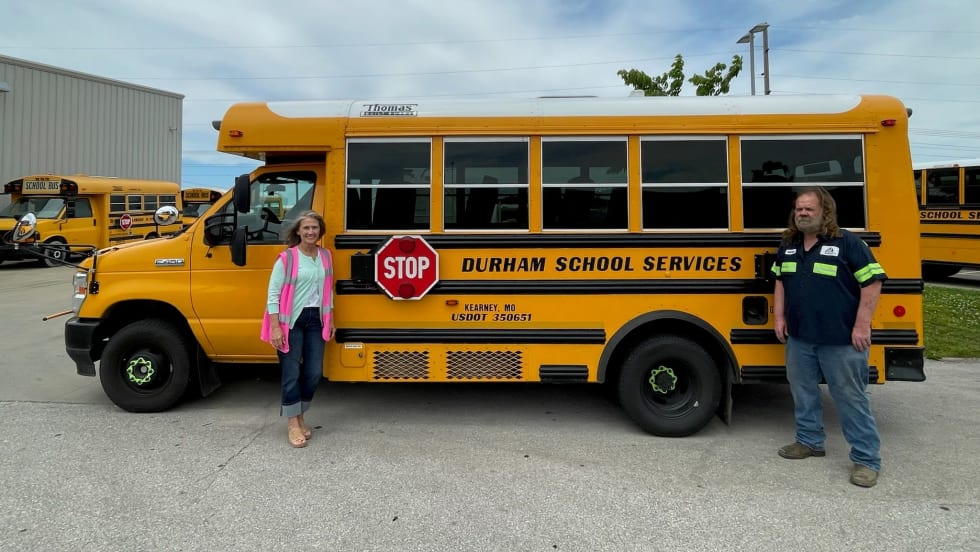
Durham School Services Maintenance Teams Earn Missouri Fleet Excellence Awards
Eight of the contractor’s school bus fleets achieved a distinction few maintenance teams earn during the state’s rigorous annual inspection program.
Read More →
How Incentives, AI, and Energy Markets Are Reshaping School Transportation
Sit down with Joe Annotti of TRC Companies to talk district grant funding, utility challenges, AI, and why school buses are evolving from transportation assets into energy assets.
Read More →
Inside the Contracting Shift: What School Transportation Operators Are Seeing Now
School transportation contractors weigh in on recent trends, costs, driver shortages, and the rise of multimodal student transportation.
Read More →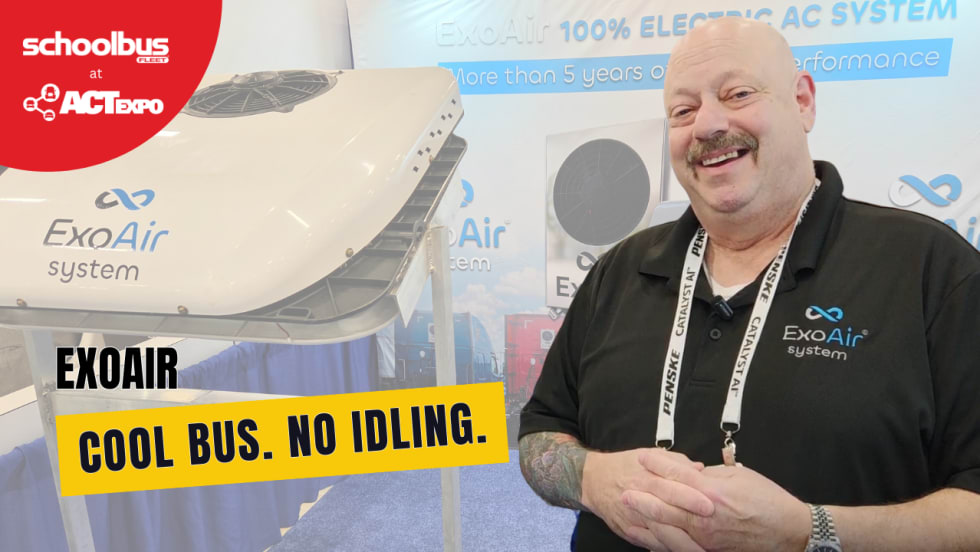
The No-Idling School Bus AC System
Take a peek at ExoAir Systems’ battery-powered cooling solution designed to run for up to 10 hours without the engine on, reducing fuel use and improving comfort for drivers and students.
Read More →
Geotab on Three Major Trends in School Transportation
School bus fleets are becoming more proactive than ever. From AI driver alerts to vehicle-to-grid opportunities, Geotab outlines the biggest technology trends transforming school bus operations.
Read More →
Gatekeeper Lands Major School Bus Deals as Revenue Surges
The video solutions provider announces contracts with Atlanta Public Schools and other fleet operators as it records quarterly revenue growth and expanding subscription business.
Read More →
Building Leaders Who Last: Creating a Successful Mentorship Program in Student Transportation
Discover five strategies for building an effective mentorship program to strengthen leadership development and support staff retention.
Read More →