



Help Cut Summer Overload for School Bus Production
More than 60% of school bus production is tied to deliveries that will occur during about 25% of the year.
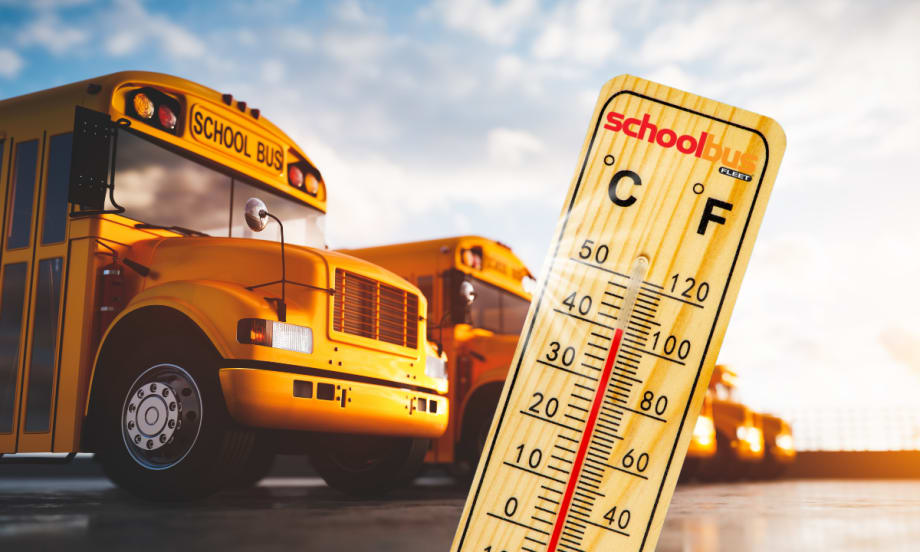
Even when schools aren’t in session, there’s plenty to do at the bus yard: planning and adjusting routes, recruiting and training drivers, maintenance work, bus rider registrations for the coming school year, etc.
Photo: School Bus Fleet
“How was your summer?”
For many of you in pupil transportation, the answer is “busy” or “very busy.”
Even when schools aren’t in session, there’s plenty to do at the bus yard: planning and adjusting routes, recruiting and training drivers, maintenance work, bus rider registrations for the coming school year, etc.
Another activity that adds to the summer busyness is taking delivery of new buses. By one estimate, close to two-thirds of school buses are ordered for summer delivery.
In other words, more than 60% of school bus production is tied to deliveries that will occur during about 25% of the year.
Why is that? And is it in the industry’s best interest?
Hectic Season
One key factor in the summer delivery rush is that most school districts are on a July 1 to June 30 fiscal year, so the funding for bus purchases becomes available in July.
For contractors, they may not want new buses on the books until after July because the buses won’t generate revenue until they’re transporting kids.
Some operations may have other reasons for ordering their buses for summer delivery, but let’s consider the challenges that this presents on the manufacturing side.
With such sharp peaks in demand each year, the manufacturers have some extremely busy months of bus building.
To ramp up production, the OEMs often have to hire a substantial number of temporary workers, who may be limited in experience and will need to be brought up to speed on the processes involved.
As an example of how the manufacturers try to mitigate this issue, they typically provide incentives for dealers to give them orders for late summer, fall and early winter, when production demand is at its lowest.
Off-peak delivery also reduces stress on the industry’s component suppliers as well as the dealers, and it can benefit the buyers — the school districts and contractors.
The more the OEMs can level out their production throughout the year, the more they can retain an experienced workforce. And that helps in optimizing quality, meaning a better bus for the customer.
Avoid Business as Usual
So how can school districts and contractors take advantage of off-peak delivery?
For some, it could be a matter of changing their budgeting process. Contractors may have more flexibility than school districts in when they can pay for new buses.
Another option is financing. In addition to making off-peak delivery more feasible, financing can enable school bus operations to replace vehicles more frequently — perhaps every year instead of every two or three years. Financing also allows the buyer to avoid huge capital purchases.
In the school bus industry, there can be no more “business as usual.” Off-peak delivery may be a big shift from how things have been done in the past, but it has the potential to benefit everyone.
One more example: It can help the OEMs improve their bottom line, which means they can invest more in research and development. And that will lead to an even safer ride for students.
More Management
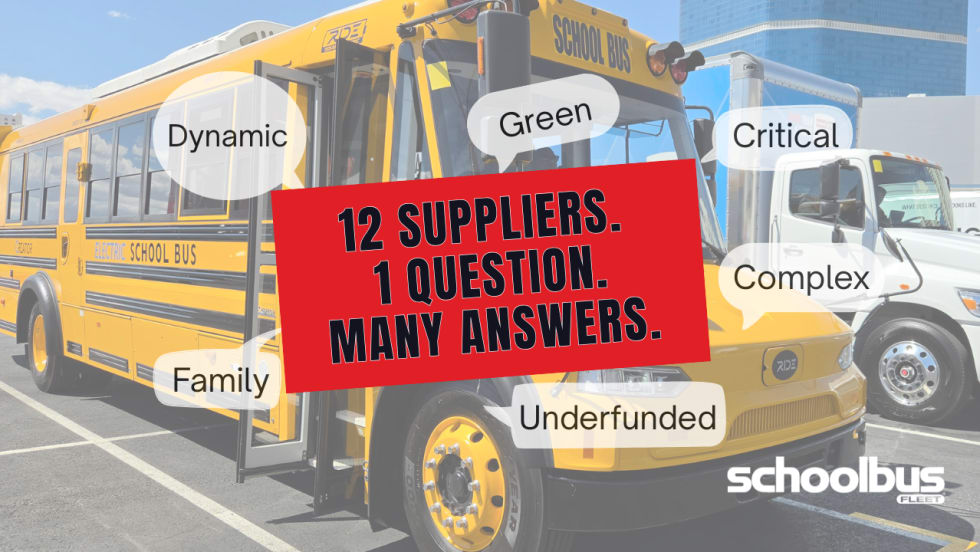
13 Industry Leaders Describe School Transportation in One Word
What word best describes the school bus industry today? We posed that question to over a dozen manufacturers, resulting in a revealing mix of perspectives on the challenges and opportunities ahead.
Read More →
Tyler Technologies Adds New AI, Transactions Leadership Roles
Two company executives are promoted to newly created C-suite positions to accelerate the company's long-term growth in both artificial intelligence and payments.
Read More →
Pro-Vision Acquires Convoy Technologies
The deal aims to broaden customer relationships and adds specialized vehicle video capabilities for commercial fleets.
Read More →


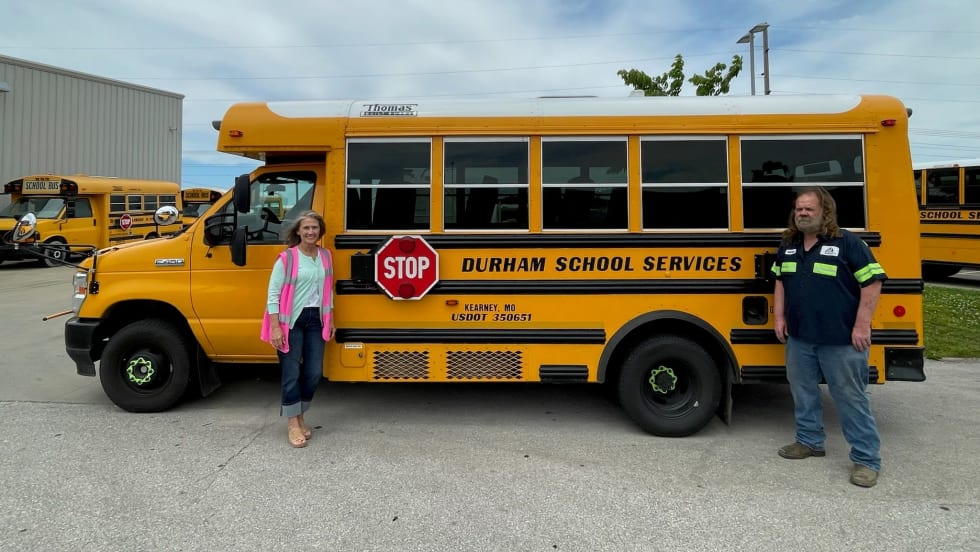
Durham School Services Maintenance Teams Earn Missouri Fleet Excellence Awards
Eight of the contractor’s school bus fleets achieved a distinction few maintenance teams earn during the state’s rigorous annual inspection program.
Read More →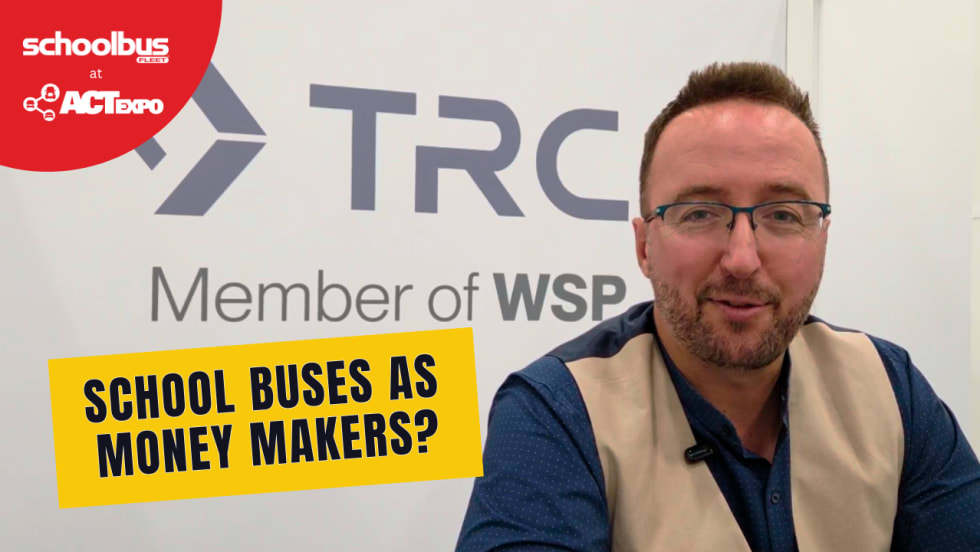
How Incentives, AI, and Energy Markets Are Reshaping School Transportation
Sit down with Joe Annotti of TRC Companies to talk district grant funding, utility challenges, AI, and why school buses are evolving from transportation assets into energy assets.
Read More →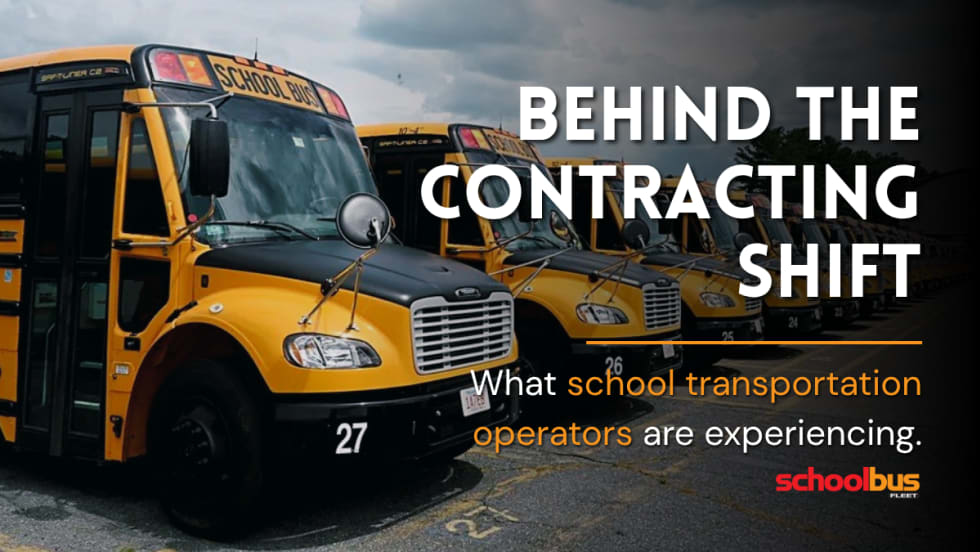
Inside the Contracting Shift: What School Transportation Operators Are Seeing Now
School transportation contractors weigh in on recent trends, costs, driver shortages, and the rise of multimodal student transportation.
Read More →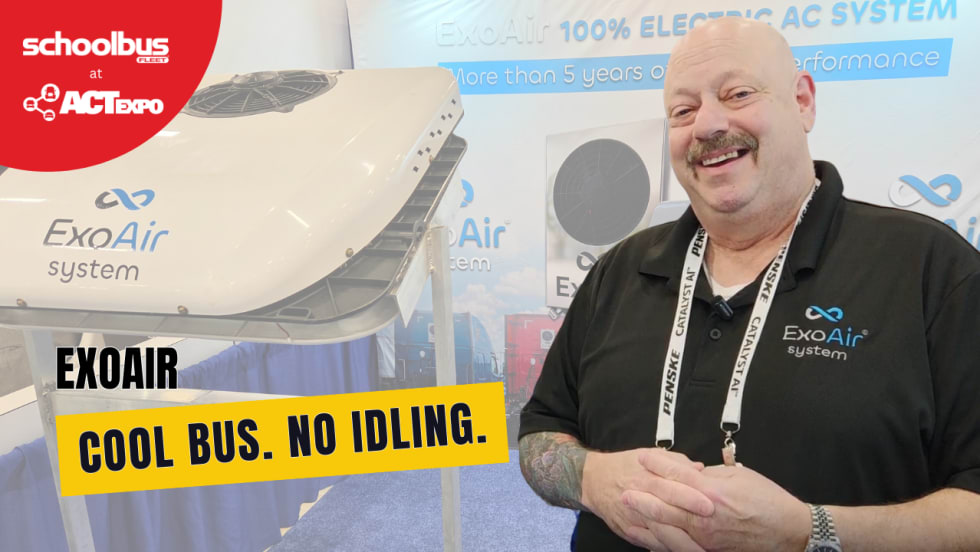
The No-Idling School Bus AC System
Take a peek at ExoAir Systems’ battery-powered cooling solution designed to run for up to 10 hours without the engine on, reducing fuel use and improving comfort for drivers and students.
Read More →
Geotab on Three Major Trends in School Transportation
School bus fleets are becoming more proactive than ever. From AI driver alerts to vehicle-to-grid opportunities, Geotab outlines the biggest technology trends transforming school bus operations.
Read More →
Gatekeeper Lands Major School Bus Deals as Revenue Surges
The video solutions provider announces contracts with Atlanta Public Schools and other fleet operators as it records quarterly revenue growth and expanding subscription business.
Read More →
Building Leaders Who Last: Creating a Successful Mentorship Program in Student Transportation
Discover five strategies for building an effective mentorship program to strengthen leadership development and support staff retention.
Read More →