



Districts join forces, cut costs
Winton Woods City School District and Finneytown Local School District in Cincinnati share their transportation services, including buses, routes and fueling stations. In sharing special-education service alone, the operations have each saved about $25,000.

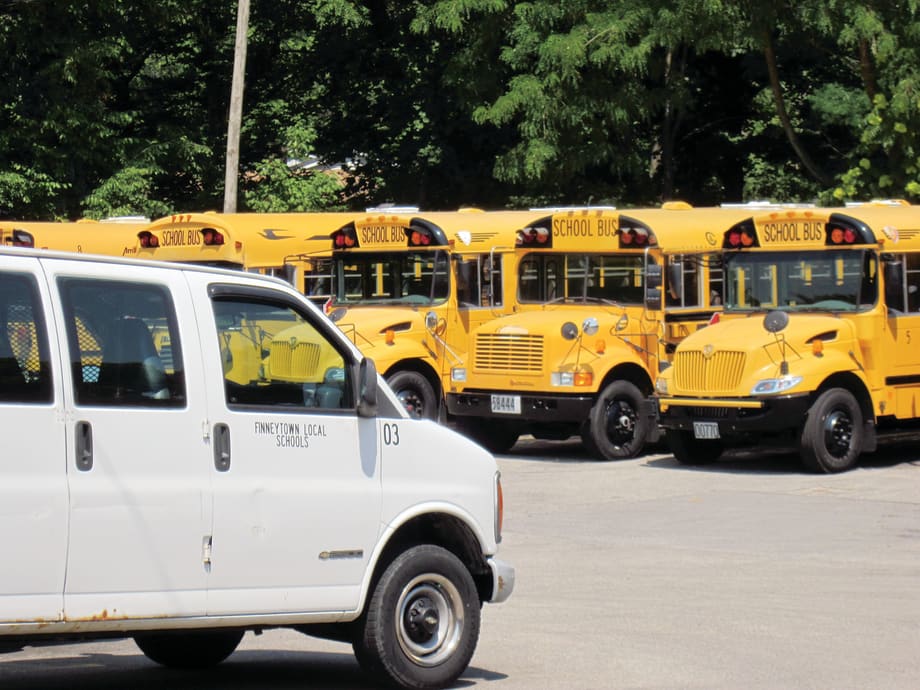
Winton Woods City School District and Finneytown Local School District, both in Cincinnati, have been sharing transportation services since the 2011-12 school year.
For Cincinnati-based districts Winton Woods City School District and Finneytown Local School District, sharing their transportation services has yielded “considerable” cost savings, according to Transportation Director Kristi Hooper. The districts are heading into their second year of shared service under a contract that was signed in June.
Hooper joined Winton Woods’ transportation department in 1994. Pete Japikse — now Ohio’s state pupil transportation director — was her supervisor. Hooper took over as the district’s transportation director in 2000. Since the beginning of the 2011-12 school year, she has also overseen school bus transportation service for Finneytown.
“I took the position because it was something new and different, and I wanted a challenge,” she says.
Shared buses, route service and more
Finneytown fuels its buses at Winton Woods’ facility, which Hooper says has reduced the district’s fuel costs by $10,000 since the drivers don’t have to fill up at local gas stations.
The districts have covered each other’s routes and field trips as well, and when they share services they charge one another half the amount. Hooper says she has learned a lot of business-related skills as a result of overseeing and managing both operations — how to borrow a bus, how to bill for service, etc.
“We set a fee based on some of our T2 expenses, and we do a quarterly billing,” Hooper explains.

The districts each maintain a service department, but they assist one another when necessary for bus maintenance.
“We’ve saved considerable money by sharing our out-of-district special-ed service this year,” Hooper adds. “There’s a third district that we’re working with — North College Hill City Schools — for this service, and I would say that Winton Woods saved at least $25,000, and that the other districts saved about the same amount of money.”
Winton Woods and Finneytown also do combined drug and alcohol testing and driver physicals onsite at one location, and Finneytown pays a portion of Hooper’s salary.
[PAGEBREAK]

Making it work
Hooper believes several factors have contributed to the success of her operations’ shared service. The first is the districts’ close proximity. They are only two miles apart, which makes it easy for Hooper to split her day between them.
While at each district, she makes an effort to have face time with all of her employees to keep abreast of daily activities.
The transportation staff at each operation has become more familiar with each other as well, and Hooper says they’ve really started to operate as a team.
Prior to starting the shared service, an in-service meeting was organized for both sets of transportation personnel, but Hooper attributes the familiarity and teamwork to working together each day.
“I think both sets of drivers realize this is what it takes to save money so that each district can run and maintain their own fleet,” she adds.
Hooper notes that the business managers at each district — Steve Denny at Winton Woods and Jim Acton at Finneytown — have been supportive and integral to the operations’ success.
“They make every effort to see that I have what I need, even to the point of offering to come down and pitch in when we have experienced office staff shortages,” she says.
Increasing bus video access, improving radio communication
For all of their success so far, Hooper believes there is room for improvement at both operations. One of her goals this school year is to show the transportation staff at Finneytown how to access and e-mail bus video surveillance clips from their computers.
The district’s school bus technician will also have software installed in his computer that will enable him to view the video clips.
Hooper believes giving her staff these capabilities is important in terms of developing their skills, as well as from an efficiency standpoint should an incident occur while she is at Winton Woods.
“I don’t want them to be dependent on one person [to watch the video clips],” she explains.
Radio communication between the two districts will also improve this year so that Hooper can oversee both operations more easily. Currently, she can monitor Finneytown from Winton Woods with a two-way radio. Winton Woods is upgrading its radios to meet the new FCC standards, and Hooper will then be able to monitor Winton Woods from Finneytown.
Moreover, software is being installed that will enable Hooper to see the contents of her Winton Woods computer while she is at the Finneytown facility, and the contents of her Finneytown computer while she is at the Winton Woods facility.
[PAGEBREAK]Tips for implementing shared service
Hooper sees shared service as a thing of the future since so many school districts are contending with budget cuts. To those who may be thinking about sharing school bus service with a neighboring district, Hooper offers several pieces of advice.
The first is to think outside the box. “The way you did things in the past isn’t necessarily the way you can do things going into the future,” she says. “Look at your routes with an open mind, and think about all the different ways you might be able to save money.”
Hooper says it’s also important to talk with everyone involved prior to developing the partnership to determine what the expectations are, and to be upfront with what you think you can accomplish.
She also emphasized the value of utilizing the technology that’s available to the pupil transportation industry and continuing to improve your skills in using the technology.
“The best thing I did was put all of the students we serve into one database so that if there’s a problem, I’m nothing but a phone call away, and I can access the information and see what the issue is,” Hooper explains.
Telephone communication is equally important. She says phones within the facilities should be equipped with call-forwarding capability so that if staff is unavailable in one office, the call will be transferred to the other district.
Also in regard to phones, Hooper says having a smartphone is very useful because you can get e-mails “anywhere, anytime,” and she recommends having a phone plan with “a lot of minutes!”
More Management
13 Industry Leaders Describe School Transportation in One Word
What word best describes the school bus industry today? We posed that question to over a dozen manufacturers, resulting in a revealing mix of perspectives on the challenges and opportunities ahead.
Read More →
Tyler Technologies Adds New AI, Transactions Leadership Roles
Two company executives are promoted to newly created C-suite positions to accelerate the company's long-term growth in both artificial intelligence and payments.
Read More →
Pro-Vision Acquires Convoy Technologies
The deal aims to broaden customer relationships and adds specialized vehicle video capabilities for commercial fleets.
Read More →


Durham School Services Maintenance Teams Earn Missouri Fleet Excellence Awards
Eight of the contractor’s school bus fleets achieved a distinction few maintenance teams earn during the state’s rigorous annual inspection program.
Read More →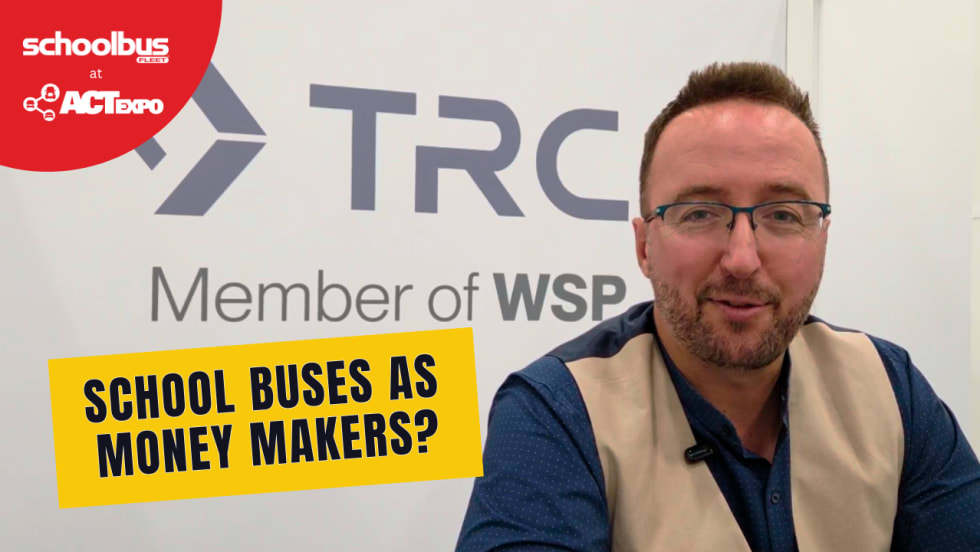
How Incentives, AI, and Energy Markets Are Reshaping School Transportation
Sit down with Joe Annotti of TRC Companies to talk district grant funding, utility challenges, AI, and why school buses are evolving from transportation assets into energy assets.
Read More →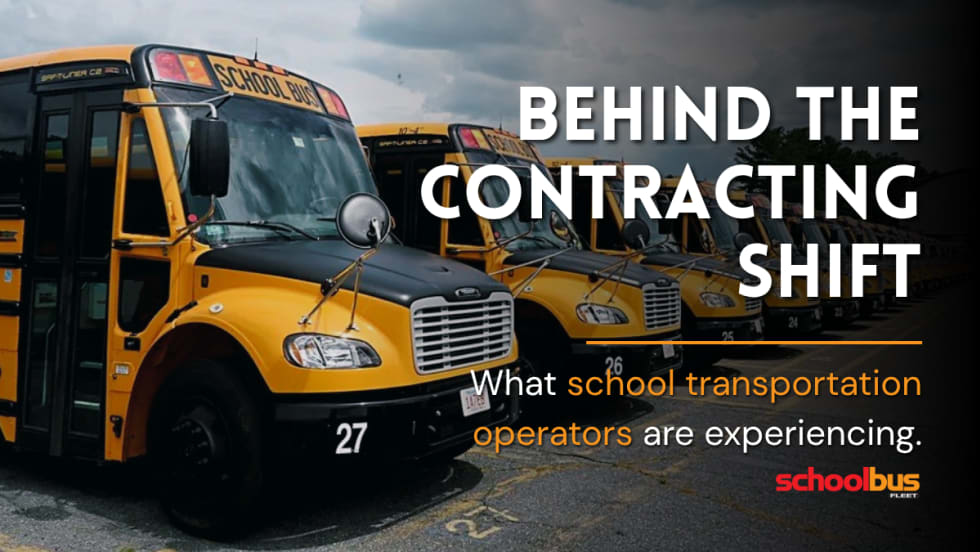
Inside the Contracting Shift: What School Transportation Operators Are Seeing Now
School transportation contractors weigh in on recent trends, costs, driver shortages, and the rise of multimodal student transportation.
Read More →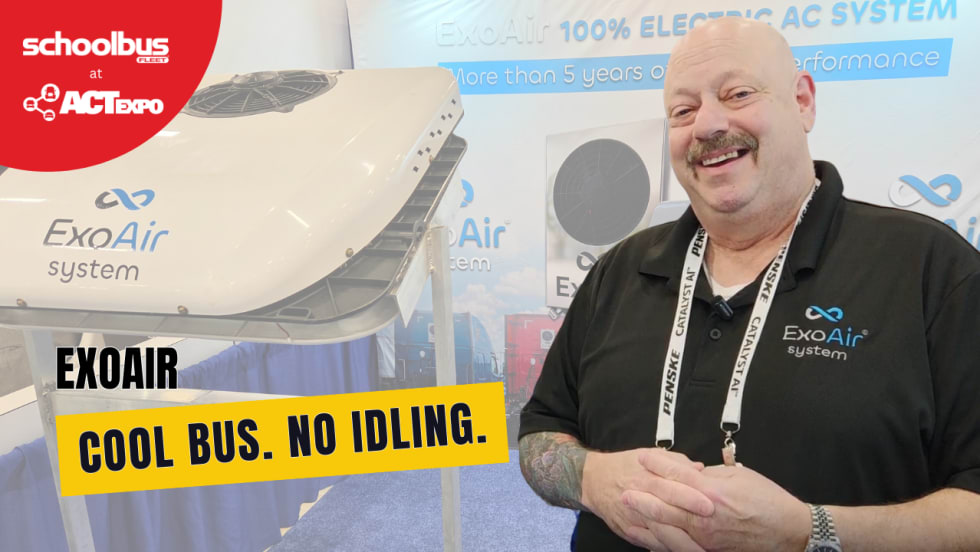
The No-Idling School Bus AC System
Take a peek at ExoAir Systems’ battery-powered cooling solution designed to run for up to 10 hours without the engine on, reducing fuel use and improving comfort for drivers and students.
Read More →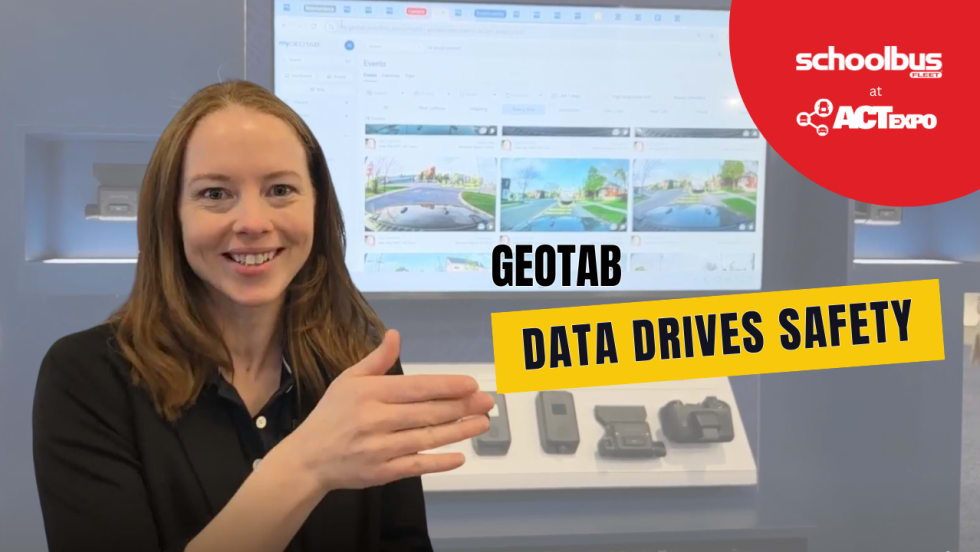
Geotab on Three Major Trends in School Transportation
School bus fleets are becoming more proactive than ever. From AI driver alerts to vehicle-to-grid opportunities, Geotab outlines the biggest technology trends transforming school bus operations.
Read More →
Gatekeeper Lands Major School Bus Deals as Revenue Surges
The video solutions provider announces contracts with Atlanta Public Schools and other fleet operators as it records quarterly revenue growth and expanding subscription business.
Read More →
Building Leaders Who Last: Creating a Successful Mentorship Program in Student Transportation
Discover five strategies for building an effective mentorship program to strengthen leadership development and support staff retention.
Read More →