



Feds show school bus support
At the annual conference of state pupil transportation directors, NHTSA Administrator David Strickland touts the safety and environmental benefits of the “humble yellow school bus,” as he calls it. NTSB Chairman Deborah Hersman credits state directors and others in the industry for their work to prevent school bus-train crashes.

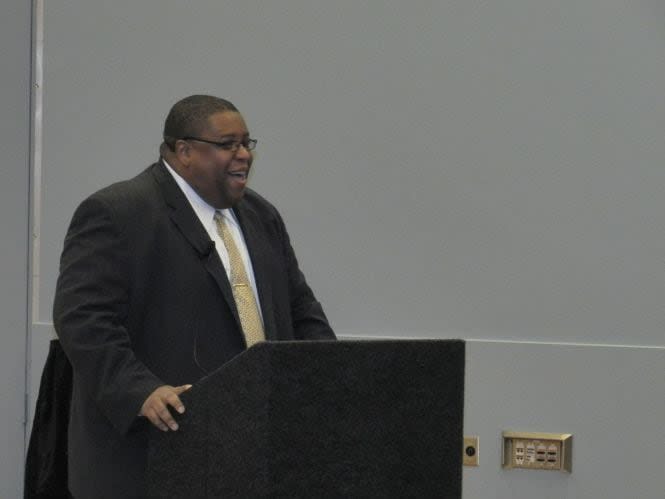
During the NASDPTS conference in Cincinnati, NHTSA Administrator David Strickland touted the safety and environmental benefits of yellow school buses.
The annual conference of state pupil transportation directors this fall drew some high-profile speakers from the federal government, and those officials had some encouraging words for the school bus community.
David Strickland, administrator of the National Highway Traffic Safety Administration (NHTSA), touted the safety and environmental benefits of the “humble yellow school bus,” as he called it. He also expressed support for increasing school bus ridership.
“We need to think about how we can expand busing — how we get more kids on buses,” Strickland said.
He noted that parents who prefer to drive their kids to school rather than putting them on the school bus have to be informed of their choice’s increased safety risk and contribution to traffic congestion.
Also during the National Association of State Directors of Pupil Transportation Services (NASDPTS) conference, which ran Oct. 21-24 in Cincinnati, NHTSA presented its new materials that promote school bus transportation.
The set of three posters can be downloaded for free at www.nhtsa.gov/School-Buses by clicking on the links under “Facts.”
High praise
In another session, National Transportation Safety Board (NTSB) Chairman Deborah Hersman reviewed several of her agency’s recent highway accident investigations and its ensuing recommendations. She also noted the lack of fatal school bus-train crashes in recent years, and she credited state directors and others in the industry for their work in preventing them.
In reviewing NTSB’s recommendations to enhance motorcoach safety, Hersman cited the superior occupant protection of school buses.
“You all have had real compartmentalization since the 1970s,” Hersman said of the school bus industry. Motorcoaches, with features like large windows through which passengers are ejected in some crashes, “are not designed with safety in mind,” she said.
[PAGEBREAK]
Flammability issue
An alarming development discussed during the NASDPTS conference was that chemical companies are reportedly funding a nonprofit group that is lobbying state legislatures to adopt additional flammability standards for school buses.
Accordingly, NASDPTS unveiled a new position paper explaining that the standards being proposed aren’t suited for pupil transportation — and the industry’s own national specifications are actually more stringent.
The paper, developed by NASDPTS’ School Bus Manufacturers Technical Council, details the fire-related federal standards that apply to school buses, including FMVSS 302 — Flammability of Interior Materials.
The paper notes that flammability standards are also included in the industry’s National School Transportation Specifications and Procedures. A maximum burn rate is specified for floor covering, and passenger seats are to meet the criteria of the School Bus Seat Upholstery Fire Block Test.
One of the standards being proposed in the lobbying efforts is to require that school bus seats meet ASTM International Standard E1537, “Standard Test Method for Fire Testing of Upholstered Furniture.” But the School Bus Seat Upholstery Fire Block Test is more stringent and more reliable, the NASDPTS paper points out.
Another of the lobbyists’ proposed standards, the paper explains, is to require that each plastic component in school bus engine compartments meets a V-0 classification when tested in accordance with the Underwriters Laboratories (UL) Inc. Standard 94, “Standard for Safety of Flammability of Plastic Materials for Parts in Devices and Appliances Testing.” But the chemicals that would be used to meet that standard could be problematic.
“In addition to major concerns regarding durability and performance of plastic components made to meet the UL 94 V-0 classification, there are also concerns with the chemicals that could be required to treat the plastics,” the paper says. “Brominated Flame Retardant (BFR) chemicals are typically used to meet UL 94 V-0 classification, and it is unknown what effect these BFR chemicals could have on plastic components in the engine compartment environment.”
The position paper is available at www.nasdpts.org/Papers.
Compelling speakers
Other highlights of the conference included a keynote speech by former NBA All-Star Mark Eaton and a welcome address by Ohio state director Pete Japikse, in which he discussed changes in school transportation and the need to come up with new solutions to old problems.
Kim Koenigs, executive director of the Worth County (Iowa) Development Authority, gave a passionate presentation about her campaign to pass Kadyn’s Law, which is named after a local girl who was killed in May 2011 when a motorist illegally passed her school bus.
The 2012 NASDPTS conference is scheduled for Oct. 19-22 in Memphis, Tenn.
More Management
The Link Between Emotional Intelligence and School Bus Safety
How can emotional intelligence help transportation pros navigate stress, manage change, and build stronger relationships? Listen to find out.
Read More →
What Emotional Intelligence Has to Do With School Bus Safety
In this video, discover how emotional intelligence can help transportation leaders and drivers navigate stress, manage change, and build stronger relationships. The Route is sponsored by IC Bus.
Read More →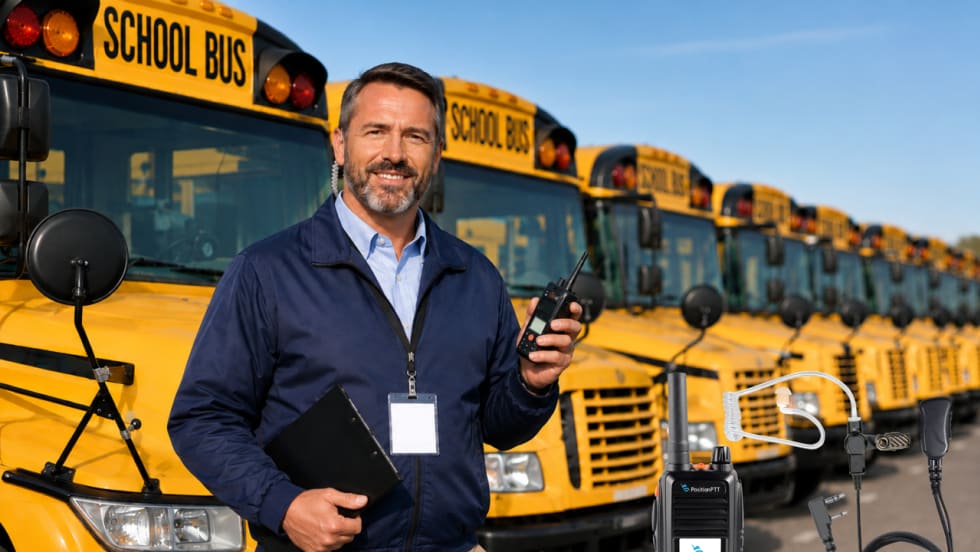
Beyond Two-Way Radios: School Bus Communications Evolve With Push-to-Talk Over Cellular
PRYME Radio and PositionPTT join forces to advance hands-free radio use and reduce distracted driving. See how PoC compares with traditional radios on range, cost, safety, and connectivity.
Read More →
Have School Districts Adapted to Bus Driver Shortages or Simply Accepted Less Service?
According to a recent report from HopSkipDrive, many districts appear to have recalibrated what "normal" transportation service looks like.
Read More →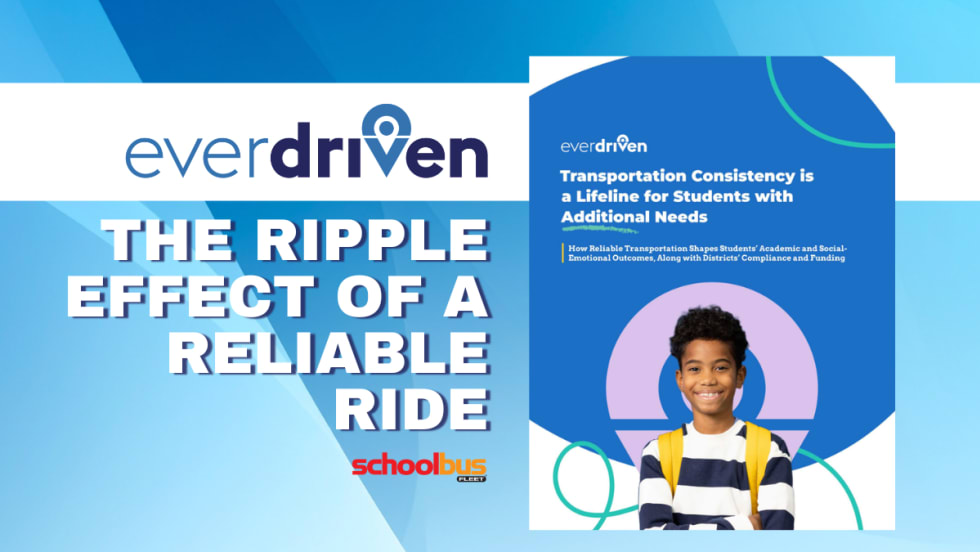
Reliable Transportation Linked to Better Student Outcomes, New EverDriven Study Finds
See why new research suggests transportation consistency improves student outcomes while influencing attendance, funding, IEP compliance, and family trust.
Read More →
Switzer-CARTY Enters the U.S. with New Acquisition
The Canadian contractor’s acquisition of Minnesota-based Agnes Corporation marks its first cross-border expansion into the United States and adds 350 vehicles.
Read More →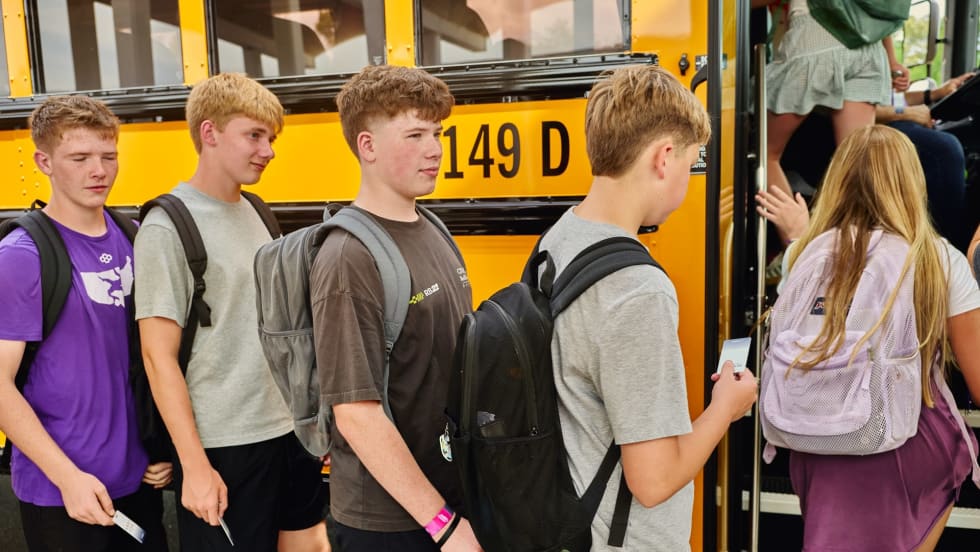
BusRight Adds New Rider Tracking Technology
Safety Pass is an NFC-based student ridership tracking solution that provides real-time boarding and drop-off data to improve school bus safety and family communication.
Read More →
EverDriven Launches RideAware App With Real-Time Student Ride Visibility
The updated platform’s new features improve communication among caregivers, districts, and drivers while streamlining trip updates.
Read More →
How School Transportation Departments Can Help Acclimate New Riders to the Bus
Here's how transportation departments can turn first-day jitters into confidence for students and parents alike.
Read More →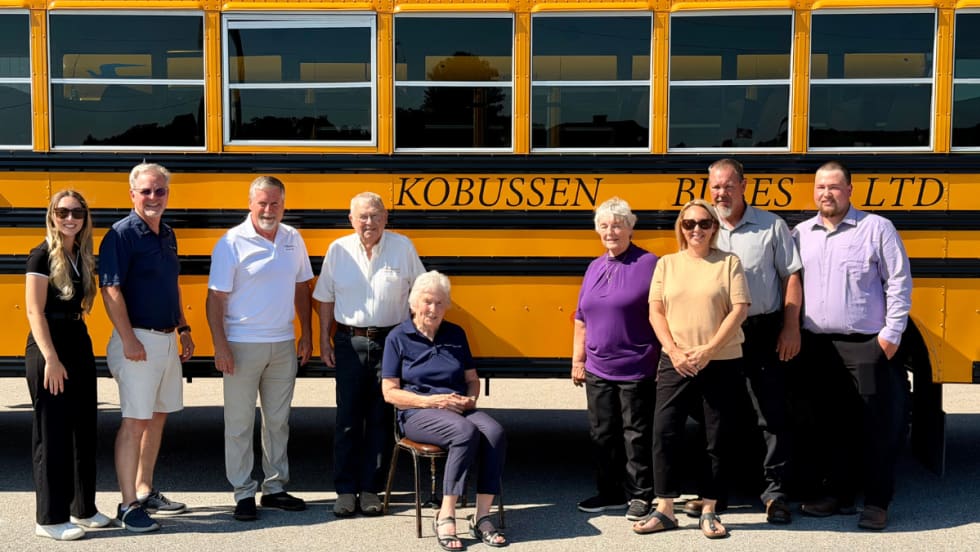
Neighbors Helping Neighbors: Nearly 90 Years of Safely Transporting Wisconsin Students
From one farmer's act of service to a fourth-generation family business, Kobussen Buses reflects on nearly 90 years of earning the trust of Wisconsin families.
Read More →