



Q&A: NAPT's Alexandra Robinson casts an eye on the future
At this year's conference in Cincinnati, Alexandra Robinson will become president of the National Association for Pupil Transportation. Her goals include analyzing the link between student achievement and access to school bus service, and maintaining and growing the industry's pool of strong leaders.

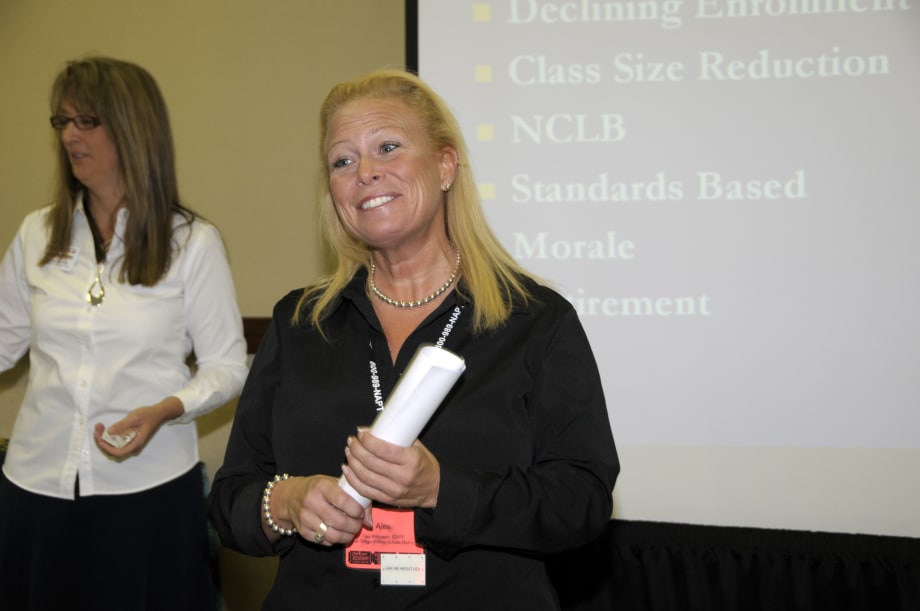
Alexandra Robinson (right) has headed many presentations at NAPT conferences. Also pictured is Launi Schmutz, director of transportation at Washington County School District in St. George, Utah.
Photo by Jaime Gallego.
Photo by Jaime Gallego
Alexandra Robinson began her career in pupil transportation nearly 25 years ago as a crisis intervention specialist for an Orlando, Fla.-based school district's transportation department.
After working in several other positions in Florida, she moved to the West Coast, where she has served as transportation director at San Diego City Schools and interim transportation director at Montebello (Calif.) Unified School District (USD).
During her time at Montebello USD, Robinson worked with the staff to achieve more than $500,000 in cost-cutting efforts. She has also recently done consulting work for school districts in Washington state, Oregon, Arkansas, Texas and Ohio that has focused on leadership development and special education.
As she assumes the presidency of the National Association for Pupil Transportation (NAPT), Robinson will draw upon her experience as an educator, which has influenced her goals for the association.
She discussed these goals, NAPT's efforts to provide guidance for pupil transporters and more with SBF Managing Editor Kelly Roher.
SBF: What are your goals for your term as president of NAPT?
ALEXANDRA ROBINSON: My goals — which I believe align with NAPT's mission — center around education, leadership, collaboration and communication. Although I'm not a teacher in a classroom anymore, I've always made it clear that I'm still in the business of education. I believe that there's a definite connection between student achievement and access and eligibility to school bus service, and I hope to help further develop that data.
Next, there are people who have participated in NAPT's Leading Every Day initiative who are the future of this industry. I will make it a priority to ensure that this leadership component remains strong so that we can tap into this talent and create resources for fellow leaders, districts and agencies.
Finally, I'm trained to be focused on what's best for children; this can only be enhanced through communication with others who share that goal. I hope to bring further engagement of our global educational and industry partners through a renewed collaborative effort.
Are there any initiatives that NAPT is currently working on?
There is a strong feeling among the NAPT board that we need to create products and services that help our members with the real-world problems they face every day, and that our success will be predicated on data. We intend to focus on collecting achievement data, demographic data, program data and perception data.
NAPT is working closely with the American School Bus Council to create strategies to collect each type of data, develop strategies for analyzing and understanding the information, and methods for determining how these efforts can influence our collective and individual goals and planning.
How can NAPT help pupil transporters handle key issues facing the industry?
Districts, agencies and boards of education have to be given the information necessary so that they can make informed decisions for students. NAPT can help in this effort so that school transportation isn't always first on the chopping block, there are vehicle replacement plans in place and those "running the show" are still being provided with professional development.
Also, there needs to be a focus on retaining those riders who we do have, for safety as well as for operational efficiency. NAPT can be the go-to resource for members in need of passenger retention plans and policy templates.
Finally, "keeping the school bus industry alive" won't be possible until succession plans are developed and we mentor those new to the business of education. Our retiree pool is growing and our up-and-coming pool is decreasing. Through collaboration with other associations and educational partners, we should be able to permanently mend this tear in the system.
Tell us about the benefits of, and the response to, NAPT's Special Needs Training Program.
The Special Needs Training (SNT) Program has filled a niche for many who specialize daily in the transport of students with disabilities and has proven to have had overwhelming success. In addition to nearly a dozen who have completed the SNT endorsement, there are literally dozens more who have begun the process.
Some of the SNT courses will soon be available online; this will make the program even more accessible to members.
When and how did you first become involved in school transportation?
In 1987, I was a behavioral specialist in a school for students with disabilities in Orlando, Fla. Someone from the district's transportation department asked if I wanted to be the crisis intervention specialist for transportation — I would be "in charge of the behavior on the school buses." I figured that couldn't be too hard. I laugh when I think about my impression of what transportation was then and what I know now.
Is there anything else you'd like to discuss in terms of your presidency of NAPT?
NAPT has a team of board members who are truly dedicated to making things better. I'm not only honored to be able to keep the momentum going, but also honored that our members have entrusted me with this role.
More Management
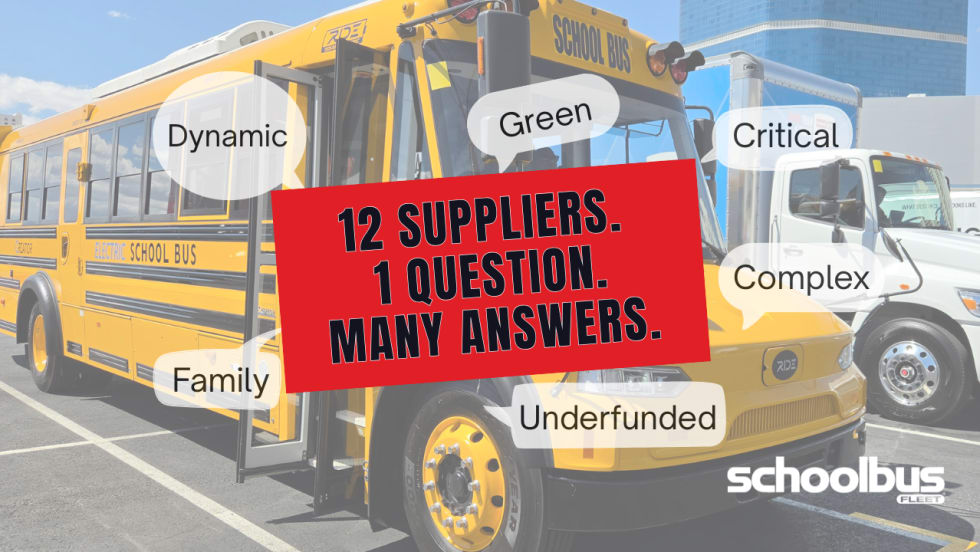
13 Industry Leaders Describe School Transportation in One Word
What word best describes the school bus industry today? We posed that question to over a dozen manufacturers, resulting in a revealing mix of perspectives on the challenges and opportunities ahead.
Read More →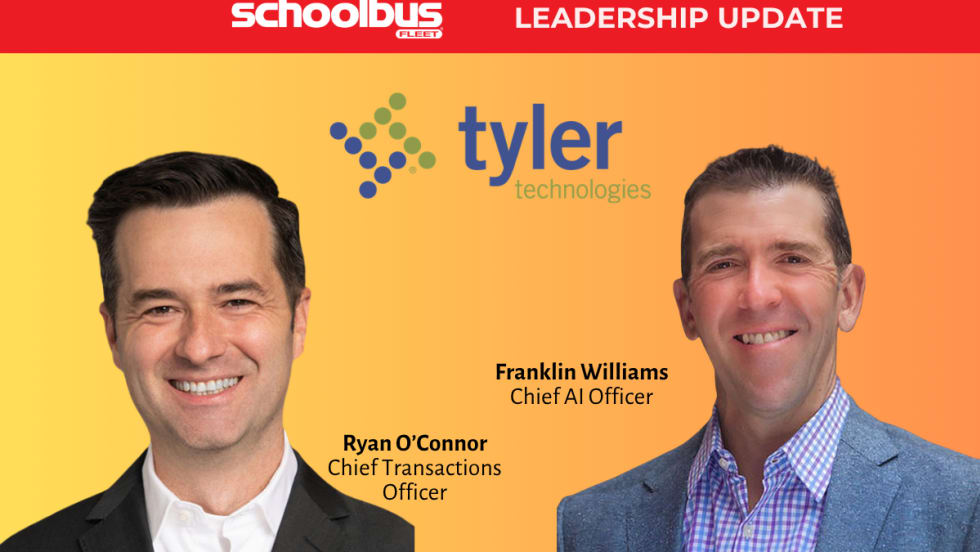
Tyler Technologies Adds New AI, Transactions Leadership Roles
Two company executives are promoted to newly created C-suite positions to accelerate the company's long-term growth in both artificial intelligence and payments.
Read More →
Pro-Vision Acquires Convoy Technologies
The deal aims to broaden customer relationships and adds specialized vehicle video capabilities for commercial fleets.
Read More →


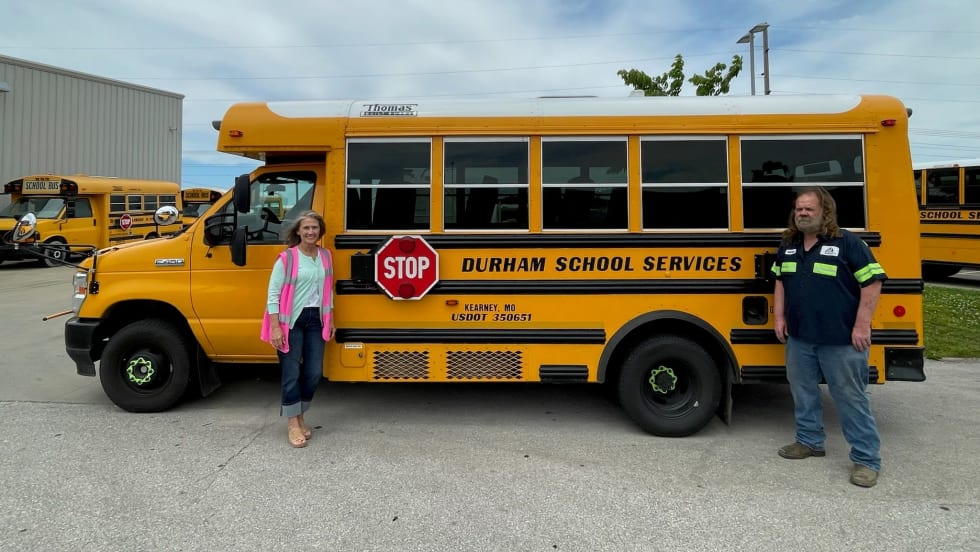
Durham School Services Maintenance Teams Earn Missouri Fleet Excellence Awards
Eight of the contractor’s school bus fleets achieved a distinction few maintenance teams earn during the state’s rigorous annual inspection program.
Read More →
How Incentives, AI, and Energy Markets Are Reshaping School Transportation
Sit down with Joe Annotti of TRC Companies to talk district grant funding, utility challenges, AI, and why school buses are evolving from transportation assets into energy assets.
Read More →
Inside the Contracting Shift: What School Transportation Operators Are Seeing Now
School transportation contractors weigh in on recent trends, costs, driver shortages, and the rise of multimodal student transportation.
Read More →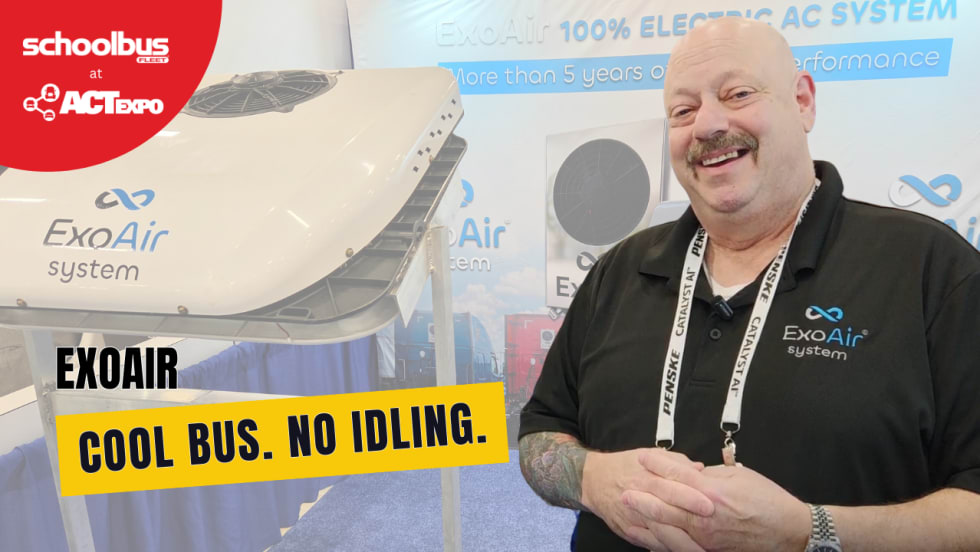
The No-Idling School Bus AC System
Take a peek at ExoAir Systems’ battery-powered cooling solution designed to run for up to 10 hours without the engine on, reducing fuel use and improving comfort for drivers and students.
Read More →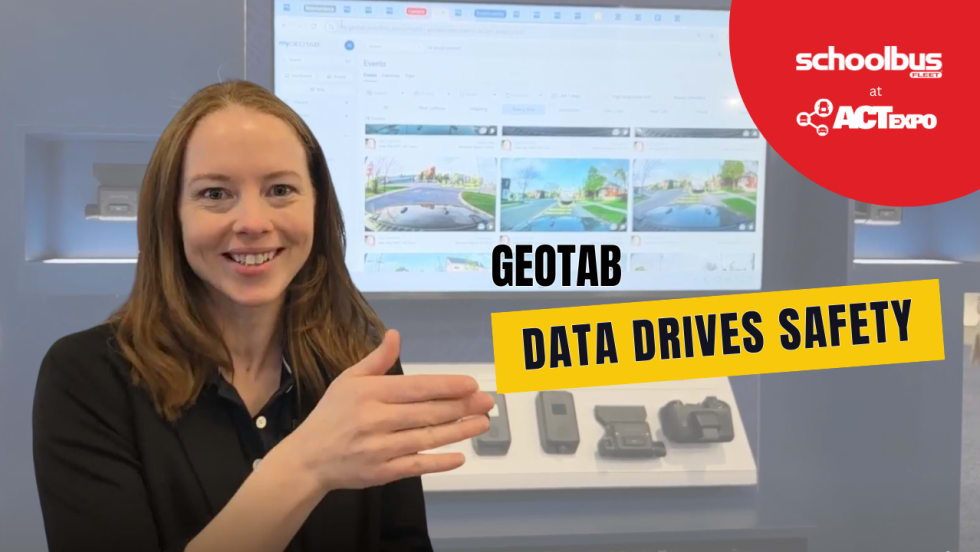
Geotab on Three Major Trends in School Transportation
School bus fleets are becoming more proactive than ever. From AI driver alerts to vehicle-to-grid opportunities, Geotab outlines the biggest technology trends transforming school bus operations.
Read More →
Gatekeeper Lands Major School Bus Deals as Revenue Surges
The video solutions provider announces contracts with Atlanta Public Schools and other fleet operators as it records quarterly revenue growth and expanding subscription business.
Read More →
Building Leaders Who Last: Creating a Successful Mentorship Program in Student Transportation
Discover five strategies for building an effective mentorship program to strengthen leadership development and support staff retention.
Read More →