




Bus Video: A Versatile Tool
School bus operators use video surveillance systems to resolve disputes and as sources of evidence in accidents or onboard incidents. Some are also using video in training drivers and recovering the costs of vandalism.

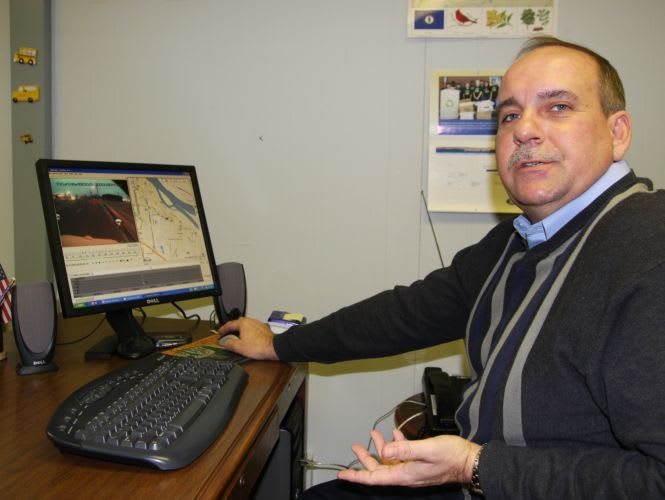
Paducah (Ky.) Public Schools' Steven Spraggs is in the process of converting his 36-bus fleet to Fortress Systems International video surveillance equipment. The four-camera system also provides passive GPS tracking, speeds and other vehicle data.
It seems obvious: Put a camera on a bus so you can monitor driver and passenger activity in case something goes wrong.
But with the variety of systems and configurations to choose from, the decision is more complicated than that. Should more than one camera be installed? What view should each camera capture? Does video have other uses besides surveillance?
Selecting a system
Many times, schools will test several systems before choosing the one to equip buses with. "We did a year-long study and borrowed systems from eight different companies," says Mike Peiffer, who directs safety and training in the Mehlville School District transportation department in St. Louis. During this period, Peiffer says Radio Engineering Industries' (REI) BUS-WATCH system stood out because it worked right away and kept working without a malfunction.
"We have two cameras on each bus," he says — one at each end of the bus' interior. "We're using a 2.8 mm, which is a wide-angle lens. That allows us to see the door, the students and the driver in the front, and we can see the back seats, where the trouble usually is." The district buys REI systems through dealer Central States Bus Sales.
[IMAGE]498[/IMAGE]Peiffer says the system's audio and video provide clear evidence in case of onboard incidents or accidents with other vehicles. "We have had buses rear-ended, and you can actually see the accident occur," he says. "You can see the vehicle approach, you can hear and see the accident, which is really good for liability if someone decides to claim injury. One time, the driver that hit the bus came up and said, 'Oh, I'm sorry, I didn't even see you. I was watching the ambulance.'"
One of the system's major benefits, he says, is in catching students who damage seats on the bus. "The year before we put in cameras, our garage staff replaced 95 seat covers," he says. "Now if we see damage to the seat, we review the video and send a bill for labor and parts to the parents along with a write-up for the student. We've recovered thousands of dollars, and now the kids know they're going to have to pay for the seat."
Training benefits
At Certified Transportation Services Inc. in Santa Ana, Calif., Operations Supervisor Sean Gregory says that using video surveillance in driver training was an unexpected benefit of having the systems installed on fleet buses. "There's nothing like being able to show a driver what they're doing," he says. Any particular maneuvers it helps with in training drivers? "Following distance, without a doubt," he says. "That's the leading cause of accidents that we've encountered, and it's something that the drivers don't get until you show them."
[IMAGE]499[/IMAGE]Eight of the company's buses are equipped with Rosco Vision Systems' Dual-Vision system, a dash-mounted continuous video recorder that captures both interior and exterior bus views.
For Rick Ellis, assistant director of transportation at Cypress-Fairbanks Independent School District in Houston, customer service figured greatly in his selection of AngelTrax Bus Video as his department's video surveillance vendor. "They addressed issues that we had and we believe their technology is good, but their support was I think the defining factor," he says.
Most of the time, Ellis uses the system to respond to reported incidents on the bus. But he also does random checks for driver assessment. He also relies on his video system for the facts surrounding any incident involving a school bus. "These new units give you so much data. It gives you a chance to look at the facts, and I think that's invaluable," he says.
John Bailey, a mechanic for Little Rock (Ark.) School District, says he finds it very easy to train people on the AngelTrax system. The district's security staff have laptops in their cars, he says, and can access bus video remotely. In addition, the quality of the footage has led to the resolution of a driver dispute. "We had a wreck, and the driver is claiming workers' compensation. She is now in legal status with that and we have video to back up that she was never hurt," Bailey says. "It was good enough video that the doctor requested it."
[PAGEBREAK]
[IMAGE]496[/IMAGE]Making an upgrade
When switching to a new video system, Steven Spraggs, director of transportation for Paducah (Ky.) Public Schools, says he was looking for additional coverage and color cameras instead of black and white. After testing a system from Fortress Systems International (FSI), Spraggs decided to go with the company's four-camera system, which monitors the stairwell, the interior of the cabin and the roadway ahead of the bus. The forward-looking camera helped Spraggs confirm bus whereabouts in a recent incident reported by a parent. "We had [a driver] go in a place they shouldn't have been, and had it not been for that particular camera, we might not have been able to see that. We were able to detect that and stop it from happening anymore."
The FSI system also provides speed and GPS location, and features an event marker function, making it easy to review footage from a specific incident. The company also offers a real-time streaming video system with active GPS that includes a covert panic button for drivers to send a distress signal for help.
In addition to providing the means to defend drivers' actions on the bus or determining fault in an accident, video footage can help identify students who have misbehaved. "We may not be able to identify the students because they're new on the bus," says Kathy Houck, director of transportation at Reynolds School District in Fairview, Ore. "Maybe they've caused an issue and we want to write a referral. We can print a still of that child unloading, which gives a good visual of the face, and send that to the school so that they know who we're talking about."
[IMAGE]497[/IMAGE]Bill Wagner, transportation assistant supervisor at the district, says Apollo Video Technology's equipment (the RoadRunner digital video recorder, or DVR) is durable enough to handle the rough environment on a bus. He also values the system's security. "Basically, if anyone got a hold of it, they could not retrieve anything off of it without the proper software to access that information."
Houck says that although they only have one Apollo camera on each bus now, as they purchase new buses, they hope to add a second camera to monitor the driver area and bus entrance.
Ken Morosko, fleet technician supervisor at Baltimore County Public Schools in Towson, Md., is also planning to increase the number of cameras on buses as new vehicles are purchased, due in part to the rising height of school bus seatbacks. He chose Seon Design Inc.'s Trooper DVR over other systems because of its simplicity, adjustability and the picture quality it provided.
In addition, answers to his questions are never far away, as he says Seon's service is "the best I've seen in 30 years in this field, dealing with any vendor. If I need a question answered, there's a go-to guy — I've got his cell number, email, and even if I get a voicemail, I get an answer in 30 minutes."
Video footage captured by the system was instrumental in verifying that a bus driver and attendant followed procedure during a bus crash last year when a boat began to come off its trailer, Morosko says. "You could see from the video looking backwards following the road and the sidewalk, our driver tried to avoid it because she saw it coming," he explains. "I gave [the video] to uur director because it demonstrated how the attendant and the driver both reacted. They first made sure the students were OK, and then they proceeded to call our office as they should."
At Orange County Public Schools in Orlando, Fla., Director of Operations Support Arby Creach says he chose Seon because the company provided schematics and parts allowing the district's shop staff to make repairs to the video equipment after the warranty ran out. "The competitor refused to sell me parts so I could do my own repairs, at my costs and on my time," he says.
With a fleet of 1,500 buses and about 900 video systems installed, Creach says drivers practically refuse to drive a bus if it doesn't have a camera on board. "It makes the decision-making process very simple and ensures that justice is done," he says. The district recently provided video footage to law enforcement after a student brought a weapon on board a bus, then threw it out the window after the driver called for help. "They were able to exactly identify the point at which he dropped the weapon, go back and recover the weapon, and charge the student," he says.
Orange County is also piloting a Seon system that allows area managers to connect wirelessly via Bluetooth and view live bus video from within 300 feet of the vehicle. "We basically create a mini hotspot," Creach says.
School bus operations that select Safety Vision's RouteRecorder system value the option to record and playback simultaneously. The system's viewer software includes a synchronized map to show the vehicle's GPS location during playback.
Accident investigation
Shop Supervisor George Davis, of Fayette County (Ga.) Schools' transportation department, says one of the biggest uses for the 247Security Inc. video systems installed on the district's buses is in accident investigation. "I'm also chairman of the accident review committee, and it allows me to go back and see, was the driver at fault or was the other person at fault?" he says. "It's the No. 1 tool I use, particularly when it's a bus-against-bus situation in a parking lot or when we find damage that was not reported."
Davis also finds the system's Mini-TRACK passive GPS feature of particular value, because there are no ongoing costs associated with cellular service, as is required with active — or real-time — GPS systems.
"I've yet to find anyone who has the manpower or the time to actually look at real-time GPS," Davis says. "Typically when someone calls in an incident, the route's pretty much over by the time you get that call anyway. And by the time you're able to address it, it's after the fact."
With the passive GPS system, Davis is still able to access bus speed, location and routing information in order to address any incidents requiring that information.
More Management
13 Industry Leaders Describe School Transportation in One Word
What word best describes the school bus industry today? We posed that question to over a dozen manufacturers, resulting in a revealing mix of perspectives on the challenges and opportunities ahead.
Read More →
Tyler Technologies Adds New AI, Transactions Leadership Roles
Two company executives are promoted to newly created C-suite positions to accelerate the company's long-term growth in both artificial intelligence and payments.
Read More →
Pro-Vision Acquires Convoy Technologies
The deal aims to broaden customer relationships and adds specialized vehicle video capabilities for commercial fleets.
Read More →


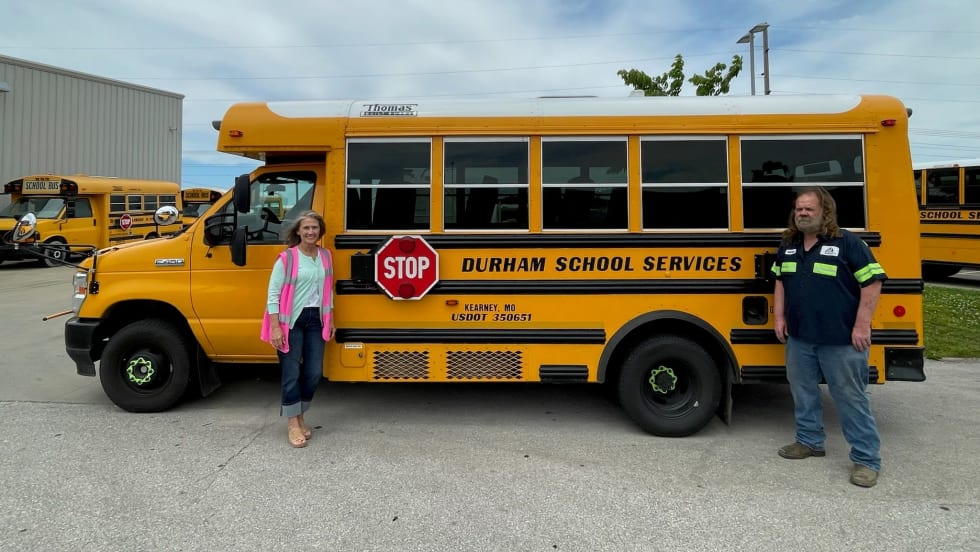
Durham School Services Maintenance Teams Earn Missouri Fleet Excellence Awards
Eight of the contractor’s school bus fleets achieved a distinction few maintenance teams earn during the state’s rigorous annual inspection program.
Read More →
How Incentives, AI, and Energy Markets Are Reshaping School Transportation
Sit down with Joe Annotti of TRC Companies to talk district grant funding, utility challenges, AI, and why school buses are evolving from transportation assets into energy assets.
Read More →
Inside the Contracting Shift: What School Transportation Operators Are Seeing Now
School transportation contractors weigh in on recent trends, costs, driver shortages, and the rise of multimodal student transportation.
Read More →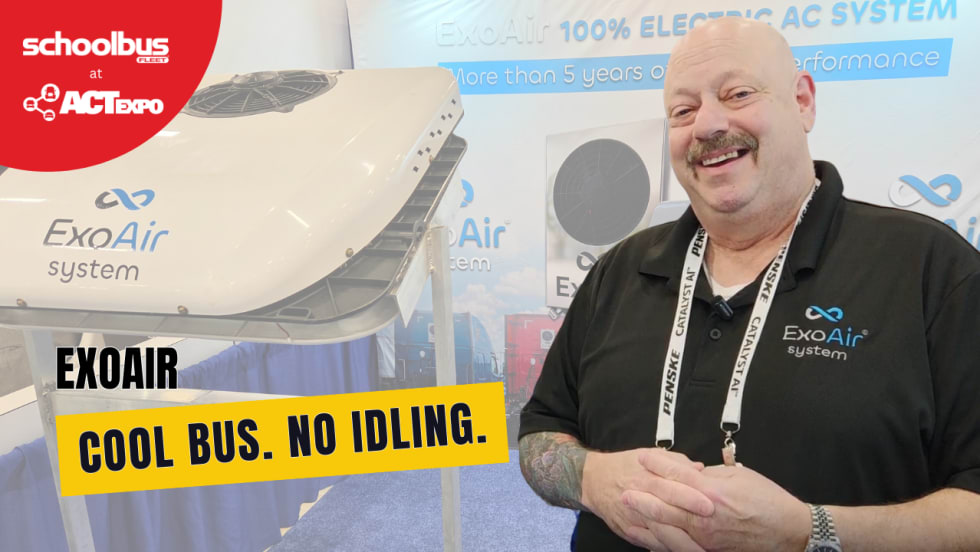
The No-Idling School Bus AC System
Take a peek at ExoAir Systems’ battery-powered cooling solution designed to run for up to 10 hours without the engine on, reducing fuel use and improving comfort for drivers and students.
Read More →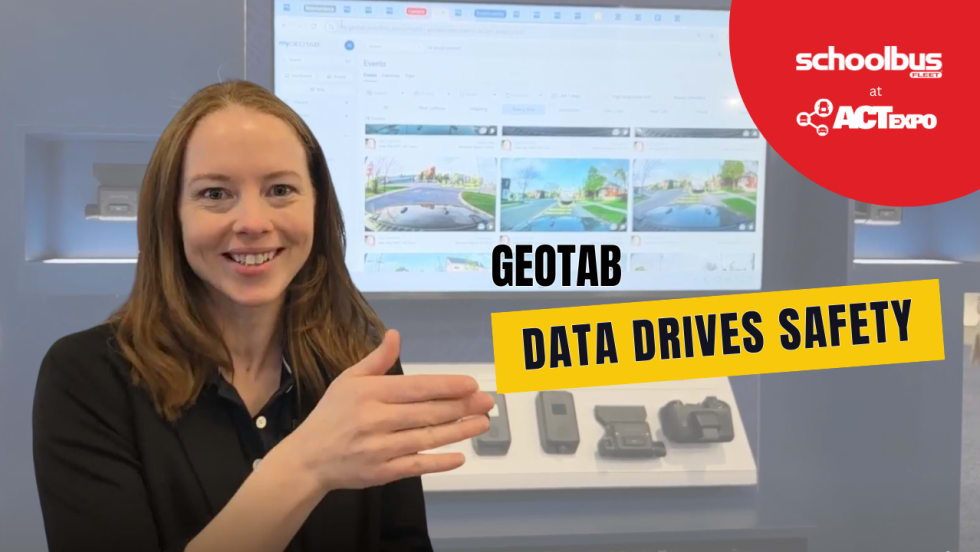
Geotab on Three Major Trends in School Transportation
School bus fleets are becoming more proactive than ever. From AI driver alerts to vehicle-to-grid opportunities, Geotab outlines the biggest technology trends transforming school bus operations.
Read More →
Gatekeeper Lands Major School Bus Deals as Revenue Surges
The video solutions provider announces contracts with Atlanta Public Schools and other fleet operators as it records quarterly revenue growth and expanding subscription business.
Read More →
Building Leaders Who Last: Creating a Successful Mentorship Program in Student Transportation
Discover five strategies for building an effective mentorship program to strengthen leadership development and support staff retention.
Read More →