



Q&A With New President of Thomas Built Buses
School bus OEM appoints Kelley Platt as the successor of John O’Leary, who moved into a new role with Daimler Trucks North America. Platt played a pivotal role in Daimler’s acquisition of Thomas Built in ’98.


Thomas Built's new president and CEO, Kelley Platt, most recently served as general manager of business excellence at Daimler Trucks North America.
In early February, Thomas Built Buses officially announced that Kelley Platt has succeeded John O’Leary as president and CEO of the school bus manufacturer.
Platt, who joined Daimler Trucks North America LLC (DTNA) in 1989 as Freightliner manager of treasury services, played a pivotal role in the company’s 1998 acquisition of Thomas Built.
Most recently, Platt served as DTNA’s general manager of business excellence, where she was responsible for product quality, business processes and customer satisfaction.
O’Leary, who joined Thomas Built in 2002, served as president until the beginning of this year. He moved to a new role as senior vice president, service and parts, for DTNA. He will serve as a member of DTNA’s operating committee and will participate in the overall management of the company.
SBF Executive Editor Thomas McMahon spoke with Platt about her outlook for Thomas Built, her experience with DTNA and the “green” aspect of school transportation.
SBF: What are your initial goals as president and CEO of Thomas Built Buses?
KELLEY PLATT: The first thing I have to do is learn about the industry — learn from our customers, our dealers, the fantastic team here at Thomas Built. Even with all the years I’ve worked with them, it’s a little bit different to actually be here in person and get an opportunity to understand what makes the business tick and what makes Thomas Built really good at what it does.
But past the initial learning, it’s very important to me that we carry on the Thomas Built tradition. Thomas Built has historically provided the safest school buses to transport children. They’ve been leaders in innovation both in terms of safety technology and in terms of providing alternative-fuel vehicles and other real innovations in the school bus business. So we want to continue to build on that going forward.
Tell us about your role in Daimler’s acquisition of Thomas Built in ’98.
At the time, I was Daimler Trucks North America’s treasurer, responsible for mergers and acquisitions activities. So I was a key part of the team that was looking for where we wanted to go in the school bus business. We knew we wanted to be in the school bus business, because it’s a key component of the chassis business within North America. So we were looking for a partner who had the same values that Daimler does. And in Thomas Built, we were very fortunate to find a company that was well aligned with those values, because they really are leaders in terms of safety innovations.
We wanted somebody who is a market leader. We wanted somebody who had very strong values as a corporation and who really had that pride and heritage in the business that you find from Daimler and the Mercedes family that is very strongly felt by all of the employees on a worldwide basis. Thomas was an absolute perfect fit from that perspective. And they have been a good match bringing knowledge of the school bus business and school bus bodies and innovation to the chassis technology that the Daimler side of the house was able to bring.
Have you had any other involvement with the school bus industry?
At Daimler, we’d spent several years looking at where we wanted to play more in the school bus industry, so I was familiar with who the players were, products, etc. But in reality, my involvement with the school bus industry prior to that was really only riding school buses. In fact, as a child, I started school riding a Thomas Built school bus about 60 miles away from High Point [where Thomas Built is headquartered], in Durham, N.C. So I rode Thomas Built school buses, and my children rode Thomas Built school buses periodically in their school days. So I’ve also been a parent of school bus riders.
Do you have any memorable stories from your school bus riding days that you’d like to share?
Probably the most vivid school bus story I have: One day, as a second-grader, I was 6 years old, and I elected not to ride the school bus home. I was very mad, because I was the last stop on the school bus route, so I figured I could get home faster walking. Well, fortunately, my school bus driver realized that I was not on the school bus that day and said something to the teachers so that they put out sort of an all-points bulletin to look for me.
Sure enough, one of the other parents found me walking home on a freeway trying to find my way home. This little 6-year-old obviously didn’t have a very good sense of direction and wasn’t able to go straight home. Needless to say, I always rode the school bus after that. But that was one of those occasions where I’m sure my parents were very glad that there was a school bus driver who was attentive enough to the number of kids she had on the bus that she was able to alert people to the fact that for some reason, I had been there in the morning and wasn’t there in the afternoon.
[PAGEBREAK]
Our research found that overall school bus sales were down about 8 percent in 2009 compared to 2008. How does the market look for 2010?
2009 was definitely a good year for Thomas even in the down economy, and I think that’s because we continue to work hard to support our customers and our dealers through this recession. We know it’s very difficult for school districts everywhere, so we’re working hard with our suppliers and our people here to try to provide them with as many buses as possible in the most cost-effective fashion.
And I think in 2010, there are some things that look like they will be bright spots on the horizon. If I look at the hybrid C2e, in a lot of school districts, they’ve been able to come up with money from the Clean Cities stimulus grant that allows them to purchase more hybrid buses. We found some other interesting places that are helping the schools, because they see this is good for the environment. And I think that is something that gives us some positive things to look for in what clearly is going to be a challenging economic environment.
Is the company seeing a lot of interest in the C2e hybrid?
We are seeing some significant interest in that. Obviously, there’s an initial cost associated with it, but it provides people an opportunity to reduce their emissions significantly, and it also provides them an opportunity to sort of serve as a beacon. A lot of schools are trying to instill in children a real sense of responsibility for the environment, and allowing them to have these buses that clearly are out there on the forefront is something that’s really good to see. There are other green technologies as well that allow us to continue that effort.
Have any new Thomas buses with SCR [selective catalytic reduction] gone out to customers yet?
We have not actually delivered vehicles to customers yet, but we’ve gotten very positive feedback from those people who have driven our pilot vehicles, and we will have the first SCR-equipped vehicles in production mode very, very shortly. So we’re eagerly awaiting those coming off the line and being able to deliver them.
How important is it for school buses to be considered a “green” form of transportation?
Well, one of the funny things is that they may be painted yellow, but they really have been green historically. If you think about it, your typical school bus is going to take something like 35 cars off the road. If you consider that one parent might have two children in the car, and a school bus is going to hold 70 kids, that’s a lot of cars that come off the road if you’re replacing parent transportation with a school bus.
Beyond that, whether it’s a C2e hybrid or it’s one of our CNG buses, there’s clearly additional positive environmental impact beyond just taking cars off the road. In fact, over the last 10 years, Thomas has delivered over 1,000 CNG buses. So we’re really one of the old guys in the market when it comes to green technology.
But beyond school buses, we’ve taken this very seriously as we move toward being a zero-waste-to-landfill manufacturing facility, and we work on things that we can do with the actual composition of the bus and our manufacturing processes to reduce the waste that we use so that we can carry that green concept and the idea of sustainability into every area of our operation.
More Management
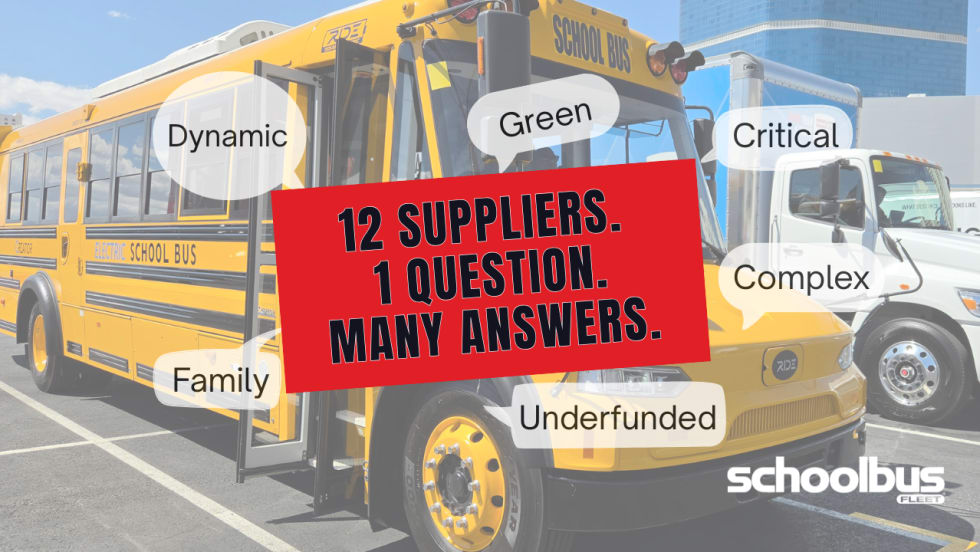
13 Industry Leaders Describe School Transportation in One Word
What word best describes the school bus industry today? We posed that question to over a dozen manufacturers, resulting in a revealing mix of perspectives on the challenges and opportunities ahead.
Read More →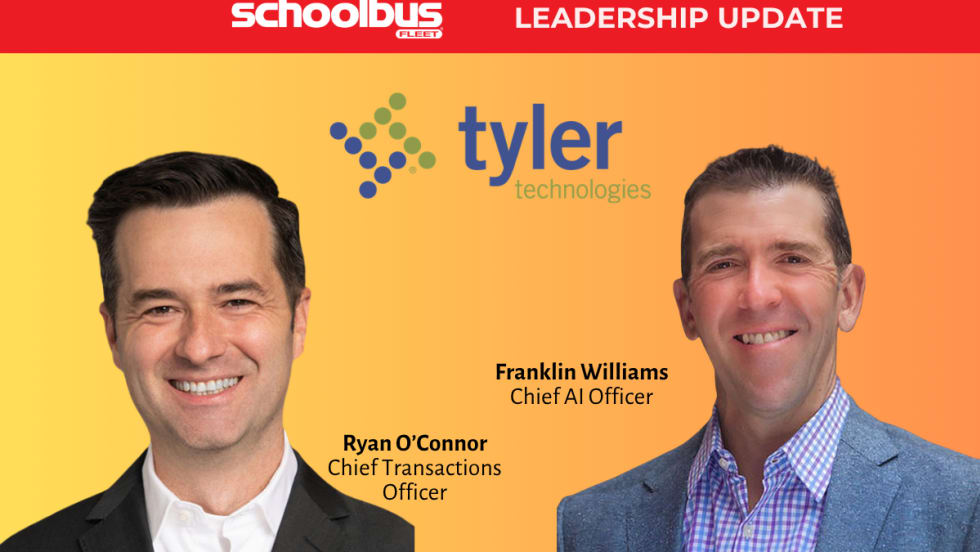
Tyler Technologies Adds New AI, Transactions Leadership Roles
Two company executives are promoted to newly created C-suite positions to accelerate the company's long-term growth in both artificial intelligence and payments.
Read More →
Pro-Vision Acquires Convoy Technologies
The deal aims to broaden customer relationships and adds specialized vehicle video capabilities for commercial fleets.
Read More →


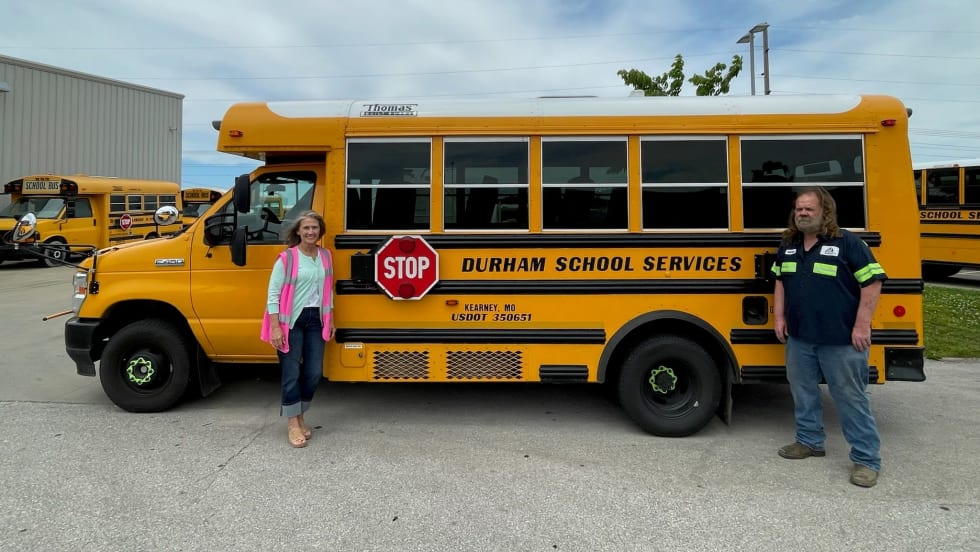
Durham School Services Maintenance Teams Earn Missouri Fleet Excellence Awards
Eight of the contractor’s school bus fleets achieved a distinction few maintenance teams earn during the state’s rigorous annual inspection program.
Read More →
How Incentives, AI, and Energy Markets Are Reshaping School Transportation
Sit down with Joe Annotti of TRC Companies to talk district grant funding, utility challenges, AI, and why school buses are evolving from transportation assets into energy assets.
Read More →
Inside the Contracting Shift: What School Transportation Operators Are Seeing Now
School transportation contractors weigh in on recent trends, costs, driver shortages, and the rise of multimodal student transportation.
Read More →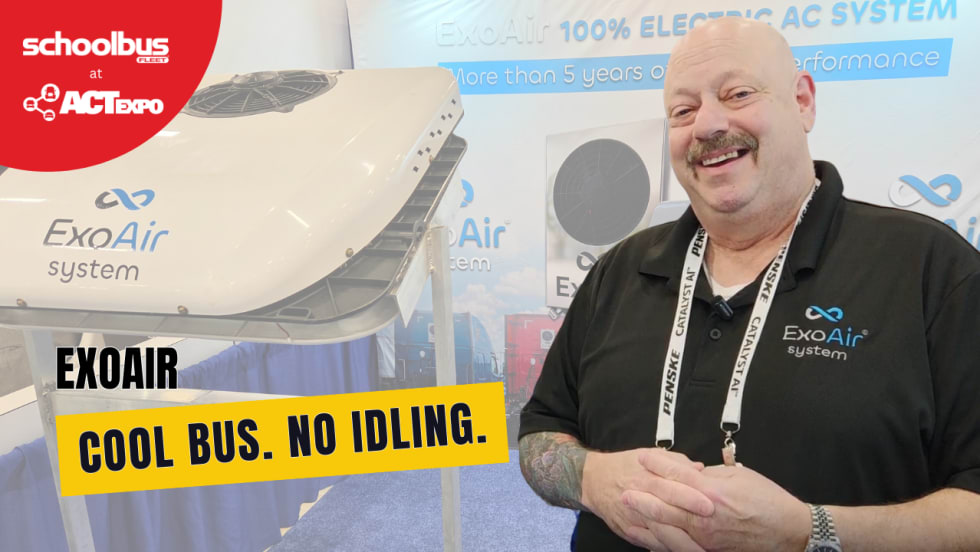
The No-Idling School Bus AC System
Take a peek at ExoAir Systems’ battery-powered cooling solution designed to run for up to 10 hours without the engine on, reducing fuel use and improving comfort for drivers and students.
Read More →
Geotab on Three Major Trends in School Transportation
School bus fleets are becoming more proactive than ever. From AI driver alerts to vehicle-to-grid opportunities, Geotab outlines the biggest technology trends transforming school bus operations.
Read More →
Gatekeeper Lands Major School Bus Deals as Revenue Surges
The video solutions provider announces contracts with Atlanta Public Schools and other fleet operators as it records quarterly revenue growth and expanding subscription business.
Read More →
Building Leaders Who Last: Creating a Successful Mentorship Program in Student Transportation
Discover five strategies for building an effective mentorship program to strengthen leadership development and support staff retention.
Read More →