



Q&A: NASDPTS President Charlie Hood on Funding Challenges, Work With Feds
State directors are battling budget shortfalls, but NASDPTS President Charlie Hood says that they remain optimistic. The association’s work with federal agencies and other industry groups targets the betterment of school transportation.


Charlie Hood knows budget cuts. The Florida state director says that his state's support for pupil transportation has been reduced 13 percent over the past two school years.
But as Hood and many other state directors deal with decreases in resources, demand for school bus service has increased. The challenge, Hood says, is doing more with less.
SBF Executive Editor Thomas McMahon interviewed Hood as he prepared to begin his second year as president of the National Association of State Directors of Pupil Transportation Services (NASDPTS). He shared his insights on such timely topics as the aforementioned funding challenges, working with federal transportation agencies, and the association's conference in Louisville, Ky.
SBF:What were the key developments in the first year of your term as president of NASDPTS?
CHARLIE HOOD: Fortunately, Derek Graham, immediate past president, handled all the tough issues before his term ended, like our comments to NHTSA [National Highway Traffic Safety Administration] on the crash protection rulemaking, for instance!
The overriding issue this last year has been the continuing decline of resources devoted to student transportation due to the nation's economic challenges, while the demand for student transportation services has been increasing. We have a perfect storm of more demand for service at a time of decreasing supply. At the same time, we're promoting the "green" benefits of school buses in reducing overall emissions and traffic congestion, while facing an estimated 10-percent increase in bus cost as a result of the new 2010 federal emissions standards.
There has been increased public awareness and regulatory effort aimed at reducing texting while driving and other forms of distracted driving. NASDPTS wrote a letter recently to the U.S. Senate sponsors of the ALERT Act, a measure that would require states to prohibit texting while driving. We're also keeping an eye on the U.S. Department of Transportation's response to the National Transportation Safety Board's findings and recommendations in several high-profile motorcoach crashes. Derek represented us at a meeting with Secretary Ray LaHood on Sept. 15 to discuss their upcoming Motorcoach Safety Action Plan and will be reporting on that at our conference in Louisville.
One of the most visible and important developments is the successful launch of the School Bus First Observer security training program this summer. Helping the Transportation Security Administration (TSA) and its contractors get this successor to School Bus Watch off the ground required a lot of effort by NASDPTS and the other associations.
What are your expectations for your second year?
Internally, we'll continue to improve the processes and procedures of NASDPTS. The association will increase its communications to members and complete a significant redesign of the Website [www.nasdpts.org] to make the already extensive content more accessible to users. As part of this effort, we are actively working to update some of our position papers that have proven so useful to members when they are explaining issues to parents and policymakers.
Externally, we will continue providing input to the Federal Motor Carrier Safety Administration on its rulemakings relating to commercial driver licensing. We will encourage the Federal Transit Administration to revive its withdrawn rulemaking to clarify that public transit systems may not provide exclusive routes to and from school serving only school students. We will continue to support TSA in finalizing its congressionally mandated school bus security risk assessment and its other security measures and programs, like School Bus First Observer.
As one of the member associations of the American School Bus Council (ASBC), NASDPTS will be lending considerable support to the ASBC's strategy of securing increased federal funding for school bus transportation. That strategy will help the ASBC achieve its primary mission of maintaining and increasing school bus ridership for all the reasons that are well known to your readers: safety, environmental benefits, reduced traffic congestion around schools, security and ensuring continued access to learning for all students.
What are some of the top challenges that many state directors are facing?
The first word that would come out of most of our mouths is "funding." Reduced budgets are causing many of us to delay bus purchases, delay or defer training, operate with fewer staff and reduce our daily contact with our customers due to travel restrictions, and states' representation at the upcoming 15th National Congress on Student Transportation may even be reduced. Most state directors I talk to are optimists and believe this situation will improve, but that is our current reality.
What about in your state?
Florida is among the states that are hardest hit by current financial difficulties. Florida derives most of its revenue from sales taxes and property taxes. Due to a combination of recent events, such as hurricanes, the resulting insurance costs, the housing meltdown, reduced consumer travel and spending, and high unemployment, we have seen significant reductions in revenue, starting in 2007-08.
The issue for those of us in education, both at the state and the local level, is having to do more with less. School districts are keeping their buses longer, consolidating bus stops into fewer stops farther from students' homes, reducing out-of-zone transportation to choice programs, and eliminating transportation of students who live within two miles of school.
Florida's state support for student transportation has been reduced 13 percent since the start of the 2007-08 school year. State economists predict that Florida's economic climate will recover by the 2011-12 school year. In the meantime, we are doing our best here in the Department of Education to continue providing services to school districts, and the districts are, in turn, doing everything they can to reduce costs while maintaining safety and access to learning for Florida's school students.
What do you expect to be some of the highlights of this year's NASDPTS conference in Louisville?
The biggest highlight will be our featured speaker, Harold Dennis, a survivor of the Carrollton, Ky., bus crash in 1988 that killed 27 passengers. He has achieved success in life while dealing with physical disfigurement and survivor guilt. He walked on to the University of Kentucky football team, has been featured on several national news shows and is the subject of the film The Phoenix. He is now a successful businessman in Kentucky, and we are honored that he will be headlining our conference.
More Management
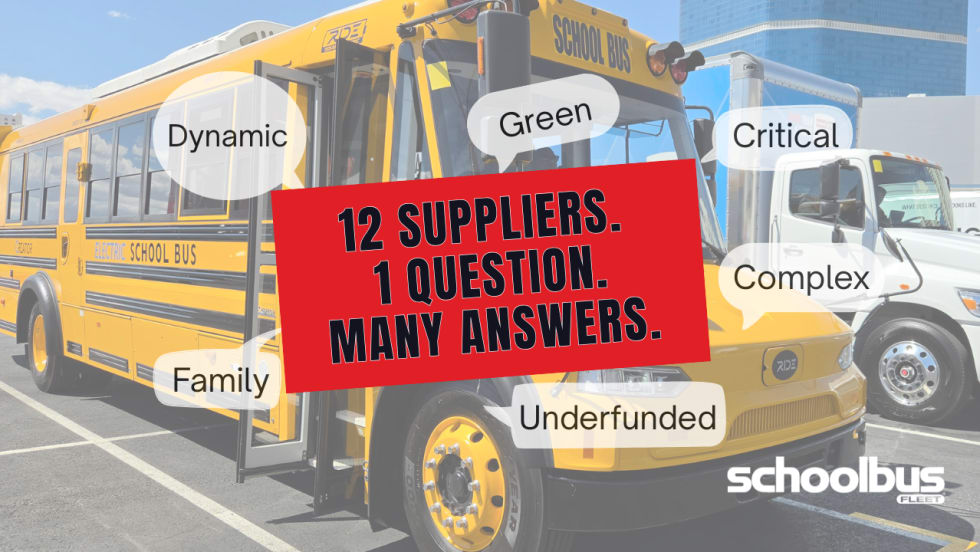
13 Industry Leaders Describe School Transportation in One Word
What word best describes the school bus industry today? We posed that question to over a dozen manufacturers, resulting in a revealing mix of perspectives on the challenges and opportunities ahead.
Read More →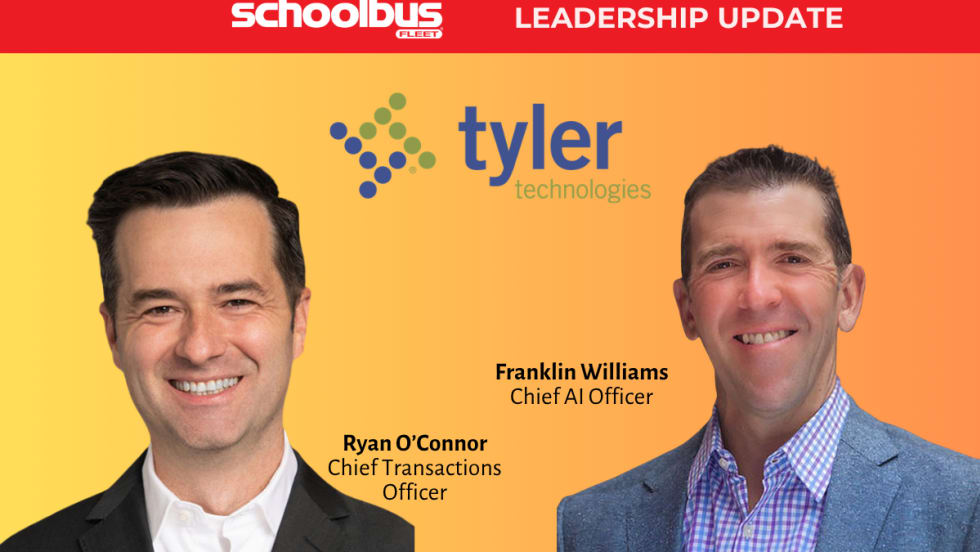
Tyler Technologies Adds New AI, Transactions Leadership Roles
Two company executives are promoted to newly created C-suite positions to accelerate the company's long-term growth in both artificial intelligence and payments.
Read More →
Pro-Vision Acquires Convoy Technologies
The deal aims to broaden customer relationships and adds specialized vehicle video capabilities for commercial fleets.
Read More →


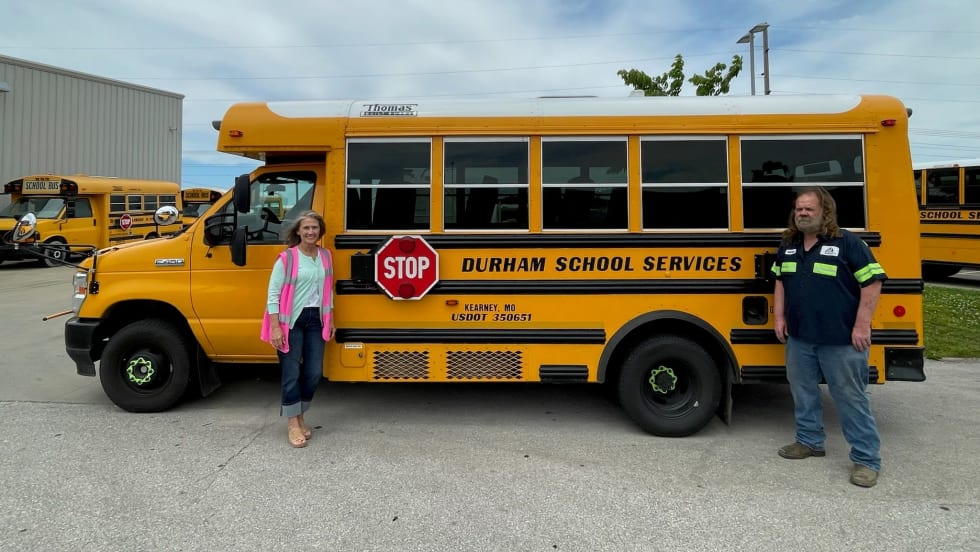
Durham School Services Maintenance Teams Earn Missouri Fleet Excellence Awards
Eight of the contractor’s school bus fleets achieved a distinction few maintenance teams earn during the state’s rigorous annual inspection program.
Read More →
How Incentives, AI, and Energy Markets Are Reshaping School Transportation
Sit down with Joe Annotti of TRC Companies to talk district grant funding, utility challenges, AI, and why school buses are evolving from transportation assets into energy assets.
Read More →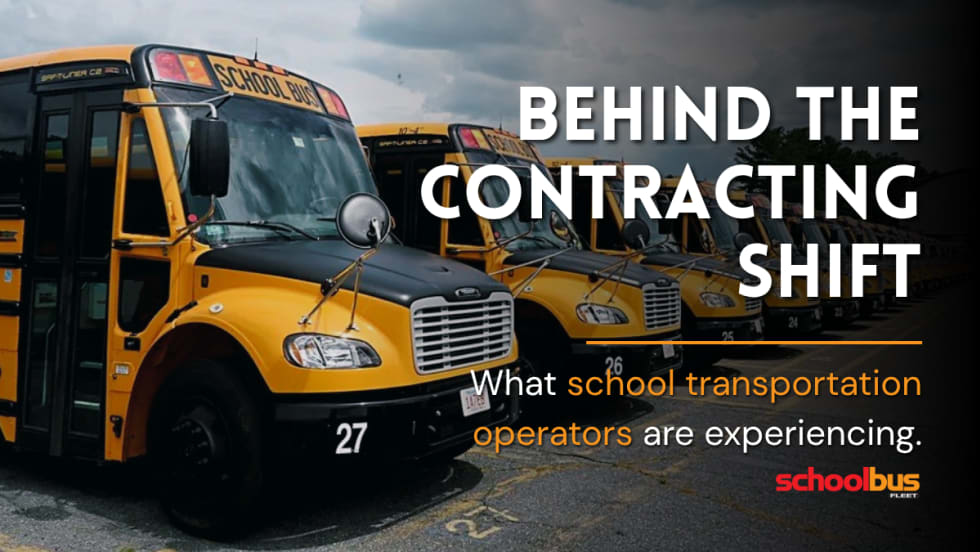
Inside the Contracting Shift: What School Transportation Operators Are Seeing Now
School transportation contractors weigh in on recent trends, costs, driver shortages, and the rise of multimodal student transportation.
Read More →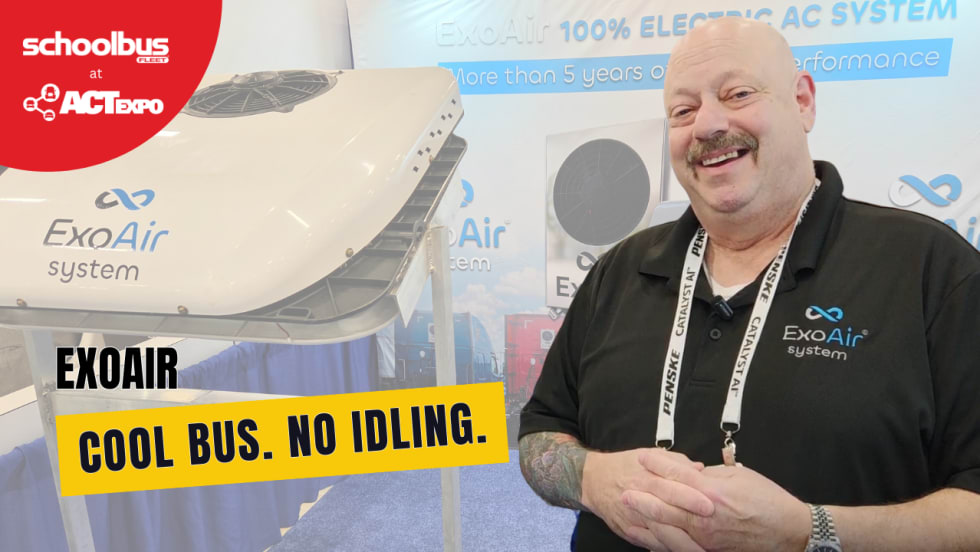
The No-Idling School Bus AC System
Take a peek at ExoAir Systems’ battery-powered cooling solution designed to run for up to 10 hours without the engine on, reducing fuel use and improving comfort for drivers and students.
Read More →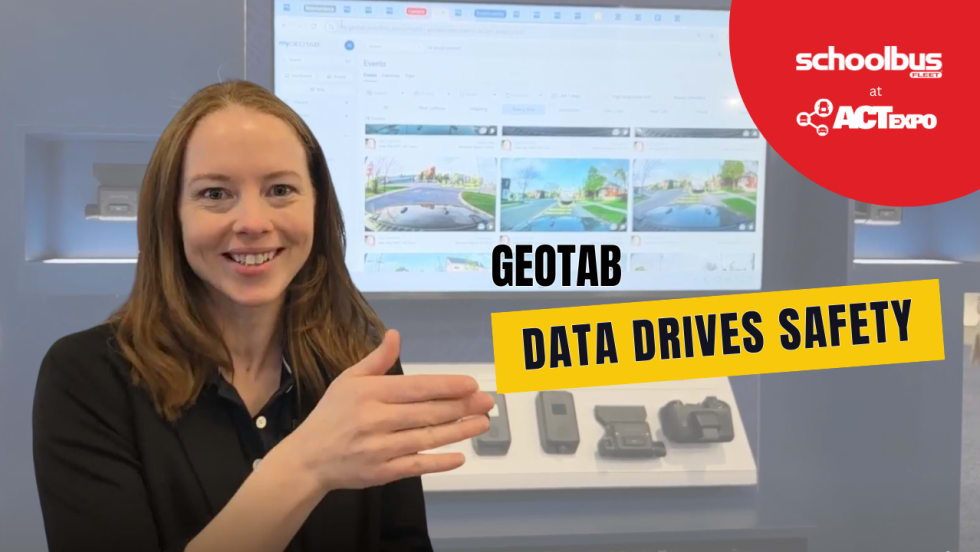
Geotab on Three Major Trends in School Transportation
School bus fleets are becoming more proactive than ever. From AI driver alerts to vehicle-to-grid opportunities, Geotab outlines the biggest technology trends transforming school bus operations.
Read More →
Gatekeeper Lands Major School Bus Deals as Revenue Surges
The video solutions provider announces contracts with Atlanta Public Schools and other fleet operators as it records quarterly revenue growth and expanding subscription business.
Read More →
Building Leaders Who Last: Creating a Successful Mentorship Program in Student Transportation
Discover five strategies for building an effective mentorship program to strengthen leadership development and support staff retention.
Read More →