




Tax planning for 2009
The February 2009 issue of SCHOOL BUS FLEET featured a tax planning article for school bus contractors for 2008 and beyond. Coincidentally, the same month ...
The February 2009 issue of SCHOOL BUS FLEET featured a tax planning article for school bus contractors for 2008 and beyond. Coincidentally, the same month, Congress passed The American Recovery and Reinvestment Act of 2009 (ARRA) P.L. 111-5, extending and, in some cases, improving some of the suggested tax planning strategies.
In total, ARRA contains $300 billion in tax relief to help stimulate the economy. This update summarizes the major provisions that impact the 2009 tax year for school bus contractors.
Section 179 expense deduction
Section 179 provisions allow firms to immediately write off (expense) certain fixed assets rather than depreciate them over the useful life of the asset. This immediate tax benefit greatly reduces the after-tax cost of capital expenditures. The rules of 2008 are extended by ARRA through 2009.
Tax planning: If you purchased less than $800,000 of qualifying assets (buses, trucks, machinery, office equipment, furniture, computers, and gasoline storage tanks and pumps) you are eligible for a first-year deduction of up to $250,000. (If asset purchases exceed $1,050,000, Sec. 179 write-offs are not allowed.)
If you purchased $250,000 or less of qualifying assets, the entire amount is deductible in 2009. In 2010, you can only write off up to $125,000 of capital expenditures and the option phases out once expenditures exceed $500,000 (both indexed for inflation).
Bonus depreciation
ARRA amends and extends for an additional year Section 168, which allows taxpayers to take an additional first-year 50-percent bonus depreciation of the adjusted basis of qualifying property acquired in 2009. This involves property with a 20-year life or less and is eligible by definition for the modified accelerated cost recovery system (MACRS).
In order to utilize this bonus depreciation, the asset’s original use, acquisition and placement in service must occur during 2009. The taxpayer must reduce the adjusted basis for the bonus depreciation before calculating the normal depreciation on the reduced basis.
Tax planning: If the taxpayer uses the Sec. 179 deduction and there is a remaining basis on the property, the taxpayer can take bonus depreciation on the remaining basis. For example, assume the entire $250,000 of qualifying assets is written off (Sec. 179) and one bus remains to be depreciated. The purchase price of the bus is $70,000. A bonus depreciation deduction of $35,000 (50 percent) is allowed along with the normal depreciation on the remaining basis of the bus ($70,000 minus $35,000 bonus depreciation equals $35,000 in remaining basis). Assuming a five-year life using MACRS, another 20 percent (or $7,000) of the remaining basis is taken as additional depreciation. Thus, a $70,000 bus results in $42,000 ($35,000 bonus deprecation plus $7,000 regular depreciation) being written off in the first year, making the after-tax cost of the vehicle very attractive.
Alternative refueling station
Prior to ARRA, installing an alternative refueling station after Dec. 31, 2005, provided a 30-percent tax credit up to $30,000 until Dec. 31, 2010. ARRA increases the tax credit to 50 percent up to $50,000 (hydrogen refueling pumps remain at prior limits). The credit is part of the general business credit and may be carried back one year and forward for 20 years.
Net operating losses
Normally net operating losses (NOL) may be carried back two taxable years before the year the loss arises and any remainder is carried forward for 20 years. ARRA extends the NOL carry-back from two to five years for small businesses with gross receipts of $15 million or less for the 2008 tax year, resulting in more immediate use of losses and providing a quick infusion of cash. Calendar year taxpayers have until Oct. 15 to file an amended return to take advantage of this change, while fiscal year payers may have more time to take advantage of change.
Premium subsidies for COBRA continuation coverage
To help employees who have lost jobs help maintain health insurance, ARRA provides a 65-percent subsidy for COBRA continuation premiums for up to nine months for involuntarily terminated workers and their families. A worker must be involuntarily terminated between Sept. 1, 2008, and Dec. 31, 2009. The subsidy ends with new employer-sponsored health care coverage or if the employee becomes eligible for Medicare. There are income limits ($125,000 for individuals or $250,000 for families), so only those in the most need can obtain this assistance. Firms pay the total premium up front with employees reimbursing 35 percent of the premium to the employer. The employer receives a credit equal to the 65 percent of the total premium on its quarterly federal payroll tax Form 941.
Take action
The challenging economy should motivate every firm to take full advantage of all the current tax-saving opportunities since future tax law impacts may not be so generous to the business community. Consult your tax planning professional for guidance on these issues.
Bruce A. Leauby is an associate professor at LaSalle University in Philadelphia. He can be reached atleauby@lasalle.edu. Jack Zook, an assistant professor at LaSalle University, can be reached atzook@lasalle.edu.
More Management
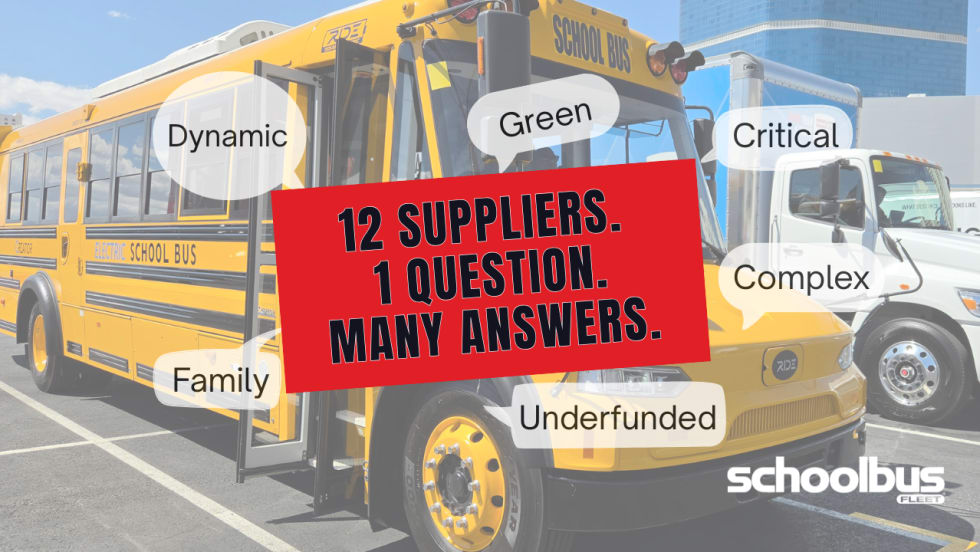
13 Industry Leaders Describe School Transportation in One Word
What word best describes the school bus industry today? We posed that question to over a dozen manufacturers, resulting in a revealing mix of perspectives on the challenges and opportunities ahead.
Read More →
Tyler Technologies Adds New AI, Transactions Leadership Roles
Two company executives are promoted to newly created C-suite positions to accelerate the company's long-term growth in both artificial intelligence and payments.
Read More →
Pro-Vision Acquires Convoy Technologies
The deal aims to broaden customer relationships and adds specialized vehicle video capabilities for commercial fleets.
Read More →



Durham School Services Maintenance Teams Earn Missouri Fleet Excellence Awards
Eight of the contractor’s school bus fleets achieved a distinction few maintenance teams earn during the state’s rigorous annual inspection program.
Read More →
How Incentives, AI, and Energy Markets Are Reshaping School Transportation
Sit down with Joe Annotti of TRC Companies to talk district grant funding, utility challenges, AI, and why school buses are evolving from transportation assets into energy assets.
Read More →
Inside the Contracting Shift: What School Transportation Operators Are Seeing Now
School transportation contractors weigh in on recent trends, costs, driver shortages, and the rise of multimodal student transportation.
Read More →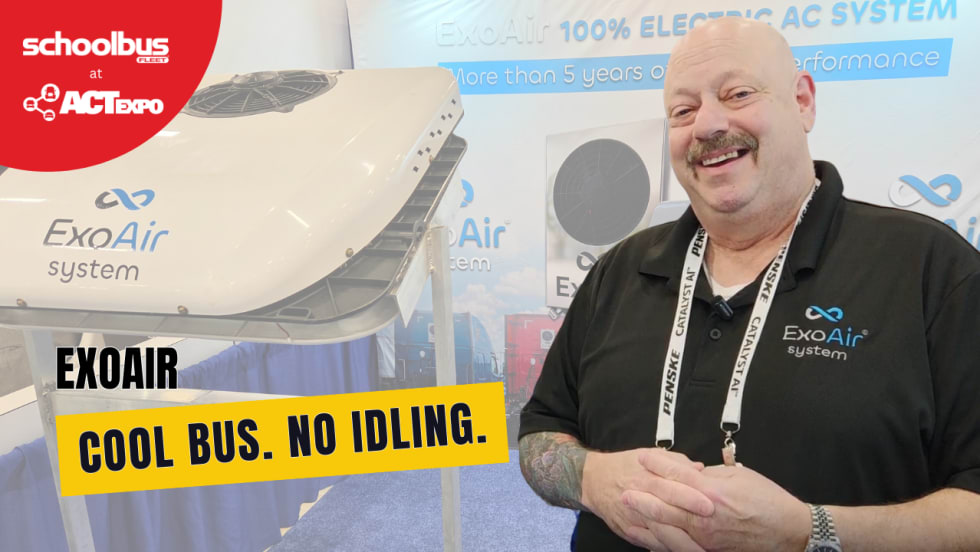
The No-Idling School Bus AC System
Take a peek at ExoAir Systems’ battery-powered cooling solution designed to run for up to 10 hours without the engine on, reducing fuel use and improving comfort for drivers and students.
Read More →
Geotab on Three Major Trends in School Transportation
School bus fleets are becoming more proactive than ever. From AI driver alerts to vehicle-to-grid opportunities, Geotab outlines the biggest technology trends transforming school bus operations.
Read More →
Gatekeeper Lands Major School Bus Deals as Revenue Surges
The video solutions provider announces contracts with Atlanta Public Schools and other fleet operators as it records quarterly revenue growth and expanding subscription business.
Read More →
Building Leaders Who Last: Creating a Successful Mentorship Program in Student Transportation
Discover five strategies for building an effective mentorship program to strengthen leadership development and support staff retention.
Read More →