




Ask the Experts: Why GPS?
For school transportation operations, GPS offers the potential to increase efficiency and security, but it also raises a number of questions for thos...

For school transportation operations, GPS offers the potential to increase efficiency and security, but it also raises a number of questions for those who aren’t familiar with the technology. To address some of the key issues, we queried officials at several companies that offer GPS-based solutions, whether on their own or coupled with other products, such as video recorders or routing software.
What is the biggest advantage of GPS for a school bus operation?
BRAD BISHOP: With a real-time GPS system, a school bus operation can keep parents happy and reduce their overhead by being more efficient. Live information allows operators to answer calls with confidence and provide accurate information to the public. Analysis tools allow managers to review current route times, mileages, and planned and actual stops and to determine where they can be more efficient.
ROB SCOTT: GPS-based solutions can offer a lot toward the improvement of daily operations and future planning. The advantages will vary from district to district. Tracking vehicles can generate a lot of data, and small districts may find the information provided a bit overwhelming, but if a transportation department has people dedicated to future planning, the information extracted can be of great assistance in the development of effective and efficient route plans. This can translate into better service and a more cost-effective system. For smaller fleets, immediate advantages will come from being able to answer daily inquiries about the operation: “Where was the bus last Tuesday at 2 p.m.?” and “How fast was the bus going yesterday afternoon on Elm St.?”
BILL WESTERMAN: With Everyday’s GPS-driven student transportation information management solutions, school districts are empowered to make fact-based decisions. They no longer need to rely on guesses or assumptions. Reliable decision support will be available for both real-time and historical analysis. The district will be able to provide better cost containment, budget planning and transportation services to the benefit of the entire community.
JAMES ADDISON: There are many advantages of GPS in school bus operation. GPS data, when presented through graphical mapping and synchronized to video surveillance, provides school bus operators with a clear visual reference of exactly where the vehicle was during an event. Useful standard GPS data include longitude, latitude, heading, speed, time and date.
ANTONIO CIVITELLA: With routing software, GPS enables a transportation director to compare actual driving paths, stop locations and stop times against planned routes, stops and times.
BOB MORAN: Advantage is relative! While GPS has been around for well over a decade, it remains a relatively new phenomenon within the school transportation industry, where two-way radios and paper clips are still considered vogue. Understanding the advantages of GPS can be a daunting task, as the confusion of vendor and feature choice seems to far outweigh the buzz of the opportunity. In simple terms, GPS is nothing more than a free international information utility that can pinpoint a location or position anywhere on the globe. Now, if you consider this in the context of “who, what, when, where and why,” consider GPS by itself to be the basic “where” in the equation. So once you have the single advantage of knowing where your target (asset) is, understanding the degree of advantage, or return on investment (ROI), is directly proportional to how important it is to know “what” asset is there, “when” it got there, “who” is there with it, and “why” (is this asset where it is for all the right reasons?). While GPS essentially marks the spot, it is really the emergence of other technologies such as mapping, routing, tracking and even accelerometer hardware that, when overlaid on GPS data, deliver a whole new level of application intelligence for optimized asset management, efficiency and behavior. And, as we all know, improved efficiency translates into improved ROI.
How can I be sure that GPS will be worth the investment?
WESTERMAN: The GPS solution from Everyday Solutions will provide actionable information. Based on our vast experience, the customers who have received the biggest financial benefit are the districts that have dedicated resources to manage this mission-critical data. The GPS system will uncover hidden costs that contribute to wasted spending, such as inefficient bus routes, excessive engine idling, courtesy stops, underutilized buses, etc., yet the district must be willing to take action based on this information to realize the value. If the district does not have the resources to leverage GPS, we offer professional services to analyze the data and provide insights on how to best utilize the results.
CIVITELLA: GPS easily demonstrates its worth if a transportation department uses a routing software solution, because it then enables the director to do some analysis and make adjustments based on actual driving paths versus planned. With our Routefinder Pro routing system, a director can see the actual driving path versus what he planned on the same map and while in routing mode right from the comfort of his office. He can then make adjustments, such as changing driving directions based on real-world conditions to ensure the safe transport of students.
SCOTT: As new technology is added to any aspect of our daily lives, we tend to ask this question. Often, the benefits are not immediately visible or do not immediately show up on the bottom line. GPS is one of those technologies that may not always show immediate financial benefit. There are ROI calculations out there that we use to justify the expense, but I think that the real cost-benefit will come from areas of a fleet’s cost of operation that may not be considered during the purchasing process. What is the value of improved routing that has buses operate at a higher on-time percentage? Is there value in being able to re-create a situation involving a dispute or accident? Is there value in making a dispatcher’s job easier or more time-efficient? We would likely agree that the answer to all is yes, but maybe a bit difficult to quantify. My personal belief is that when used correctly, GPS-related solutions will improve operations and reduce cost.
BISHOP: To ensure GPS will be worth the investment, your district should have clear goals for using the system, then select a vendor who has a history of delivering on their promises and integrate the system into your current operations. For example, our customers are seeing reduced idle times (fuel savings), accurate driver time sheets (reduced overhead) and more efficient routing. When you add these together with ongoing service and upgrades, I would say that they believe the investment to be well worth the expense.
{+PAGEBREAK+} How does GPS increase security and safety?
ADDISON: GPS, when combined with video surveillance, can increase security by adding clarity of the situation to the video evidence. Trying to figure out where the children got on and got off the vehicle without GPS data can be difficult or questionable.
RICHIE HOWARD: A lot of schools run our VSM [Virtual Synchronized Mapping], which is an important safety evidence tool. They want to have some sort of integration where GPS and video are combined and compatible. A lot them want live tracking, which is quite different: It gives them the ability to say, “Where is my bus now?” But while they can see that Susie got off the bus on the video footage, they really have no identification of where she got off. That’s where VSM comes in. It will show them the exact street name and number that the bus is on while it’s stopped and letting someone off. That’s an important tool. Here’s a clarification of what GPS really is: There’s navigation, there’s live tracking and there’s VSM. We do all three.
BISHOP: By having a real-time system that tracks location at all times, districts can respond to emergencies with the best information possible. For example, if a bus is on a field trip and parents are concerned about the return time or current status of the trip, dispatchers can immediately locate and track the vehicle. If a bus is taken for unauthorized use, the same capabilities would apply. Or if a bus breaks down and dispatch needs to send help, they can locate the bus in question and other GPS-equipped vehicles and send the nearest one to assist.
WESTERMAN: With Everyday Solutions’ GPS system, the district will always have real-time and historical views and know where their buses and student riders are located at all times. If there is an incident on a bus, the driver can simply press Everyday Solutions’ Emergency Button on the bus to notify the dispatcher. The dispatcher can activate a system to listen in on the bus in real time and record the conversation to protect drivers and student riders. Speed alerts will notify the transportation department when a driver exceeds a district-defined threshold to keep riders safe and secure. In addition, you can define “geo zones” to ensure that buses are not traveling in unsafe areas.
What should I consider in choosing between a cellular-based or radio-based solution?
WESTERMAN: Each option has advantages and disadvantages. The cellular- based option enables the district’s buses to be tracked no matter where they go across the nation and provides over-the-air updates and upgrades to the onboard firmware. The disadvantage of the cellular approach is the ongoing monthly data communication cost. The radio-based option has no monthly communication fee, yet real-time tracking is restricted to district boundaries as dictated by the number and location of district-owned base stations. We offer service programs that include updating onboard firmware for the radio-based option. With Everyday’s hybrid approach, a district can get the best of both worlds. Our cellular option can be applied to activity buses that are deployed to field trips and athletic events, while the radio solution will be used for buses that will travel within the district. This approach provides the most comprehensive and cost-effective means to benefit from GPS.
BISHOP: The biggest factor to consider is the community’s expectations for a GPS system. For example, if the expectation is that buses need to be tracked at any time, cellular options will offer more long-range coverage for all types of routes. If your geographic area has poor cellular coverage, a radio-based option may be a better solution. Maintenance is also a major factor to consider. With cellular technologies, the maintenance to the district is non-existent. With local radio-based systems, the district is responsible for maintaining the communications network. We also suggest that districts review the total cost of ownership and to be wary of options that may be cheaper initially but will cost more in the long run.
How will I alleviate any concerns my drivers may have that GPS is for “spying” on them?
HOWARD: Anytime you’re putting technology on buses, it’s not only for children’s safety, but also the driver’s safety. If the driver is doing what he or she is supposed to be doing, we don’t have anything to worry about. Technology is changing, and it’s going to continue to change. And, like it or not, technology is going onto vehicles. Over time, drivers get used to it. But you are going to have some people who just don’t like it.
CIVITELLA: GPS is similar to a time-clock system. It protects drivers by confirming that they stopped at particular locations and at particular times and were not speeding. This protects drivers from unfounded parent complaints as well.
ADDISON: GPS tied with video surveillance can corroborate the driver’s side of the story of what happened, when and where. School bus drivers can focus on safely doing their jobs to the best of their abilities without the concern of being falsely accused of wrongdoing.
SCOTT: I have colleagues who track my performance, and I like to think that they have my best interests in mind. When we work together and have a mantra that says that we work for the common good, we generally feel safe and comfortable. If you have that sort of work environment established now, you should be able to explain this new tool as something that is intended to help all to improve and get the job done more efficiently. If your workforce views such change as potentially threatening, you have to deal with this reality up front. GPS can be used to protect employees. It can accurately replay situations in the past, and drivers have to know that this information is used to protect them. And this means that if their actions were wrong, this new information will be used to help them understand what went wrong so that corrective action can be taken to assist them in their duties in the future.
More Management
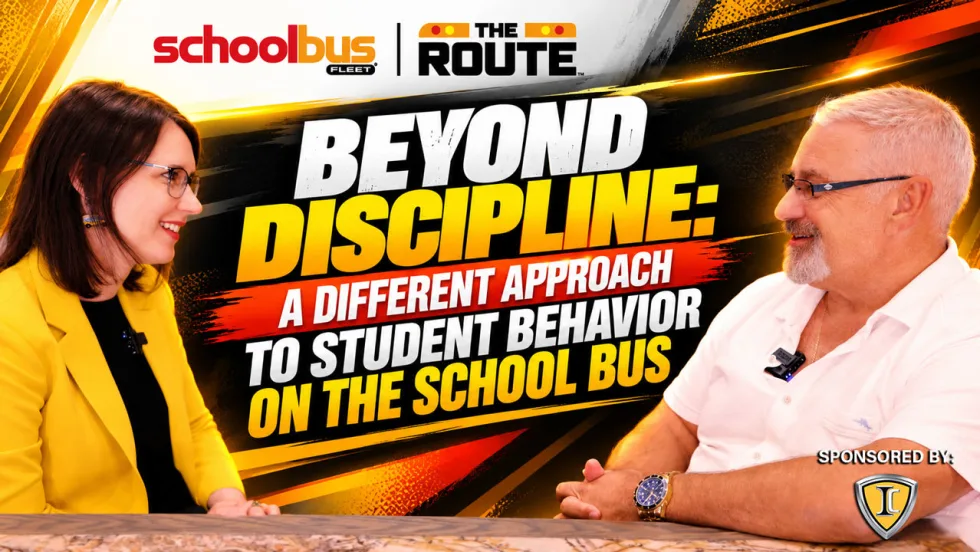
Beyond Discipline: A Different Approach to Student Behavior on the Bus
After implementing a dean of students program in Oregon, North Clackamas is seeing positive improvements. Here’s how it worked. The Route is brought to you by IC Bus.
Read More →
A Dean of Transportation's Different Approach to Student Behavior on the School Bus
After implementing a dean of students program in Oregon, North Clackamas is seeing positive improvements on the bus. Here’s how it worked.
Read More →
Inside NAPT ACTS 2026: Highlights from Louisville
From federal updates and student behavior strategies to new school bus technology and industry awards, see highlights from NAPT ACTS 2026 in Louisville.
Read More →
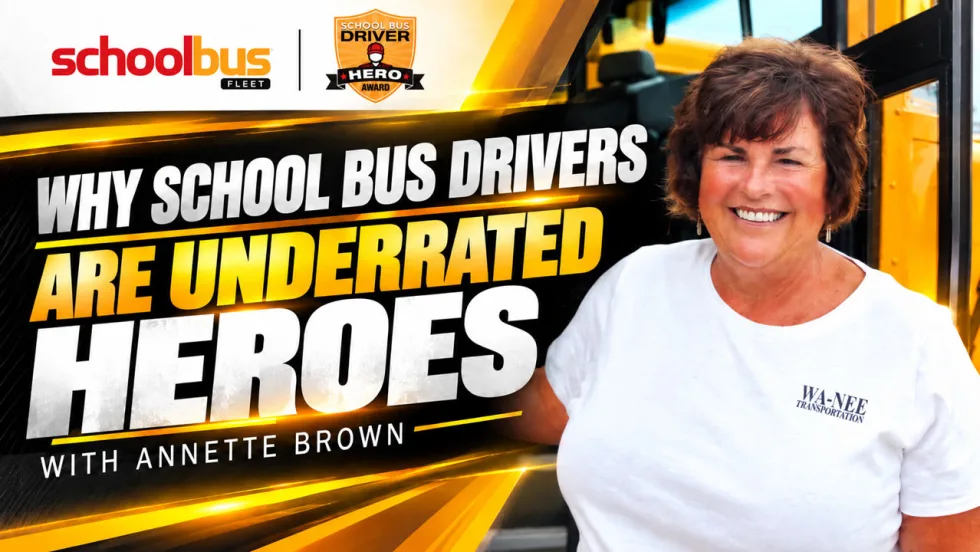
Meet the 2025 School Bus Driver Hero Winner: Annette Brown
We caught up with Wa-Nee Community Schools' Annette Brown on site at SBFX, where she was named the 2026 School Bus Driver Hero Award winner. Hear about her reaction, what she loves most about being a school bus driver, and more!
Read More →
Predictability Is Like Ketchup (According to 6-Year-Olds)
To students, a different school bus can feel like a full-blown crisis. One driver reflects on why familiar routines, showing up on time, and being reliably boring matter more than we think.
Read More →
Samsara Launches Free Driver Rewards Program
The new Driver Perks program gives eligible professional drivers access to discounts and offers without adding a cost for participating fleets.
Read More →
How Tax-Exempt Municipal Leases Can Help Finance School Buses
Let’s explore school bus financing options, including municipal leases, vendor payable accounts, and balloon payments, and how they can help stretch fleet budgets.
Read More →
Nominate Rising School Transportation Pros Under 40!
We’re searching for the next generation of leaders making an impact across the K-12 student transportation industry to recognize as SBF’s 2027 Trailblazers. Nominations are open now!
Read More →
Changing Lanes: BusWhere, EverDriven, InterMotive, Summit School Services, Switzer-Carty & Thomas Built Buses
Check out who's been hired, promoted, and appointed to leadership positions at various school transportation suppliers, contractors, and manufacturers.
Read More →
The Most Expensive Thing You Do Before Selling a School Bus: Wait
When should you sell an aging school bus? Learn how maintenance, mileage, corrosion, specifications, and timing can affect resale value long before the auction.
Read More →