




T.G.I. Thursday?
To most kids, a four-day school week would seem like a dream come true. Who wouldn’t want a longer weekend? That’s one more day to play and procrastin...

To most kids, a four-day school week would seem like a dream come true. Who wouldn’t want a longer weekend? That’s one more day to play and procrastinate on homework.
Heck, I could sure go for cutting Friday or Monday out of the work week, even if it would mean putting in more hours on the other four weekdays.
This idea of a shortened school week has been surfacing a lot lately, prompted in particular by the soaring fuel prices that have plagued us this year.
Growing interest
The American Association of School Administrators released a survey this summer that asked superintendents about the effect of rising fuel and energy costs on their school districts.
Not surprisingly, 99 percent of respondents reported that the rising costs were impacting their school systems. Conserving energy, cutting back on field trips and consolidating bus routes were cited as some of the key ways that districts having been dealing with the problem.
Included in the survey was the topic of a shortened school week. While only 3 percent of superintendents said that their districts were scaling back to four days, 15 percent said their districts are considering making that change. Some districts said that they would run offices on a four-day week when school is not in session.
The Associated Press (AP) recently did an article on this subject. The article told of how a small school district in rural Minnesota is cutting classes every Monday to save fuel. Classes on the other four weekdays were extended by about 10 minutes.
The district’s superintendent told the AP that the shorter week would save at least $65,000 in fuel.
Pros and cons
For transportation departments, the potential benefits of moving to a four-day school week are clear:
Cutting a whole day of route service each week means that the buses are subjected to fewer miles and less wear and tear.
Reducing mileage means less fuel use and less emissions.
Cutting mileage also means lowering the chances of bus accidents, although that risk may be small already.
But this strategy is by no means a slam dunk. There are potential drawbacks, including:
Longer school days could be exhausting for some students.
Parents who work outside the home may need to find daycare for their children.
If bus drivers and other staff members aren’t paid for the fifth day, recruitment could become more difficult.
At the least, the idea is worth looking into. It’s likely that it would work better for some districts than for others.
For instance, the Minnesota district profiled in the AP article is small — only about 700 students — and many of the students’ parents are self-employed with jobs in farming or construction, so it might be easier for them to adapt to the school schedule.
We’d like to hear your thoughts on the idea of the four-day school week, especially if your district has made or is planning to make the switch. Send me an e-mail at thomas.mcmahon@bobit.com.
More Management
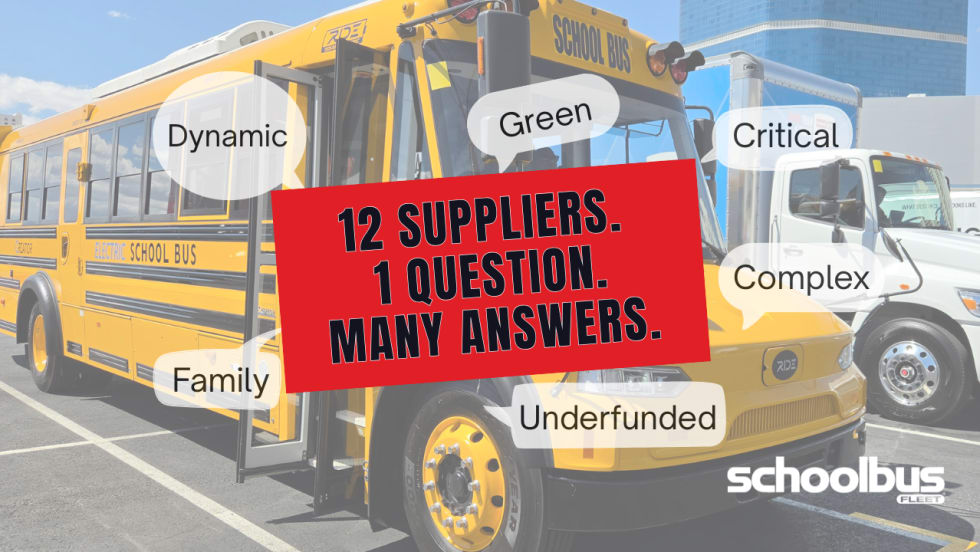
13 Industry Leaders Describe School Transportation in One Word
What word best describes the school bus industry today? We posed that question to over a dozen manufacturers, resulting in a revealing mix of perspectives on the challenges and opportunities ahead.
Read More →
Tyler Technologies Adds New AI, Transactions Leadership Roles
Two company executives are promoted to newly created C-suite positions to accelerate the company's long-term growth in both artificial intelligence and payments.
Read More →
Pro-Vision Acquires Convoy Technologies
The deal aims to broaden customer relationships and adds specialized vehicle video capabilities for commercial fleets.
Read More →


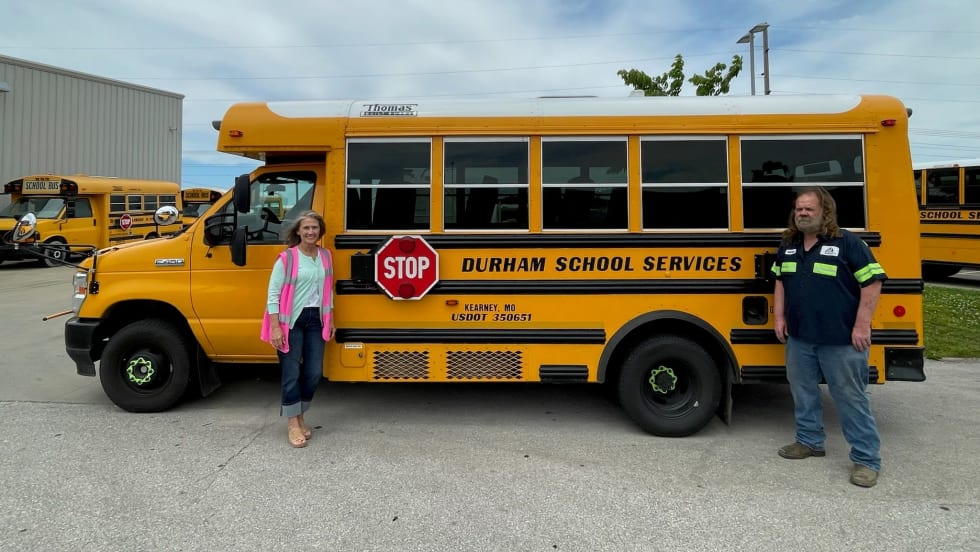
Durham School Services Maintenance Teams Earn Missouri Fleet Excellence Awards
Eight of the contractor’s school bus fleets achieved a distinction few maintenance teams earn during the state’s rigorous annual inspection program.
Read More →
How Incentives, AI, and Energy Markets Are Reshaping School Transportation
Sit down with Joe Annotti of TRC Companies to talk district grant funding, utility challenges, AI, and why school buses are evolving from transportation assets into energy assets.
Read More →
Inside the Contracting Shift: What School Transportation Operators Are Seeing Now
School transportation contractors weigh in on recent trends, costs, driver shortages, and the rise of multimodal student transportation.
Read More →
The No-Idling School Bus AC System
Take a peek at ExoAir Systems’ battery-powered cooling solution designed to run for up to 10 hours without the engine on, reducing fuel use and improving comfort for drivers and students.
Read More →
Geotab on Three Major Trends in School Transportation
School bus fleets are becoming more proactive than ever. From AI driver alerts to vehicle-to-grid opportunities, Geotab outlines the biggest technology trends transforming school bus operations.
Read More →
Gatekeeper Lands Major School Bus Deals as Revenue Surges
The video solutions provider announces contracts with Atlanta Public Schools and other fleet operators as it records quarterly revenue growth and expanding subscription business.
Read More →
Building Leaders Who Last: Creating a Successful Mentorship Program in Student Transportation
Discover five strategies for building an effective mentorship program to strengthen leadership development and support staff retention.
Read More →