




How to prepare for the spotlight
As we begin another school year, there is sure to be a high level of interest in school bus safety and related issues. Recent high-profile activit...

As we begin another school year, there is sure to be a high level of interest in school bus safety and related issues.
Recent high-profile activities and actions in places like Texas (gubernatorial veto of a well-supported anti-idling bill) and Washington, D.C. (an impending new rulemaking on school bus occupant protection) are sure to attract long-term attention. New issues, often resulting from crashes or other incidents in the field, are sure to pop up regularly.
In many of these circumstances, critics of the school transportation industry are sure to seize the opportunity to call for “reform,” so you’d better be prepared to be dragged into the limelight on occasion simply because of who you are and not just because of what you know.
The question you need to ask yourself NOW, therefore, is how should you respond when someone — especially the media — is calling on you for information or your opinion?
Boxing provides a good analogy of the perspective you should adopt before you receive your first call. Most spectators simply turn on the tube and watch the two combatants slug it out, oblivious to the fact that the fight itself is simply the culmination of many, many days, weeks and perhaps even months of preparation. Fighters who step into the ring on short notice and without adequate preparation usually end up losing — and they don’t look good doing it either!
Before a boxer steps into the ring, he or his handlers have analyzed countless details that will provide the fighter with every possible advantage — the date of the fight, the location, the time of day, the size of the ring, the tension of the ring ropes, the weight of the gloves and on and on.
Boxing professionals (and others as well) call this type of preparation “reading the room.” The point is that no detail should be left unattended. The objective is to ensure that the fighter is not distracted or surprised by things that will detract from his performance.
Before you begin to respond to the inevitable questions you are sure to receive, you too should “read the room.”
Here are four simple rules of thumb you should remember:
1. Don’t expect the media to provide an objective perspective
In a 2003 edition of Crain’s New York Business, Editor Greg David published a column titled “Telling the tough stories.” In it, David explains the fundamental realities of newspaper publishing.
“Each week, we try to provide a look at the most important issues affecting business and the economy in the city [New York]. We include government and social trends, and both the arts and nonprofit groups fall under our definition of business.
“Our reporters are told to seek out stories with tension and conflict, to stress what is expected to happen (forward spin), to emphasize two or three themes in each piece and to concentrate on the people involved in the story. No story is ever based on an interview with one person, even the chief executive of a company.
“We take a point of view, which means it is up to the reporter to come to a conclusion about what is most important in each article. This is different from traditional journalism, in which all views are given equal space. Virtually all business publications do the same as Crain’s because it’s the best way to get to the heart of an issue. Fairness is required in stories, and we always present the other side.
“Sometimes people tell me that a story they read in Crain’s was ‘good’ for the subject or ‘not good’ for the person we wrote about. I’m always taken aback by this since we never judge stories that way. I want stories that inform me, interest me, sometimes amuse me, often make me mad and are so well-written they are a pleasure to read. We also never contemplate the consequences of a story.”
Regardless of your opinion about David’s personal perspective, you, as a potential newsmaker, should interpret David’s opinion literally and adopt a simple perspective: Do not expect the media to provide an objective perspective.
Why? Because of the old newspaper maxim: Stories make the news but headlines sell newspapers! If you adopt the perspective that sensational stories make good press and, consequently, lead to follow-up stories about specific instances that exemplify the supposed ideal, you will not be surprised when it happens and you can start to get ready to prevent it from happening to you.
2. Try to think and speak in “sound bites”
Market research for each of the big three media has determined the attention span of the average viewer, listener or reader to be a maximum of 30 seconds. In fact, many of today’s television and radio ads are designed as 20- or even 10-second spots. As a consequence, it has become extremely important for newsmakers to capture the essence of a story — any story — in short, succinct word groups, more commonly referred to as sound bites.
The sound bite rule is simple: Make your point in 20 seconds or less, preferably 10 seconds. In other words, if you can’t say it in 20 seconds or less, you probably haven’t said it well. A corollary to this rule is know what you want to say before you say it. If you think about it in advance, you should be able to make any point well in 20 seconds.
3. Establish ground rules for interviews
Think about it for a moment: How many times have you talked to reporters? How many times have you asked those reporters to read back your quotes at the end of the interviews? How many times do you read something you said — or didn’t exactly say — reported out of context the next day?
Virtually every time a reporter engages you in an interview, he/she has control. The simple fact that you are answering the phone rather than placing the call puts you at a competitive disadvantage. You can even the odds, however, if you establish a few basic interview ground rules:
Know the reporter. What is his/her complete name, the name of the newspaper or station, and the division and subject area (or “beat”) to which he/she is assigned? If you don’t know the answers to these questions, get them and write them down.
Know the situation. Ascertain immediately if the reporter is interviewing you for informational purposes only (typically called “background”) or whether you are being asked to be part of the story (called “on the record”). Most reporters are looking to speak with someone “on the record,” so unless you know the reporter and have a good relationship with him/her, it is not advisable to assume anything else. In any event, make sure you establish when and how the information you provide will be used.
Ask about the story before you become part of it. This is perhaps the most critical ground rule. For all you know, you may be the story. Ask the reporter everything you need to know to make yourself comfortable before you agree to an interview. Who else have you interviewed? What did he/she say? Who else are you going to talk to?
If you would like to participate in the interview but are not fully prepared when the reporter calls (e.g., you are not sure about some of the facts or statistics that would likely come up), say so and ask him/her to call you back at a later time. Remember, you always have the option of declining to participate in the interview.
4. Sometimes less is more, but more is never less.
Another way to state this rule is: Don’t assume facts. Or, to put it simply: Only answer the question you have been asked.
Another tip: A former Washington Post reporter once said that Ronald Reagan (“The Great Communicator”) was one of his most difficult interviews because he frequently answered a question with a question. Try it — it works.
A consequence of the political circumstances affecting the administration of a school transportation operation today is that media and public relations have become almost as important to your job as routing and scheduling.
All transportation professionals would be well advised to know and practice the four rules of thumb described here. As the legendary football coach Vince Lombardi once said, “Adequate preparation is a cornerstone of victory.”
More Management
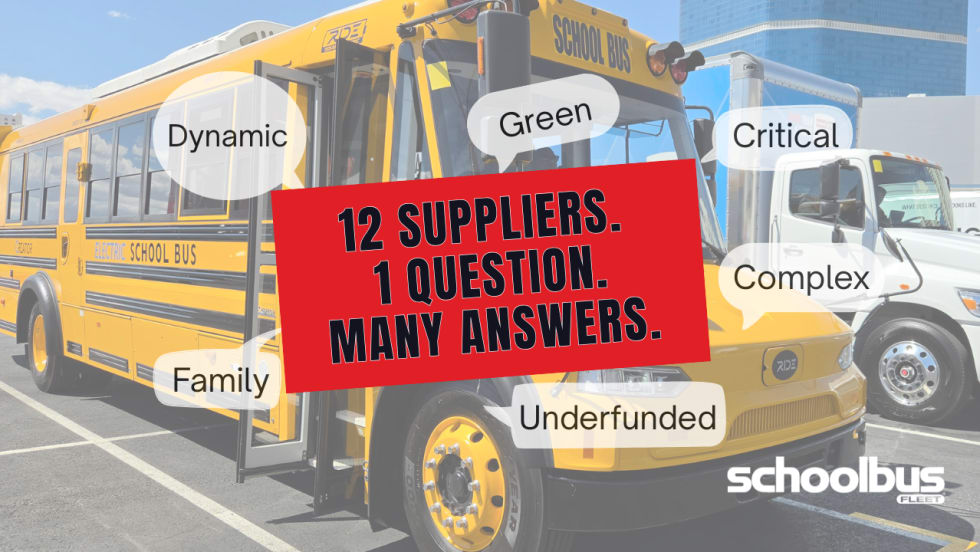
13 Industry Leaders Describe School Transportation in One Word
What word best describes the school bus industry today? We posed that question to over a dozen manufacturers, resulting in a revealing mix of perspectives on the challenges and opportunities ahead.
Read More →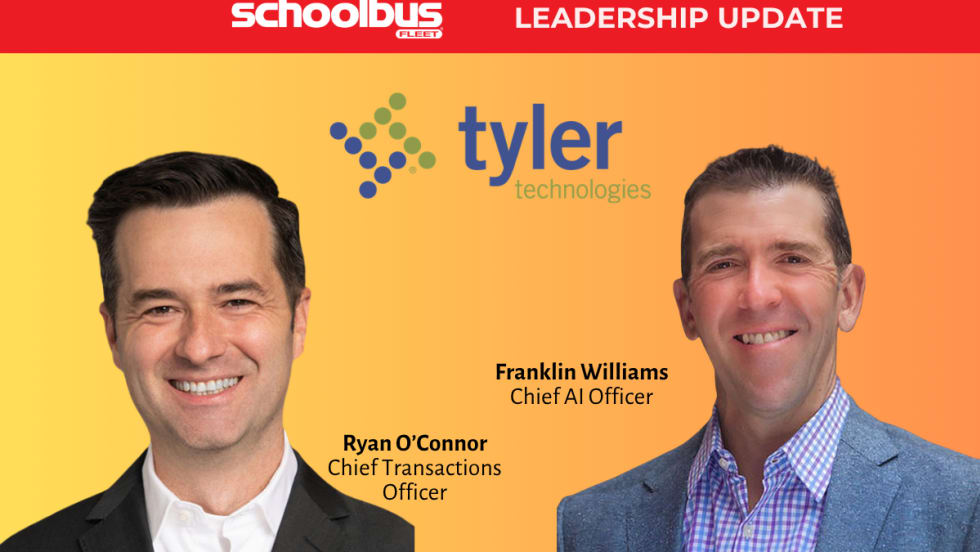
Tyler Technologies Adds New AI, Transactions Leadership Roles
Two company executives are promoted to newly created C-suite positions to accelerate the company's long-term growth in both artificial intelligence and payments.
Read More →
Pro-Vision Acquires Convoy Technologies
The deal aims to broaden customer relationships and adds specialized vehicle video capabilities for commercial fleets.
Read More →


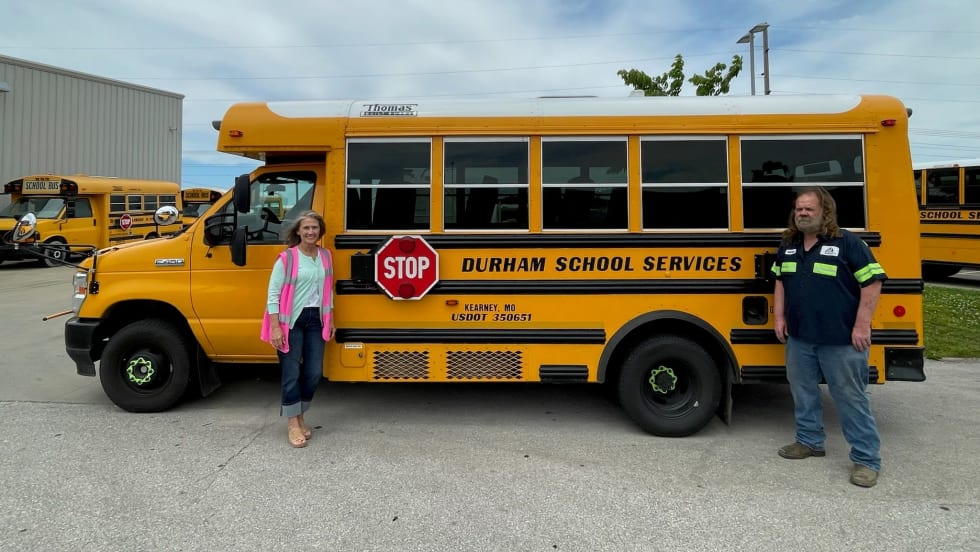
Durham School Services Maintenance Teams Earn Missouri Fleet Excellence Awards
Eight of the contractor’s school bus fleets achieved a distinction few maintenance teams earn during the state’s rigorous annual inspection program.
Read More →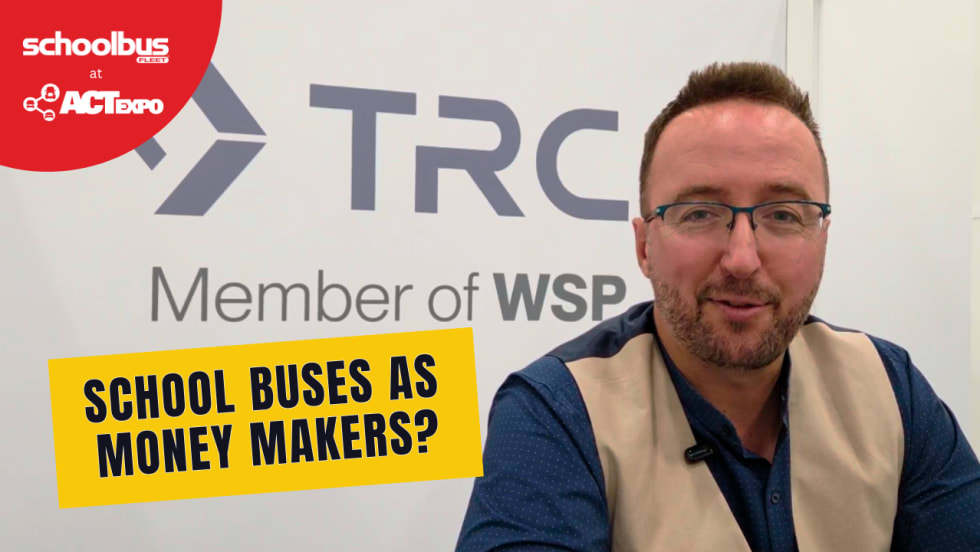
How Incentives, AI, and Energy Markets Are Reshaping School Transportation
Sit down with Joe Annotti of TRC Companies to talk district grant funding, utility challenges, AI, and why school buses are evolving from transportation assets into energy assets.
Read More →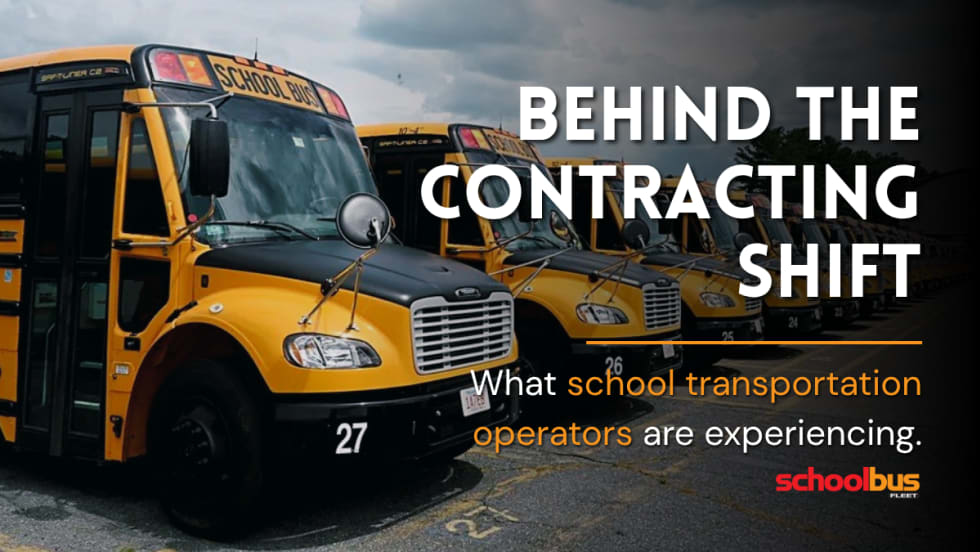
Inside the Contracting Shift: What School Transportation Operators Are Seeing Now
School transportation contractors weigh in on recent trends, costs, driver shortages, and the rise of multimodal student transportation.
Read More →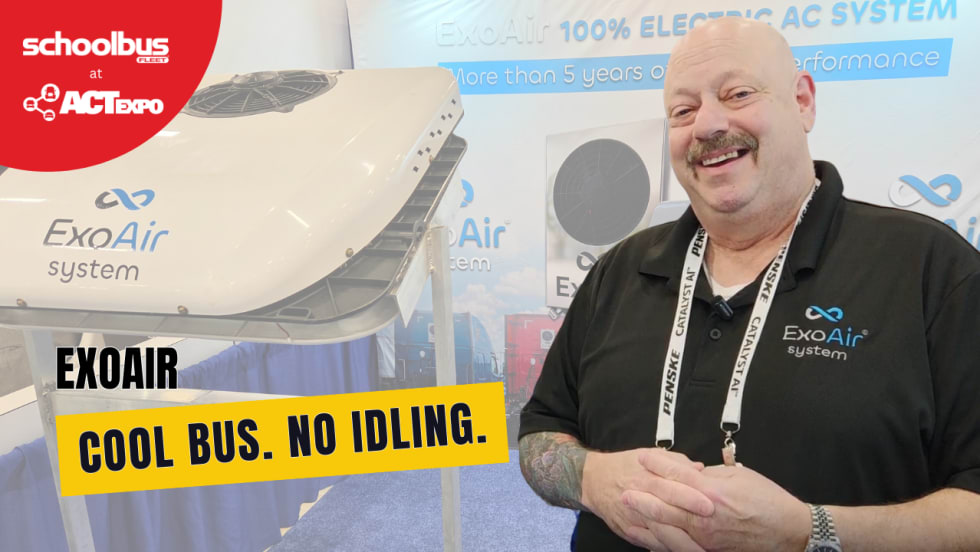
The No-Idling School Bus AC System
Take a peek at ExoAir Systems’ battery-powered cooling solution designed to run for up to 10 hours without the engine on, reducing fuel use and improving comfort for drivers and students.
Read More →
Geotab on Three Major Trends in School Transportation
School bus fleets are becoming more proactive than ever. From AI driver alerts to vehicle-to-grid opportunities, Geotab outlines the biggest technology trends transforming school bus operations.
Read More →
Gatekeeper Lands Major School Bus Deals as Revenue Surges
The video solutions provider announces contracts with Atlanta Public Schools and other fleet operators as it records quarterly revenue growth and expanding subscription business.
Read More →
Building Leaders Who Last: Creating a Successful Mentorship Program in Student Transportation
Discover five strategies for building an effective mentorship program to strengthen leadership development and support staff retention.
Read More →