



Clinging to the past?
For the two decades that I’ve been associated with pupil transportation through this magazine, our industry has fought against those who would have us equip large school buses with active passenger restraint systems, whether they’re lap belts, lap-shoulder belts or other devices.
For the two decades that I’ve been associated with pupil transportation through this magazine, our industry has fought against those who would have us equip large school buses with active passenger restraint systems, whether they’re lap belts, lap-shoulder belts or other devices (remember the roller coaster-style lap bar?).
We’ve stood our ground against continuing assaults from well-meaning but often misinformed proponents of seat belts, such as parents whose only frame of reference is their car or zealous seat-belt advocates.
We’ve cited the effectiveness and simplicity of compartmentalization in keeping passengers safe in a crash. The statistics are persuasive. On average, only 10 passengers are killed each year in school bus crashes. Only 10 are killed, out of 25 million transported daily. That’s truly amazing.
We’ve cited the loss of capacity that the installation of lap-shoulder belt systems would cause. Floor plans would have to be modified, possibly to a 3/2 or 2/2 seating scheme, with a loss of capacity.
We’ve cited scenarios in which young children struggle to free themselves from their seat belts after their bus has plunged into a lake or been engulfed in flames.
The streets are meaner
We’ve held our ground. We’ve fought the good fight. But maybe it’s time to look a little more closely at the possibility that we’re clinging to an outdated notion.
Ten years ago, how many people do you recall driving while talking on their cell phones? Now, how much more distracted is everyone on the road, whether they’re talking on a cell phone, monkeying with their iPods or checking e-mail with their BlackBerrys.
Ten years ago, we didn’t have lap-shoulder belt systems built expressly for school buses. Now, several suppliers offer three-point systems, including some of the bus OEMs. These systems are rigorously designed and tested.
Ten years ago, it was unthinkable that a state would require a three-point belt system on its buses. Only two states — New York and New Jersey — required any type of active restraint (lap belts, in those instances). Now, California, one of the nation’s most populous and influential states, requires all new school buses to be equipped with lap-shoulder belts. Other states will follow their lead.
Let’s embrace the future
I know my stance will be unpopular, but it’s time to address this polarizing issue from a long-term perspective. Ten years from now, I believe we’ll have shifted our paradigm, and three-point restraint systems will be mandatory on all our buses.
Thankfully, the number of deaths in school bus crashes is already low, but injuries are more common. Three-point belt systems will be helpful in minimizing the number and severity of injuries in crashes. Fatalities garner the biggest headlines, but injuries need to be considered as well.
I leave it up to you to fight for increased transportation funding to buy more buses to compensate for reduced capacity. Yes, I know, budgets are tight and school boards are focusing on the classroom. But safety is our mission and our responsibility.
More Management
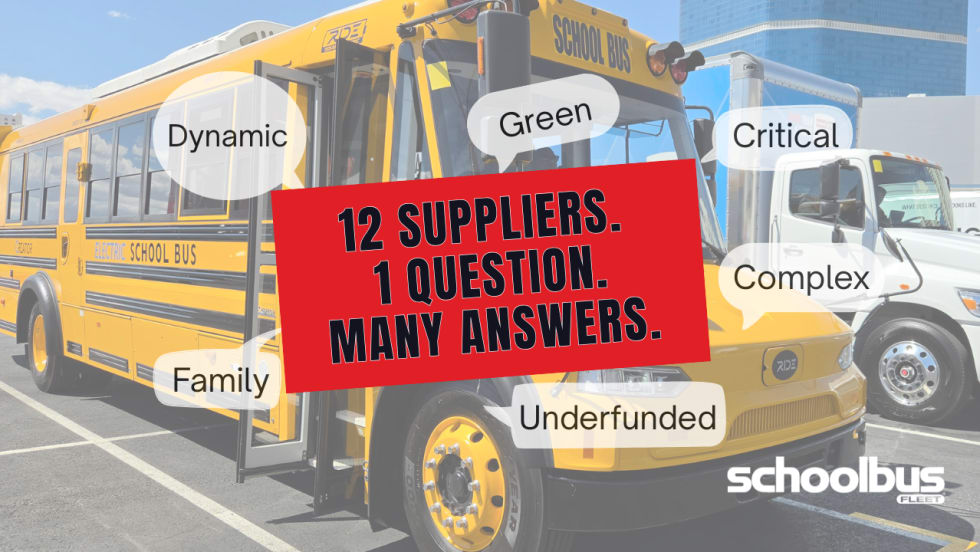
13 Industry Leaders Describe School Transportation in One Word
What word best describes the school bus industry today? We posed that question to over a dozen manufacturers, resulting in a revealing mix of perspectives on the challenges and opportunities ahead.
Read More →
Tyler Technologies Adds New AI, Transactions Leadership Roles
Two company executives are promoted to newly created C-suite positions to accelerate the company's long-term growth in both artificial intelligence and payments.
Read More →
Pro-Vision Acquires Convoy Technologies
The deal aims to broaden customer relationships and adds specialized vehicle video capabilities for commercial fleets.
Read More →


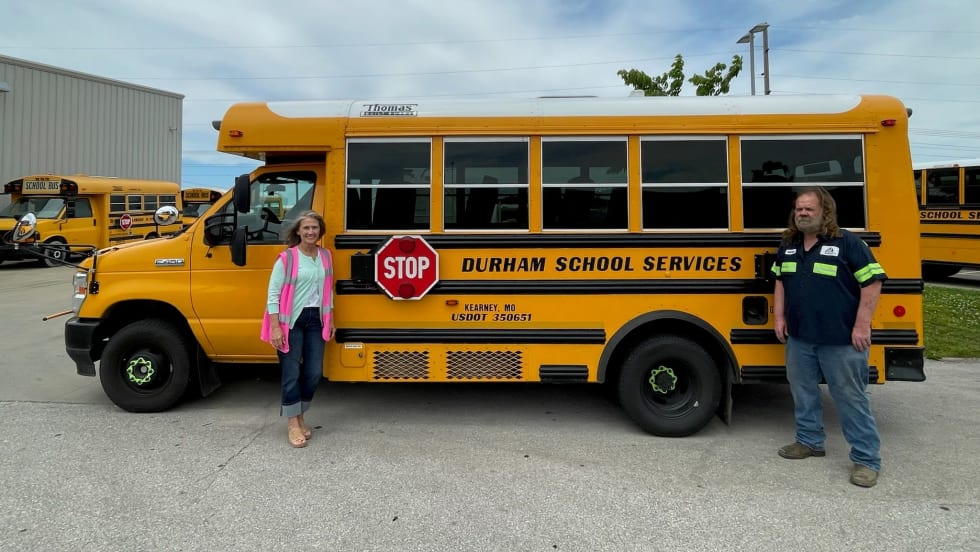
Durham School Services Maintenance Teams Earn Missouri Fleet Excellence Awards
Eight of the contractor’s school bus fleets achieved a distinction few maintenance teams earn during the state’s rigorous annual inspection program.
Read More →
How Incentives, AI, and Energy Markets Are Reshaping School Transportation
Sit down with Joe Annotti of TRC Companies to talk district grant funding, utility challenges, AI, and why school buses are evolving from transportation assets into energy assets.
Read More →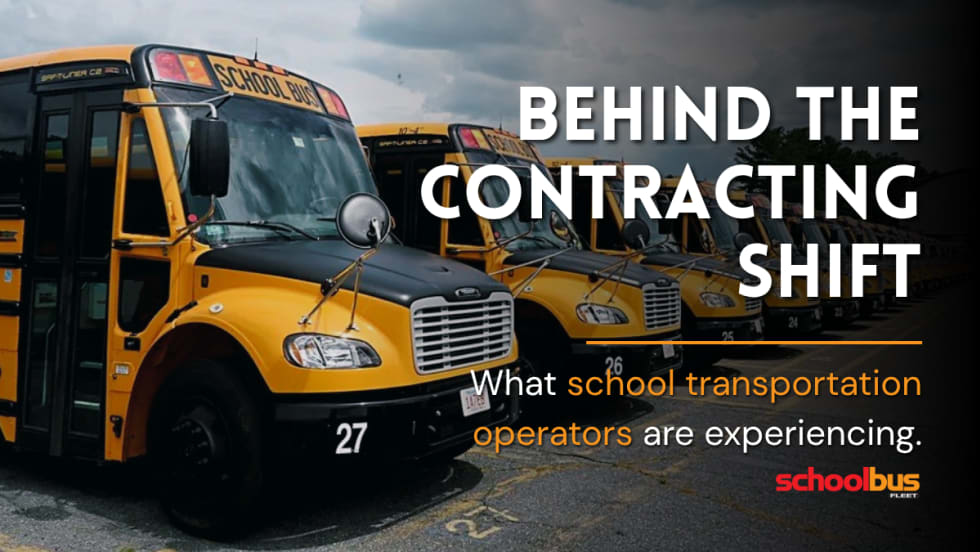
Inside the Contracting Shift: What School Transportation Operators Are Seeing Now
School transportation contractors weigh in on recent trends, costs, driver shortages, and the rise of multimodal student transportation.
Read More →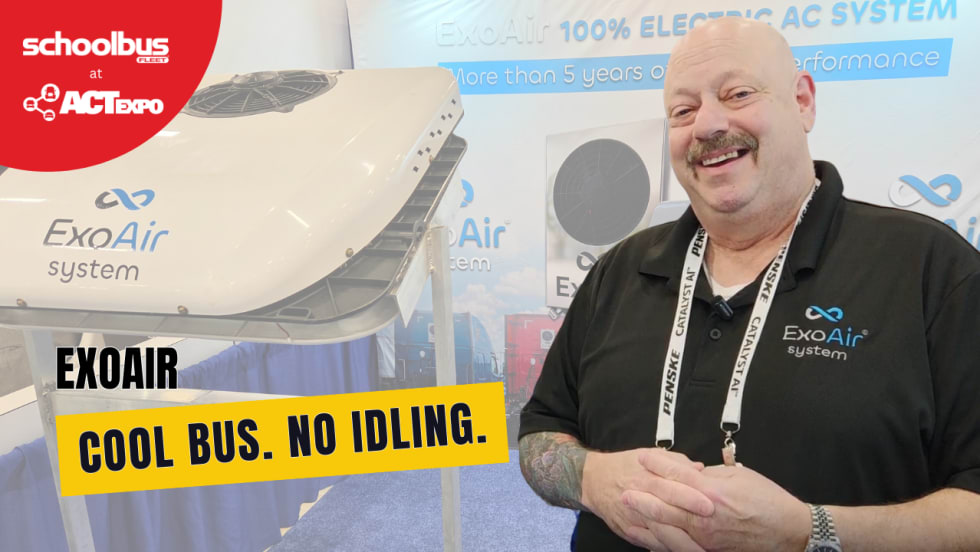
The No-Idling School Bus AC System
Take a peek at ExoAir Systems’ battery-powered cooling solution designed to run for up to 10 hours without the engine on, reducing fuel use and improving comfort for drivers and students.
Read More →
Geotab on Three Major Trends in School Transportation
School bus fleets are becoming more proactive than ever. From AI driver alerts to vehicle-to-grid opportunities, Geotab outlines the biggest technology trends transforming school bus operations.
Read More →
Gatekeeper Lands Major School Bus Deals as Revenue Surges
The video solutions provider announces contracts with Atlanta Public Schools and other fleet operators as it records quarterly revenue growth and expanding subscription business.
Read More →
Building Leaders Who Last: Creating a Successful Mentorship Program in Student Transportation
Discover five strategies for building an effective mentorship program to strengthen leadership development and support staff retention.
Read More →