




Don’t loose out
As an editor, I’m expected to be perfect at grammar, syntax, punctuation, spelling and usage. Well, I’m not.
As an editor, I’m expected to be perfect at grammar, syntax, punctuation, spelling and usage. Well, I’m not. In fact, I just looked up “syntax” in the dictionary to find out what it means. Here’s the definition: “the way in which linguistic elements are put together to form constituents.” Hmm. . . I’m still not sure what it means.
As an example of my imperfection, I once wrote “sight” when I meant “site” — or vice versa — and one of our more eagle-eyed (and sadistic) readers ripped the page from the magazine, circled the word in red ink and anonymously mailed the page to the office. I was, of course, mortified and showed the page to several of my colleagues. I was hoping just one of them would say, “Yeah, I’ve made that same mistake before. No big deal.” None of them did.
It is a big deal, really. An editor making that type of mistake is equivalent to a route supervisor placing a bus stop along a dangerous curve. The editor’s error doesn’t put children at physical risk, but it’s a sign that he or she isn’t paying attention to details. We all take pride in our work. Maintaining a high standard is a matter of professionalism. It’s also an effective way to challenge yourself to do your best work at all times.
How’s your writing?
But editors aren’t the only ones who are judged by their ability to string words together in a meaningful fashion. You are, too. A pupil transportation professional’s writing skills are on display more than ever before because of the increasingly common use of e-mail. Many conversations that used to take place over the phone are now being held via e-mail.
For those of you who are strong writers, this focus on the written word is not a problem. For the rest of you, responding to e-mail, writing reports or even filling out employee evaluations can be a struggle. More than that, an inability to communicate effectively with the written word can hurt your reputation and sabotage your career aspirations.
That’s why it’s important for you to be aware of your written communication skills and, if necessary, to improve them. To help in a small way, I offer the following tips, which are taken from a presentation on effective writing that I did a couple of years ago at the National Association for Pupil Transportation conference.
Before you start writing, know what you want to say. If necessary, prepare an outline with the main points that you’re going to make.
Focus on clarity, simplicity and brevity. Long sentences filled with three-syllable words may sound impressive, but they can be difficult to read and understand.
Understand who your audience is and craft your message accordingly. A quick note to a colleague about a meeting that’s been rescheduled will not need to be nearly as formal as a letter to a site administrator about dangerous traffic patterns around his or her school.
Always have someone else proofread anything you’ve written that needs to be clean and precise. No matter how good a writer you are, you should not try to proof your own copy.
Avoid common errors that plague even the best writers. “It’s” is not possessive, even though it has an apostrophe. It means, “It is.” To remember, think of “its” (the possessive form) as being like “his.” Another common error: It’s “lose,” not “loose,” when you misplace your glasses or fail to win (see headline).
I haven’t forgotten buses
You thought this column was supposed to be about school buses, didn’t you? Well, here’s my advice in that regard: In the U.S., it’s “buses” when you’re talking about big vehicles that transport lots of people and “busses” when you’re talking about kissing your sister or, better yet, someone you’re not related to (or should that be “to whom you’re not related?”)Finally, don’t procrastinate. When you have to put something in writing, take care of it right away. Putting it off only increases your chances of an error. I speak from experience here.
More Management
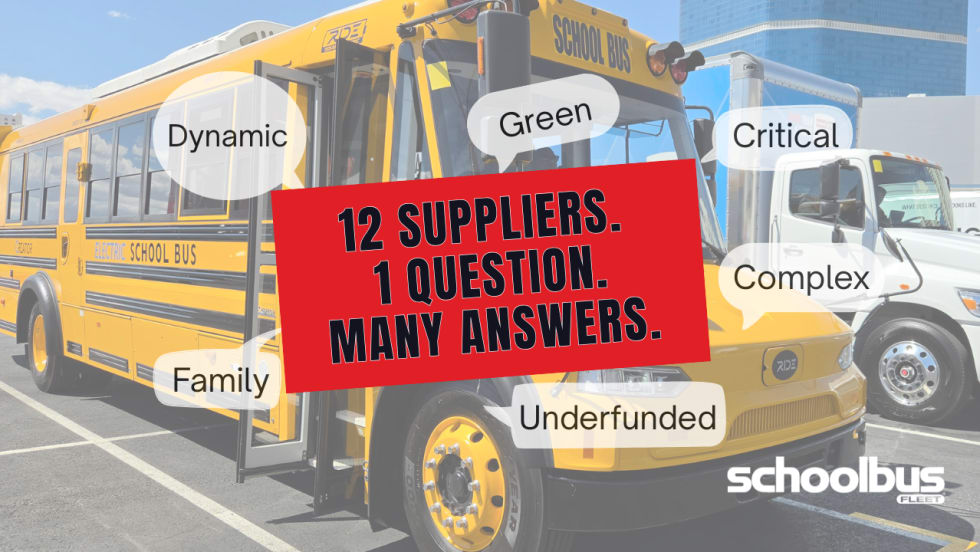
13 Industry Leaders Describe School Transportation in One Word
What word best describes the school bus industry today? We posed that question to over a dozen manufacturers, resulting in a revealing mix of perspectives on the challenges and opportunities ahead.
Read More →
Tyler Technologies Adds New AI, Transactions Leadership Roles
Two company executives are promoted to newly created C-suite positions to accelerate the company's long-term growth in both artificial intelligence and payments.
Read More →
Pro-Vision Acquires Convoy Technologies
The deal aims to broaden customer relationships and adds specialized vehicle video capabilities for commercial fleets.
Read More →


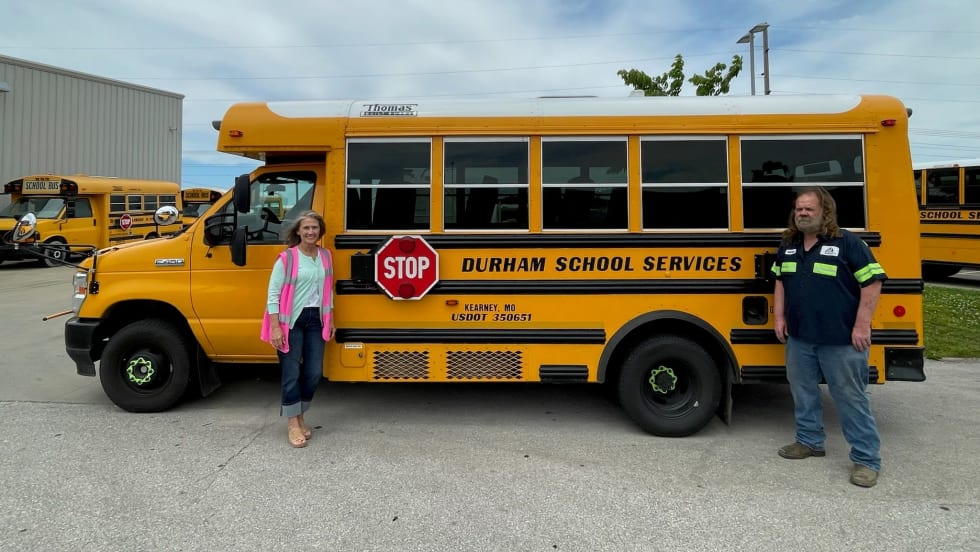
Durham School Services Maintenance Teams Earn Missouri Fleet Excellence Awards
Eight of the contractor’s school bus fleets achieved a distinction few maintenance teams earn during the state’s rigorous annual inspection program.
Read More →
How Incentives, AI, and Energy Markets Are Reshaping School Transportation
Sit down with Joe Annotti of TRC Companies to talk district grant funding, utility challenges, AI, and why school buses are evolving from transportation assets into energy assets.
Read More →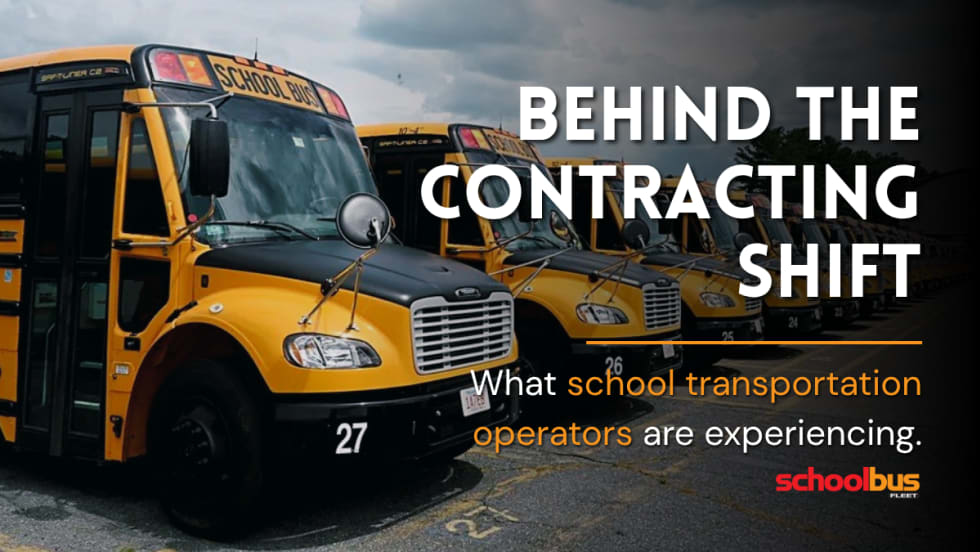
Inside the Contracting Shift: What School Transportation Operators Are Seeing Now
School transportation contractors weigh in on recent trends, costs, driver shortages, and the rise of multimodal student transportation.
Read More →
The No-Idling School Bus AC System
Take a peek at ExoAir Systems’ battery-powered cooling solution designed to run for up to 10 hours without the engine on, reducing fuel use and improving comfort for drivers and students.
Read More →
Geotab on Three Major Trends in School Transportation
School bus fleets are becoming more proactive than ever. From AI driver alerts to vehicle-to-grid opportunities, Geotab outlines the biggest technology trends transforming school bus operations.
Read More →
Gatekeeper Lands Major School Bus Deals as Revenue Surges
The video solutions provider announces contracts with Atlanta Public Schools and other fleet operators as it records quarterly revenue growth and expanding subscription business.
Read More →
Building Leaders Who Last: Creating a Successful Mentorship Program in Student Transportation
Discover five strategies for building an effective mentorship program to strengthen leadership development and support staff retention.
Read More →