




Bus Empty?: Solving the Stranded-Pupil Problem
Why are children continually abandoned on school buses? The reasons abound, but so do the possible solutions. Applying multiple strategies to train, remind and check up on drivers will help ensure the safety of precious cargo.

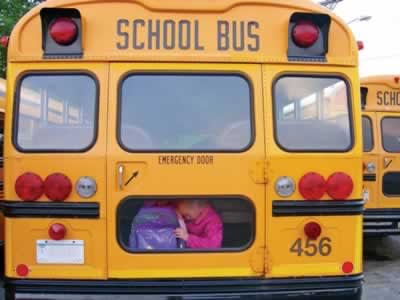
When Joanne Jamison woke up alone on a parked school bus, she thought she was in big trouble.
The 7-year-old had fallen asleep on the way to summer school in late June, but her driver and an attendant failed to find her before disembarking the bus.
Joanne immediately realized she was missing class, but she didn’t know what to do. The youngster, whose mother, Maggie, describes her as very quiet and shy, believed that she wasn’t allowed to open the door. So she waited, hoping someone would come back soon.
Fortunately, the bus was parked under a tree, and Joanne didn’t feel that it got too hot. Eventually, she drifted back to sleep. About three hours later, she was back at the bus stop where the fateful trip had begun. No one else was aware of what had happened until that evening, when Maggie asked Joanne how her day at school was.
After Joanne shrugged, Maggie asked again. Eventually, Joanne explained, “I didn’t go to school today. I’m in big trouble.”
Unfortunately, young pupils are left on school buses at what some call an alarming rate, often in more perilous circumstances.
In extremely cold or hot temperatures, a parked bus can be a dangerous place for a child. And when a young passenger is able to get out of the bus, disaster could await her as she tries to find her way in the bus yard or the streets beyond.
In some cases, special-needs students, who are often the most vulnerable and sometimes non-verbal, are stranded for hours until someone realizes they’re missing.
These incidents seem to appear every week in news reports across the nation. And certainly many others elude the eyes of the media.
“I would suspect that for every one or two that make the newspapers, there are three times as many as that,” says Larry Riggsbee, associate director of Sumner County Schools in Gallatin, Tenn.
While no official count is kept, many school transportation officials say that the problem is widespread and manifested much more frequently than it should be, especially given the industry’s unparalleled safety record.
“Even one incident is a big problem,” says Allan Jones, director of pupil transportation for the state of Washington.
Ronald Despenza, director of the transportation department at Clark County School District in Las Vegas, says that every transportation director he has spoken with in recent years has experienced the problem at his or her operation.
However, other officials don’t see the phenomenon as being as ominous as some would make it out to be. Considering that about 24 million children in the U.S. ride school buses daily, if one is left behind per day, the percentage is minuscule.
“I don’t think it’s a big problem, but it does draw a lot of attention from the media,” says Rafael Salazar, director of transportation at Northside Independent School District in Helotes, Texas.
Neal Abramson, transportation director at Santa Monica-Malibu (Calif.) Unified School District, says that there are years when it seems that more children are being left on buses than in other years. But, like Salazar, he doesn’t believe it’s an immense problem overall. Still, both agree that these incidents, when they do surface, can be dangerous.
Regardless of whether one believes an industry-wide crisis is afoot, no pupil transporter wants to be faced with the array of consequences that one of these unfortunate events could entail. In addition to the aforementioned dangers that a stranded student could face, consider these troubling effects:
Careers can be ruined. In many cases in which a child is left on a bus, the driver is fired. If it’s a rookie, one might argue that the person was probably not cut out for the job anyway. But, surprisingly, these incidents often involve drivers who have been on the job for many years and have clean records.
It may become a legal matter. The district, the contractor and the driver may be hit with a lawsuit. Also, the driver could face criminal charges.
It’s likely to make the local news. Parents often contact the media when their child is subjected to this type of neglect. The ensuing coverage will not be flattering for the driver, the supervisor, the bus operation, the district and so on.
Trust — as well as riders — may be lost. The child could develop a fear of the school bus and refuse to ride it anymore. Parents might conclude that the bus isn’t safe for their children and pull them off. In actuality, this will mean that more kids will be taking less-safe forms of transportation — whether it’s riding in Mom’s minivan, pedaling their own bikes or otherwise — to and from school.
It’s imperative, then, that every student transportation operation have measures in place to prevent pupils from being left on the bus.
Reasons for leaving
If every school bus driver thoroughly checked the seats and floor of his or her bus after every run, no child would ever be left behind. The issue seems simple enough. Yet when one delves into the reasons that the checking process is forgotten or botched, it becomes clear that the matter is more complicated.Many transportation managers say that drivers are often in a hurry to get off the bus, which leads to the bus not being checked thoroughly or at all for sleeping students.
Bob Markwardt, supervisor of transportation at Cecil County Public Schools in Elkton, Md., says that a driver may be in a rush to get to a doctor appointment, to return home to care for a sick son or daughter or simply to end the workday. He says that bus drivers, like other people, often have a lot on their minds.
Despenza of Clark County says that another factor is complacency. “If you walk to the back of the bus a hundred times and don’t find any kids, you can have a tendency to get complacent and just assume that no kid is there,” he says.
Carol Boucher, a driver in Green Bay, Wis., says she believes that most school bus drivers are conscientious. However, some who might not carry out their duty to check the bus assume that stranding a child is “not going to happen to them. They have that teenage mentality,” she says.
Additionally, these incidents are often attributed to a change in the driver’s routine. Jones points to an example from a Washington operation in which a driver pulling into the bus lot noticed a person acting oddly. Upon parking the bus, the driver immediately went to report the stranger, forgetting to check the bus. As luck would have it, there happened to be a child still on board.
Even a momentary distraction can lead to a child being stranded. Markwardt shares a story from his operation in which a driver was checking her bus when another bus began backing in next to hers. The activity caused her to look up briefly — just enough time to miss a student who was on the floor underneath a seat. Also working against the driver’s efforts was the fact that it was a stormy day, so the bus was darker than usual.
Sometime after the driver had left, the child got off the bus and wandered down a road until a passerby stopped to help.
Boucher herself experienced a disruption that caused her to miss a sleeping child before she left a school drop-off (see sidebar on pg. 28 for full story). Fortunately, the youngster popped up before Boucher had parked the bus at her home. And Boucher’s routine included another check before disembarking the vehicle.
Taking a leading role
School bus drivers are among the most highly trained and professional drivers on the road. They are not, of course, perfect. So expecting them to never forget to check their bus without having any backup measures in place is a gamble.“Anytime you have a human system, you’re going to have some errors made,” Jones notes. He says that managers need to ensure that drivers are given solid training and constant reminders on the subject. Beyond that, there should be an electronic or manual device to verify that the checking is done.
Dale Goby, a consultant and former executive transportation director at Detroit Public Schools, says that “although the driver is the employee most responsible, the supervisor must make certain there is sufficient redundancy in the system to make it failsafe.”
At Detroit Public Schools, Goby required each of the five terminal managers to pledge that their buses were being checked by signing a document and faxing it to the central transportation office.
“Only then did we get 100 percent compliance and not have incidents,” Goby says.
Gerald Oram, transportation coordinator at North Hunterdon-Voorhees Regional High School District in Annandale, N.J., offers a similar stance: “You need to be out of your seat from a management standpoint.”
Oram says that drivers are more likely to skip post-trip inspections if they know that a manager isn’t checking up on them. He recommends “going out into the yard and being visible when buses are coming in.”
Markwardt has found a solution to satisfy those who are anxious to get off the bus because they feel that their workday is over. His operation is adding five minutes of pay for post-trip checking. “So you can’t say that you’re not getting paid for it,” Markwardt says.
[PAGEBREAK]
Planning for prevention
There are myriad methods that pupil transporters can employ to prevent children from being left on buses. Many officials concur that no single system is foolproof, so having more than one in place is important.A prevention program should begin with pre-service training and continue with in-service sessions. Drivers should be taught not only how to check their bus, but also what can happen if they don’t.
At Cecil County, drivers are instructed to check each seat on the way to the back and to look at the floor in front of each seat — which also gives a view of the space under the next seat — while walking to the front.
“When done correctly, it takes 30 to 45 seconds,” Markwardt says. “That’s one of the things we try to emphasize. Even if you’re in a hurry, that’s not going to make much of a difference.”
The transportation department at North Hunterdon-Voorhees uses the following phrase to ensure that drivers know their responsibility: “Check all seats and floor spaces for children left on or sleeping.”
Oram says that an extra step drivers can take after walking up and down the aisle is to go outside the bus and open one of the emergency doors to get a good view of the floor.
Drivers have to be aware that their checking must be thorough. Though it may seem unlikely, an inattentive driver can walk up and down the aisle and still miss a child.
Jones notes that a district in Washington has a surveillance video in which a driver walks to the back of a bus and returns empty-handed. But later in the footage, a youngster pops out from one of the seats. Boucher says that she has seen a picture in which a boy wearing a black jacket is curled up on top of a wheel well, rendering himself nearly indistinguishable at a glance.
“You could definitely miss a kid if you’re not looking closely,” Boucher says.
One way to reduce the risk posed by distractions is to require that drivers’ routines include two checks per run — one when the bus becomes empty and another when it returns to the depot or other parking site. Another benefit is that checking the bus before leaving a school drop-off can eliminate a lot of backtracking if a sleeping student is found then rather than at the bus lot.
Refreshing their memory
Part of a supervisor’s role in preventing incidents of abandonment is making sure that drivers are constantly reminded of this element of their duties.“You have to get to the point that you remember to check your bus like you remember to put on your clothes before you walk outside in the morning,” Markwardt says.
Oram came up with a clever way to keep the concept on everyone’s minds. Each month, he designs a poster with a new slogan that stresses the need for post-trip checking. A recent edition shows a photo of children playing ball and reads, “Be on the ball, check for us all,” followed by the aforementioned “Check all seats and floor spaces...” wording. The posters, which are in the form of Microsoft Word documents, are hung up in the transportation office and placed in the drivers’ mailboxes.
“The hardest part is coming up with a catchy phrase,” Oram says. After that, he says it only takes five minutes to design the poster. He recommends spending time on these sorts of efforts to help avoid spending much more in dealing with the aftermath of a child being left on a bus.
In a similar endeavor, David Broussard, a former school bus driver and now city councilman in New Iberia, La., designed a sticker with a concise message — “Check for sleepers” — to be placed inside the bus above the service door. Broussard says he spent $700 out of his own pocket to have 10,000 of the stickers printed. His goal is to get one in every school bus in his state. He says he’s given out about a quarter of them so far.
Broussard says that in addition to catching the bus driver’s attention, the stickers remind students to look out for their fellow passengers.
Becoming equipped
Various forms of equipment can help ensure that drivers walk to the back of the bus after a run. They can also serve as visual cues for a supervisor walking through the yard that buses have been checked.Among the more simple items are flags and signs that drivers post in the rear window. One common version is a sign that reads “BUS EMPTY” and sticks to the glass with two suction cups.
Bee Line Bus Transportation in Phoenix recently began using signs that are printed on fluorescent paper and laminated and read, “This bus has been checked and cleaned.” The signs can be attached with Velcro or suction cups.
Bee Line General Manager Kathy Roadlander says that if a driver forgets to hang the sign before leaving the bus in the yard, a supervisor will place a notice in his or her mailbox.
On the more complex end of the equipment spectrum, there are electronic systems in which the driver must deactivate an alarm at the back of the bus before exiting.
One of these units is made by Child Check-Mate Systems in Navan, Ontario. President Bob Moran says that one of the key advantages of the product is that even if a driver becomes distracted, the alarm will serve as a reminder of his or her duty if the key is turned off before the system has been disarmed.
“It’s as much of a job security device as it is a safety device for children,” Moran says. “We want to appeal to the drivers first and foremost. All they have to do is push the button as part of their normal routine.”
Markwardt’s operation is in the process of retrofitting its entire fleet with the Child Reminder System, which is made by CRS Electronics in Welland, Ontario. The device requires drivers to walk to the back of the bus after turning off the ignition and raise the rear door handle or press a deactivator button. Markwardt says that one of the reasons he chose the system is that it turns on the interior lights during the checking process.
At Clark County, every bus has two systems to help ensure that no student is left stranded. One is a red flag to be hung in the rear window so it’s visible from outside of the bus. The other is Seattle-based Zonar Systems’ EVIR Package. A radio frequency identification tag is placed at the back of the bus, among other places, and the driver must hold a reader device up to it during the inspection process.
Some pupil transporters are wary of relying too much on equipment. Lionel Pinn, transportation supervisor for the Centralia/Chehalis (Wash.) Pupil Transportation Co-op, focuses more on holding drivers up to high standards.
“I feel you can have all the bells, lights, horns, empty signs and whistles you want, but people are still going to circumvent the system and, yes, make mistakes,” Pinn says.
According to Pinn, requiring a driver to be a professional should be a program’s No. 1 priority. “Along with this designation come professional expectations and consequences,” he says.
Fitting the punishment
There are conflicting opinions on what punishment should follow a child-abandonment incident on a school bus. Many transportation officials say that a zero-tolerance policy is the only way to go.At Clark County, a driver will be dismissed on the first incident of abandoning a child. Despenza says that no lesser punishment will suffice.
“We had more incidents when there was a lesser punishment,” he says. His operation used to average five to eight of these incidents per year.
“I ran the gamut on this with discipline,” Despenza says. It started as a warning, then was raised to suspension and then the suspension was lengthened. “But it still didn’t completely resolve the problem.”
[PAGEBREAK]
After implementing a zero-tolerance policy four years ago, the average number of incidents dropped to less than one. And, Despenza points out, his fleet has also grown substantially since then.
Salazar’s operation also holds to a zero-tolerance policy. Earlier this year, a driver was fired for leaving a 4-year-old on a bus for a few hours in hot weather. The driver had been with the district for two decades.
Salazar says that in some cases, a driver could be transferred to food service or the custodial department, but he or she “wouldn’t drive a bus anymore here.”
Oram takes a similar tack. “To me, it’s serious enough that it warrants dismissal,” he says. Still, he acknowledges that “maybe drivers don’t understand the potential consequences: loss of job, child endangerment charges, negative publicity.”
Jones has mixed feelings on discipline in these cases. “Is it appropriate to fire someone after 20 years of experience and this happens once?” he says. “The driver feels as bad as anyone.”
Factors such as how long the child was left alone and whether he or she was injured should be considered, Jones says.
Abramson offers another variable. “The supervisor might decide to suspend the driver, but [if] it goes to court, they might ultimately not have a choice but to fire the driver, especially if that’s one of the things [the parents are] suing for,” he says. “A lot of times when it gets to litigation, they’re looking for money and the driver’s head on a platter.”
Goby says that the driver often bears too much of the blame when a child is left on a bus.
“If the supervisor doesn’t check that the driver is performing these responsibilities, where you need 100 percent compliance, then the supervisor should be disciplined,” Goby says.
Goby says that while drivers should also be disciplined in some manner if they forget to check their bus, he feels that firing a driver for this type of incident is more to placate parents than it is to prevent it from happening again at the operation.
At Cecil County, Markwardt responds to these incidents on a case-by-case basis. “We look at the driver, we look at the circumstances — we look at everything we can — and then we make a determination,” Markwardt says.
Navigating the wake
Dealing with the parents of a child who was left on the bus is likely one of the less desirable situations a transportation manager might be faced with.According to Sumner County’s Riggsbee, the key is to “apologize, apologize, apologize. When you’re talking to a parent, you just don’t have an excuse.”
Salazar agrees. “You have to understand where the parents are coming from, because it’s their kid,” he says. “You’re all about safety, and one of your drivers has just broken one of the biggest rules by leaving a child on the bus.”
Salazar suggests keeping the parents informed as the situation develops, but he doesn’t recommend telling them the driver’s fate.
“Let them know that you’ve done an investigation and that you took the appropriate action with the driver,” he says. “But don’t tell them what you actually did. If the driver was fired, the parents will eventually find out.”
Salazar also suggests working with the district communications officer, if there is one, because he or she can help in handling the media if necessary.
Jones says that part of the difficulty of responding to parents is in trying to earn back their trust.
“It’s a loss of confidence in school transportation,” he says. “Parents might decide to take their kids off the bus, but that puts them at more risk than the occasional kid being left on the bus. The school bus is still the safest way to get a kid to school.”
In the case of young Joanne Jamison, her mother, Maggie, decided to put her back on the bus the week after she was left stranded.
After the incident, the driver and an official from the bus company called to apologize. “They’re doing everything they can to make sure it doesn’t happen again,” Maggie says. “I just want to make sure my child is safe. If I felt that she wasn’t, I’d never put her back on that bus.”
Still, Maggie told her daughter that if she does find herself alone on the bus again, she should scream and honk the horn.
To help assuage any fears Joanne may have had, an attendant began sitting with her on the bus and meeting her outside of the school.
Maggie admits that when the driver called, she didn’t initially handle it well. “I got a little snappy with her at first,” she says. But Maggie says she soon realized that she should try to make something positive come out of what started as a troubling experience.
“Buses will always take our kids to school, and that’s important,” Maggie says. “It’s important for me to work with these people. But I didn’t have that attitude at first.”
'It' happened to me!
Carol Boucher, a school bus driver since 1999 in Green Bay, Wis., loves her job and takes it seriously. For her passion, she’s earned the nickname “Bus Nut” and has won her company’s top driver honor, the Presidential Award. She describes herself as conscientious and a rule follower. Clearly, she’s not a driver one would expect to miss a sleeping passenger. Here, Boucher recounts how “it” happened to her one day last year: I never thought it would. Didn’t see how it possibly could. I check my bus for sleeping children before I ever pull away from school. Here’s how things went awry.
Noon route. Early Childhood. Only six students. There’s usually one or two sleeping when I get to school. I wake them up, get their backpacks on them and have them stand in line to wait for the two teachers to come out and get them.
On this day, there was a car in my spot in front of the school doors, so I had to hang back about one bus length. The teachers always come out to the bus, and we talk about who rode in, who didn’t, etc. But because I wasn’t close — and it was cold — they more or less stood by the door and motioned for the kids to get inside.
I sent them all (I thought); even the two who are usually sleeping were awake this day. I walked back to check my bus and found a hat, probably in the third or fourth seat. I grabbed it and quickly ran to the school doors before they closed (they lock at that point). I delivered the hat and then got back on the bus.
Because of the way everything went — the activity and all — it felt like I checked my bus. So I got in my seat and drove home. Just as I pulled up in front of my house (a 12-minute trip), I saw a head pop up in the seat! I wasn’t even thinking it was a student. Couldn’t be. I just didn’t know. It scared the heck right out of me! I yelled, “Who is it?” (Actually, that part is funny in retrospect.)
Then I realized who it was, so off I went back to school. I radioed base and told them that I had found a sleeping student and was returning to school. Proper procedure, no questions asked — they knew it was only a few minutes since I dropped off.
The point is, it can happen to anyone. I am always so careful. I would never think of not checking my bus or cutting any corners, but still it happened. Thank God for the new Child Check-Mate systems we have. I hadn’t gotten to the point of turning my bus off when I saw him, but it could have saved us both. I would still have had to walk to the back of the bus to disarm the system before I could shut the ignition off, and I would have seen him then. But this just really scared me!
The next day, after I checked at school, I pulled over out of the driveway and checked again!
More Management
13 Industry Leaders Describe School Transportation in One Word
What word best describes the school bus industry today? We posed that question to over a dozen manufacturers, resulting in a revealing mix of perspectives on the challenges and opportunities ahead.
Read More →
Tyler Technologies Adds New AI, Transactions Leadership Roles
Two company executives are promoted to newly created C-suite positions to accelerate the company's long-term growth in both artificial intelligence and payments.
Read More →
Pro-Vision Acquires Convoy Technologies
The deal aims to broaden customer relationships and adds specialized vehicle video capabilities for commercial fleets.
Read More →


Durham School Services Maintenance Teams Earn Missouri Fleet Excellence Awards
Eight of the contractor’s school bus fleets achieved a distinction few maintenance teams earn during the state’s rigorous annual inspection program.
Read More →
How Incentives, AI, and Energy Markets Are Reshaping School Transportation
Sit down with Joe Annotti of TRC Companies to talk district grant funding, utility challenges, AI, and why school buses are evolving from transportation assets into energy assets.
Read More →
Inside the Contracting Shift: What School Transportation Operators Are Seeing Now
School transportation contractors weigh in on recent trends, costs, driver shortages, and the rise of multimodal student transportation.
Read More →
The No-Idling School Bus AC System
Take a peek at ExoAir Systems’ battery-powered cooling solution designed to run for up to 10 hours without the engine on, reducing fuel use and improving comfort for drivers and students.
Read More →
Geotab on Three Major Trends in School Transportation
School bus fleets are becoming more proactive than ever. From AI driver alerts to vehicle-to-grid opportunities, Geotab outlines the biggest technology trends transforming school bus operations.
Read More →
Gatekeeper Lands Major School Bus Deals as Revenue Surges
The video solutions provider announces contracts with Atlanta Public Schools and other fleet operators as it records quarterly revenue growth and expanding subscription business.
Read More →
Building Leaders Who Last: Creating a Successful Mentorship Program in Student Transportation
Discover five strategies for building an effective mentorship program to strengthen leadership development and support staff retention.
Read More →