




The Transportation Manager's 2004-05 Survival Guide
It's a transportation manager's worst nightmare. You've got a fleet of buses that need replacing but a budget that won't buy you one, a shortage of se...
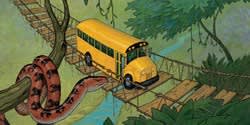
It's a transportation manager's worst nightmare. You've got a fleet of buses that need replacing but a budget that won't buy you one, a shortage of several drivers with no new prospects, a disgruntled dispatcher and two mechanics who won't work until they receive pay raises — all this while Timmy the Tormentor's mom is on the phone line arguing her little precious' innocence! The new school year is just starting. How do you feel?
Recognizing stress
Many transportation managers face their days with a certain level of bullheadedness. The job has to get done whether you feel up to it or not, so what's the big fuss? Oftentimes this dismissive posturing works well to propel one through the daily grind, but at what price? What's behind those sleepless nights, the attention deficits, mood swings and the frequent, unexplainable aches in your back and shoulders? You recognize it right away in your staff — alcohol or drug abuse, chronic fatigue, anti-social behavior, but what about when it's happening to you? Transportation managers must learn to recognize their own stress and deal with it accordingly.
Our bodies react to changes in our environments. Those changes, especially when unexpected, cause stress. Having to adjust or respond to events causes stress. Experiencing certain types of stress is normal. It's our body's way of signaling danger or the need to be alert. But when certain types of stress occur, it can be damaging, both physically and mentally.
Stress is common like hunger and headaches, and the causes vary significantly. Death, traffic and crowds are frequent contributors just like marriages, births and deadlines. The key is knowing how to direct, reduce or prevent stress. This becomes a challenge when the source is unknown, but more often than not we know the source — we simply deem it unavoidable or unalterable. Look out for stressful situations like the following in the 2004-05 school year.
Weather the storm
Challenges abound in pupil transportation. Some are controllable, some aren't. But few can rankle a transportation director's nerves like inclement weather. Biting temperatures or heavy precipitation can cause cancellations or make it nearly impossible to safely transport students to school.
"Day-to-day pressures like dealing with staff, drivers, kids and angry parents don't really get to me like the weather does," says Greg Liedl, transportation director at Bemidji (Minn.) School District.
Minnesota temperatures can drop well below zero, without wind chill, which causes stress to both the human body and to school buses. It's up to Liedl to determine if the conditions can be weathered. He's awake at 3:30 a.m. and in contact with farmers to the north and south to gauge the severity of the cold.
"It's stressful because now you're deciding if there's school or not," says Liedl. The extreme temperatures can persist for days, but shutting the schools down too often can cause a different kind of storm. "You can't cancel too many days or you'll be into June trying to make them up."
Fourteen-hour days are common when the temperatures plummet, says Liedl. But the long days are necessary to ensure the safety of the students he transports.
"It's not the chill factor, it's the ice," he says. "It's when you apply the brakes and the bus just keeps moving."
[PAGEBREAK]
Critical conditions
Howard Yamaguchi of Yamaguchi Bus Services in Kilauea, Hawaii, struggles daily with weather conditions.
"It's moisture that's a problem here," says Yamaguchi. "It's always raining, so it's always wet." It rains almost every day in Kilauea and the moisture wreaks havoc on Yamaguchi's equipment. "Plywood floors on buses don't work well here," he says. "They dry rot." Lumps or soft spots appear in the floors after six to seven years of exposure to the moist air, so Yamaguchi orders new buses with steel floors only. Mirrors give him trouble too. "You'd be surprised at how much time the maintenance guys spend cleaning, painting and repainting mirrors."
Joel Helfrick, maintenance manager at Laidlaw Transit Services in Fairbanks, Alaska, has been there and done that with extreme temperatures. On rare occasions he's seen temperatures drop to 55 and 60 degrees below zero. And unlike the Bemidji School District, the schools Laidlaw services in Alaska rarely shut down because of the cold. The temperatures sometimes warm just enough for rain, but the rain freezes the minute it hits the ground and turns into ice.
"I've had a half dozen buses stuck out on the road because of snow conditions or ice," says Helfrick. "The buses just slide off the road or into ditches." Sometimes there are five or six buses stuck at one time. Standby buses are sent to pick up the stranded students and a mechanic is sent to assess the situation. Once there, a decision has to be made: can the service guys remedy the situation themselves or will they have to involve a local towing company?
The anxiety increases exponentially for Helfrick because now he might have all 10 of his mechanics out at once, which means downtime for the shop. "You're also trying to make sure all the kids get to school on time and that you fulfill your contract obligations," he says. The emergencies can take from one to four hours to resolve and may happen once or twice a year. "It's all short lived but very stressful while it's happening."
Driver shortage blues
Sherilyn Thacker-Smith, director of transportation services for Palmdale (Calif.) School District, directs pupil transportation services for the sixth-largest school district in California. School has not officially started, but her driver-shortage headaches have.
Schools put in requests for activity trips. If the trips are between regular school routes, then things are fine, but if they're not, a substitute driver is needed to drive the route. This means using a regular driver for the activity trip. "That causes a shortage of drivers sometimes," says Thacker-Smith, "and there can be a lot of activity trips." The trips are for student activities like football scrimmages and cheerleading day camps, which take place during the summer before school commences.
"Driver shortage is a constant battle," says Hugh Mills, director of transportation at Suwannee School District in Live Oak, Fla. Mills, who's been in transportation for 20 years, directs a mostly rural operation and transports 4,000 students annually with a fleet of 56 buses.
"We have a driver-trainer employed here, and she may have a class with only one trainee." Mills trains substitute drivers all year long but says they, too, are hard to find. "We may train as many as 15 to 16 subs and will retain about five by the year's end." As an incentive for the subs, Mills hires full-timers from his sub list before looking elsewhere.
Driver recruitment is a thorn in the side of Yamaguchi Bus Services, where it's necessary to bait drivers with medical benefits and a guaranteed minimum number of hours. "In Hawaii, it's two hours a day plus medical," says Yamaguchi. Some contractors are forced to offer five or six hours of work each day to attract drivers. The problem, says Yamaguchi, is the charter bus companies that cater to tourists. Drivers can get hours and benefits with the charter bus services. To maximize drivers' paid time, contractors have required drivers to clean their own buses or perform maintenance or janitorial work for the district. Drivers get the hours they require and contractors get services rendered. "Still, we're having a difficult time finding drivers," Yamaguchi says.
[PAGEBREAK]
Not-so-precious cargo
Student behavior problems on school buses have received plenty of news coverage lately due to the outrageousness of some of the incidents. But hourly or daily reports would only begin to shed light on the seriousness of this issue for the transportation industry.
"The children today do things that were just unheard of 15 years ago," says Allen Prince, transportation director for Spartanburg (S.C.) School District #2. Prince has worked in transportation for 20 years, manages a fleet of 37 buses and remembers when his expanding district looked like Mayberry. Things have changed.
Prince had to hire nine monitors, who he rotates on different buses depending on where the behavior is most flagrant. He's also installed surveillance equipment on every bus. "That takes away some of the stress from our drivers," he says.
The Suwannee School District has allowed drivers to take matters into their own hands, somewhat. "We learned a long time ago that students have to understand that the bus driver is the adult in charge and has the authority to do something," says Mills. Suwannee drivers give students two to three warnings about their behavior before contacting the child's parents directly. Of course, Mills or another official must preauthorize the contact, but the process has been effective. Bus drivers can suspend students from the bus for one day. Now when drivers offer warnings, students listen. "Inconveniencing the parents gets the children's attention," says Mills.
A lot of stress comes from the discipline aspects, says Michael Bross, director of support services at Jefferson Schools in Monroe, Mich. "You have to take each kid for his or her own merits. Keep yourself removed from it and deal with the facts." Jefferson Schools bus drivers treat students similar to the way teachers treat them: act up in class and it's detention; act up on the school bus and you're off the bus. "It's a hard decision to make," says Bross, "but it's for the safety of all the student riders."
Budgetary tug-of-war
The bottom line is that few transportation operations have the kind of funding that makes everyone happy. Do what you can with what little you have is the rule of the day, but complacency is a no-no.
"They are revamping the state budget for Maine," says Joanne Woodworth, transportation manager at Maine School Administrative District #49 in Fairfield. "I've been waiting to see what happens, because we've been told they're cutting our budgets big time." Woodworth is concerned about the downsizing of her fleet and personnel, but she's been proactive with the help of her state association.
"We've begun to compile a folder that contains all of our transportation needs, so the people putting the budget together get an idea of what those needs are."
Things are much tighter for contractors. "Lately, we've had to personally guarantee everything," says Yamaguchi. "It's getting worse." Insurance companies are getting more selective about who they insure, and financial institutions are requiring that small contractors put up personal assets such as their homes to obtain financing. "School districts have different funding levels and revenue sources, whereas a contractor has to bear it all."
But it's not all roses at the school districts.
Bemidji School District has 85 district buses and six contracted school buses. Of the 85 district buses, 12 are Carpenters with bad roofs. "There's about 100 of them in the state," says Liedl, who recently appealed to the state board to have his Carpenters replaced. The senate proposed aid of about $30,000 per bus to be matched with funds from the district, but the state rejected the proposal. "The state didn't pass anything up here," says Liedl, "so I'll have to try again."
Several of Liedl's colleagues in Minnesota own and operate Carpenters that are well beyond their state-designated years-of-service mandates. He says they have no choice but to run the buses. "There are several of us using buses well into the 15th or 16th year," he says.
[PAGEBREAK]
Coping mechanisms
All the challenges and demands associated with a transportation manager's job are too numerous to name here. Besides those already mentioned, there are tons of things that weigh in, including salaries. So how does one cope with all the stress?
"They say laughter is the best medicine," says Woodworth, "so I laugh." Woodworth finds the humor in life, and where there's none, she improvises. "Sometimes I'll do silly stuff. I find myself laughing at myself." Coworkers will often join the fun with their own mirthful contributions. Associates save comic strips, newspaper clipping or jokes and share them with Woodworth.
"You just need to relax," says Yamaguchi, who passes on advice from his doctors after surviving a heart attack and quadruple bypass surgery (see sidebar below). "Take a break during the workday and go for a walk. Stay active," he says.
Jefferson Schools' Bross owns a racing team, which he deems a satisfying outlet. "The race team is where I let my hair hang down," he says. Bross has been involved with racing for 17 years. His son drives the car and the entire family comes out every weekend in May through October to watch the races. "I'm the mechanic, the owner and financier. I do everything," says Bross.
Liedl finds relaxation inside the walls of his personalized office. Shelves in his office are lined with well over 100 miniature yellow school buses, he's replaced fluorescent lighting with a livelier hanging light, hung plants and set up a round table where everyone seated is equal and at ease.
"People have pictures of their families on and around their desks, but I've got atmosphere," Liedl says. Outside of work, Liedl likes to hop on his '92 Honda Gold Wing and "go for a ride."
Laidlaw's Helfrick owns a motorcycle too. "I've owned an old '68 Harley Davidson since I was 17 years old," he says. "That's one of my biggest stress relievers." Helfrick enjoys taking the bike on long, open country roads where there are no traffic signs or lights. "I might leave Fairbanks and head 100 miles or so to Denali," he says. He keeps his speed at or around 55 miles per hour, suggesting that he's too old for speeding.
Early arrivers should consider working things out before entering the office, suggests Allen Prince, who, after a 44-mile commute to work, sits in his car and plans his day. "I take a recorder with me or I'll write things down," he says. Prince meditates on what's before him, develops a strategic plan and is able to coast through as much of his day as possible before anything unexpected occurs.
"You have to have an outlet," says Thacker-Smith. She and her husband enjoy camping, fishing and riding their all-terrain vehicles in the desert. One thing she learned was whatever happens at work stays at work. "I realized early on that I wouldn't survive if I didn't learn that."
Learning to delegate can also go a long way, says Mills. "I've always tried to hire people better than me. I keep them trained all the time. I send them to workshops and all the in-service trainings."
"It's all about careful planning," says Bross. "In this business, you don't want to be reactionary. You always have to plan for the worst-case scenario. You have to be well prepared and keep your people well prepared."
Bross suggests surrounding yourself with confident, competent people, emphasizing that if you do your homework, your school year will run well. "You're not going to cover everything," he says, "but you can certainly minimize those unforeseen circumstances."
[PAGEBREAK]
It takes a licking and keeps on...
KILAUEA, Hawaii — I've always thought that when you have a heart attack you bend over and clutch your chest in excruciating pain, like in the movies. It didn't happen like that with me. It was a mild pain, something I could stand. Thinking back, all I can remember is feeling uncomfortable.
I was cleaning out an old bus, a '58 Superior — the prototype with the 6-cylinder gas engine. My grandfather started the business transporting children during WWII by converting old pineapple trucks into school buses. So my father was proud when he bought the Superior.
So I'm out cleaning the family relic because it was falling apart. I had collected little treasures — pictures, toys, etc. — and had them in the Superior. You know how they say men like to collect stuff. That's when I felt something I thought was a cramp. I tried to stretch. I felt so uncomfortable. It was something I'd never felt in my chest or in my body. I wasn't perspiring or anything.
My wife was inside the house. I told her there was something different, that something was wrong. She said we'd better go see the doctor. After some blood tests, my doctor told me that I had suffered a mild heart attack. A week and a half later, I had quadruple bypass surgery. That was in September 2003. I was 57 years old.
It was caused by work stress and inactivity. You eat a heavy dinner at night and you sit down and watch television. That's what I started to do after I got married. But I still played softball. Every Sunday, I go diving or fishing, so I thought I was active.
My friends smoke and drink, and thought I was the healthy one. But my family has a history of heart problems. Heredity plays a big part, but you have to watch your diet. At 5 foot 5 inches and 164 pounds, I was not overweight — a little chubby, but not overweight. I lost 19 pounds after the heart attack.
You have to ask yourself what's important. You need to relax, take a break. That's what my doctor told me. Go for a walk. Be active. Once you have a heart attack, you realize what's important.
10 strategies to reduce stress
Remember to breathe
Don't skip meals
Read something spiritual or religious
Squeeze a stress ball
Exercise daily
Plan ahead
Take daily supplements
Delegate when necessary
Take a walk
Count to 10
More Management
13 Industry Leaders Describe School Transportation in One Word
What word best describes the school bus industry today? We posed that question to over a dozen manufacturers, resulting in a revealing mix of perspectives on the challenges and opportunities ahead.
Read More →
Tyler Technologies Adds New AI, Transactions Leadership Roles
Two company executives are promoted to newly created C-suite positions to accelerate the company's long-term growth in both artificial intelligence and payments.
Read More →
Pro-Vision Acquires Convoy Technologies
The deal aims to broaden customer relationships and adds specialized vehicle video capabilities for commercial fleets.
Read More →


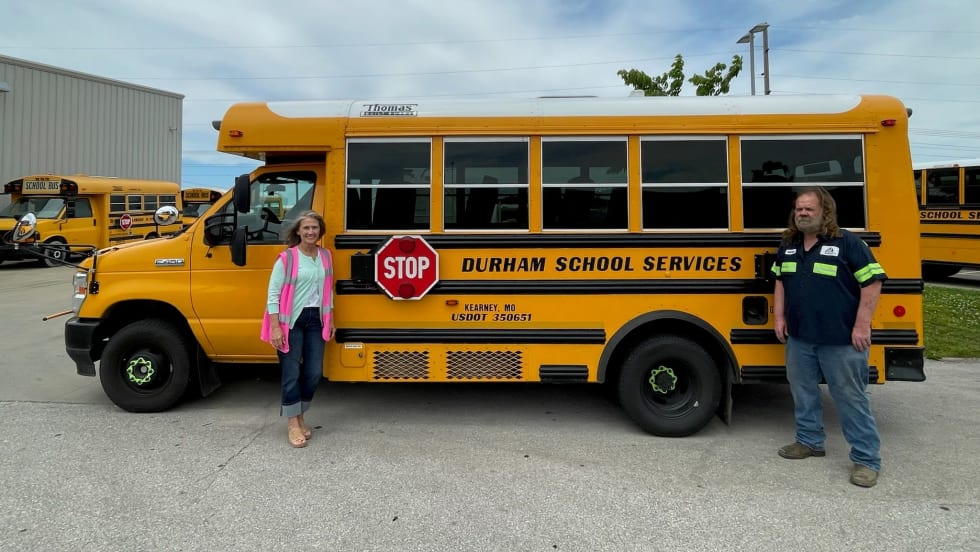
Durham School Services Maintenance Teams Earn Missouri Fleet Excellence Awards
Eight of the contractor’s school bus fleets achieved a distinction few maintenance teams earn during the state’s rigorous annual inspection program.
Read More →
How Incentives, AI, and Energy Markets Are Reshaping School Transportation
Sit down with Joe Annotti of TRC Companies to talk district grant funding, utility challenges, AI, and why school buses are evolving from transportation assets into energy assets.
Read More →
Inside the Contracting Shift: What School Transportation Operators Are Seeing Now
School transportation contractors weigh in on recent trends, costs, driver shortages, and the rise of multimodal student transportation.
Read More →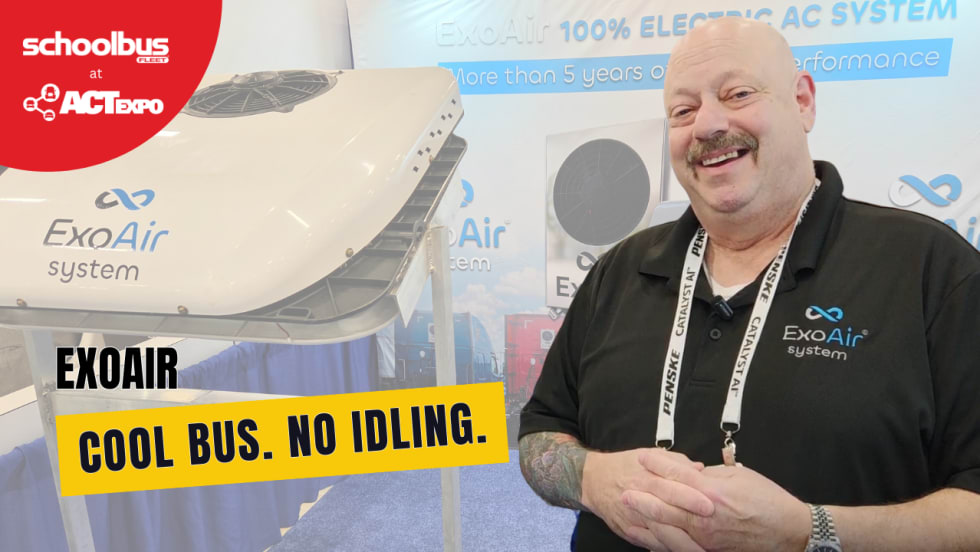
The No-Idling School Bus AC System
Take a peek at ExoAir Systems’ battery-powered cooling solution designed to run for up to 10 hours without the engine on, reducing fuel use and improving comfort for drivers and students.
Read More →
Geotab on Three Major Trends in School Transportation
School bus fleets are becoming more proactive than ever. From AI driver alerts to vehicle-to-grid opportunities, Geotab outlines the biggest technology trends transforming school bus operations.
Read More →
Gatekeeper Lands Major School Bus Deals as Revenue Surges
The video solutions provider announces contracts with Atlanta Public Schools and other fleet operators as it records quarterly revenue growth and expanding subscription business.
Read More →
Building Leaders Who Last: Creating a Successful Mentorship Program in Student Transportation
Discover five strategies for building an effective mentorship program to strengthen leadership development and support staff retention.
Read More →