




Preventing Post-Trip Carelessness
Simply making sure the bus is empty after a run is one of the easier duties a driver has, yet children still get left behind on school buses again and...
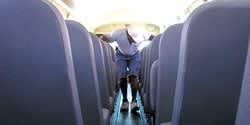
Simply making sure the bus is empty after a run is one of the easier duties a driver has, yet children still get left behind on school buses again and again. Considering the severity of this careless act, forgetting just one child is far too many.
Preventing this potentially tragic situation begins with driver training and requires regular reinforcement of the need to do walk-backs after every trip.
Transportation departments often use electronic devices and other reminders to assist drivers in this essential task. Any tool that contributes to passenger safety is a valuable asset to an operation.
Emphasize importance
Without exception, walk-backs must be a required part of a post-trip bus inspection. Drivers should be trained to complete this task as second nature, just like all other items on a pre- or post-trip inspection checklist.
At the School District of Greenville County (S.C.), posters are hung next to the drivers' time cards as a reminder at the beginning and end of each shift.
The department also has four supervisors who observe the buses on the road and at schools to ensure that proper procedures are followed at all times.
Nancy Benson, safety training specialist at the district, says regular safety meetings keep drivers conscious of the dangers inherent to operating a school bus, making them more vigilant about following all policies.
About 30 of the district's 120 buses have an electronic child alert system requiring the driver to press a button at the back of the bus. Benson says she expects the state to purchase more with this configuration as older buses are replaced.
Connie Orlowski, safety coordinator for Region 8 in Vernon Rock, Conn., has found that posting reminders about the number of children left on buses in the region has been effective for her drivers.
"When it says zero, we know we're doing well," Orlowski says. "When a child has been left, everyone becomes more careful."
Device specifics
Transportation departments should have some way to verify that drivers have done their walk-backs. If there is no policy in place, a noncompliant driver may not be identified until it is too late.
Operators take many approaches to keeping drivers accountable, ranging from simple paper placards to following in observation vehicles to monitoring with video surveillance to electronic alarm devices.
Regardless of what method is used, any system should be a backup to solid driver training. {+PAGEBREAK+} Devices that install directly into the bus' electrical system are by far the most foolproof and effective at ensuring drivers really walk all the way to the back.
These systems typically include two parts: an alarm system mounted at the front of the bus near the driver and the deactivation unit at the rear of the bus. Depending on bus model, a surface-mount button or the rear emergency door lever is used to deactivate the system.
Once the driver turns on the warning lights at the start of a trip, the system is automatically activated. Most systems require drivers to deactivate or reset them before the engine has been turned off.
Failure to go to the back of the bus results in a primary alarm, and a secondary alarm — usually the horn honking — may sound when the doors have been opened.
Contractors and transportation directors hesitant to invest in an electronic system are often concerned about drivers tampering with the unit and taking shortcuts.
Child Check-Mate Systems, based in Navan, Ontario, has addressed this issue by requiring that drivers walk through the bus to the back instead of opening the rear emergency door from the outside.
If the front or rear doors are opened before the system has been deactivated, the alarm will sound. This means drivers cannot ask students or coworkers to press the button or lever for them.
Cincinnati-based Doran Mfg. installs its deactivation switch at a height that cannot be reached from outside the bus. Additionally, if a driver tries to tape down the switch to keep it in the deactivated position, the system automatically reverses its setting, requiring that the switch be released for the next deactivation.
"Drivers can't override that switch," says Scott Comisar, GM for Doran. "It's all metal and it's heavy duty. We guarantee that it's good for 100,000 switches."
Both companies offer nationally compliant systems with five-year warranties. The designs and wiring tend to be generic for compatibility on a variety of bus makes and models.
"Our system is sold as a safety procedure rather than a commodity," says Bob Moran, president of Child Check-Mate.
Reliance on people
Terry Penn, executive director of transportation for Dallas County Schools, says he's skeptical that electronic systems are fail-safe. His department has elected to stay with a placard system for now.
"Our attitude is that at this point in time, we don't want drivers to be annoyed, because that could have an adverse effect," says Penn.
Penn adds that his drivers don't need a warning system if they have been educated and trained to always perform the check. {+PAGEBREAK+} "It's up to management to push the process and we would rather rely on people than a mechanical device," he says.
Monthly safety meetings are held, and driver walk-backs are a frequent main topic, especially from August to October.
"We're very worried about the heat in Dallas. We stress the importance of getting all students off the bus," says Penn.
John Davies, director of transportation at Independence (Mo.) Public Schools, agrees that staff should be responsible for making sure all students get off the bus.
His department checks the onboard video surveillance cameras periodically to make sure proper policy is followed, but drivers aren't required to provide tangible proof of their check.
"We depend on our people, and so far our people have been dependable," says Davies. "The best safety device is the person behind the wheel."
Cost concerns
Others say they would appreciate an electronic system but can't afford it in an already tight budget.
Transportation Director Jeff Hunt of Central Consolidated School District #22 in Kirtland, N.M., says his department has looked at electronic systems but is unable to justify the expense of a product that he says can be substituted by a piece of paper.
In theory, this may be correct, but the true value of an electronic system is evident when a driver has already forgotten and attempts to exit the bus, says Child Check-Mate's Moran.
Until the systems can be worked into the district's budget, Hunt says he is careful to make sure placards are in the rear window of all buses at the end of the day.
Clay County (Fla.) School District has used an electronic child alert system for three years in more than 260 buses. Glenn Sonnenberg, supervisor of fleet maintenance, says he feels the expense has been more than worth it.
"The cost is not that great when you're considering the welfare of children," he says.
He adds that many of the drivers have expressed appreciation for the system because they see it as a valuable aid.
Benefits for drivers
Many operations have a written policy that leaving a child on a bus results in automatic termination.
However, drivers do not always see a walk-back verification system in a positive light. They may feel that management does not trust them and can become resentful of the entire procedure. {+PAGEBREAK+} Emphasizing how a reminder system, whether manual or electronic, can help the driver as well as the passengers can contribute to better morale among the staff.
Lesser offenses, such as not doing a walk-back or not looking carefully around and below the seats, bring penalties ranging from verbal warnings to suspension and possible termination.
If a driver forgets to hang a placard in the back of his bus at Central Consolidated, Hunt first meets with the driver to find out what happened and to provide a stronger reminder for the future.
"We have a form that says we discussed the issue and we both sign it," Hunt explains. "But it's not a reprimand. We just want to have documentation that it was addressed."
Hunt understands the importance of impressing the necessity of these checks on drivers. Two children have been left on special-needs buses during midday routes in the district.
Both children were found quickly and without injury, but these situations would have been prevented had the drivers simply walked to the back of the bus to look for remaining passengers.
Develop good habits
When a child alert system activates in the Laidlaw bus yard in Attica, N.Y., a new driver is usually the cause.
"Our new drivers are the most likely to forget to do a check," says Betty Mallette, branch manager. "The first time the horn goes off it reminds them."
An electronic system can be an indicator to management about how well a new driver is catching on to the operation's procedures.
Mallette says the additional safety the system provides makes her feel more comfortable.
Before the electronic devices were installed, a ribbon was hung in the back window. Mallette says it was always a concern that a driver would ask a student to hang it instead.
No matter what kind of reminder system is used, when a child is left on a bus, it is ultimately due to human error.
Even with an electronic system, drivers can walk to the back without doing a thorough check and deactivate the system while a child still remains.
The key is to integrate good driver practices with additional aids, such as placards and electric devices.
More Management

Zum Secures Continued Financing Support for School Bus Expansion
Generate Private Credit has financed approximately $75 million in school bus deployments across three states, supporting more than 500 buses as Zum expands across the county.
Read More →
Beyond Discipline: A Different Approach to Student Behavior on the Bus
After implementing a dean of students program in Oregon, North Clackamas is seeing positive improvements. Here’s how it worked. The Route is brought to you by IC Bus.
Read More →
A Dean of Transportation's Different Approach to Student Behavior on the School Bus
After implementing a dean of students program in Oregon, North Clackamas is seeing positive improvements on the bus. Here’s how it worked.
Read More →
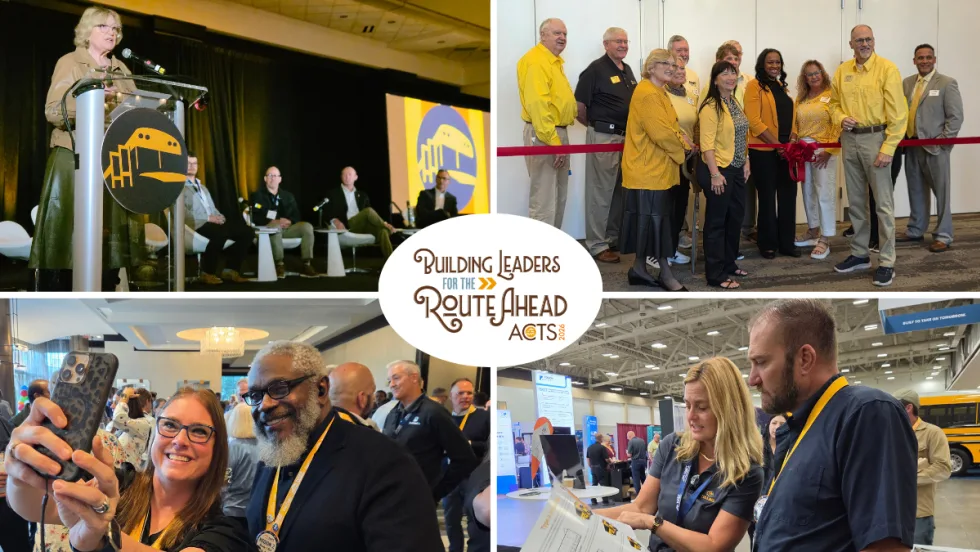
Inside NAPT ACTS 2026: Highlights from Louisville
From federal updates and student behavior strategies to new school bus technology and industry awards, see highlights from NAPT ACTS 2026 in Louisville.
Read More →
Meet the 2025 School Bus Driver Hero Winner: Annette Brown
We caught up with Wa-Nee Community Schools' Annette Brown on site at SBFX, where she was named the 2026 School Bus Driver Hero Award winner. Hear about her reaction, what she loves most about being a school bus driver, and more!
Read More →
Predictability Is Like Ketchup (According to 6-Year-Olds)
To students, a different school bus can feel like a full-blown crisis. One driver reflects on why familiar routines, showing up on time, and being reliably boring matter more than we think.
Read More →
Samsara Launches Free Driver Rewards Program
The new Driver Perks program gives eligible professional drivers access to discounts and offers without adding a cost for participating fleets.
Read More →
How Tax-Exempt Municipal Leases Can Help Finance School Buses
Let’s explore school bus financing options, including municipal leases, vendor payable accounts, and balloon payments, and how they can help stretch fleet budgets.
Read More →
Nominate Rising School Transportation Pros Under 40!
We’re searching for the next generation of leaders making an impact across the K-12 student transportation industry to recognize as SBF’s 2027 Trailblazers. Nominations are open now!
Read More →
Changing Lanes: BusWhere, EverDriven, InterMotive, Summit School Services, Switzer-Carty & Thomas Built Buses
Check out who's been hired, promoted, and appointed to leadership positions at various school transportation suppliers, contractors, and manufacturers.
Read More →